


Jewish Onliner is an independent publication. If you find our work valuable, please consider becoming a paid subscriber. You can also subscribe to us on WhatsApp and Telegram. Follow us on YouTube, TikTok, Instagram, Discord, and X.
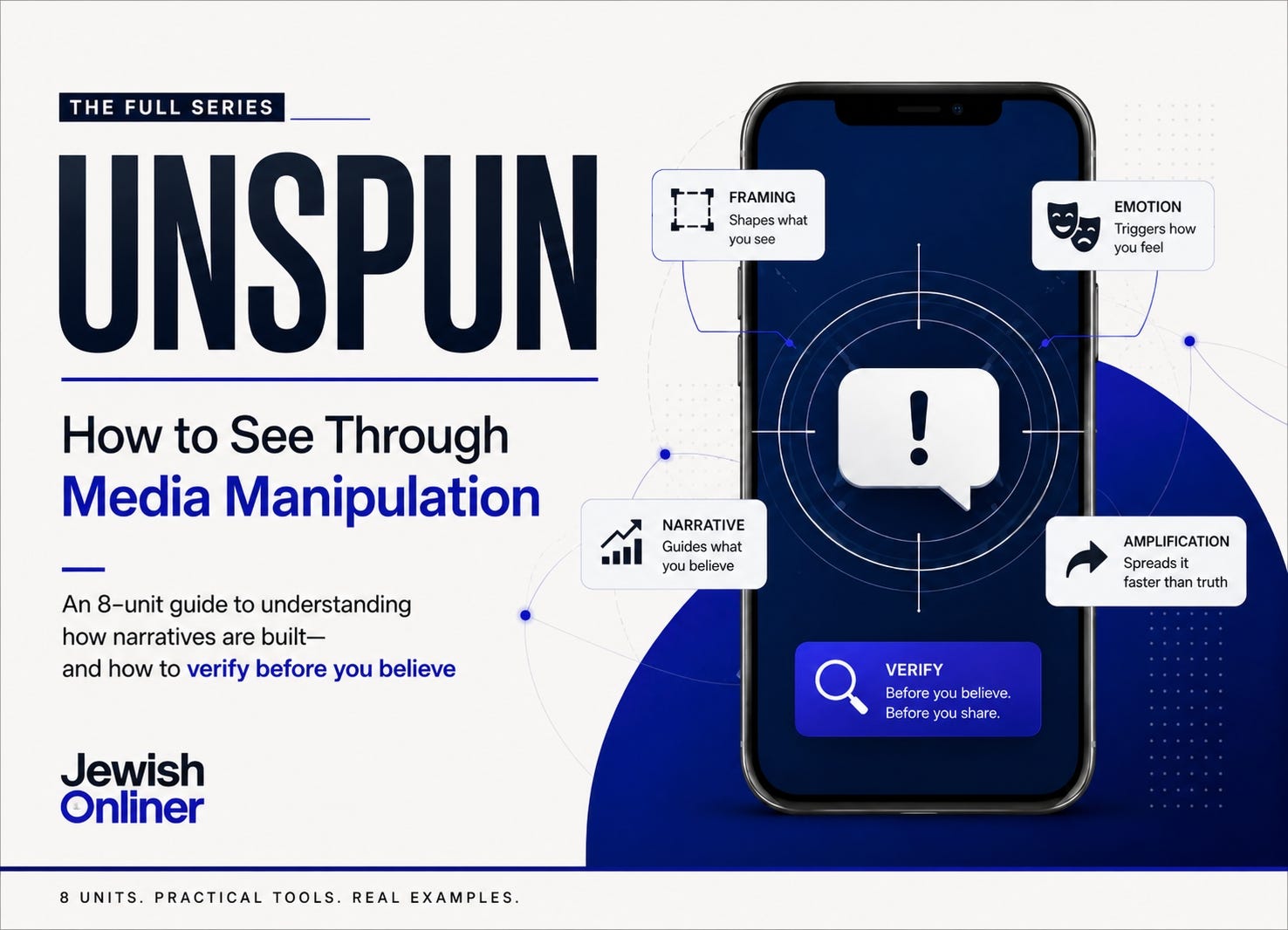
Media literacy is not a thing you finish. It is a way of reading — noticing the frame before you evaluate the content, leaving the page to check the source, refusing to amplify what you cannot verify, treating confident language as performance rather than proof, and asking what system delivered a claim to you before deciding whether to trust it.
None of that is dramatic. It will not give you the feeling of having “seen through” something. It is the opposite of the exhilarating certainty that so much of modern media is designed to produce. That is the point. The manipulation stack — from framing to rhetorical tactics to algorithmic curation — runs on the feeling of certainty. Resisting it means being willing to sit with less.
The mechanics are small. Ask how before whether. Trace backward before you share forward. Treat the sensation of sudden clarity as a reason to slow down, not speed up. Let “I don’t know yet” be a complete sentence. And when you cannot verify something, let the silence do the work.
If you have gotten this far, you already have what you need. The rest is practice — one claim, one image, one feed at a time.
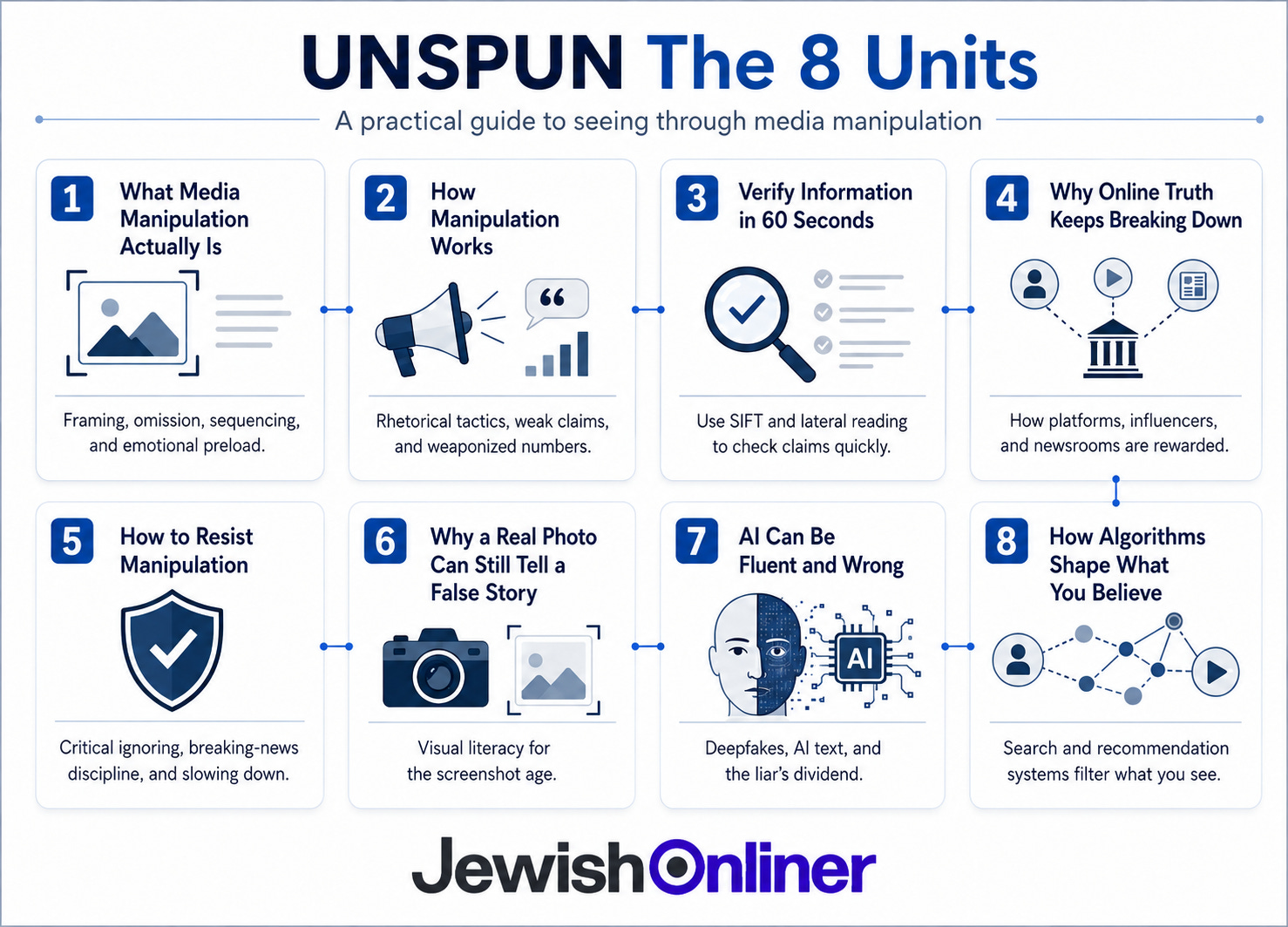
The Complete UNSPUN Series
Introduction: How to See Through Media Manipulation
Unit 1: What Media Manipulation Actually Is
Unit 2: How Manipulation Works
Unit 3: How to Verify Information in 60 Seconds
Unit 4: Why Online Truth Keeps Breaking Down
Unit 5: How to Resist Manipulation
Unit 6: Why a Real Photo Can Still Tell a False Story
Unit 7: AI Can Be Fluent and Wrong
Unit 8: How Algorithms Shape What You Believe
This series will not make you immune to manipulation. No checklist will. What it can do is make manipulation harder to pull off without you noticing — and that margin, the few seconds between encountering a claim and deciding whether to believe or share it, is where most of the work happens.
The goal was never to turn you into a fact-checker. It was to give you the reflex to pause, the tools to verify, and the confidence to say “I don’t know yet” when that is the most honest answer available. If you use even one of these habits once, the series did its job.
UNSPUN is a Media Literacy series from Jewish Onliner.