


Jewish Onliner is an independent publication. If you find our work valuable, please consider becoming a paid subscriber. You can also subscribe to us on WhatsApp and Telegram. Follow us on YouTube, TikTok, Instagram, Discord, and X.
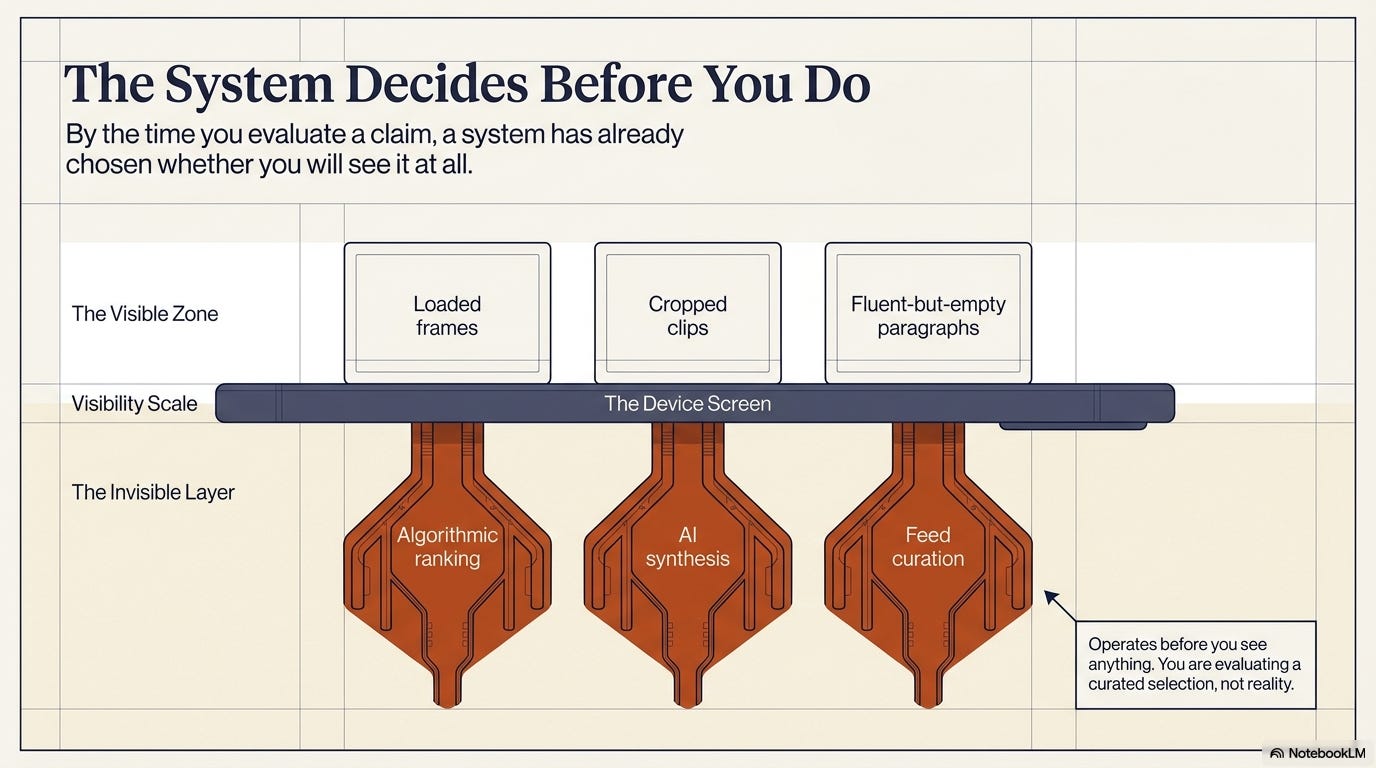
By the time you evaluate a claim, a system has already decided whether you would see it — and increasingly, what summary of it you would read instead of the source. Search engines, encyclopedias, and AI assistants no longer just connect you to information; they interpret, rank, and reframe it. That transformation introduces its own risks, mostly invisible.
This is the last, and in some ways the most difficult, layer of the manipulation stack. The earlier units covered things you can learn to notice — a loaded frame, a cropped clip, a fluent-but-empty paragraph. This layer is harder to see because it operates before you see anything. The feed you scroll, the search result you click, the AI answer you skim — each is the output of a system that has already chosen what to show you, in what order, and often with what interpretation attached. You are not evaluating information. You are evaluating a curated selection of it, produced by a system optimized for its goals, not yours.
When The Summary Becomes The Source
Most people never reach the original anymore. They read the featured snippet, the AI overview, the top result — and trust it because the platform surfaced it. But search ranks content by algorithm, not accuracy: a well-optimized piece of misinformation can outrank a careful correction, and a snippet can pull a line out of context and present it as settled fact.
Encyclopedias can possibly be accurate but editable by anyone, and well-maintained on some pages while neglected on others. Citing one without checking its sources is trusting a summary of a summary. AI answers sound authoritative but do not verify — they synthesize patterns, and sometimes those patterns are confident hallucinations. When the summary is wrong, most people never find out.
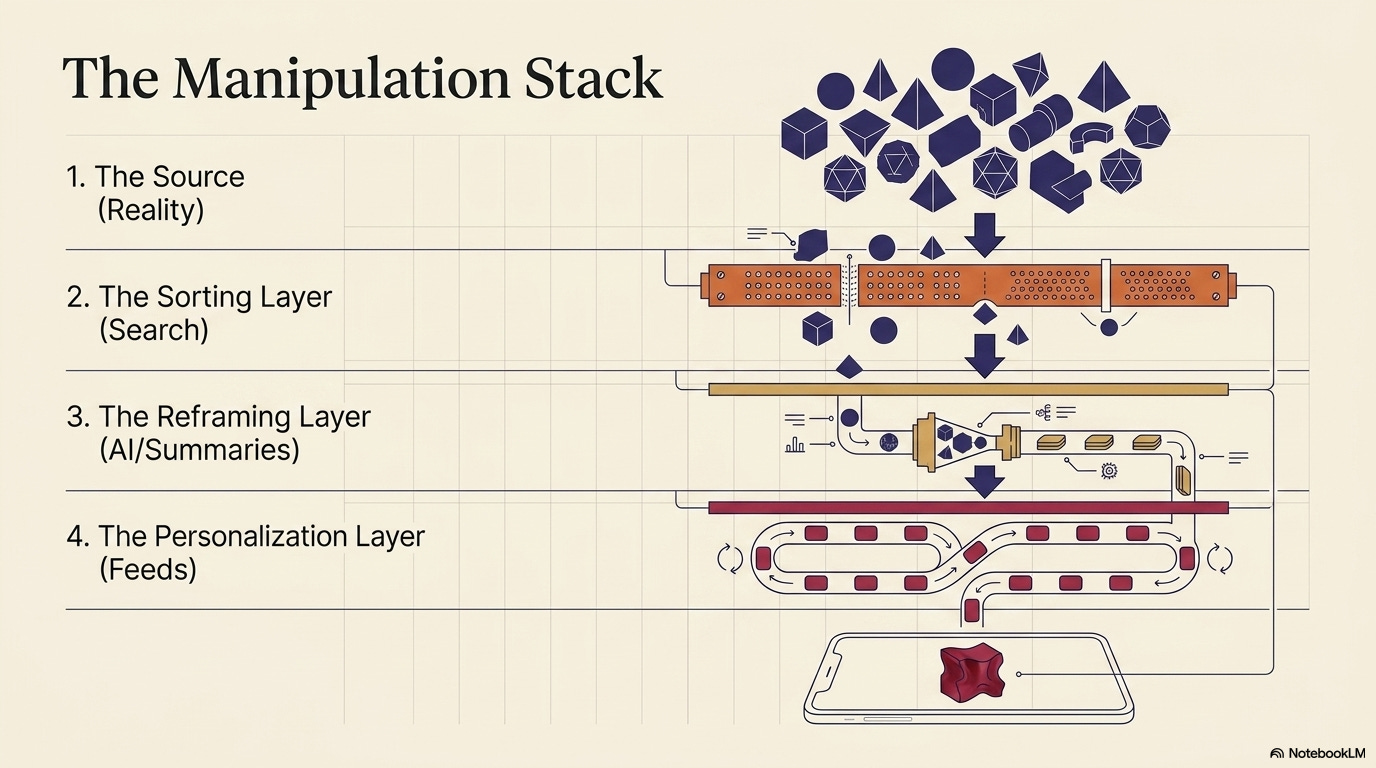
The result is a strange inversion of how information used to work. For most of the internet’s history, the point of a search or a link was to get you to a source. Now, the destination is often the summary itself — the box at the top of the results page, the chatbot’s reply, the tweet-length paraphrase of a study nobody read. The source still exists, technically. It just isn’t where the conversation happens anymore.
How The Feed Shapes What You See
If summaries have replaced sources, feeds have replaced the act of choosing. Personalization tailors your feed to what the platform thinks will hold you. Click partisan content and you get more of it; engage with sensational headlines and you get more of those.
The system is not trying to inform you; it is trying to keep you there. Engagement-based ranking rewards what generates clicks and shares — outrage, surprise, controversy — and buries what does not, which is usually nuance, correction, and complexity. And synthetic engagement makes it worse: bots and coordinated networks inflate likes and shares to make content look popular, which the algorithm reads as real signal and amplifies further.
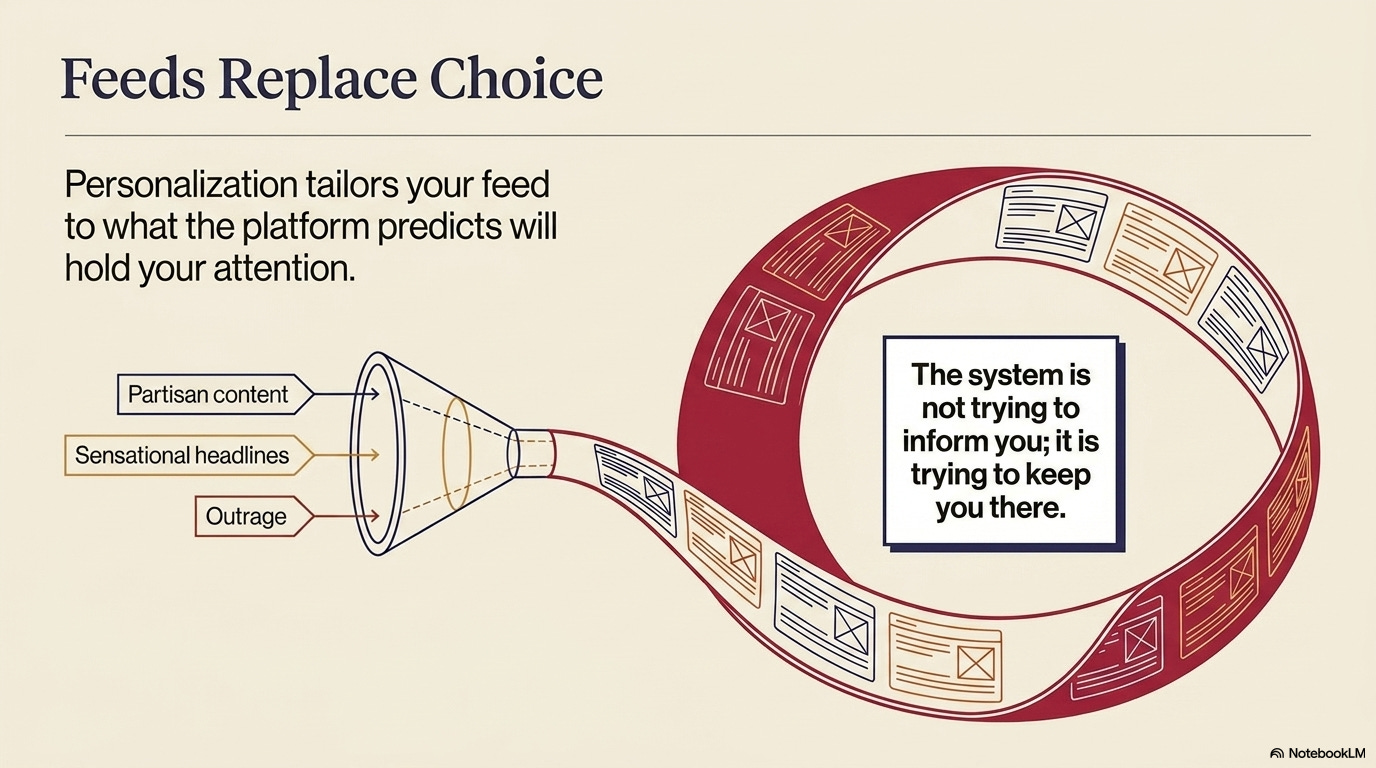
What reaches you is not what is true. It is what the system predicts will keep you scrolling: emotionally charged, ideologically familiar, socially validated, or infuriated. Over time, that isn’t just a feed. It’s a shape. It is the specific corner of reality the algorithm has decided you belong in, reinforced every day by the fact that everyone else in that corner is seeing roughly the same things you are.
What To Ask
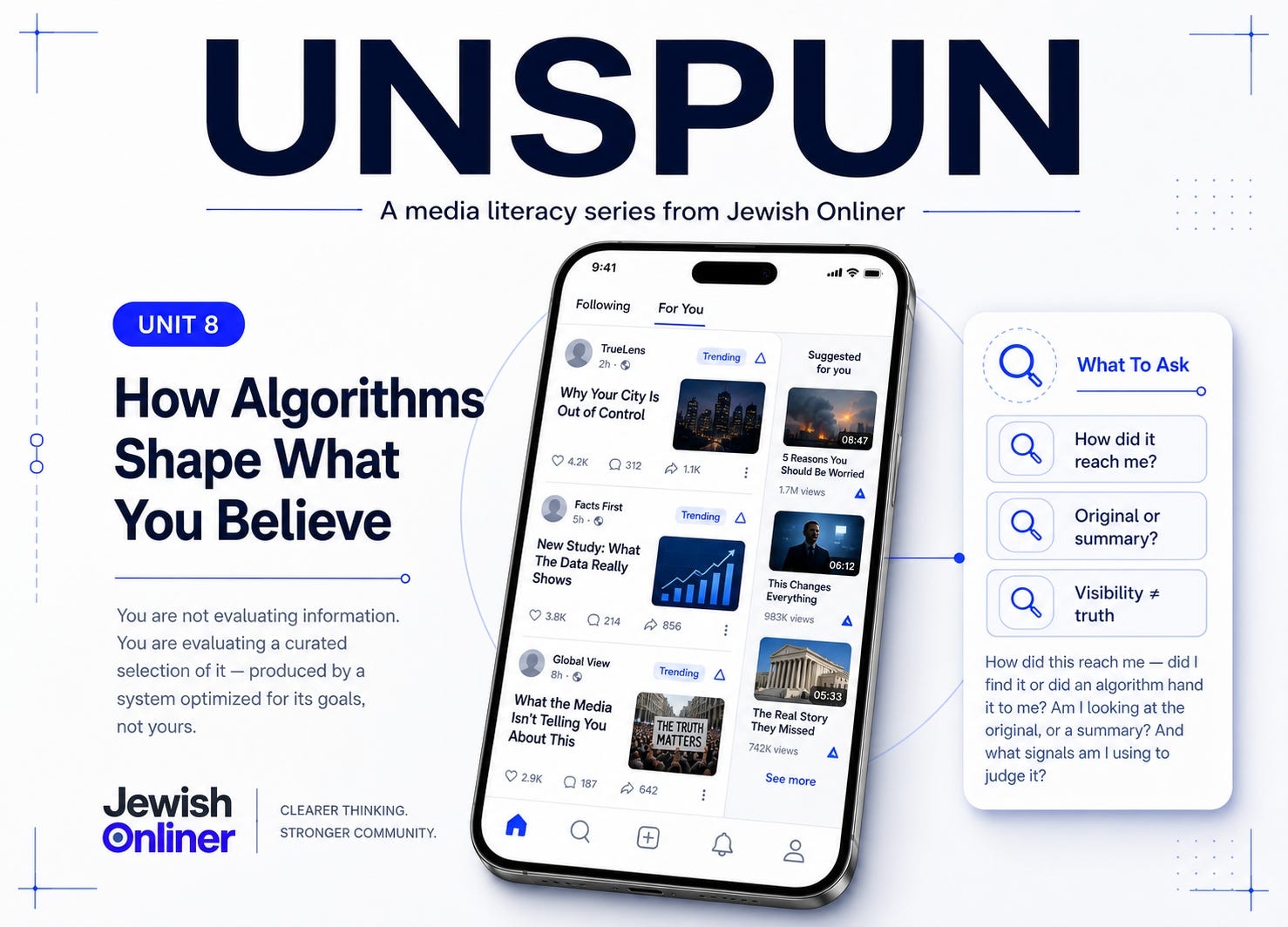
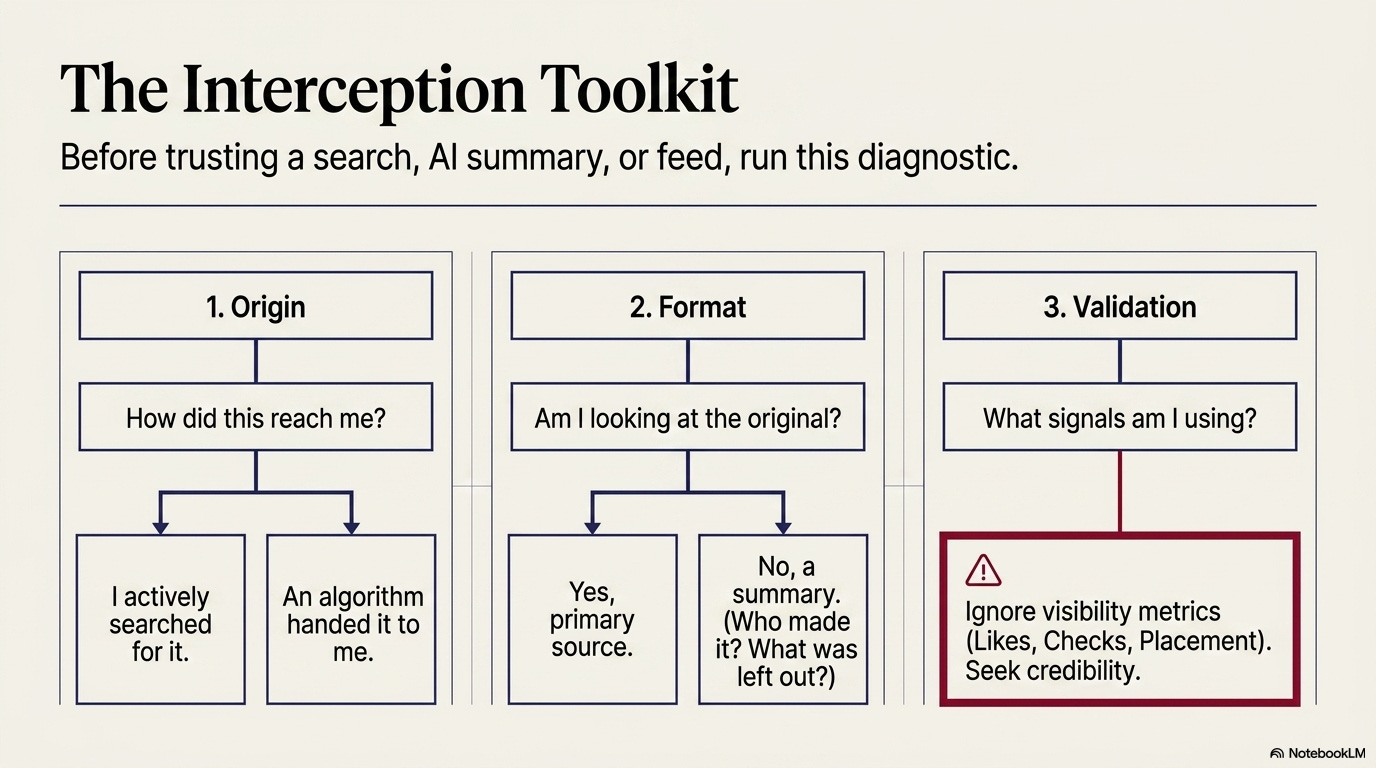
Before trusting something delivered by search, an AI summary, or a feed, ask three things. How did this reach me — did I find it, or did an algorithm hand it to me, and did it go viral because it is credible or merely because it is engaging? Am I looking at the original, or a summary of it — and if a summary, who made it and what did they leave out? And what signals am I actually using to judge it — because top-of-results, a blue checkmark, and a high like-count are signals of visibility, not truth.
The systems that deliver your information are not neutral. Understanding how they work is now part of literacy itself.