


Jewish Onliner is an independent publication. If you find our work valuable, please consider becoming a paid subscriber. You can also subscribe to us on WhatsApp and Telegram. Follow us on YouTube, TikTok, Instagram, Discord, and X.

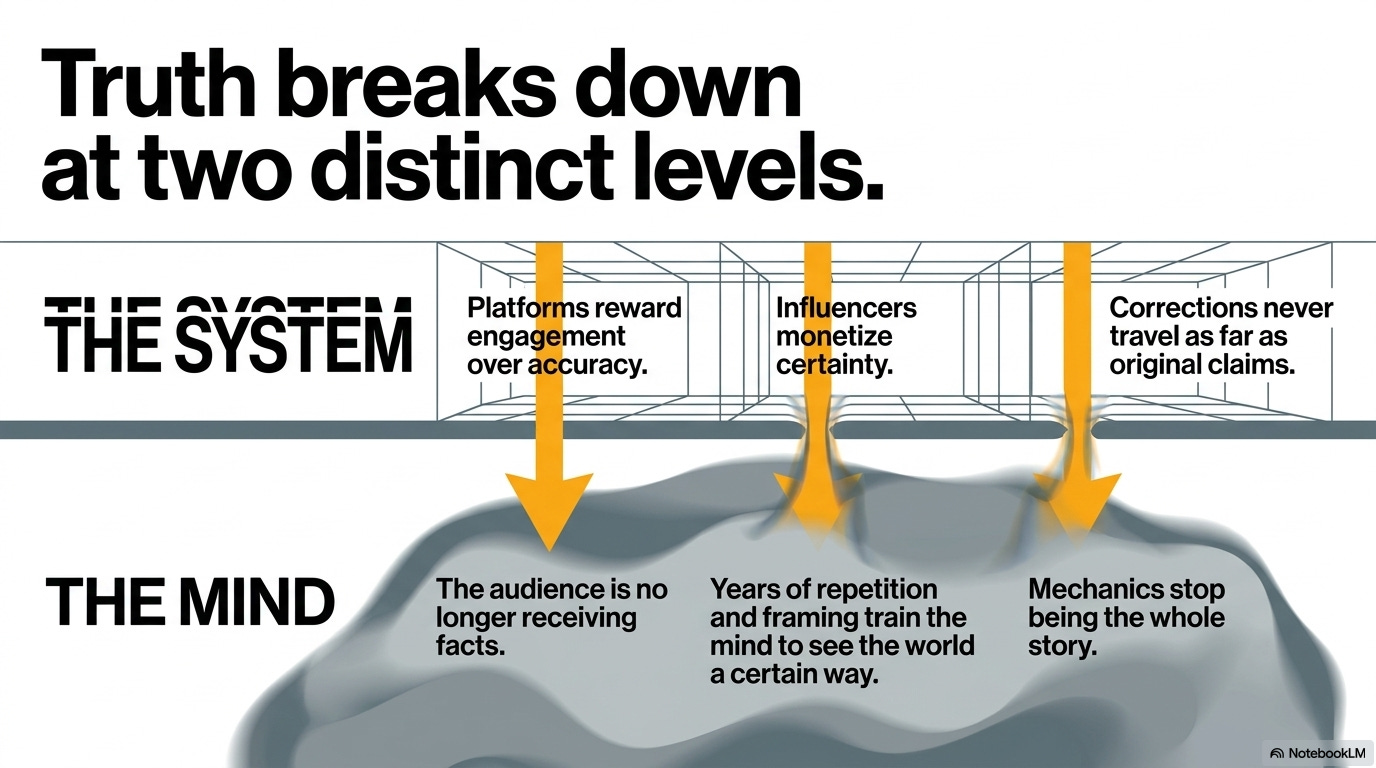
Online, truth breaks down at two levels. The obvious one is the system: platforms reward engagement over accuracy, influencers monetize certainty, and correction never travels as far as the original claim. The deeper one is inside your head. Once an audience has been trained — over years, through repetition and framing — to see the world a certain way, the mechanics of the platform stop being the whole story. The reason facts fail to land is no longer just that the algorithm buries them. It is that the audience is no longer receiving them.
Before any technique, one uncomfortable premise sits underneath this entire series: being right is not enough. For an audience that has already been captured, facts do not land. You can win every fact-check and still lose the room.
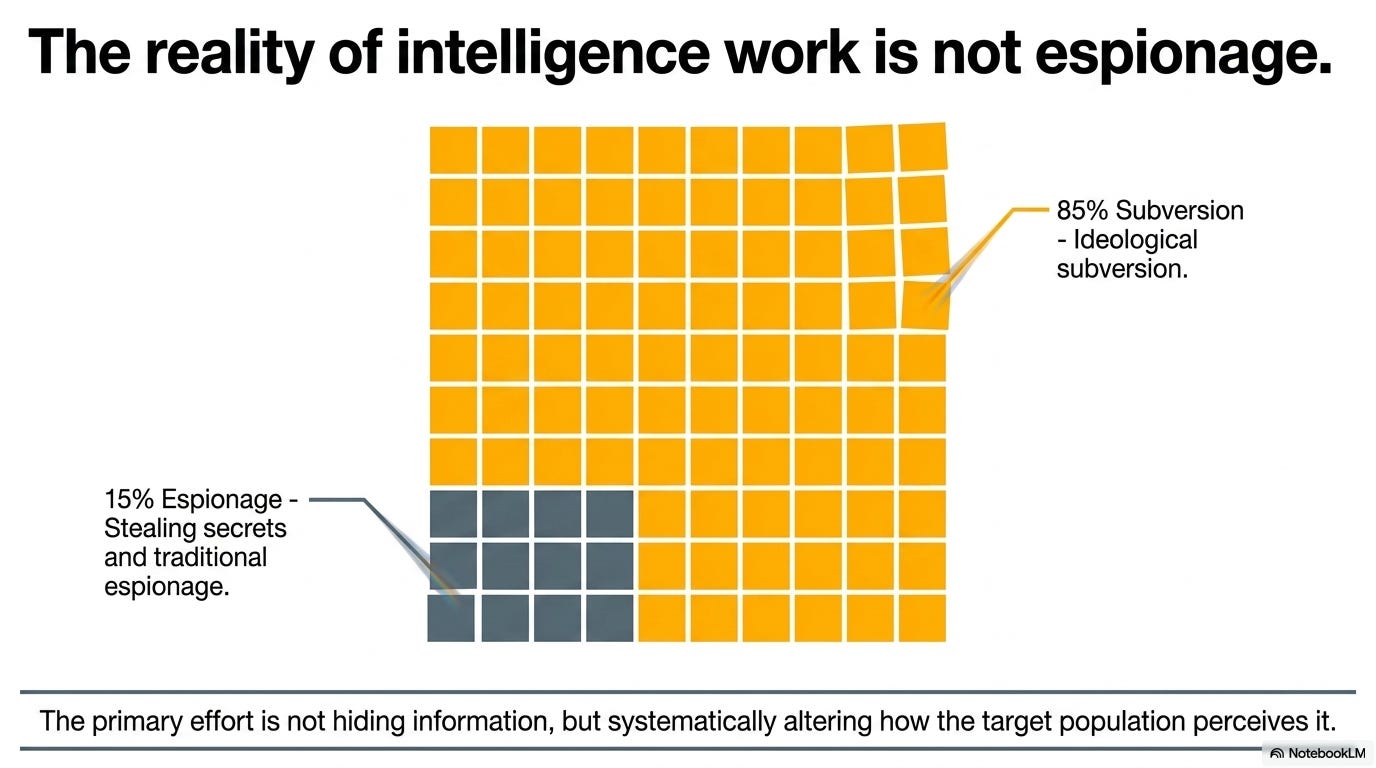
The clearest articulation of why comes from an unlikely source. Yuri Bezmenov — a KGB-trained propagandist who defected from the Soviet Union in 1970 — spent the 1980s warning the West about what he called ideological subversion, most fully in a 1983 lecture and a 1984 interview with G. Edward Griffin. His central claim was that the real work of the KGB was not espionage. By his own estimate, spying accounted for only 10 to 15 percent of its effort; the other 85 percent was subversion — slow, legal, and, in his words, “easily observable if you give yourself the time and trouble to observe it.” The subverter, he said, is not a bridge-bomber. It is a student, a diplomat, an actor, a journalist — what he himself had been.
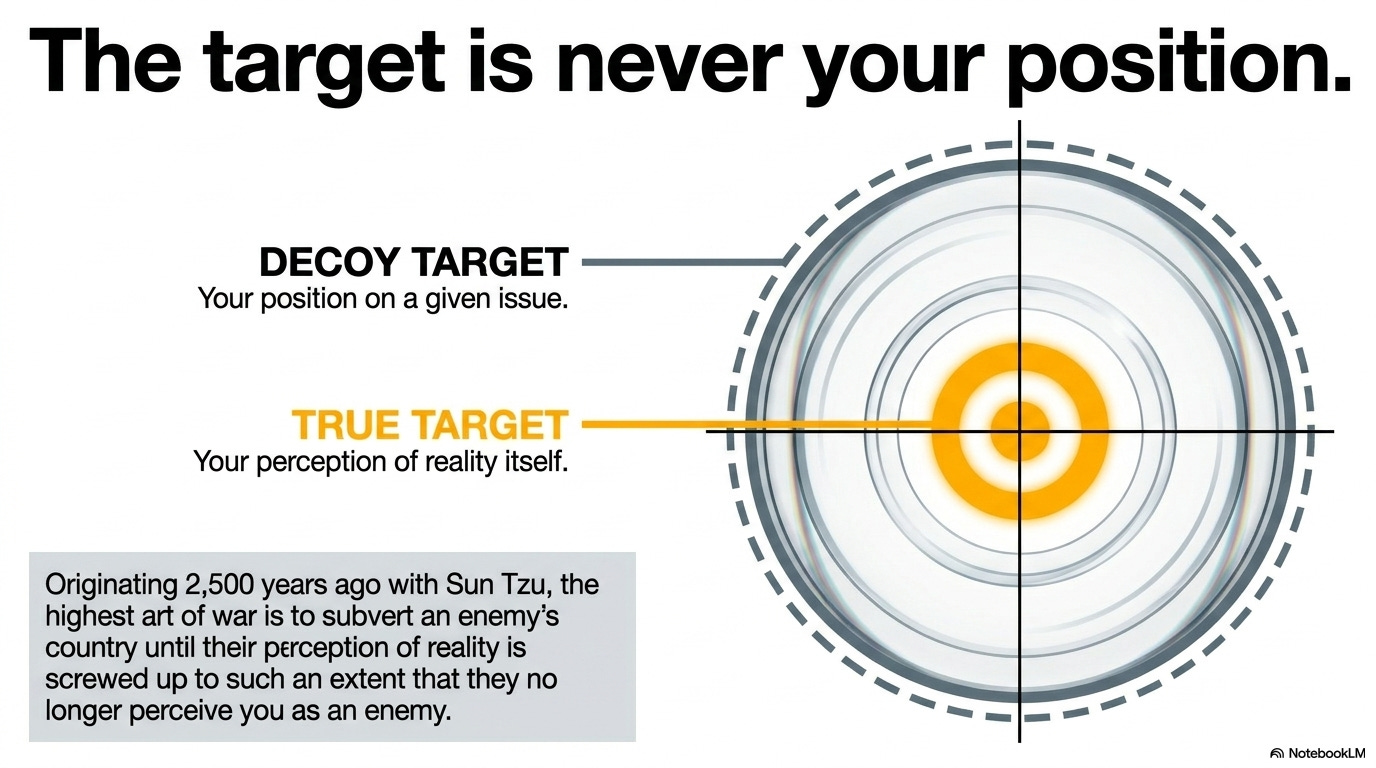
He traced the idea back 2,500 years, to Sun Tzu: the highest art of war is not to fight but to subvert everything of value in an enemy’s country — in his paraphrase, “until the perception of reality of your enemy is screwed up to such an extent that it does not perceive you as an enemy.” That one sentence is the thesis of this entire series. The target is never your position on a given issue. It is your perception of reality itself.
The Four Stages
He broke the process into four stages, and the horizons are worth spacing out, because the whole point is that this is patient work:
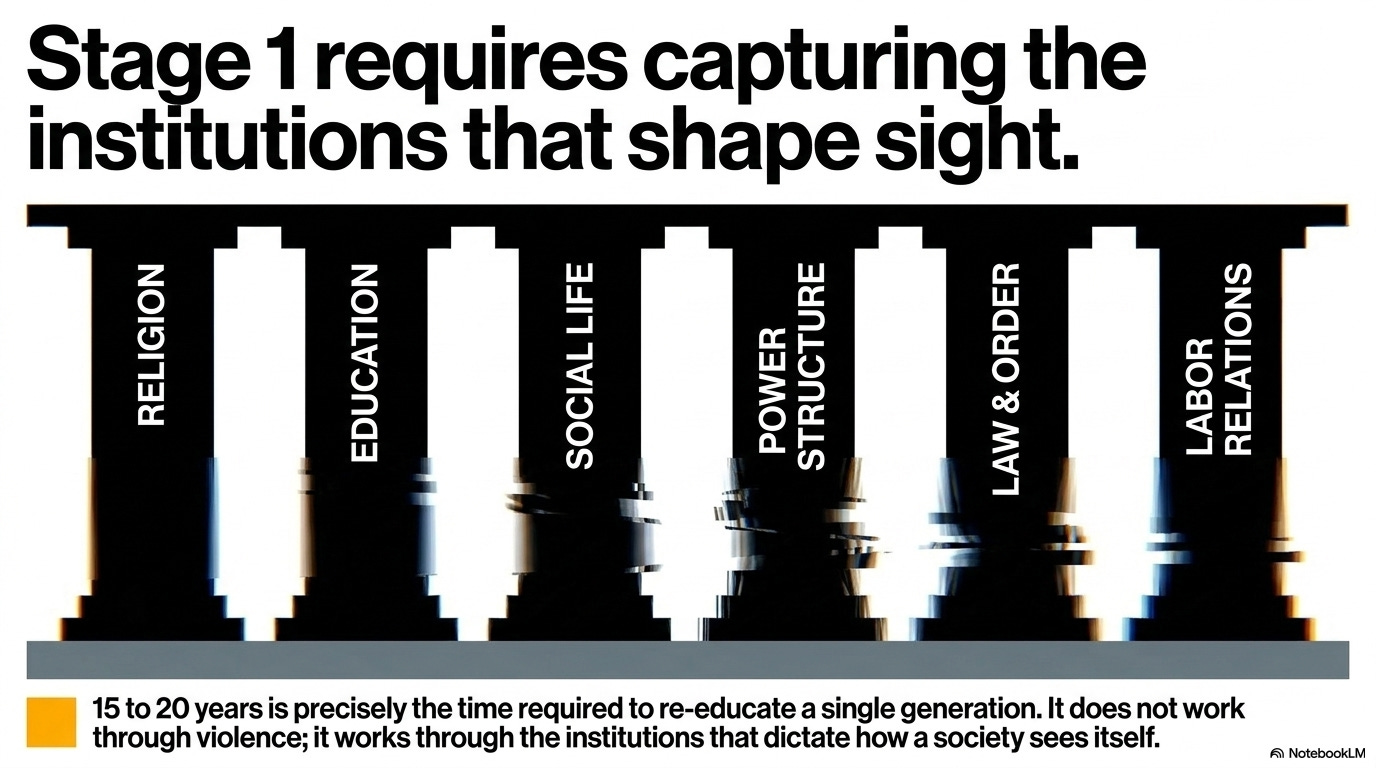
Demoralization — 15 to 20 years — the time to re-educate one generation. It works through the institutions that shape how a society sees: religion, education, social life, the power structure, law and order, and labor relations.
Destabilization — 2 to 5 years. The target narrows to essentials — the economy, law and order, and the media — where compromise stops being possible.
Crisis — a matter of weeks. A sharp, often violent shock that forces a change of power, at which point a “benefactor” arrives claiming to have every answer.
Normalization — indefinite. The new order is imposed and declared normal. His example was the tanks rolling into Prague in 1968: no more Prague Spring, stability by force.
But the line that matters most for anyone thinking about media came in the 1984 interview, describing what demoralization does to a single person:
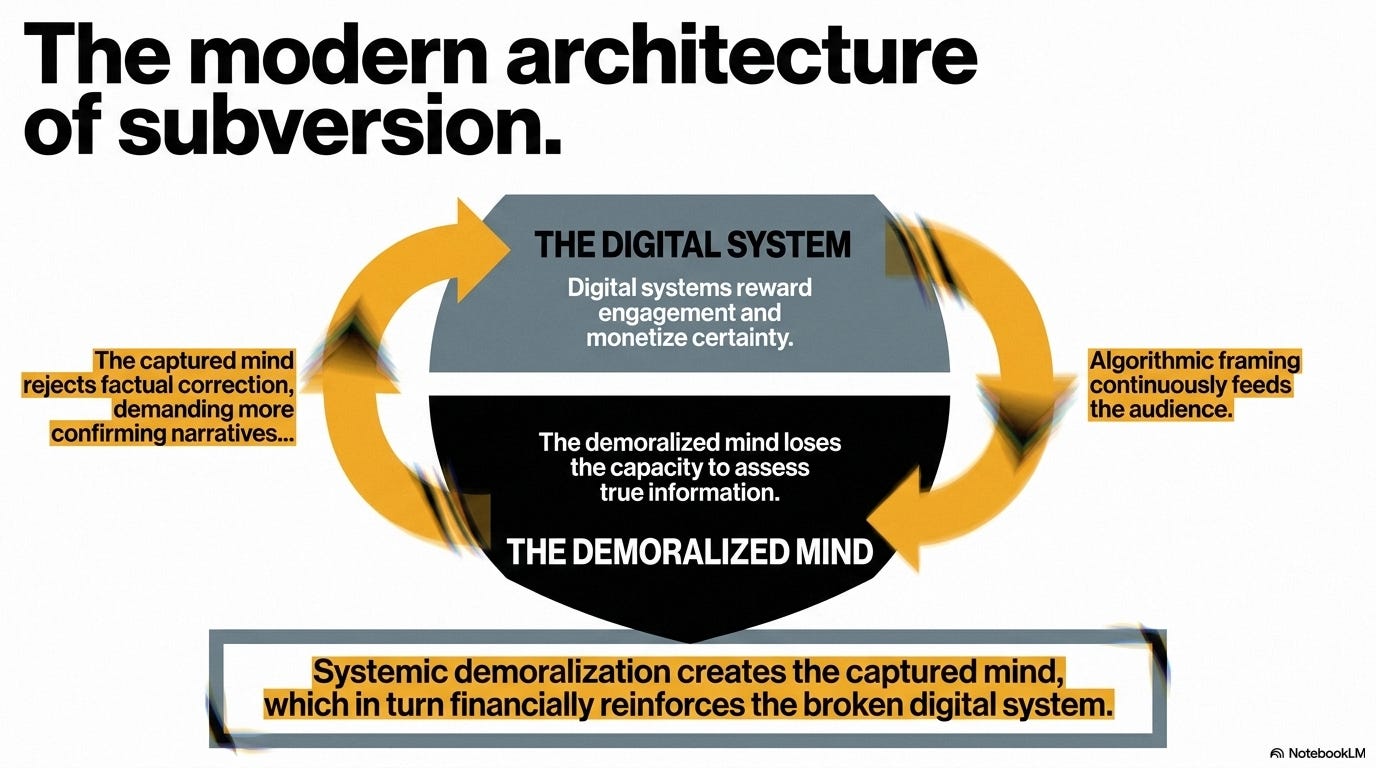
“A person who was demoralized is unable to assess true information. The facts tell nothing to him. Even if I shower him with information, with authentic proof, with documents, with pictures … he will refuse to believe it.”
That is the entire problem in two sentences. A captured audience has been trained to reject any evidence that contradicts the narrative it already holds — not through stupidity, but through a settled habit of interpretation. This is why literacy cannot be only about what is true. It has to be about how you see: rebuilding the capacity to take in an inconvenient fact at all.
How This Looks Online And To You
Bezmenov described a mechanism that used to require decades and institutions. The internet compresses it. What took the Soviet system fifteen years of patient work through schools, media, and cultural life can now happen in months — through a single influencer’s audience, a coordinated hashtag campaign, or a steady drip of framed clips into a personalized feed.
None of this requires a foreign intelligence service. The market provides it for free. Platforms reward the exact content that does demoralization work, because outrage and grievance hold attention better than nuance. Influencers succeed by keeping audiences in a permanent state of low-grade anger at institutions. The infrastructure of capture is now the business model.
So take the mechanism, not the program. The durable part — broadly borne out by later research on propaganda and influence operations — is that perception can be shaped deliberately, over long horizons, and that once it has been, facts alone will not reverse it. Whether or not you buy his story about the KGB, that mechanism is real, and it is the reason the rest of this series exists.
The optimistic corollary is that the mechanism runs on two things you actually control: your attention, and your habits of interpretation. Those can be retrained. Everything that follows is how.