


Jewish Onliner is an independent publication. If you find our work valuable, please consider becoming a paid subscriber. You can also subscribe to us on WhatsApp and Telegram. Follow us on Facebook, YouTube, TikTok, Instagram, Discord, and X.
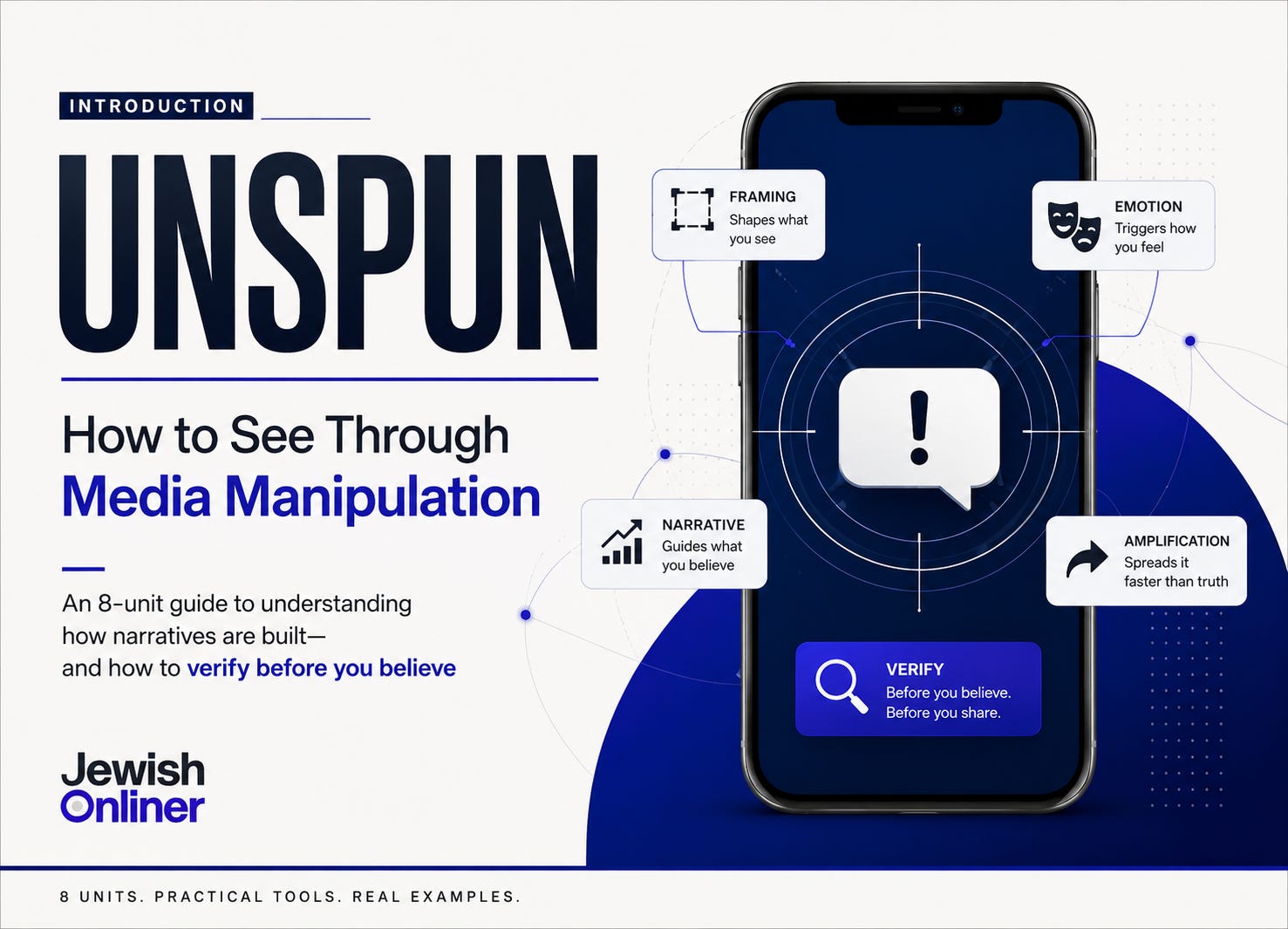
You’re scrolling through your feed. A video clip catches your eye — 15 seconds long, emotionally charged, clearly damning. The caption tells you exactly what you’re seeing. Within seconds, you’ve formed an opinion. Maybe you’ve shared it.
Then the full context emerges. The clip was cropped. The caption was misleading. What looked obvious wasn’t.
By then, it’s too late. The distorted version has already traveled further than the correction ever will.
This happens every day. Not because people are gullible, but because the modern information ecosystem rewards speed over accuracy, outrage over nuance, and engagement over truth. And most of us were never taught how to navigate it.
That’s what our new series, UNSPUN, is for.
What This Series Is — and Isn’t
This isn’t another “don’t trust the media” rant. It’s not here to tell you what to think.
It’s here to show you how narratives are built, how manipulation works, and how to verify claims before believing or sharing them.
UNSPUN is an 8-unit media literacy curriculum that will drop Sundays, Tuesdays, and Thursdays over the next three weeks that teaches you:
How framing shapes perception before you evaluate evidence
What tactics make weak claims feel strong
How to verify information in 60 seconds
Why platforms reward certain content and bury others
How to resist becoming part of the manipulation chain
Why real photos can tell false stories
How AI deceives through fluency and realism
How algorithms shape what you see and believe
Each unit builds on the last. By the end, you’ll have a working framework for navigating media in 2026.
The 8 Units
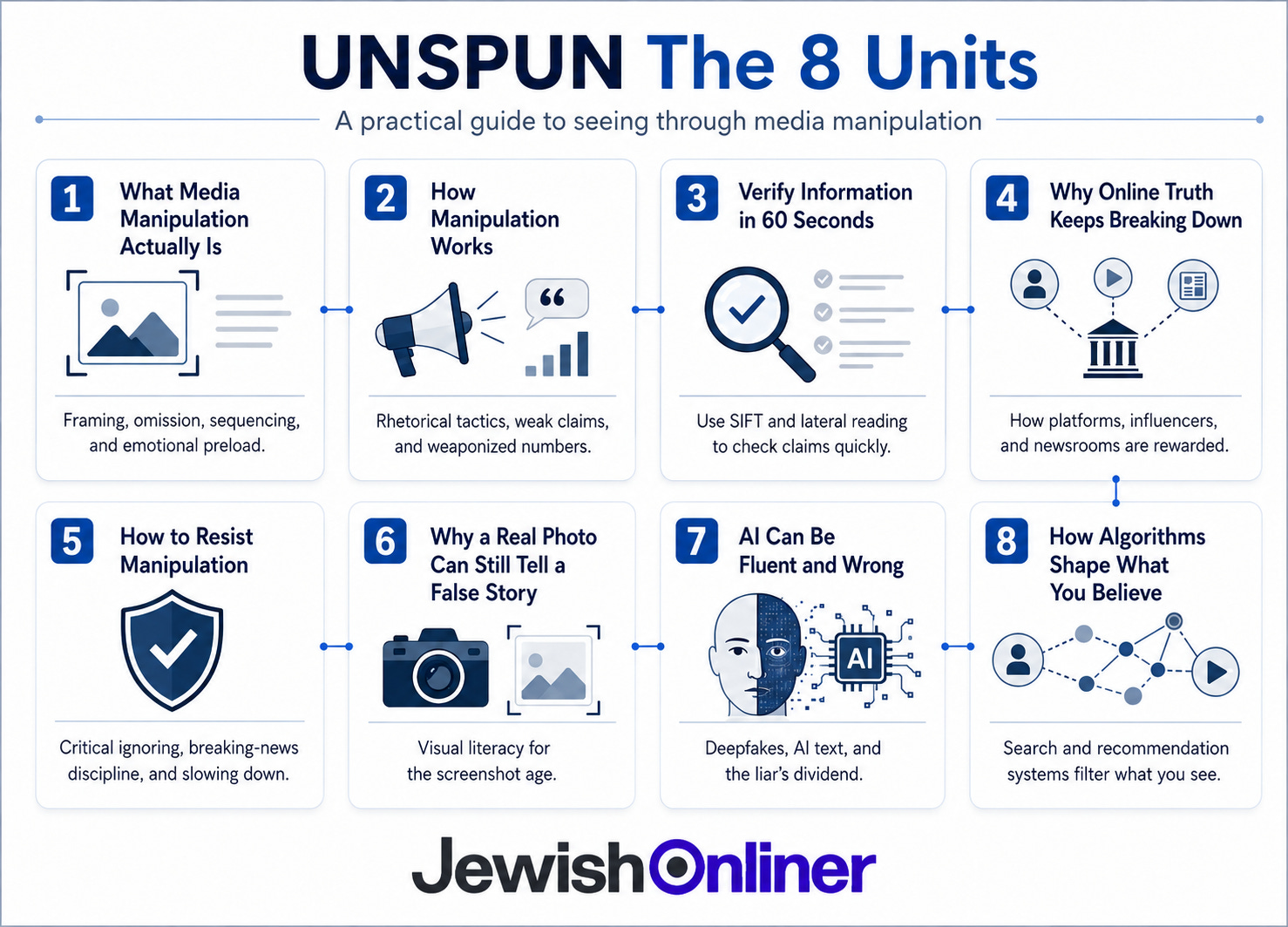
Unit 1: What Media Manipulation Actually Is
Manipulation isn’t just lies. It’s framing, omission, sequencing, and emotional preload.Unit 2: How Manipulation Works
The 12 most common rhetorical tactics and how numbers are weaponized to deceive.Unit 3: How to Verify Information in 60 Seconds
Master SIFT and lateral reading—the tools professional fact-checkers use.Unit 4: Why Online Truth Keeps Breaking Down
Understand the incentives behind platforms, influencers, and newsrooms.Unit 5: How to Resist Manipulation
Critical ignoring, breaking-news discipline, and how not to become part of the manipulation chain.Unit 6: Why a Real Photo Can Still Tell a False Story
Visual literacy for the screenshot age.Unit 7: AI Can Be Fluent and Wrong
Navigate deepfakes, AI-generated text, and the “liar’s dividend.”Unit 8: How Algorithms Shape What You Believe
How search results and recommendation systems filter what you see.
Why Now?
The tools of manipulation have evolved faster than our ability to recognize them. AI generates text that sounds more authoritative than truth. Algorithms surface content based on engagement, not accuracy. Screenshots strip context at scale. And the correction never catches up to the lie.
Media literacy isn’t optional anymore. It’s mandatory in today’s broken media landscape.
UNSPUN won’t make you cynical. It doesn’t say “trust nothing.” It will unpack how to ask better questions, recognize manipulation before it takes hold, and verify before amplifying.
Because once you see how the machinery works, you can’t unsee it.