


Jewish Onliner is an independent publication. If you find our work valuable, please consider becoming a paid subscriber. You can also subscribe to us on WhatsApp and Telegram. Follow us on Facebook, YouTube, TikTok, Instagram, Discord, and X.
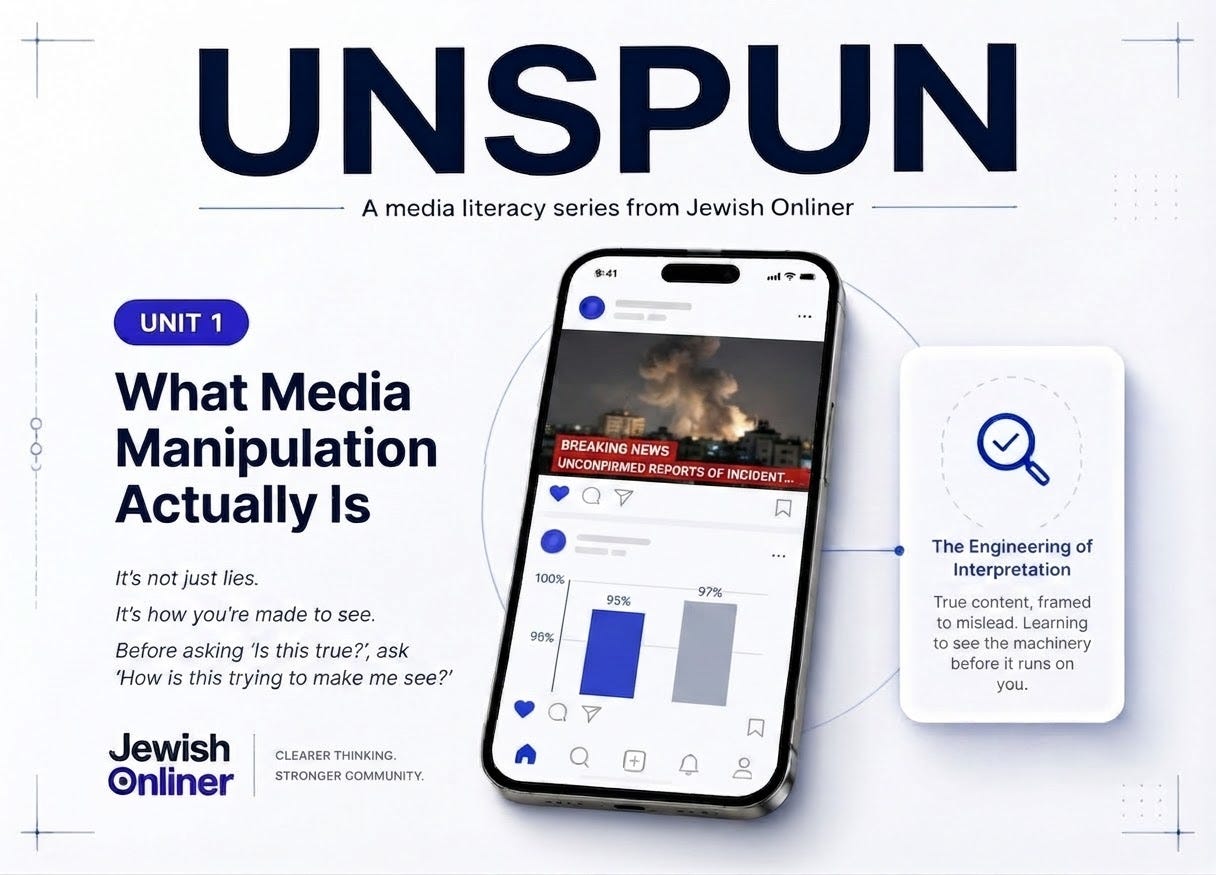
On October 17, 2023, an explosion tore through the courtyard of the al-Ahli Arab Hospital in Gaza City. Within the hour, a headline sat atop the New York Times website and went out as a push alert to millions of subscribers: “Israeli Strike Kills Hundreds in Hospital, Palestinians Say.” On the BBC, a correspondent told viewers it was “hard to see what else this could be… other than an Israeli airstrike.”
The source for all of it was the Hamas-run health ministry. No evidence had been produced. The figure reported worldwide — roughly 500 killed — later turned out to trace to a mistranslation of a report describing about 500 total victims, killed and wounded together.
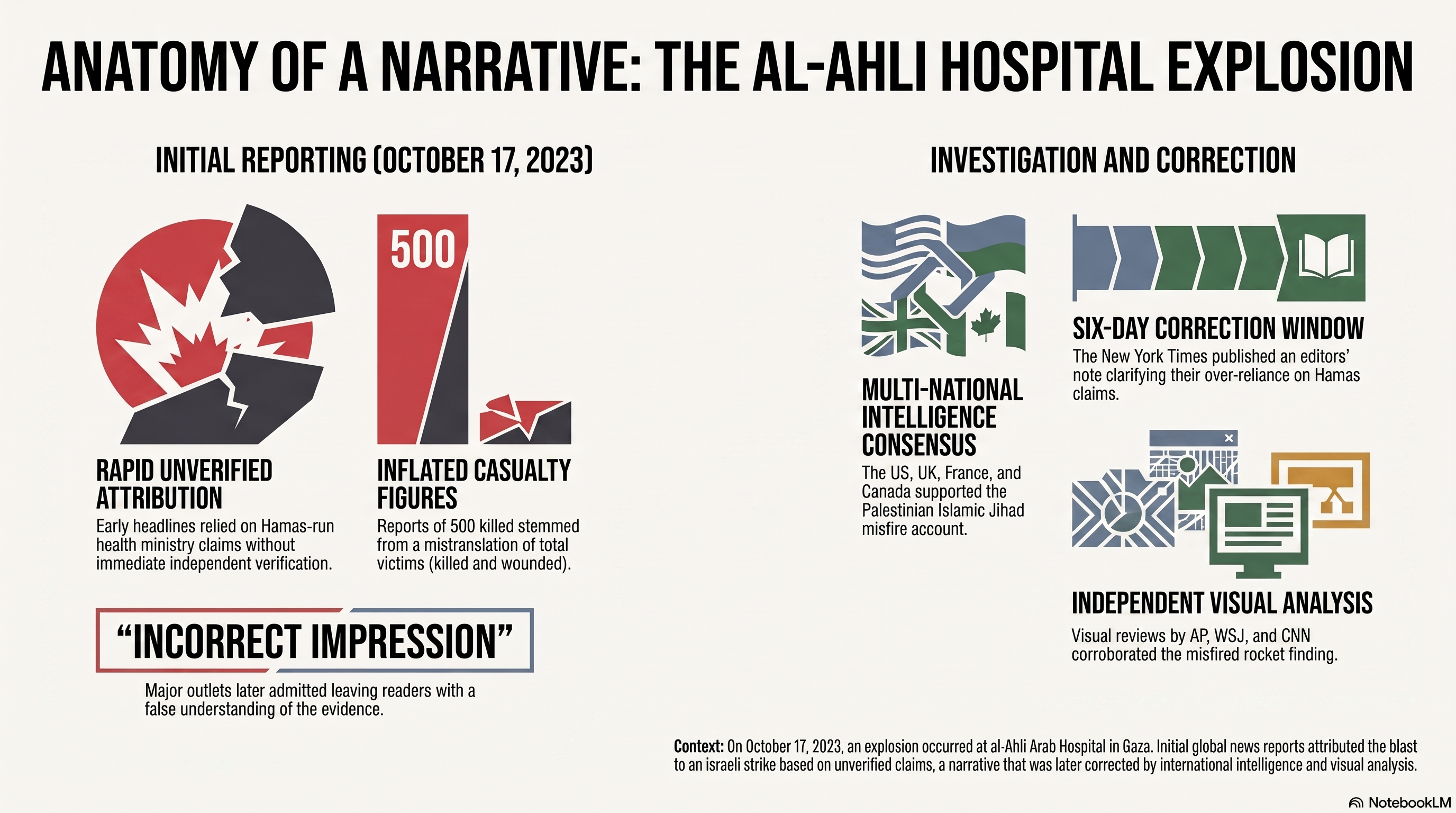
Within hours, Israel said the blast was a misfired rocket launched by Palestinian Islamic Jihad. Over the following days the United States, France, the United Kingdom, and Canada, plus independent visual analyses by the Associated Press, the Wall Street Journal, and CNN, all supported that account. Six days after the headline, the Times published an editors’ note: its early coverage “relied too heavily on claims by Hamas, and did not make clear that those claims could not immediately be verified,” and had left readers “with an incorrect impression about what was known and how credible the account was.”
Here is the point. Not one word of the initial reports was fabricated. Palestinian officials really did make the claim. There really was an explosion. People really died. There was no deepfake, no doctored photo, no invented quote. The manipulation lived entirely in the gap — between the claim and its verification, between a headline’s certainty and the actual state of knowledge.
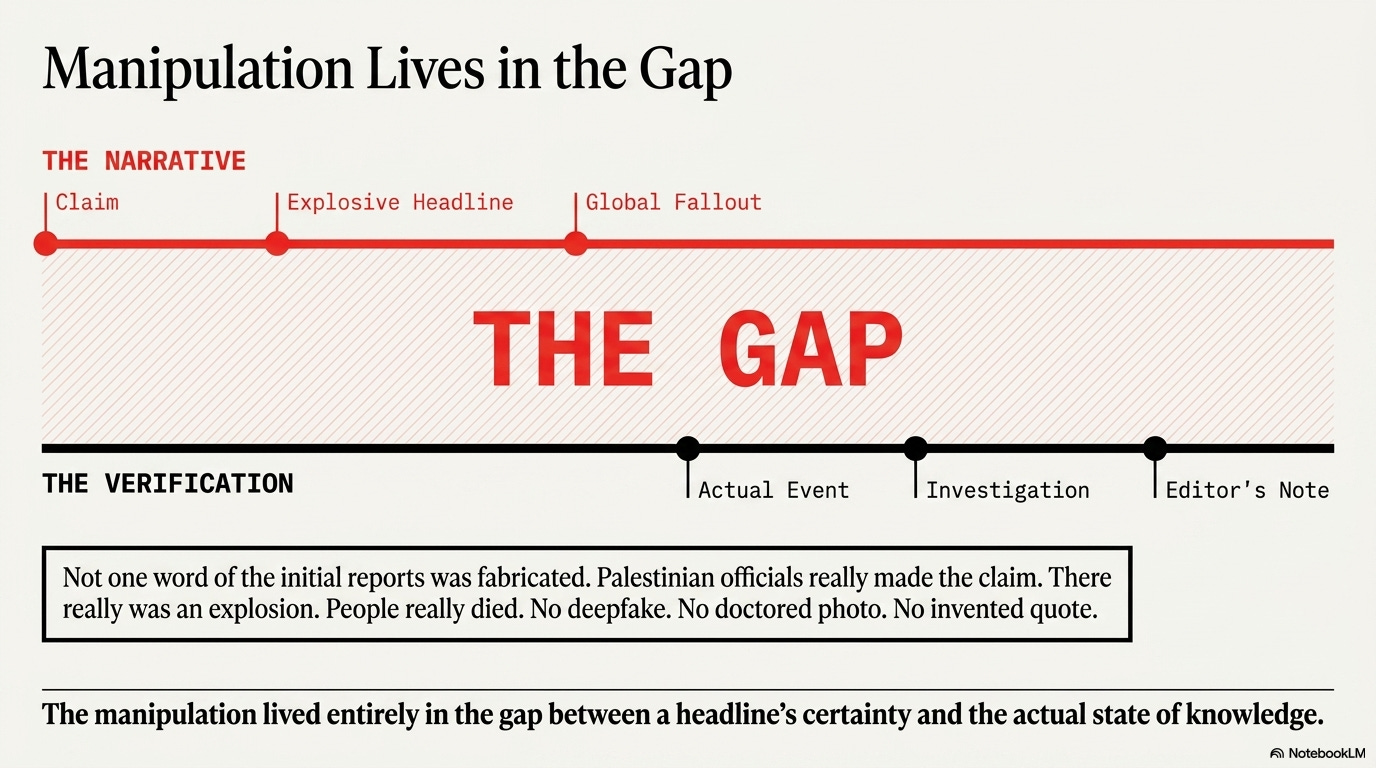
And the gap was enough. Before the correction arrived, the framing had already done its work: a planned summit between President Biden and Arab leaders was called off, and the false attribution fed a wave of antisemitic incidents across Europe and the United States. The truth caught up. It just caught up second.
That is what this series is about. Not, mostly, fabricated content — that is the rarer, easier problem. It is about the ability to recognize the attempted engineering of your interpretation, before you realize interpretation is even happening.
It’s Not Just Lies. It’s How You’re Made To See.
Most people picture manipulation as fake news: a tampered photo, an invented statistic, a fabricated quote. Those exist. But the more common and more effective work is done with true material, arranged to produce a false impression. A headline can be accurate and still plant a lie. A video can be unedited and still deceive through its caption. A chart can use real numbers and still mislead through its framing.
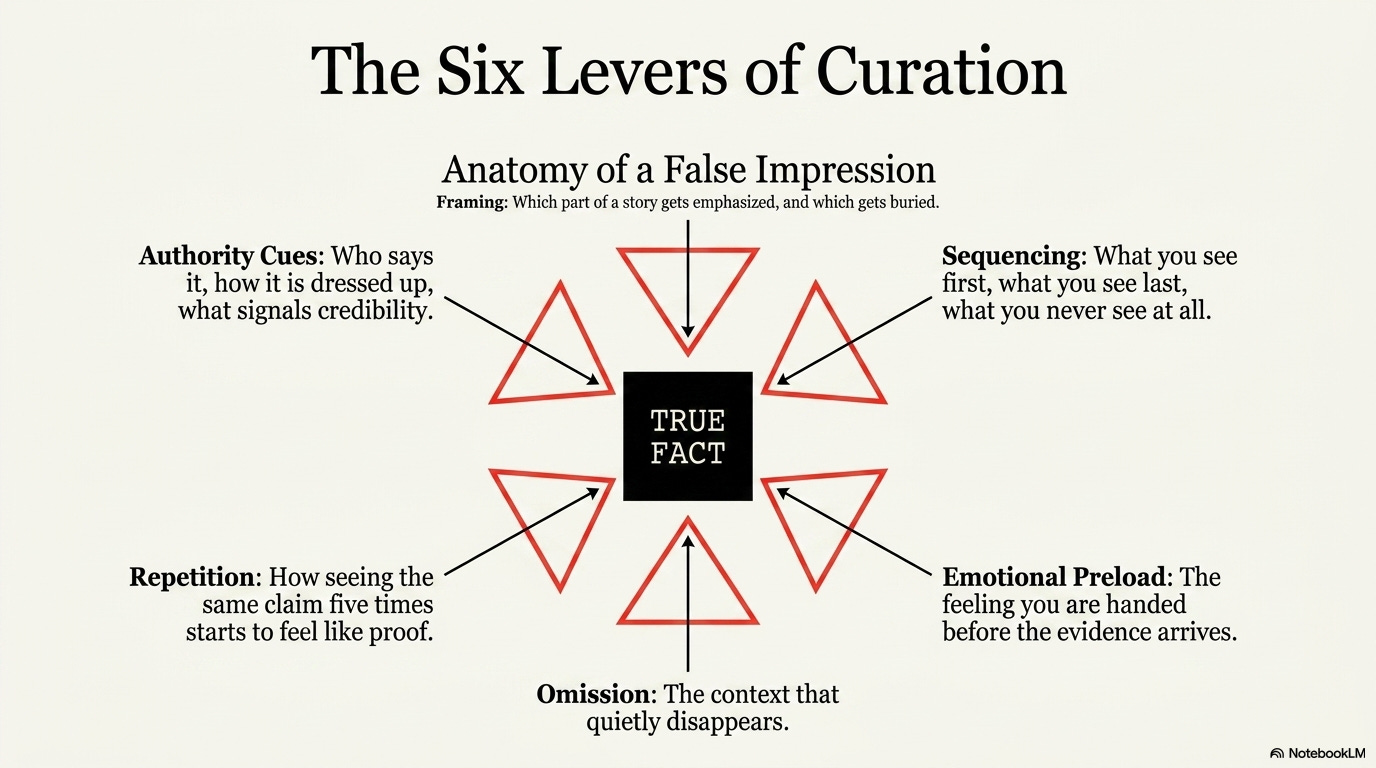
Manipulation operates through a small set of levers:
Framing — which part of a story gets emphasized, and which gets buried.
Sequencing — what you see first, what you see last, what you never see at all.
Emotional preload — the feeling you are handed before the evidence arrives.
Omission — the context that quietly disappears.
Repetition — how seeing the same claim five times starts to feel like proof.
Authority cues — who says it, how it is dressed up, what signals credibility.
The vocabulary you need
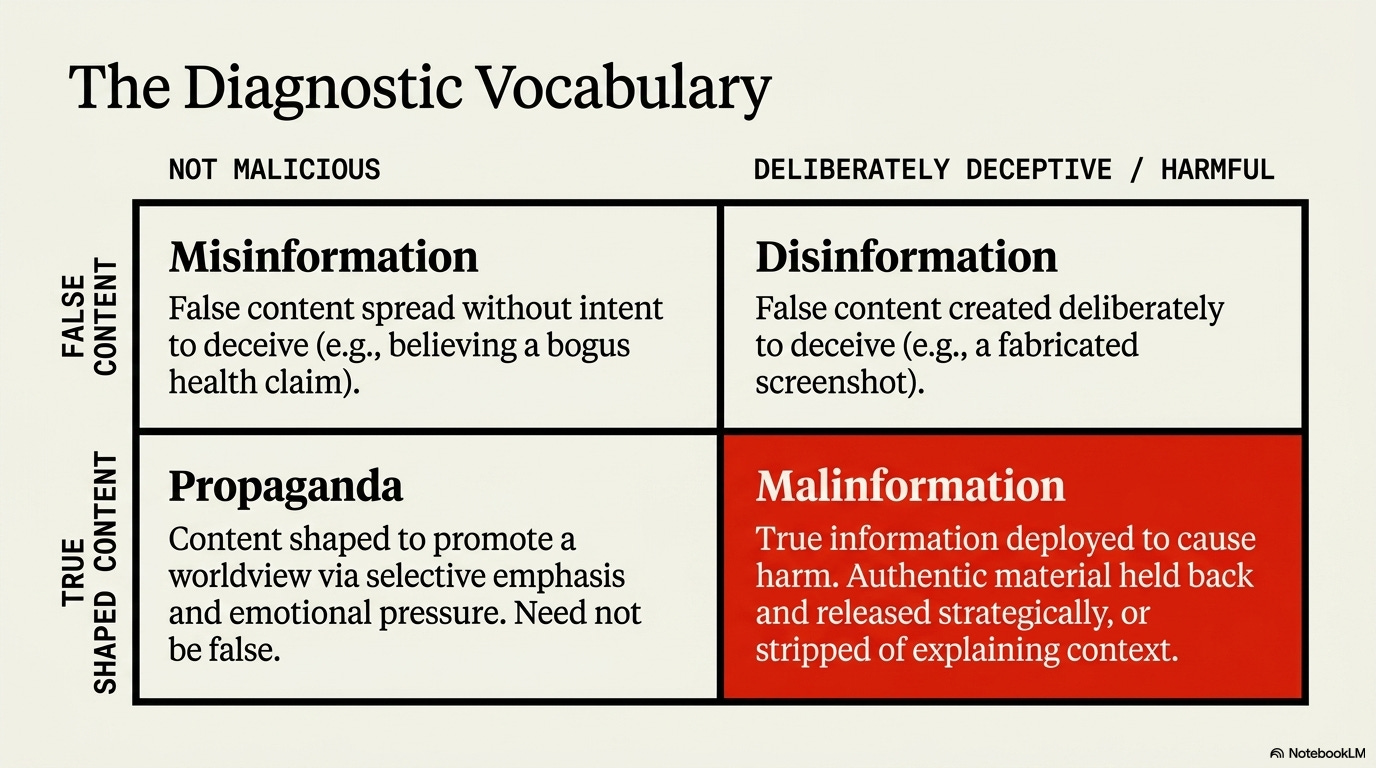
To name what you are seeing, you need four terms. They are not interchangeable.
Misinformation — false content spread without intent to deceive. Someone forwards a bogus health claim because they believe it. Wrong, but not malicious.
Disinformation — false content created and spread deliberately to deceive. A fabricated screenshot of a politician, circulated by someone who knows it is fake.
Malinformation — true information deployed to cause harm — authentic material held back and released at a strategic moment, or stripped of the context that would explain it. Genuine private messages leaked at the peak of a campaign to dominate a news cycle.
Propaganda — content shaped to promote a cause or worldview through selective emphasis and emotional pressure. It need not be false. It only has to be built to produce a desired response.
Which is why the first question is not “Is this true?” It is “How is this trying to make me see?”
However it's not incorrect to now take the position that Israel has decimated the entire medical infrastructure of Gaza. But keep focusing one one report which is contested. lol