


Jewish Onliner is an independent publication. If you find our work valuable, please consider becoming a paid subscriber. You can also subscribe to us on WhatsApp and Telegram. Follow us on YouTube, TikTok, Instagram, Discord, and X.

You see a claim.
It’s specific, alarming, and already spreading. Your instinct is to react — to forward it, to feel vindicated or betrayed. That instinct is the gap: the moment between seeing something and believing it. You can learn to close it, and it does not take a journalism degree or special software. It takes one habit, practiced until it is automatic.
The method is called SIFT, developed by the digital-literacy researcher Mike Caulfield. It is the single most useful verification routine for everyday use, and it takes about a minute.


The Four Moves
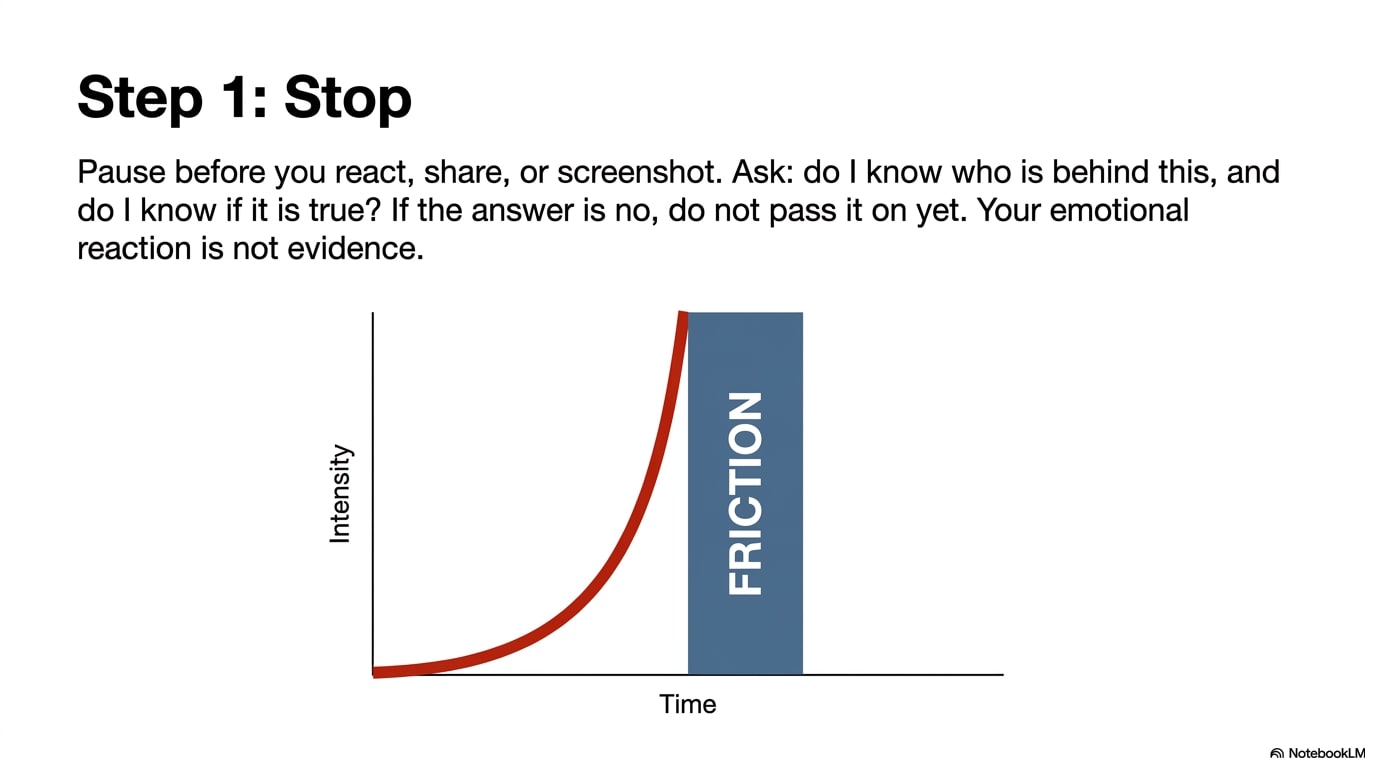
Stop before you react, share, or screenshot. Pause and ask: do I know who is behind this, and do I know if it is true? If the answer is no, do not start disseminating it. Your emotional reaction is not evidence.
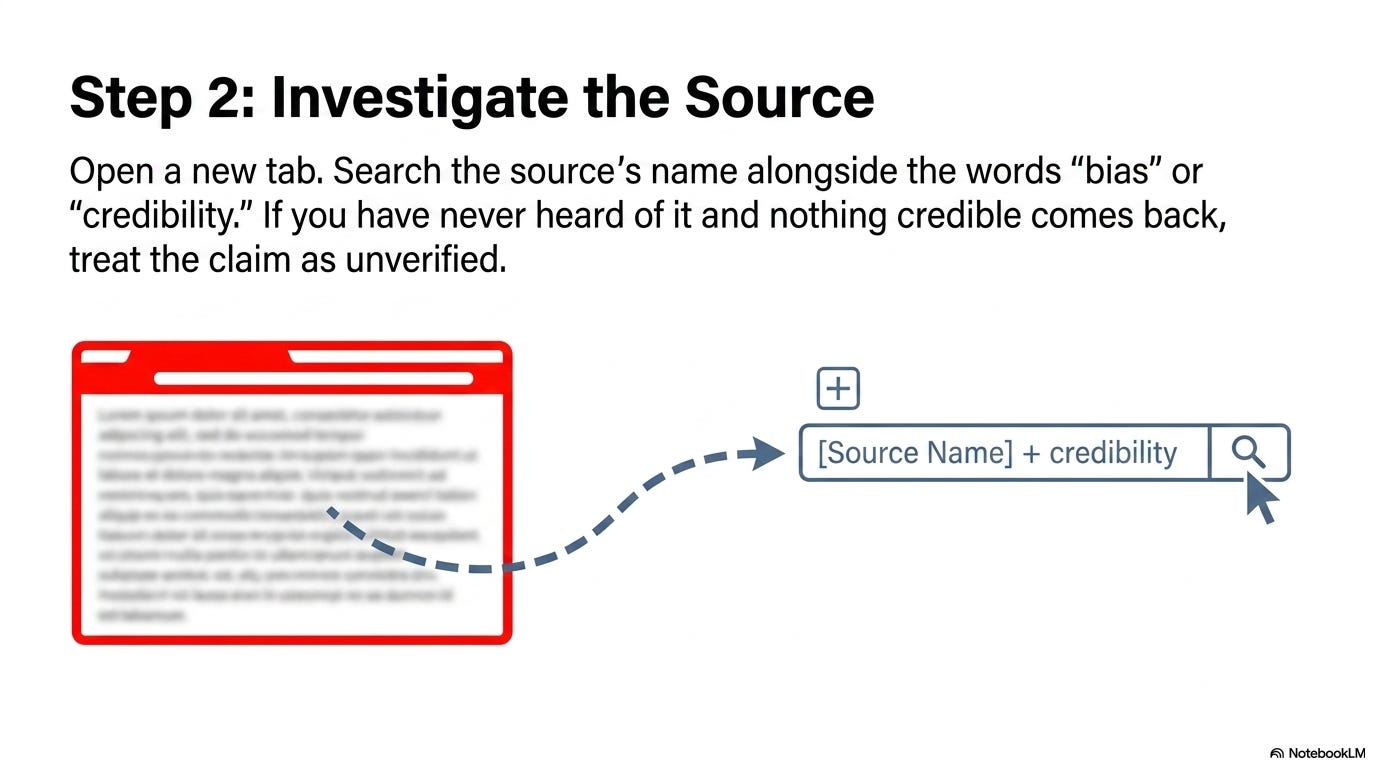
Investigate the source. Do it by leaving the page, not by reading the page harder. You cannot verify something by staring at it. Open a new tab. Search the source’s name alongside “bias” or “credibility.” If you have never heard of it and nothing credible comes back, treat the claim as unverified.
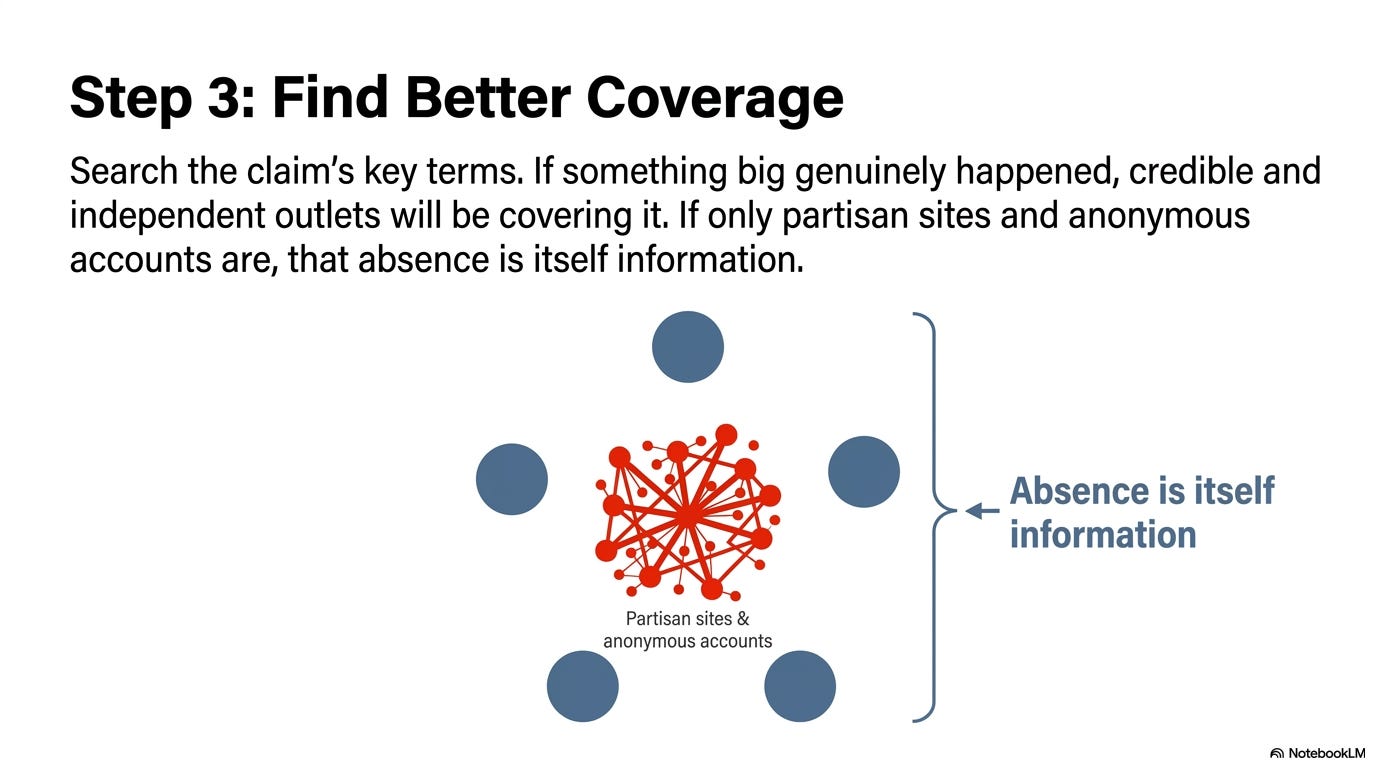
Find better coverage for the claim itself. Search its key terms. If something big genuinely happened, credible and independent outlets will be covering it. If only partisan sites and anonymous accounts are, that absence is itself information.
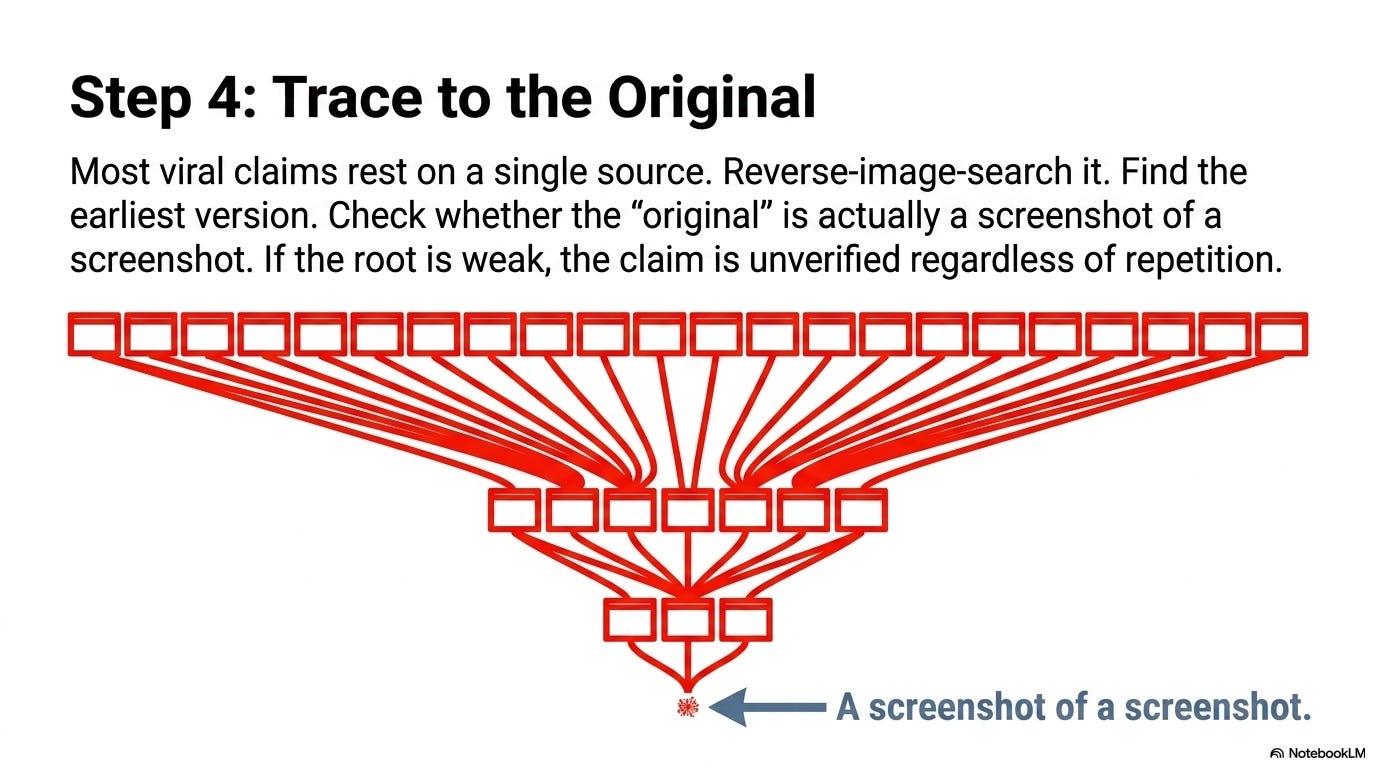
Trace to the original — because most viral claims rest on a single source — that has been reposted until it feels like common knowledge. Reverse-image-search it. Find the earliest version. Check whether the “original” is actually a screenshot of a screenshot. If the root is weak or nonexistent, the claim is unverified no matter how many times it has been repeated.
The al-Ahli case is what SIFT looks like in real time. The thing that would have caught it was refusing to treat one interested party’s unverified claim as established fact, and waiting for independent confirmation. That confirmation arrived inside a day — and pointed the other way.
Why You Must Leave The Page
Most people try to judge a claim by reading it more closely — checking whether it “sounds right,” whether the writing is polished. That does not work, because manipulative content is often well-written, confident, and internally coherent. Disinformation can look completely professional. The only reliable move is to check the claim against the world outside the page. That is called lateral reading, and it is exactly what professional fact-checkers do. Stay on the page and you stay trapped in the frame the page was built to create.
And if you cannot verify it, you do not have to share it. Silence is not a failure. It is a refusal to add one more link to the chain.