


Jewish Onliner is an independent publication. If you find our work valuable, please consider becoming a paid subscriber. You can also subscribe to us on WhatsApp and Telegram. Follow us on Instagram, Discord, and X.
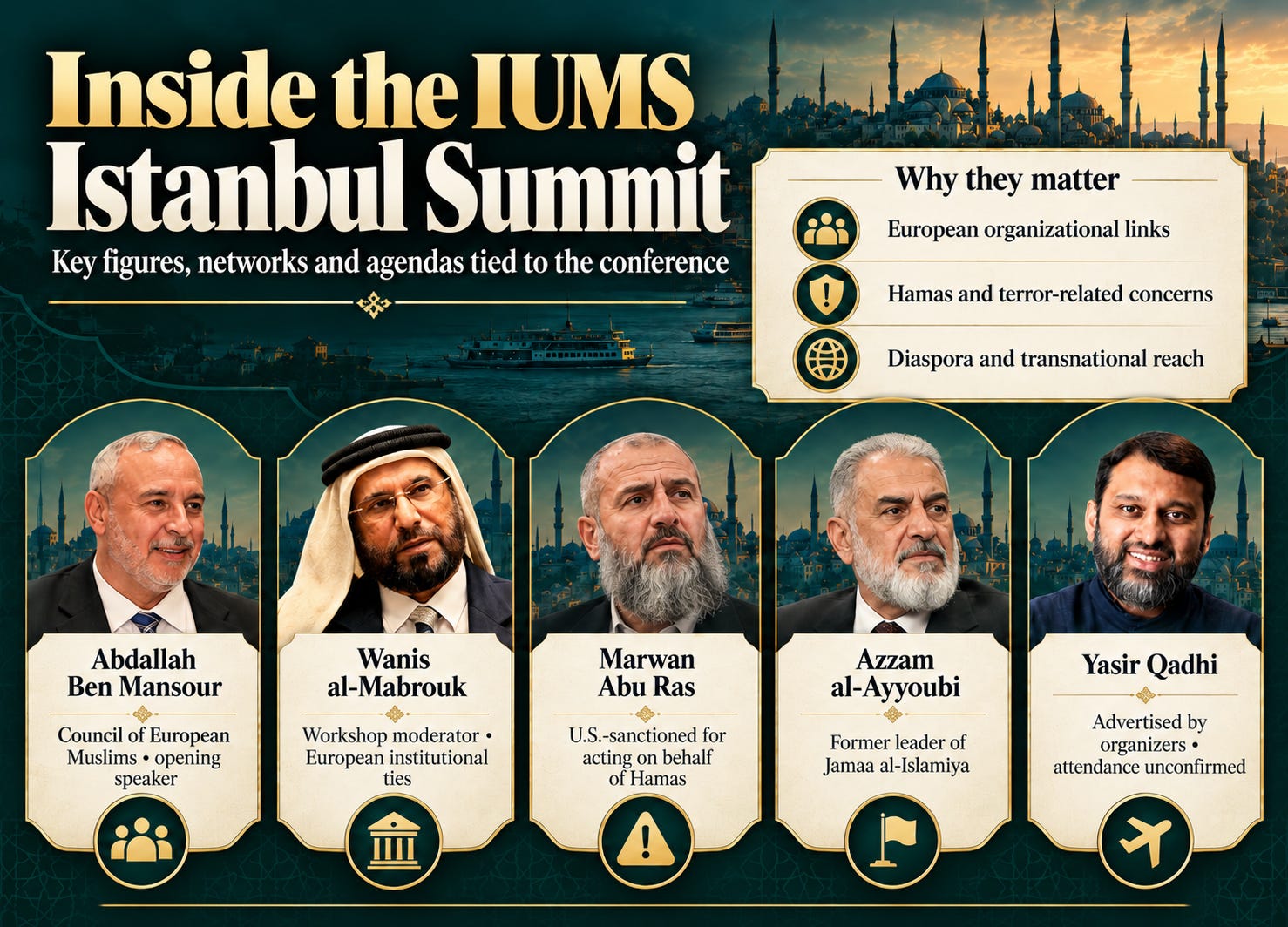
The Qatar-based International Union of Muslim Scholars (IUMS), identified by a French government report as part of the international Muslim Brotherhood organization and described as the Brotherhood’s “transnational scholarly authority” in testimony submitted to the U.S. Senate Judiciary Committee in August 2026, has called for ongoing political coordination among Muslim leaders and the establishment of unity committees in Muslim communities worldwide, including Western countries.
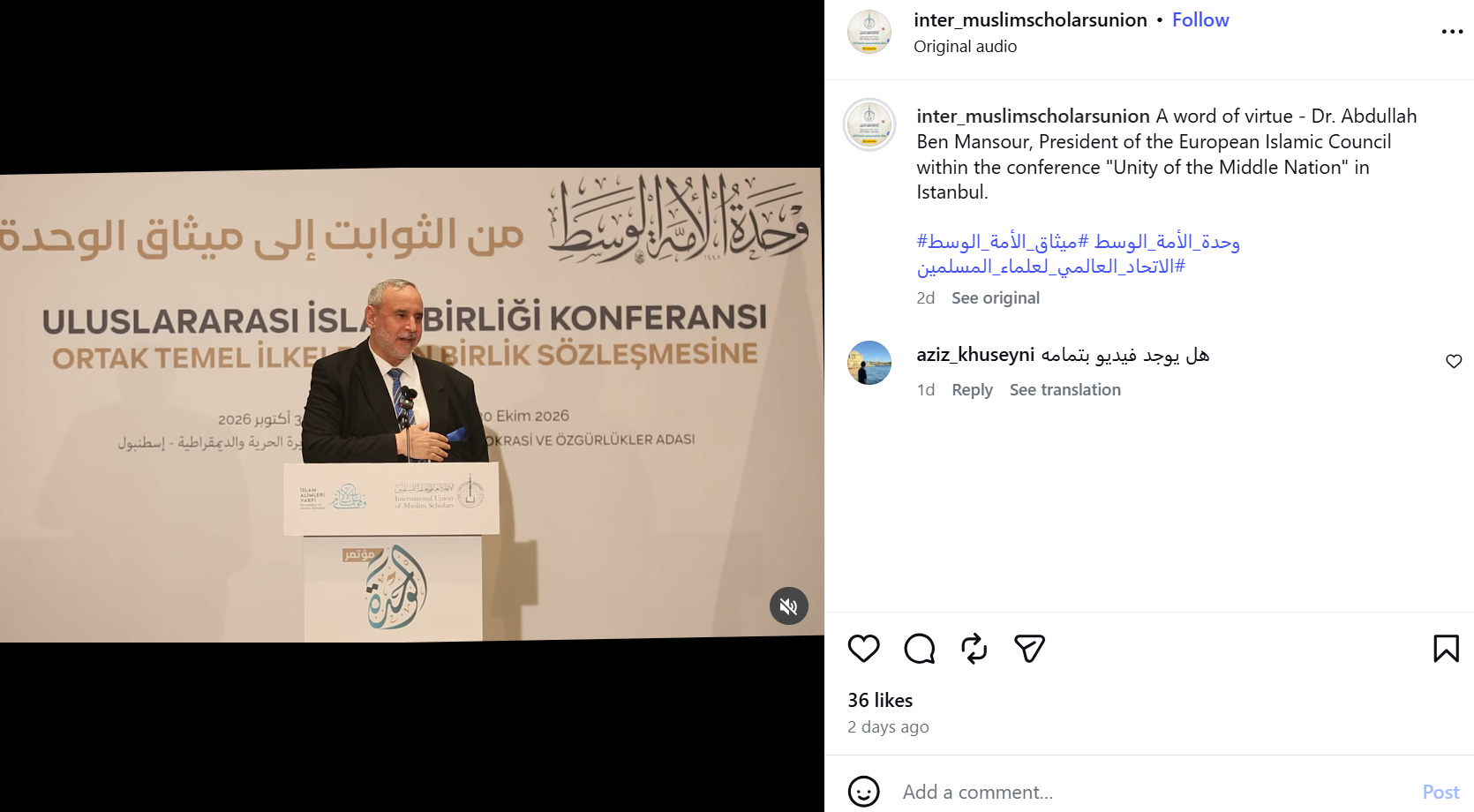
The October 28–30 Istanbul conference brought together European Islamic leaders, Syrian government representatives and a U.S.-sanctioned Hamas figure. Among its opening speakers was Abdallah Ben Mansour, president of the Council of European Muslims, whom the French government identifies as Europe’s representative on the international Muslim Brotherhood’s Shura Council.
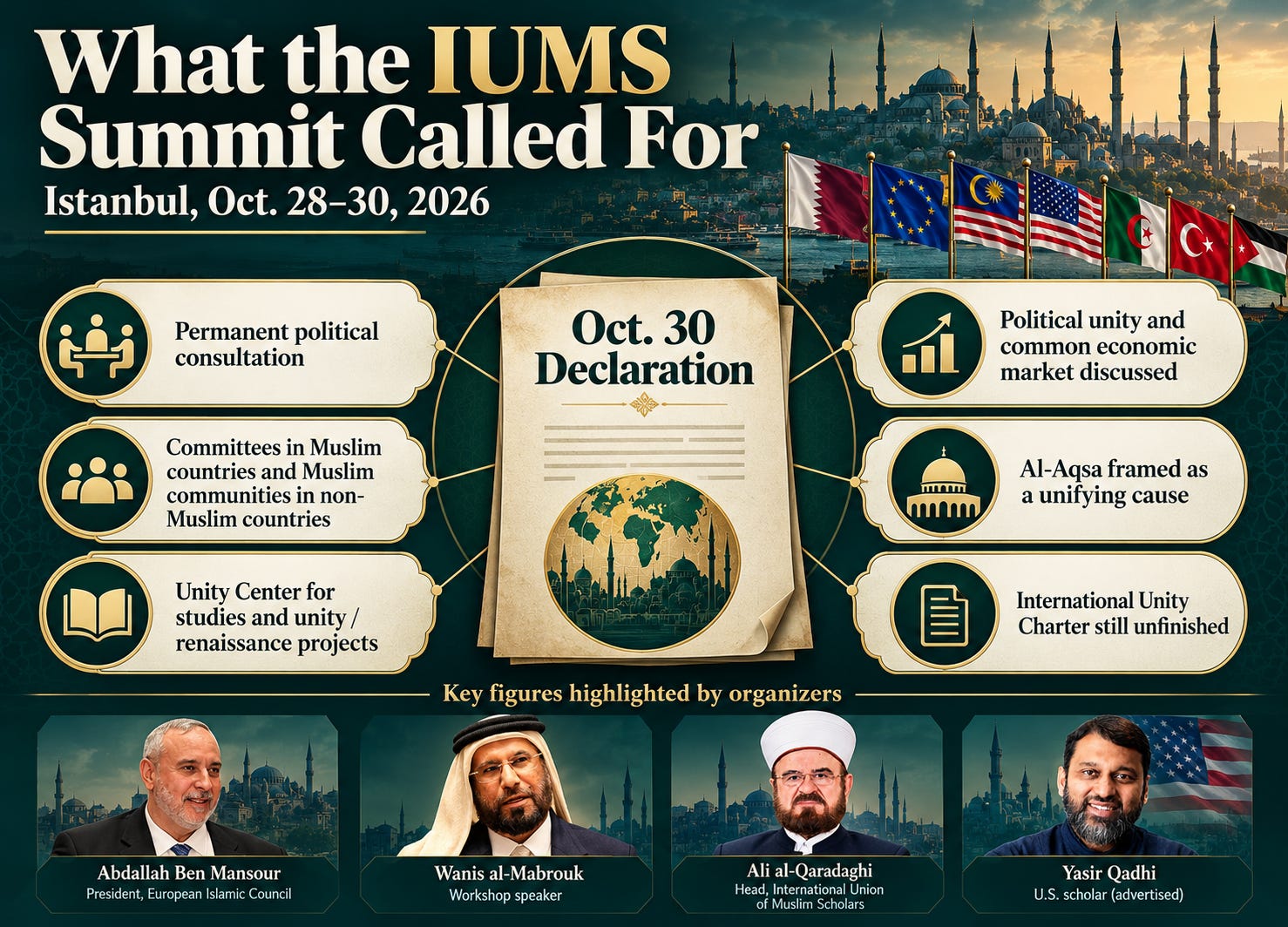
Organizers also advertised Texas-based scholar Yasir Qadhi, chairman of the Fiqh Council of North America, in promotional material featuring the American flag. His attendance has not been independently confirmed. Qadhi previously identified himself as an IUMS member.
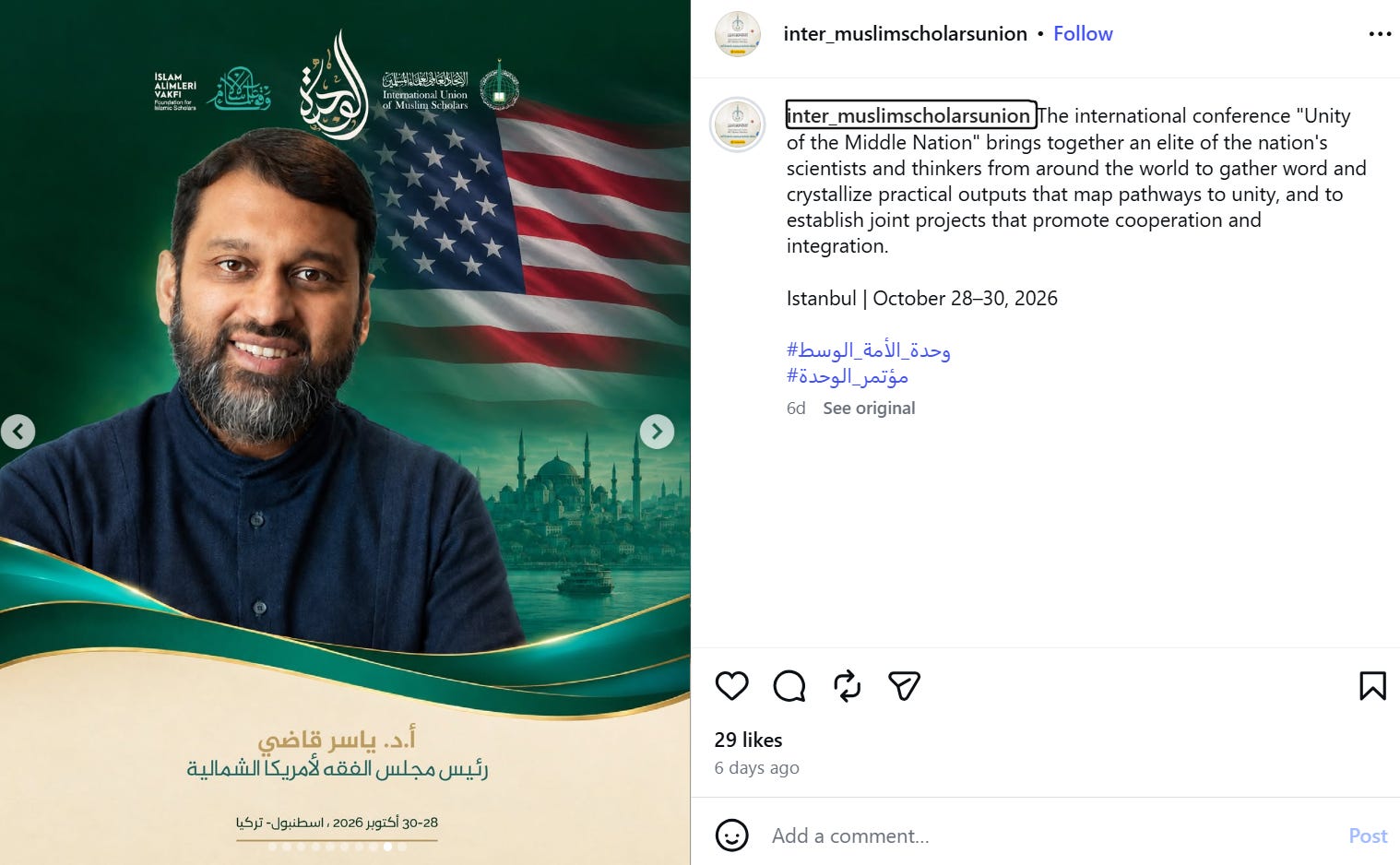
Conference Calls for Global Political Coordination
The conference’s October 30 closing declaration called for establishing a ‘Unity Center for Studies and Unity and Renaissance Projects,’ alongside unity committees in Muslim-majority countries and Muslim communities in non-Muslim countries.
It also emphasized the central importance of Al-Aqsa Mosque and coordinated efforts to advance its cause.
It further called for converting political-cooperation recommendations into concrete programs, appointing institutional contacts and holding regular meetings to evaluate implementation.
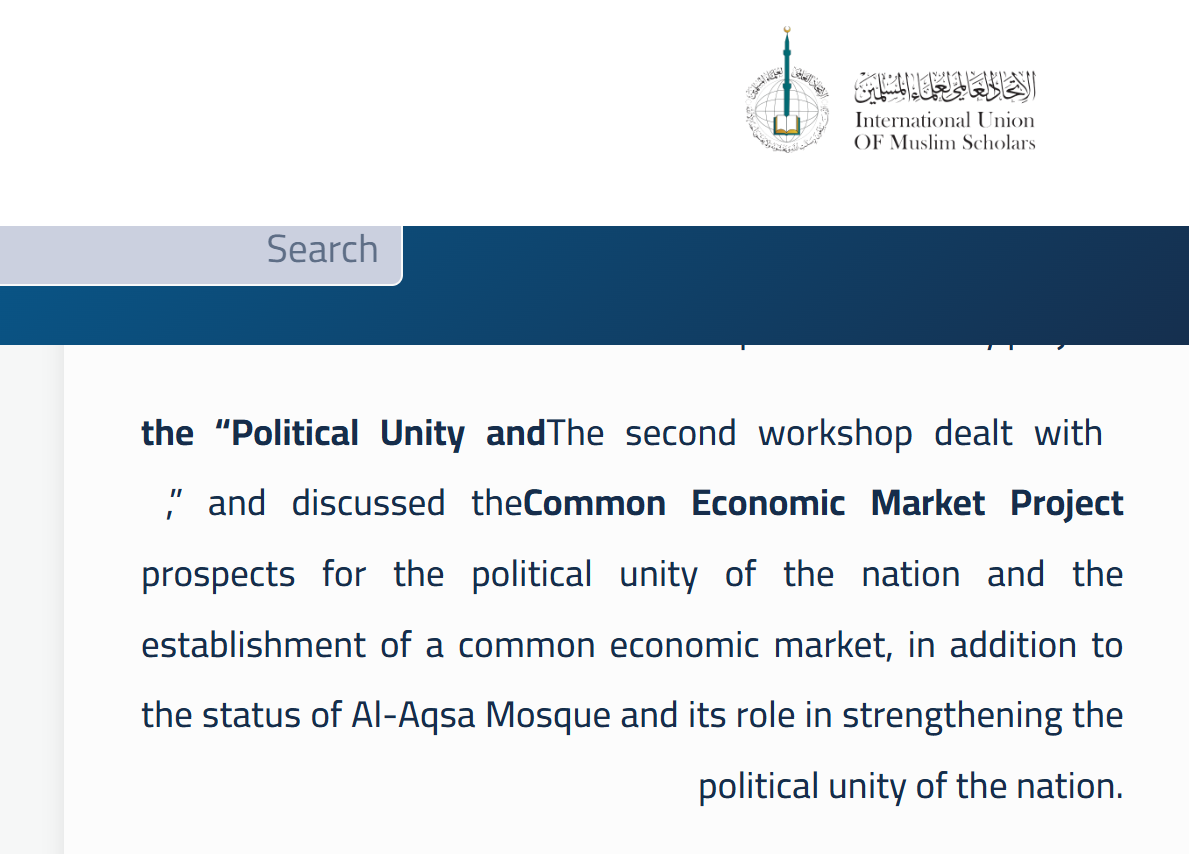
The political dimension was explicit in the conference’s workshops. One examined “political unity and a common economic market,” including Al-Aqsa’s role in strengthening Muslim political unity. Another focused on cooperation among Islamic movements and civil-society organizations.
French Government Identifies IUMS as Brotherhood Structure
A May 2025 French Interior Ministry report describes IUMS as “a structure belonging to the international organization of the Muslim Brotherhood.”
On page 29, the same report identifies Abdallah Ben Mansour as representing Europe within the Shura Council of the International Organization of the Muslim Brotherhood.
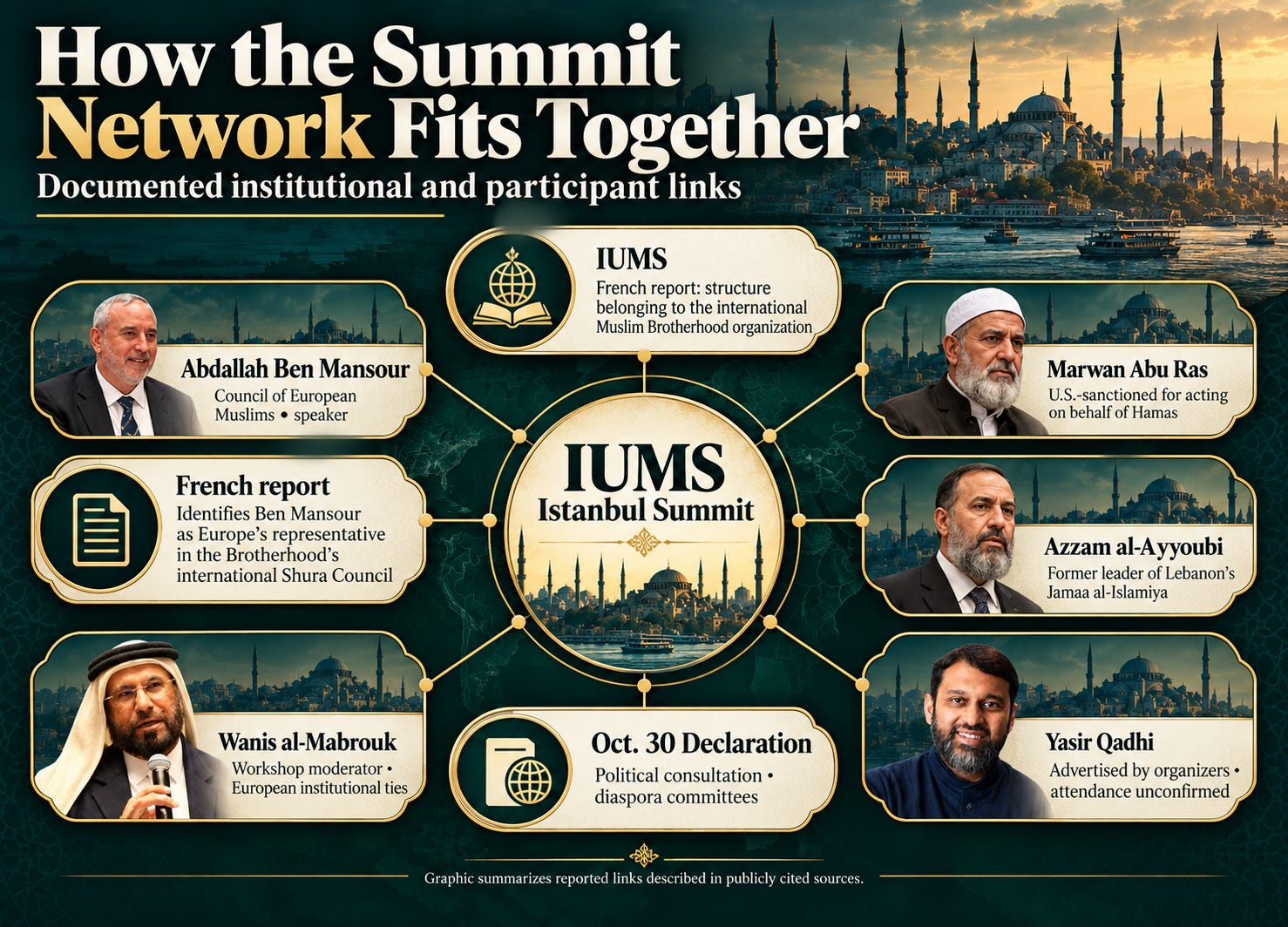
It also documents overlapping leadership between Brotherhood structures and the Council of European Muslims, formerly the Federation of Islamic Organisations in Europe (FIOE). Fouad Alaoui, another senior European council figure, is identified as a member of IUMS’s International Council since December 2023.
IUMS confirmed Ben Mansour’s participation among its opening speakers and published video of his address.
Another senior IUMS official, Wanis al-Mabrouk, has longstanding connections to European Islamic institutions. A 2008 interview identified him as head of education and outreach at the Federation of Islamic Organisations in Europe (FIOE), alongside previous positions at Islamic institutions in Britain. At Istanbul, he moderated the workshop on coordinating Islamic movements and civil-society institutions.
As Jewish Onliner previously reported, European-linked al-Mabrouk was among 15 scholars named in the organization's fatwa, dated March 28, 2025 and published April 1, calling for armed jihad against Israel.

IUMS president Ali al-Qaradaghi chaired the committee responsible for that ruling. Its secretary, Fadl Abdullah Murad, chaired a session on education and reform at the Istanbul gathering.
U.S.-Sanctioned Hamas Figure Among Conference Speakers
The opening session also featured Marwan Abu Ras, chairman of IUMS’s Jerusalem and Palestine Committee. On May 19, 2026, the U.S. Treasury sanctioned Abu Ras for having acted or purported to act on behalf of Hamas.
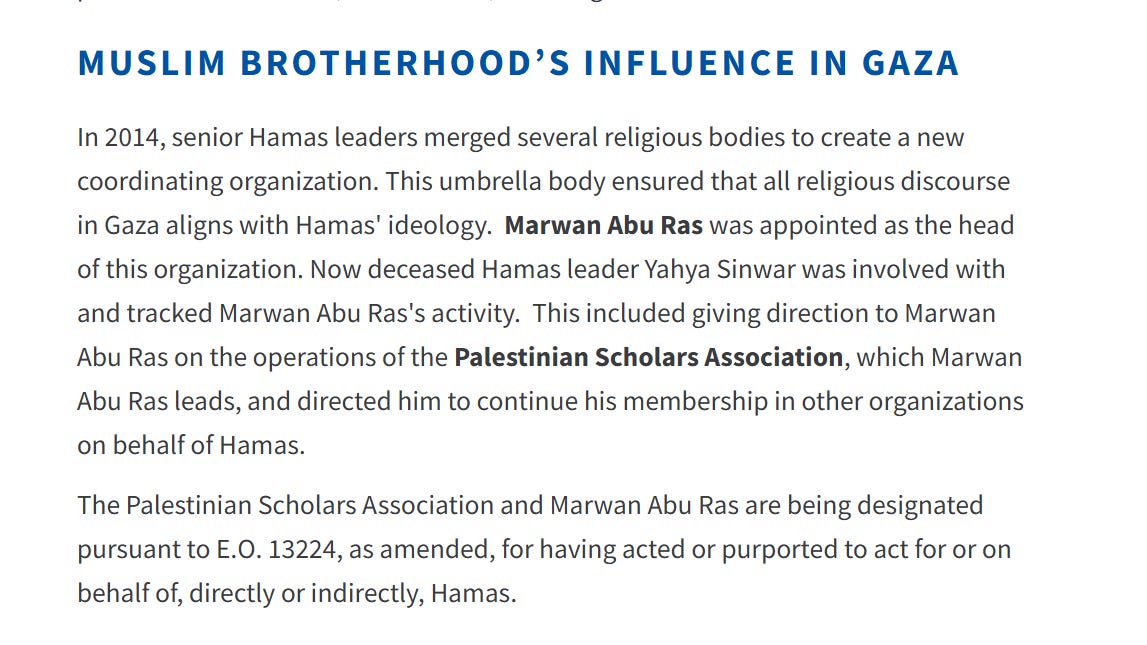
Treasury reported that senior Hamas leaders established a religious umbrella organization in Gaza in 2014 and appointed Abu Ras to lead it, aligning religious messaging with Hamas ideology.
It also identified former Hamas leader Yahya Sinwar as directing Abu Ras’s activities, including instructing him to maintain positions in other organizations on Hamas’s behalf.
Another opening speaker, Azzam al-Ayyoubi, served as secretary-general of Lebanon's Jamaa al-Islamiya from 2016 to 2022. The organization, including its Al-Fajr Forces armed wing, was designated a Foreign Terrorist Organization by the United States in January 2026.
Earlier IUMS Statement Proposed Parliamentary and Military Unification
The conference followed a broader political-unification proposal attributed to IUMS and published by the Muslim Brotherhood’s official website in March 2026.
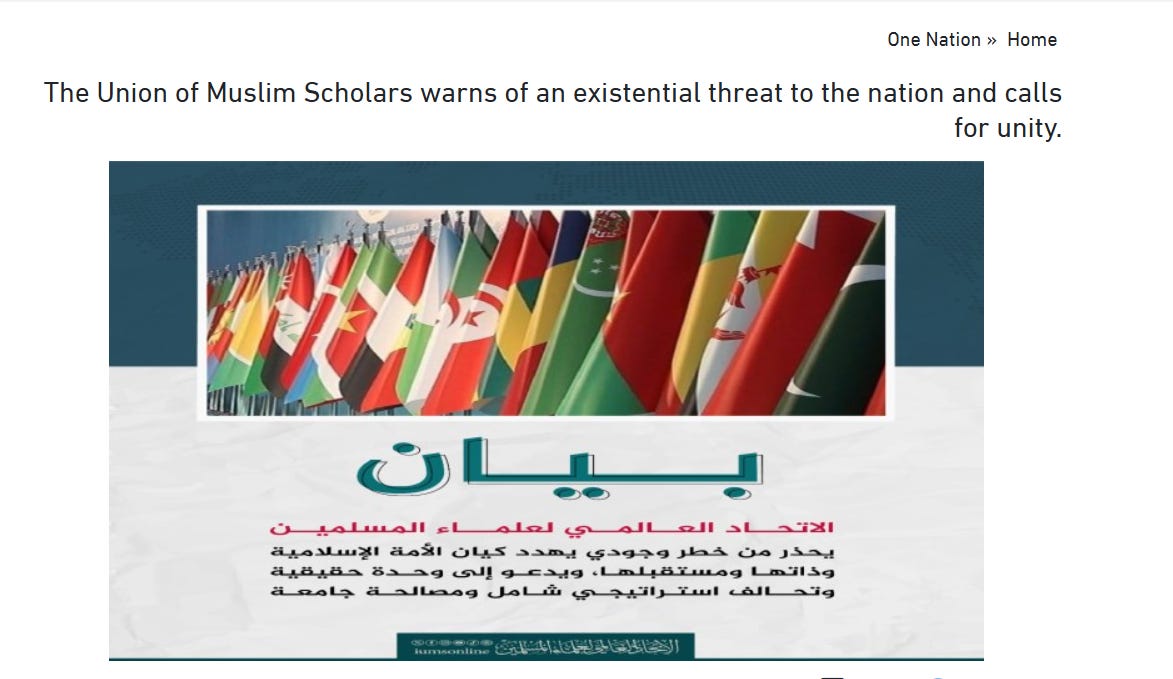
The statement, bearing the names of al-Qaradaghi and IUMS Secretary-General Ali al-Sallabi, called for an EU-style strategic alliance among Muslim-majority countries.
It proposed political, economic, military, social and judicial committees, with the ultimate objective of unifying the Muslim world politically, parliamentarily, economically and militarily.
The statement identified Saudi Arabia, Turkey and Qatar among countries capable of advancing the initiative.
Syria Presents Religious-Unification Model
Syria’s religious affairs minister, Mohammad Abu al-Khair Shukri, also attended the conference and presented Damascus’s Charter for the Unity of Islamic Discourse as a model for religious coordination.
According Shukri, more than 1,800 scholars signed the charter, which was introduced on February 16, 2026.
Syria’s grand mufti, Osama al-Rifai, is also identified by IUMS as a member of its Board of Trustees, establishing an existing leadership connection with Syria’s religious establishment.
After the Summit
The Istanbul conference adopted its closing declaration, but the separate international Unity Charter remains unfinished. Indonesia’s Muhammadiyah organization, whose representative joined the drafting committee, confirmed that participants agreed on the charter’s principal ideas on October 29 and planned to finalize the document remotely during November.
The declaration already establishes an agenda for continued international political and institutional coordination. The leadership, participating organizations and implementation arrangements for its proposed committees, including those serving Muslim communities in Western countries, have not yet been publicly disclosed.