


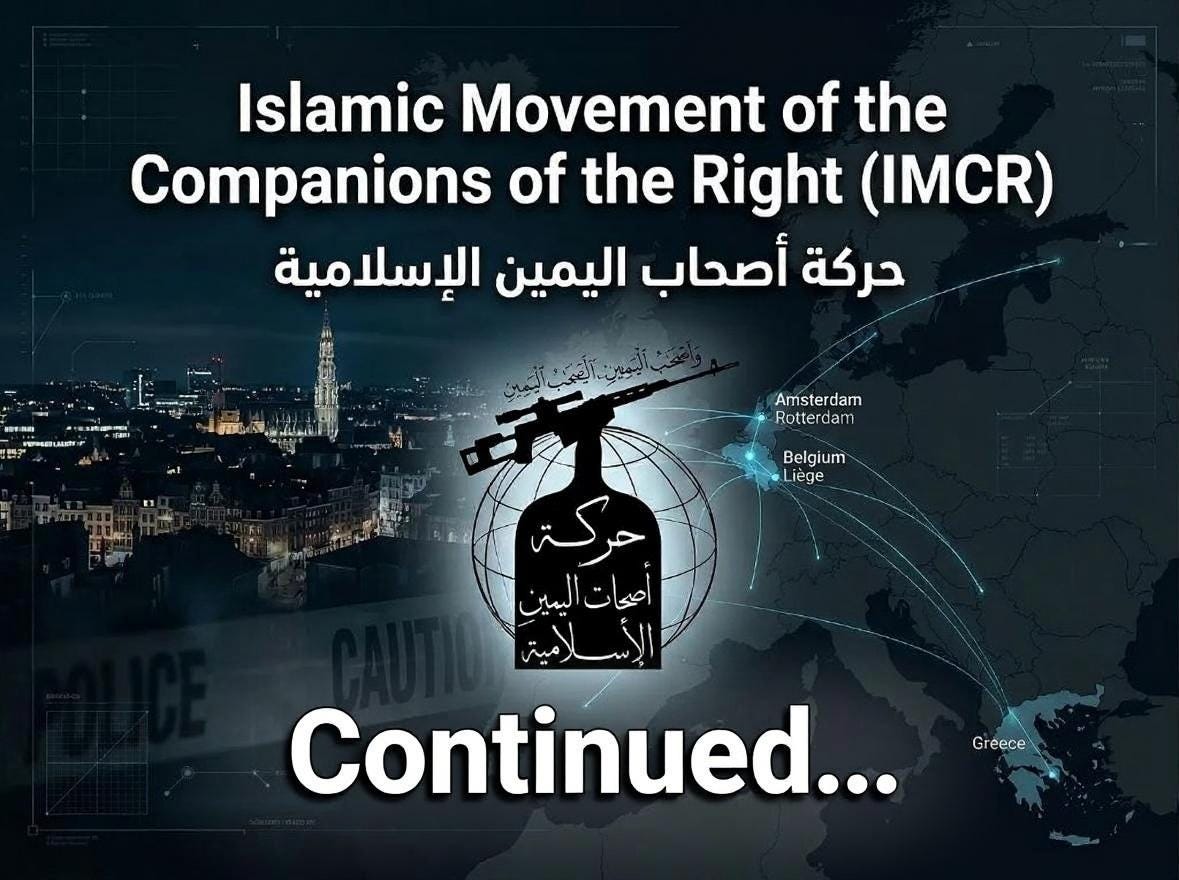
A special report released March 24 by Israel’s Ministry of Diaspora Affairs and Combating Antisemitism supports key elements of Jewish Onliner’s earlier reporting on Harakat Ashab al-Yamin al-Islamia, the group claiming responsibility for a wave of attacks on Jewish institutions across Europe.
The eight-page report echoes Jewish Onliner’s reporting on the group’s alleged Iranian-aligned propaganda distribution patterns and operational style, while also stating that “Ashab al-Yamin” may be linked to Harakat Ansar Allah al-Awfiya, a U.S.-designated Iraqi militia.
As of the report’s publication, the group had claimed seven incidents across Europe, including attacks in London and Antwerp on March 23. Public reporting, however, does not establish all of those claims as confirmed, and the ministry report itself notes that the claimed Greece incident was unverified and may have been disinformation.
Government Report Supports Key Jewish Onliner Findings
Jewish Onliner’s analysis published on March 16 identified several critical indicators suggesting possible ties to Iran’s “Axis of Resistance” network — conclusions now partly echoed in the March 24 special report.
The government report states that attack videos circulated “rapidly on Telegram channels associated with Shiite militant networks aligned with Iran, including channels linked to Hezbollah and the Islamic Revolutionary Guard Corps (IRGC)” — precisely the distribution pattern Jewish Onliner documented through analysis of pro-Iran Axis of Resistance channels.
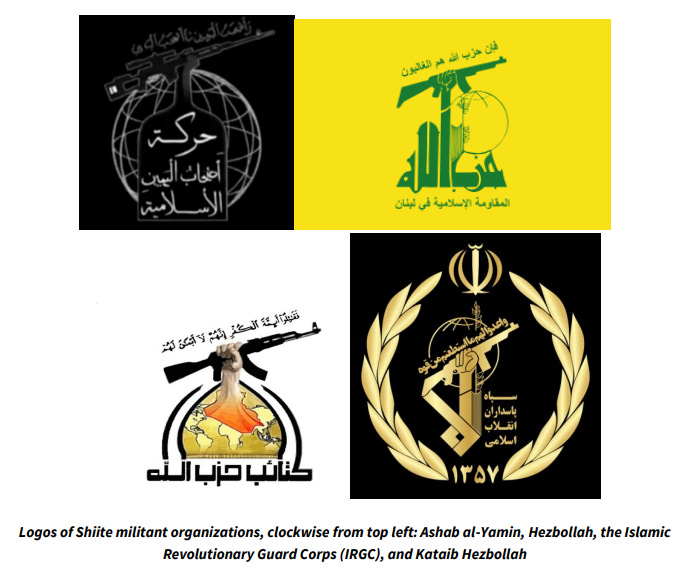
Both investigations identified the group’s visual identity as deliberately mimicking Iranian-aligned organizations like Hezbollah and Kataib Hezbollah, with logos featuring raised arms holding rifles against global backgrounds — though the use of a Dragunov-style rifle rather than the more familiar AK-pattern rifle may help create plausible deniability.
The report supports Jewish Onliner’s earlier assessment of the group’s “decentralized operational model” using local actors and psychological warfare tactics, noting that “most attacks caused property damage rather than casualties” with intimidation as the “primary purpose.”
Potential Connection to U.S.-Designated Terror Group
The Israeli government report says “Ashab al-Yamin” may be linked to Harakat Ansar Allah al-Awfiya (HAAA), an Iraqi militia designated by the U.S. State Department in June 2024. HAAA has “previously used the alias ‘Ashab al-Yamin,’” according to the report. The U.S. Department of National Intelligence identified AAA as an Iran-backed Iraqi Shia militia.
The report argues the timing is notable, saying the attacks followed the reported killing of an HAAA leader in a joint U.S.-Israeli operation on February 28 and may represent retaliatory messaging.
A pro-Iran account on X claimed the group is affiliated with the “Iraqi resistance” when circulating video of the March 15 Amsterdam attack.
Recruitment and Operational Cells
The government report identifies two possible recruitment mechanisms: “directed lone actors” radicalized online, or “contracted operatives” — local criminals or youth recruited through intermediaries, consistent with Iranian networks’ previous European operations.
Dutch police arrested four individuals aged 17-19 from Tilburg after the Rotterdam synagogue arson, stopping them near another synagogue where authorities suspected they may have been preparing an additional attack. The report notes that the Amsterdam attack occurring the night after these arrests "suggests that multiple operational cells may be active simultaneously."
Group Claims Additional Attacks
Since Jewish Onliner’s original publication on the group, the group has claimed responsibility for two additional attacks, expanding its reach to Britain and Belgium.
On March 22, attackers set fire to four ambulances owned by Hatzola, a Jewish non-profit, in the parking lot of Machzike Hadath Synagogue in Golders Green, London. The BBC reported that law enforcement is seeking three suspects. Authorities have classified the incident as an antisemitic hate crime and have not publicly characterized it as terrorism, despite the group's claim of responsibility. Police later arrested two men, who were subsequently released on bail while the investigation continues.



The following day, a vehicle was torched on Appelmansstraat, a major thoroughfare in Antwerp’s Jewish Quarter. Belgian prosecutors arrested two minors shortly before midnight and are investigating the case as suspected antisemitic arson; separate reporting said a judge was requested on charges including participation in the activities of a terrorist group.
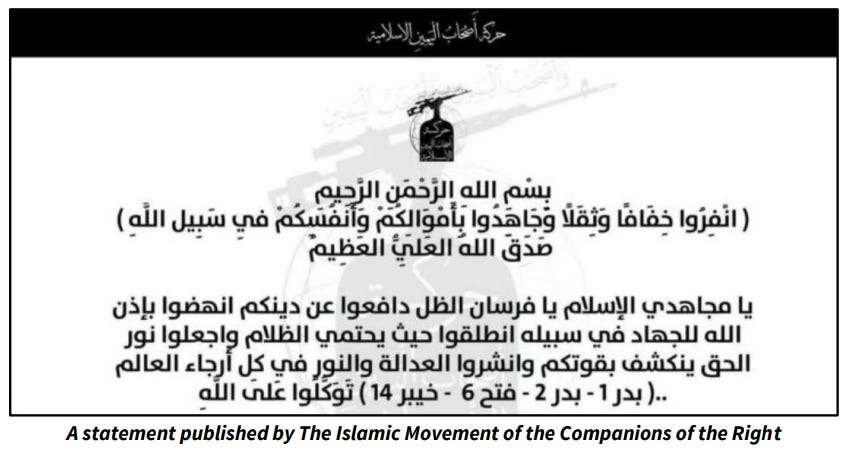
In the group’s video claim, Ashab al-Yamin described Antwerp as having “a large Zionist community,” warning that “operations will continue to escalate and intensify until the liberation of our occupied lands in beloved Palestine and revenge for the blood of the Palestinians, Lebanese, and all Muslims.”
Pattern of Psychological Warfare
According to Long War Journal, the group has claimed seven incidents between March 9 and March 23 across Belgium, the Netherlands, Britain, and Greece, though the claimed Greece incident remains unverified
After the March 15 Amsterdam explosion, the group released a video warning: “To all the people of the world, especially in the European Union, immediately distance yourselves from all American and Zionist interests, facilities, and what is affiliated with them.”
CBS News reported receiving a similar message Monday: “We’ll keep threatening US and Israeli interests worldwide until we’ve avenged every child in Gaza, Iran, Lebanon, and the resistance nations.”
The Israeli government assessment concludes that the attacks “appear designed primarily to generate psychological impact, intimidate Jewish communities in Europe, and signal Iran’s ability to project influence beyond the Middle East.”