


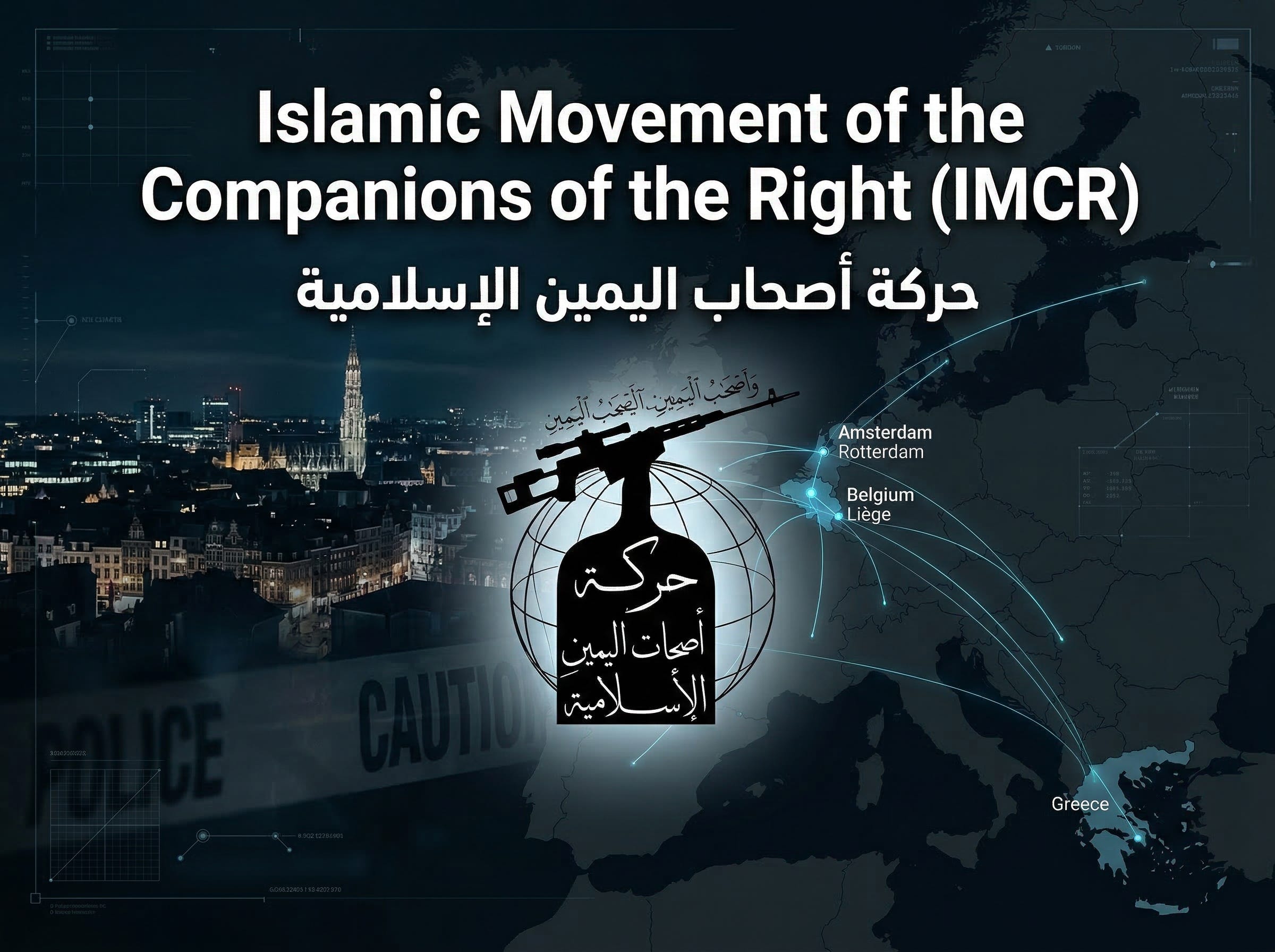
A previously unknown group — Islamic Movement of the Companions of the Right (IMCR) — has emerged online, claiming responsibility for several antisemitic attacks on Jewish institutions in Europe in March. Belgian prosecutors are analyzing a circulating Liège-related video, while Dutch authorities are investigating possible links between the incidents.
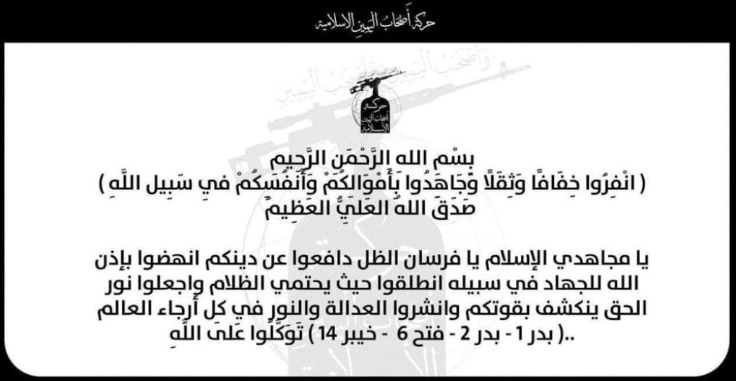
The name also appears in Arabic as “Harakat Ashab al‑Yamin al‑Islamiyyah,” and its responsibility claims have circulated rapidly via Telegram channels associated with the “Axis of Resistance,” according to Long War Journal. Other reporting has consistently stressed that none of these claims have been independently verified and that authorities are still assessing the material as investigations continue
What is IMCR—and what is still unknown
Open-source reporting to date describes IMCR as a “previously unknown” label that began posting (or being credited with) claim materials only after the March attacks, leaving basic questions unresolved: whether it is a real organization with command-and-control, a temporary cover identity used by other actors, or a fabrication attached to unrelated crimes.
FDD’s Long War Journal said it could not verify the original source of the group’s statement and a key Liège video, and it separately reported a second “Greece” claim that lacked corroborating open-source evidence on the date asserted—an early indicator that the online brand may be outrunning verified facts.
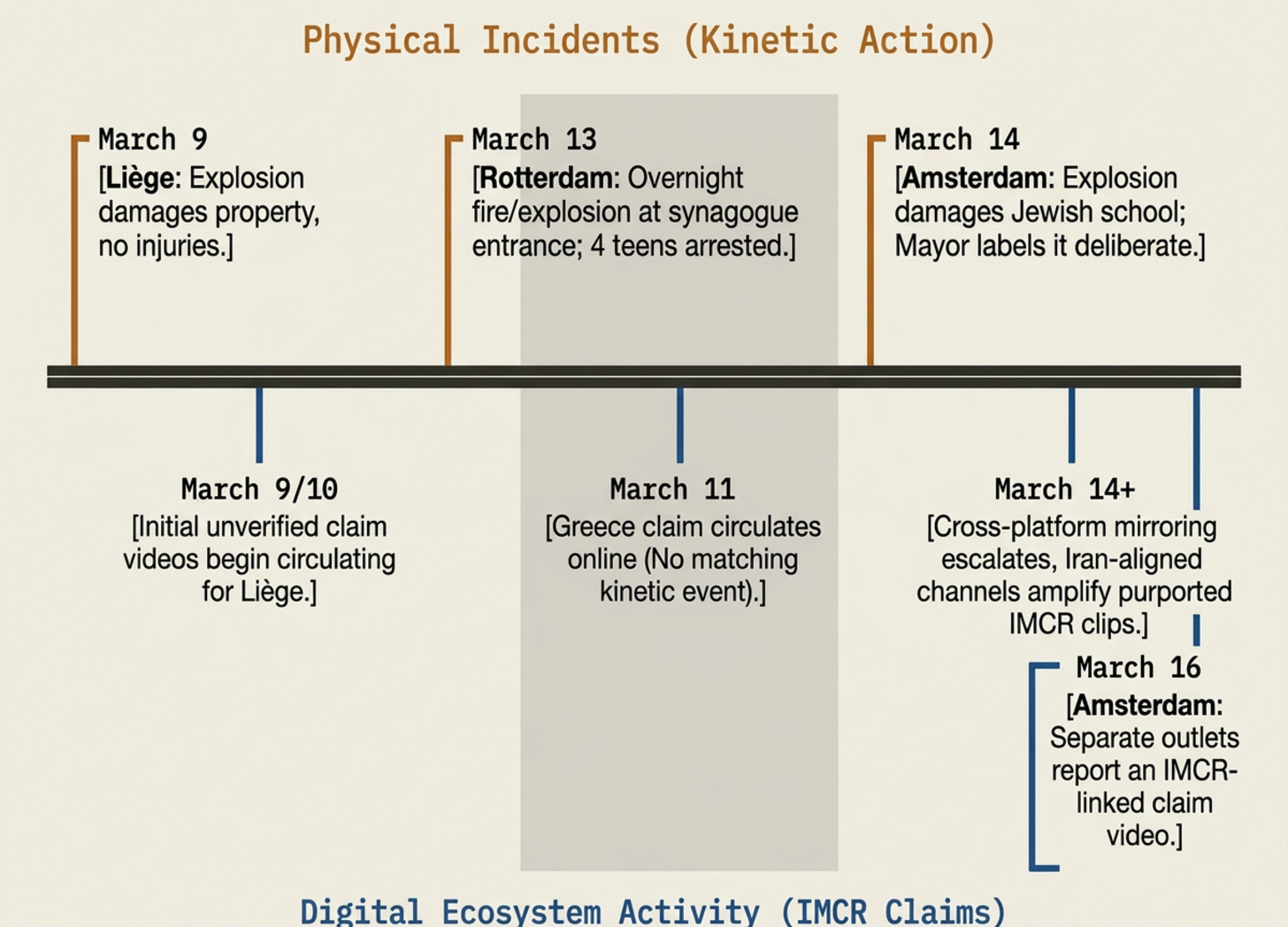
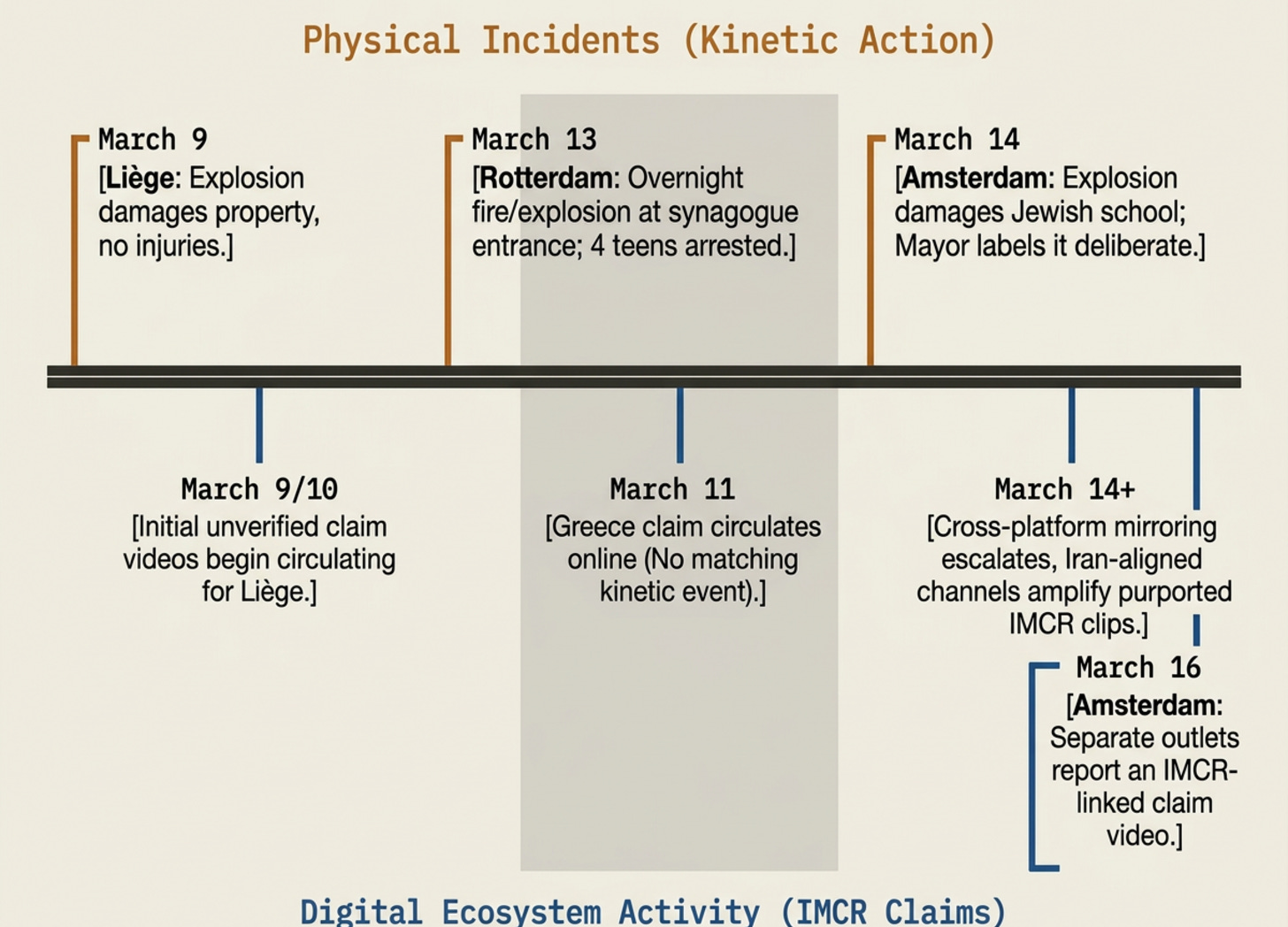
Timeline of Attacks
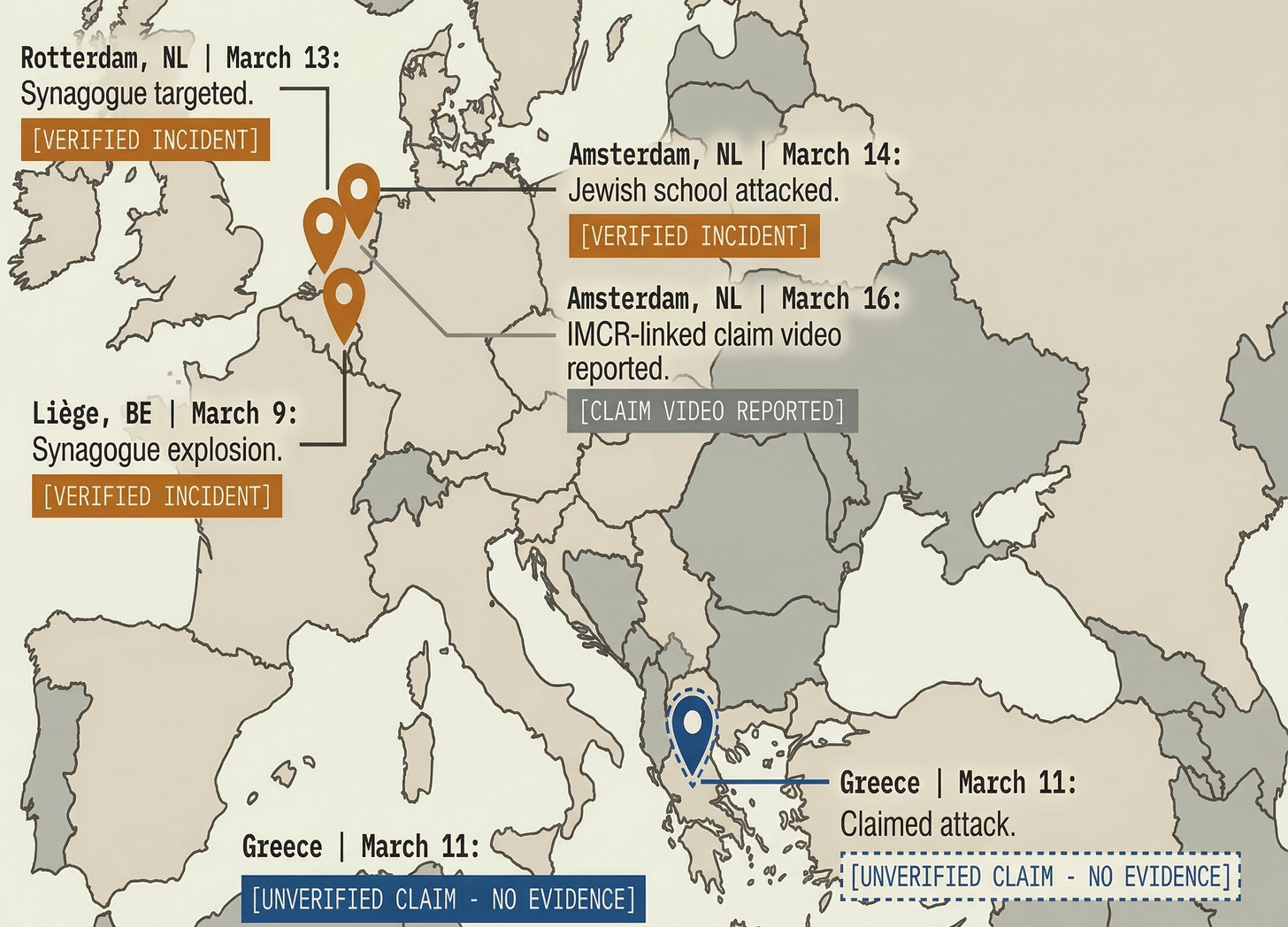
Below is a consolidated timeline based on publicly reported incidents and the status of online claims:
March 9 — Liège, Belgium: Explosion outside the synagogue damages property; no injuries reported; Belgium’s federal prosecutor leads the case.
March 11 — Greece: an IMCR-branded claim circulated online alleging an attack on a ‘Zionist,’ but no location was specified and Long War Journal reported no corroborating open-source evidence of a matching incident.
March 13 — Rotterdam, Netherlands: an overnight explosion and fire damaged a synagogue entrance; four teenagers were arrested after police stopped a suspicious car near another synagogue.
March 14 — Amsterdam, Netherlands: Explosion damages a Jewish school; mayor calls it a deliberate attack; separate outlets report an IMCR-linked claim video.
March 16 — Amsterdam, Netherlands: Explosion damages an office building; police investigate after the same group that claimed the Jewish school attack also claimed responsibility, but authorities have not confirmed the claim or any Jewish-community link to the building.
Explosion in Liège
Belgian police reported a blast at around 04:00 local time in front of the synagogue in Liège that damaged windows across the street while causing no injuries, and the city’s mayor described the incident as “an antisemitic act.”
Belgium’s federal prosecutor’s office is leading the investigation, and Belgian broadcaster VRT reported that prosecutors were analyzing circulating footage to determine whether it is genuine and where it originated, while also urging the public not to distribute the video.
Rotterdam Arrests
In Rotterdam, Dutch police arrested four teenagers after an overnight fire and explosion damaged the entrance of a synagogue at about 3:40 a.m., with police reporting no injuries and stating the blaze went out on its own.
A JTA report carried by The Forward said a group calling itself IMCR claimed responsibility via a video posted to social media, but investigators had not confirmed its authenticity or any direct Belgium-Netherlands link.

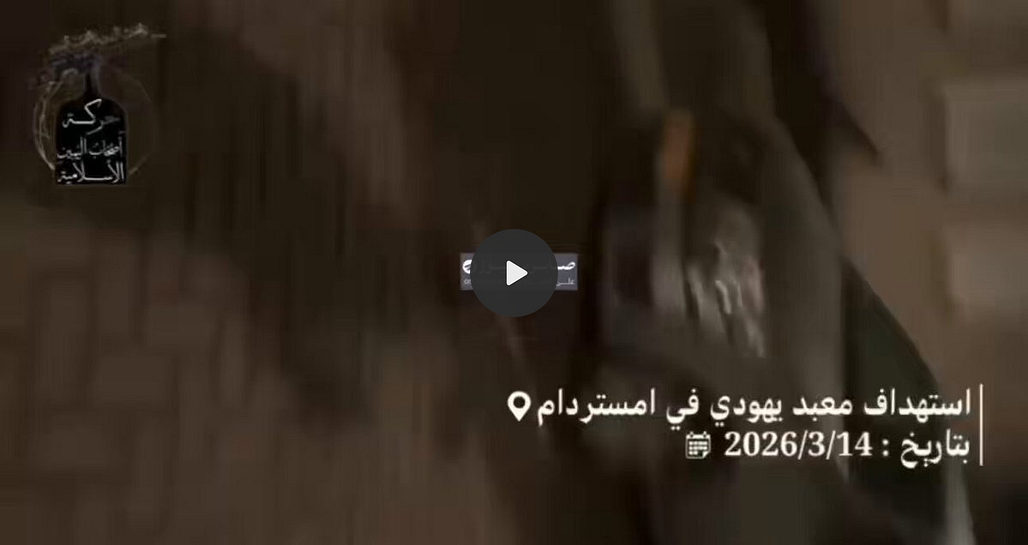
IMCR Claims Responsibility for Amsterdam Attack
In Amsterdam, an explosion caused minor damage to a Jewish school, and the city’s mayor described it as “a deliberate attack against the Jewish community,” with no injuries reported. The attack was also subsequently claimed by IMCR.
The Times of Israel reported that social-media accounts linked to Iran’s Revolutionary Guard circulated a purported IMCR-attributed clip of the Amsterdam attack.
A Signal-to-Noise Problem
IMCR-branded media content has included a claimed attempted attack in Greece, but FDD’s Long War Journal said it found no open-source evidence of suspected terrorism or attack matching the video’s claim and could not verify the source of the footage.
That gap matters because the same online channel dynamics—rapid reposting, re-editing, and cross-platform mirroring—can create an impression of coordinated operations even when the underlying material is unverified or repackaged, especially as security forces work to correctly identify the group and its members across Europe.
Iran Connection Under Investigation
Long War Journal reported that Telegram channels aligned with the “Axis of Resistance,” which include Hezbollah, the IRGC, and other radical Shia channels, widely disseminated the IMCR-branded materials and highlighted the brand resemblance to Iranian-aligned militant aesthetics, while stressing that it remains unclear whether IMCR is authentic, a front group, or a hoax. The timing has coincided with public warnings from Iranian officials that European states joining the U.S. and Israel could face retaliation.
The broader security backdrop has also been shaped by public Iranian warnings: EUobserver reported that Iran’s deputy foreign minister Majid Takht‑Ravanchi said European states joining the US and Israel in attacks on Iran would be “legitimate targets for Iranian retaliation,” a statement that European outlets have cited as part of heightened concern about spillover.
What to Watch Next
The next decisive facts are likely to come from prosecutorial findings: whether the videos are authentic and traceable, whether suspects in the Netherlands have provable links to claim-material producers, and whether cross-border coordination can be established beyond thematic similarities.
In the interim, IMCR is best understood as an unverified claim label attached to real incidents in Belgium and the Netherlands and amplified through Iran-aligned online channels, rather than a confirmed organization shown to have directed them.