



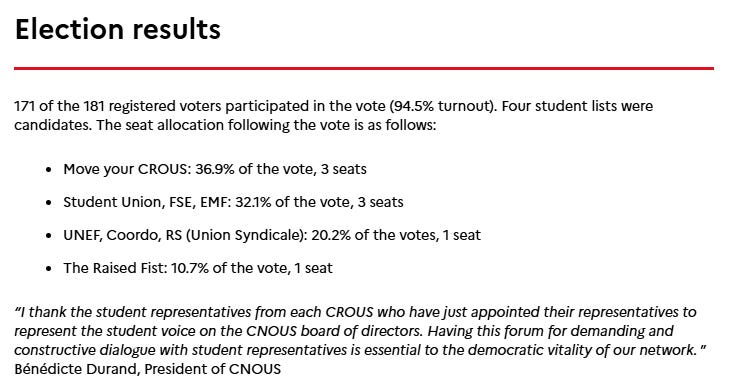
On 1 April 2026, a joint student slate bringing together Union Étudiante, the Fédération syndicale étudiante, and Étudiants musulmans de France (EMF) won three of the eight elected student seats on the board of the Cnous, France’s national student welfare body. The outcome drew wider scrutiny because a French government report links EMF’s origins to the network that became Musulmans de France, which the report identifies as the country’s principal branch of the Muslim Brotherhood. Official results show the coalition took 32.1 percent of the vote, matching the three seats won by the FAGE-backed “Bouge tes Crous” list, which finished first with 36.9 percent.
The Muslim Brotherhood Angle
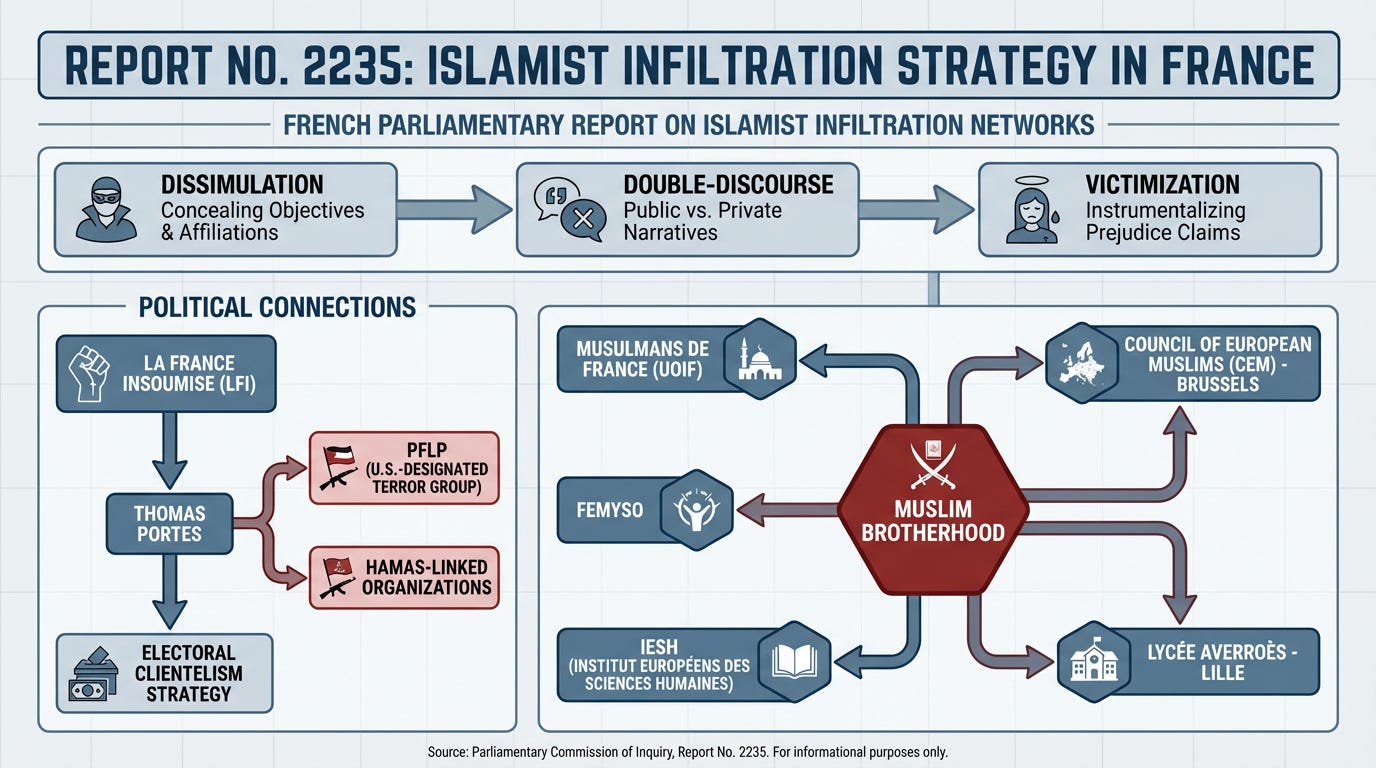
That same report identifies Musulmans de France as the principal French branch of the Muslim Brotherhood and presents EMF as part of a broader ecosystem of religious, educational, and civic structures built over time around that movement. It says EMF is active in major university cities and specifically cites Orléans and Strasbourg as places where it is represented in CROUS governance.
The report goes further than campus organizing alone. It says 139 places of worship are affiliated with Musulmans de France, with 68 more considered close to the federation, and describes a wider institutional presence spanning preaching, education, charity, youth activity, and local association life. The report argues that this influence is often exercised through local “ecosystems” rather than through overt confrontation.
It also states that, as of September 2023, 21 Muslim confessional schools educating roughly 4,200 pupils were identified as linked to the movement. That broader finding helps explain why an election result inside the student welfare system has been read by some French officials and commentators as part of a larger long-term contest over institutional influence.
From Intelligence Concern to National Politics
The issue has since moved well beyond specialist security circles. Reuters reported that President Emmanuel Macron convened senior ministers in May 2025 to discuss the report’s findings, which warned of gradual ideological infiltration through local proxies and civil-society networks rather than through direct violence.
During a 6 January 2026 Assembly debate, Interior Minister Laurent Nuñez said “entryism” was not clearly defined in law and argued that the state needed sharper legal tools to address it, including in the intelligence sphere. Two weeks later, the National Assembly adopted a resolution urging the European Union to place the Muslim Brotherhood on the EU list of terrorist organizations.