


This guest op-ed is written by Hadi Mahdeyan, an Iranian international student at Yale University, and a 2025-2026 fellow at the Committee for Accuracy in Middle East Reporting and Analysis (CAMERA).
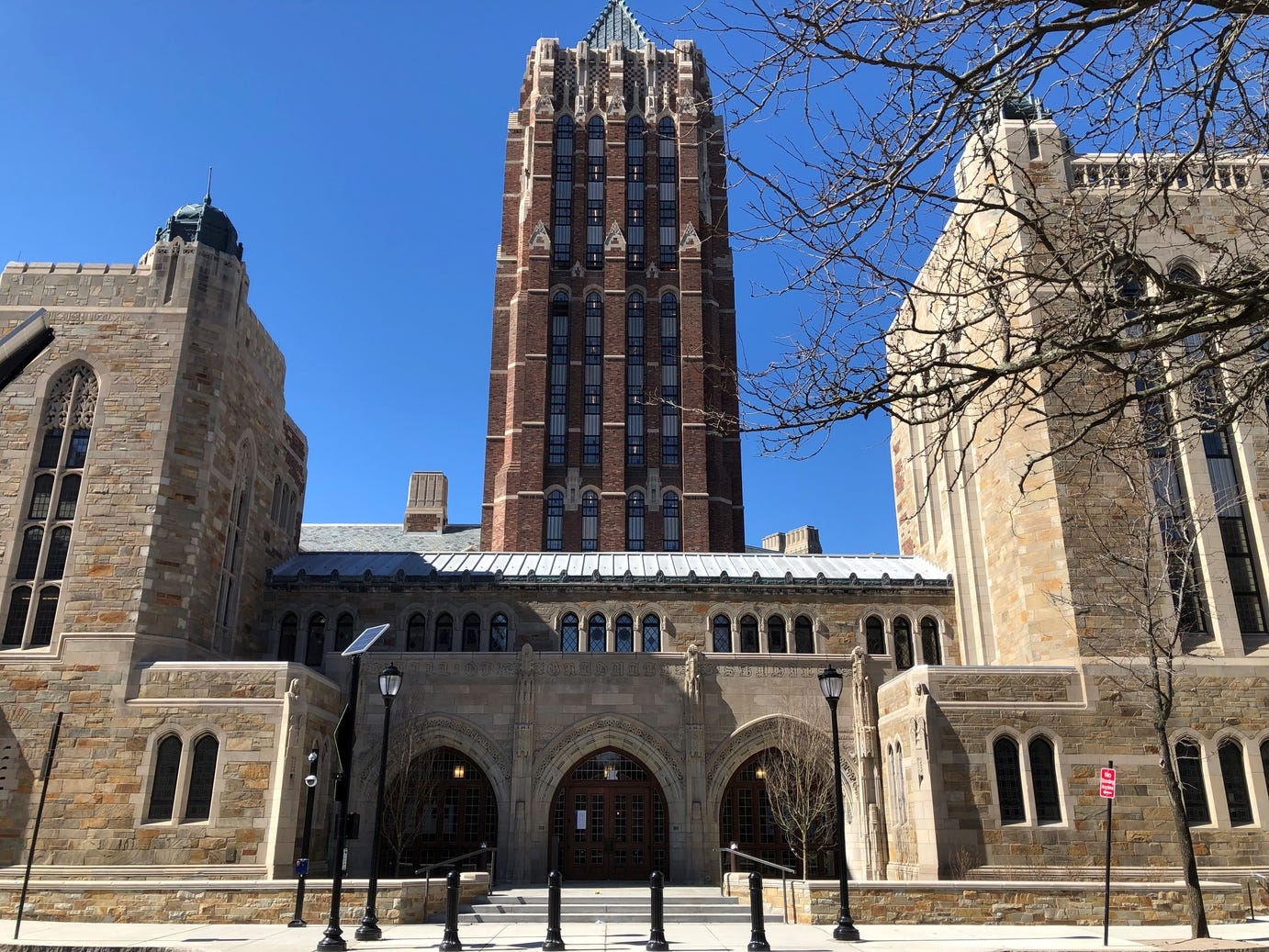
When Yale launched the Program for the Study of Antisemitism (YPSA) in 2011, it was hailed as an academic effort to examine the longest hatred with rigor and depth. Fourteen years later, the program again promised scholarly rigor and attention to both ancient and contemporary antisemitism, including contested topics such as Zionism. Now almost a year after its 2025 relaunch, the YPSA has developed into an institutional effort to dodge the hardest questions surrounding antisemitism. The program avoids analyzing antisemitism in modern anti-Zionist movements by confining itself to safer historical and abstract discussions.
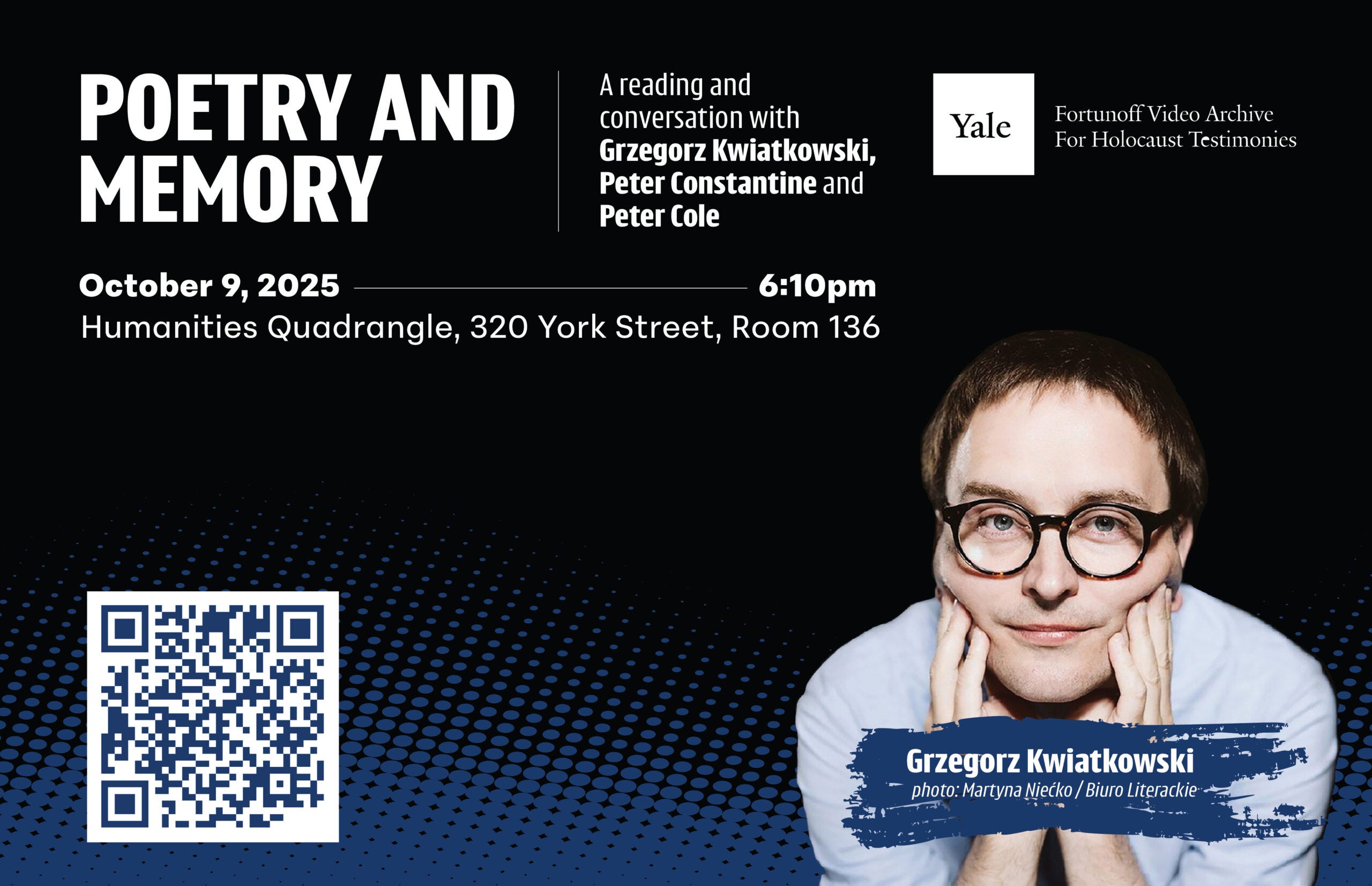
YPSA’s 2025 work was dominated by lectures, book talks, and conferences, mostly co-sponsored by other Yale organizations, often making them indistinguishable from general humanities and Jewish studies programming elsewhere at the university. Most of YPSA’s recent events such as The Many Lives of Anne Frank, The Fate of Bulgaria’s Jews during WWII, and Poetry and Memory, address topics worthy of study on their own, but taken together they situate Jews as a secondary subject within broader historical and cultural narratives, rather than as the central analytical focus of antisemitism itself.
When YPSA does address Zionism or contemporary antisemitism directly, it does so from a safe analytical distance, primarily offering conceptual overviews. An event such as The Ideology of Settler Colonialism and the Israel-Palestine Conflict treats anti-Zionism as an intellectual object rather than a critical movement whose rhetoric and practices contribute directly to antisemitism. Another talk titled Campus Antisemitism, Past and Present, functions as an introductory conversation focused on the personal experiences and institutional background of the YPSA’s new managing director. In both cases, the program’s emphasis on framing and retrospection creates a noticeable distance from examining how antisemitism operates within contemporary political movements, including anti-Zionist ones.
The same safe distance characterizes YPSA’s limited research output. The program’s most visible research release in 2025 is a survey of anti-Israel and antisemitic attitudes among young voters, which presents data with minimal interpretation, offering little effort to explain how those attitudes function or intersect with broader antisemitic trends.
Aside from questions of scholarship, YPSA’s management of its public presence and its handling of sensitive research materials raise serious concerns about the expectations of a Yale research center. A review of YPSA’s website reveals dozens of Persian-language articles promoting refrigerator and appliance repair services in Iran. Notable titles include: “Why Fridge Repair Is the Only Skill You Really Need”, “Will the Fridge Repair Business Ever Die?” and “Who else Wants to Know the Secret Behind the Fridge Repair Business?”.
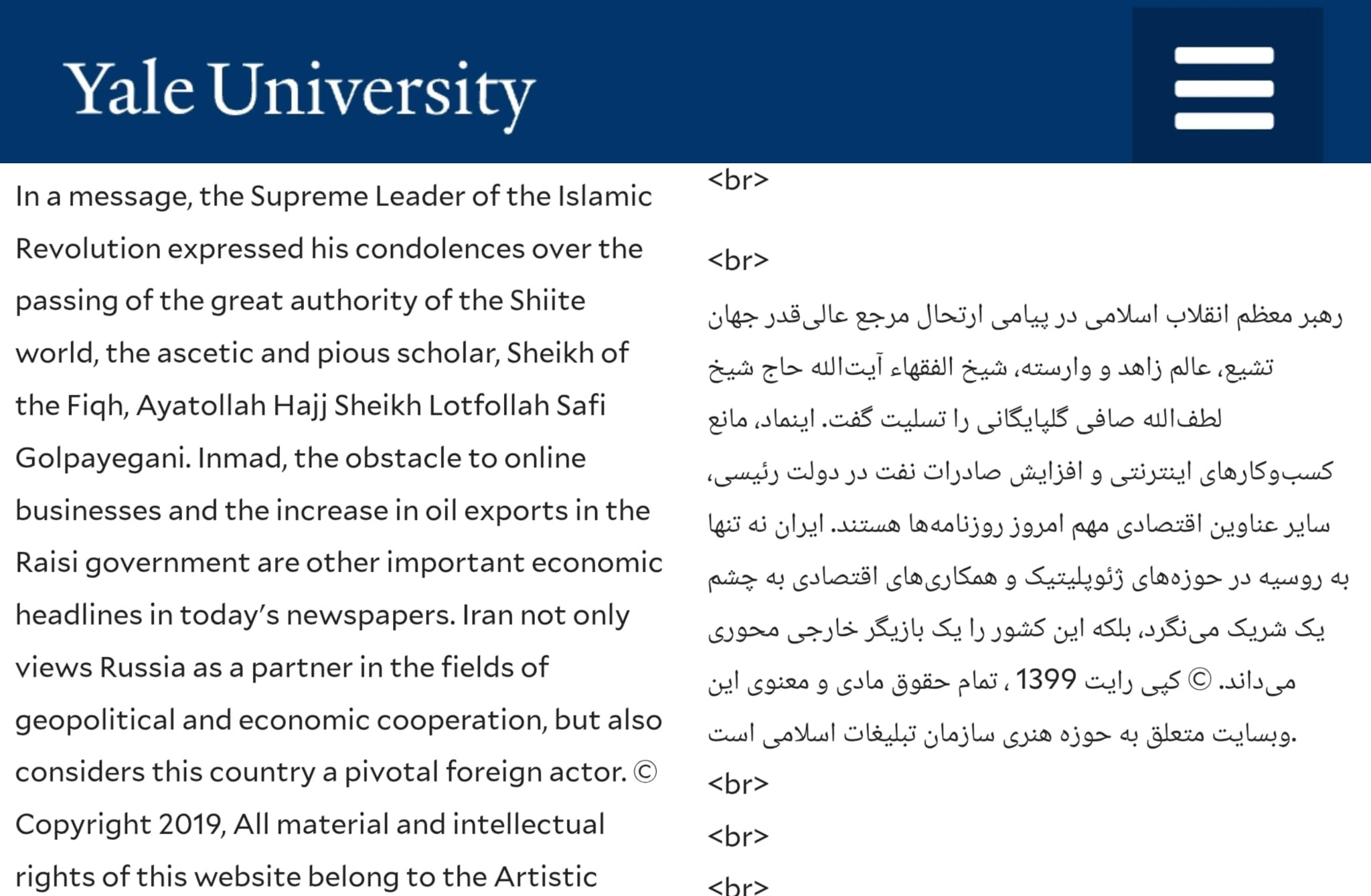
In addition to commercial content, at least one page on the YPSA site features political material including quotations by the Islamic Republic’s supreme leader, Ali Khamenei. Whatever the origin of these pages, their continued availability under Yale’s domain suggests a failure of basic editorial control and professional conduct by the YPSA.
Questions about YPSA’s oversight extend beyond the appearance of unusual Iranian refrigerator repair advertisements. As of December 2025, the YPSA website hosts more than twenty transcribed interviews with Iranian Jews who fled Iran and later settled in the United States, conducted as part of the Iranian Jewish Oral History Project. The transcripts state that public release of the interviews requires the explicit consent of participants, and partner institutions, such as the UCLA library, host the same material with access limitations until the year 2033. YPSA did not respond to a request for clarification regarding whether consent was obtained, nor how long the interviews had been publicly accessible.
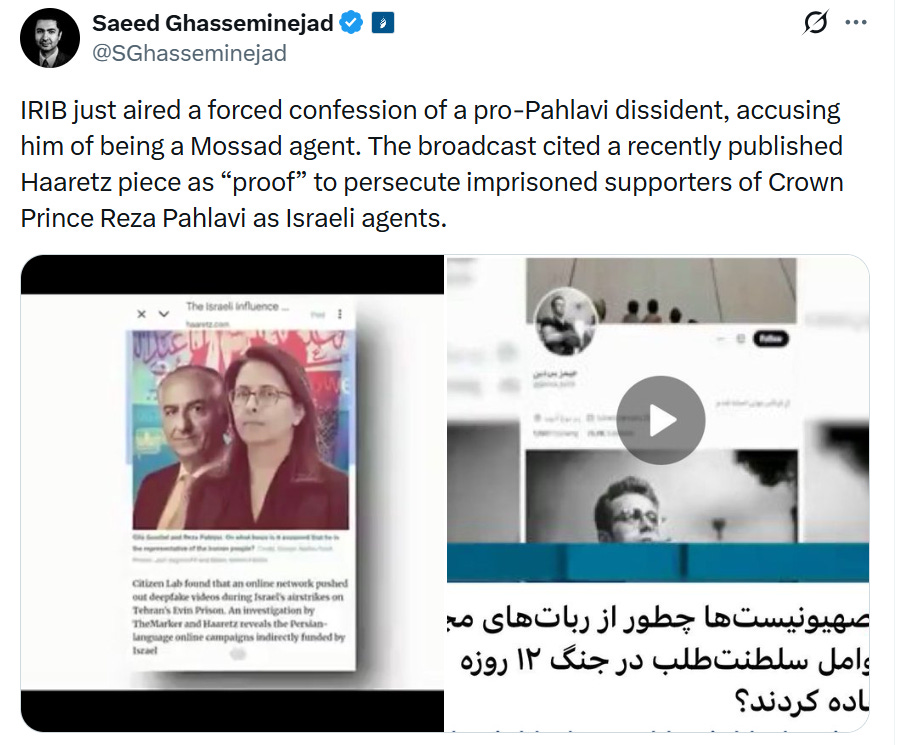
The Yale Program for the Study of Antisemitism has also made questionable personnel choices. One of YPSA’s 2025 postdoctoral associates, Arash Azizi, authored a flattering biography of Islamic Revolutionary Guard Corps (IRGC) commander Qasem Soleimani. Since joining Yale, he has publicly supported claims against Israel, particularly accusations that Iranian dissidents in Iran are contracted by the Israeli government. These claims were used by the Islamic Republic as evidence to conduct arrests and forced confessions. For a program devoted to studying antisemitism, choosing an associate whose public commentary aligns so closely with the Islamic Republic’s regime is a questionable choice.
Antisemitism deserves, and requires, serious scholarship. Yet the YPSA treats it superficially by stacking their events calendar as a substitute for research, selectively narrowing the forms of antisemitism it is willing to confront, and making personnel and governance choices that undermine its stated mission. At a time when antisemitism is at an all-time high, Yale must do better than wasting its limited resources on a program that only confuses the public on antisemitism.

This free essay is Absolutely Critical reading if you want to grasp the full scope of this unfolding dynamic and the centuries-long historical pattern driving it. For the deep-dive analysis backed by historical sources, doctrinal explanations, current demographic data, specific incidents, and documented "receipts" (including references to Pew projections, Europol reports, Global Terrorism Index, and primary historical chronicles), read the full piece here:
It lays out, without apology, how taqiyya-enabled deception combined with strategic mass migration is advancing a long-term project toward global Sharia dominance, and why ignoring it risks the irreversible erosion of Western (and all non-Islamic) freedoms. Wake-up call material.
https://sleuthfox.substack.com/p/the-trojan-horse-how-americas-education