


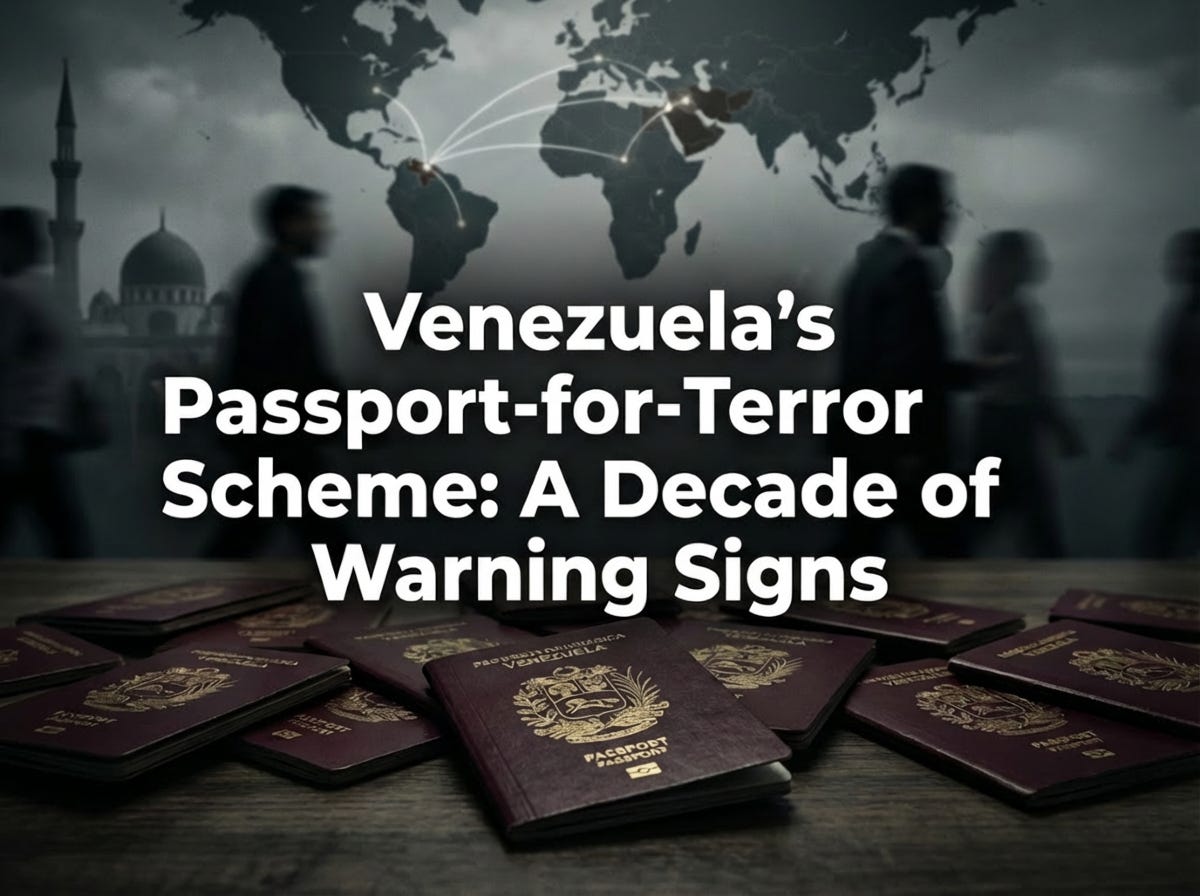
Venezuelan President Nicolas Maduro allegedly provided 10,000 Venezuelan passports to Lebanese Hezbollah, a retired Lebanese Brigadier General Wehbe Katicha to local media on January 3rd, according to the Middle East Media Research Institute (MEMRI). The passports were reportedly used by officers of Syria’s Assad regime to flee the country after the regime’s collapse in December 2024.
The claim was made the same day U.S. forces captured Maduro in a military raid and transported him to New York to face drug trafficking and other charges. Syrian officers allegedly used these Venezuelan passports to escape Lebanon to Venezuela, other South American countries, or beyond.
Venezuelan passports permit visa-free travel to over 130 countries, including 26 European Union nations, making them valuable tools for evading international scrutiny and arrest warrants.
A Decade-Long Scheme
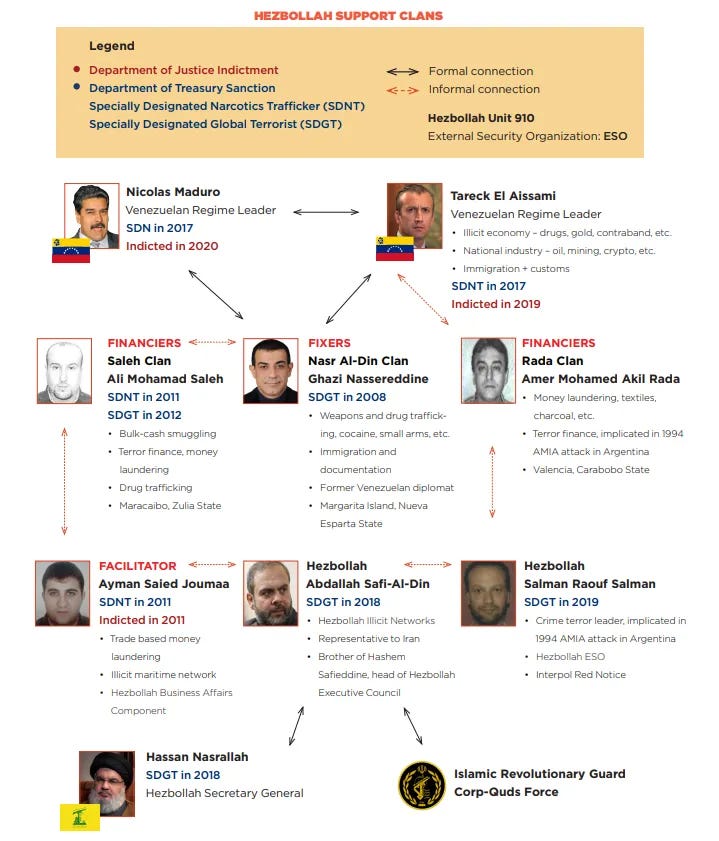
This isn’t the first time Venezuela has been accused of weaponizing its passport system. Between 2008 and 2012, at least 173 Islamist extremists, including some allegedly tied to Hezbollah, received Venezuelan passports and IDs in order to “slip unnoticed into North America,” according to declassified intelligence from the Center for a Secure Free Society. The operation was orchestrated by Tareck El Aissami during his tenure as Interior Minister, according to CNN.
The scheme was exposed in 2017 when Misael Lopez, former legal adviser to Venezuela’s Baghdad embassy, revealed to CNN that passports and visas were being sold for $5,000 to $15,000 each. Lopez discovered authentic Venezuelan passports issued to people with Arabic names, but the identification numbers belonged to Venezuelans with Hispanic names, exposing systematic identity fraud.
Additional Venezuela-Hezbollah Ties
The U.S. Treasury Department sanctioned Venezuelan diplomat Ghazi Nasr Al-Din in 2008 for facilitating Hezbollah operations. Treasury documents revealed Al-Din provided “specific information on bank accounts where deposits would go directly to Hezbollah” and facilitated travel for Hezbollah members between Venezuela and the Middle East while serving at Venezuelan embassies in Damascus and Beirut.
Canadian intelligence found that from 2009 to 2011, Latin America became the largest embarkation region for improperly documented Iranians seeking refuge in Canada. In 2011 alone, 65% of fraudulent passport violations detected in Caracas involved Iranians using Venezuelan documents to claim refugee status.
The Implications
The reported provision of 10,000 passports to Hezbollah for Syrian officers represents a dramatic escalation of this decade-long operation, potentially allowing war criminals to evade justice while establishing new lives under false identities across the Western Hemisphere.