


Jewish Onliner is an independent publication. If you find our work valuable, please consider becoming a paid subscriber.
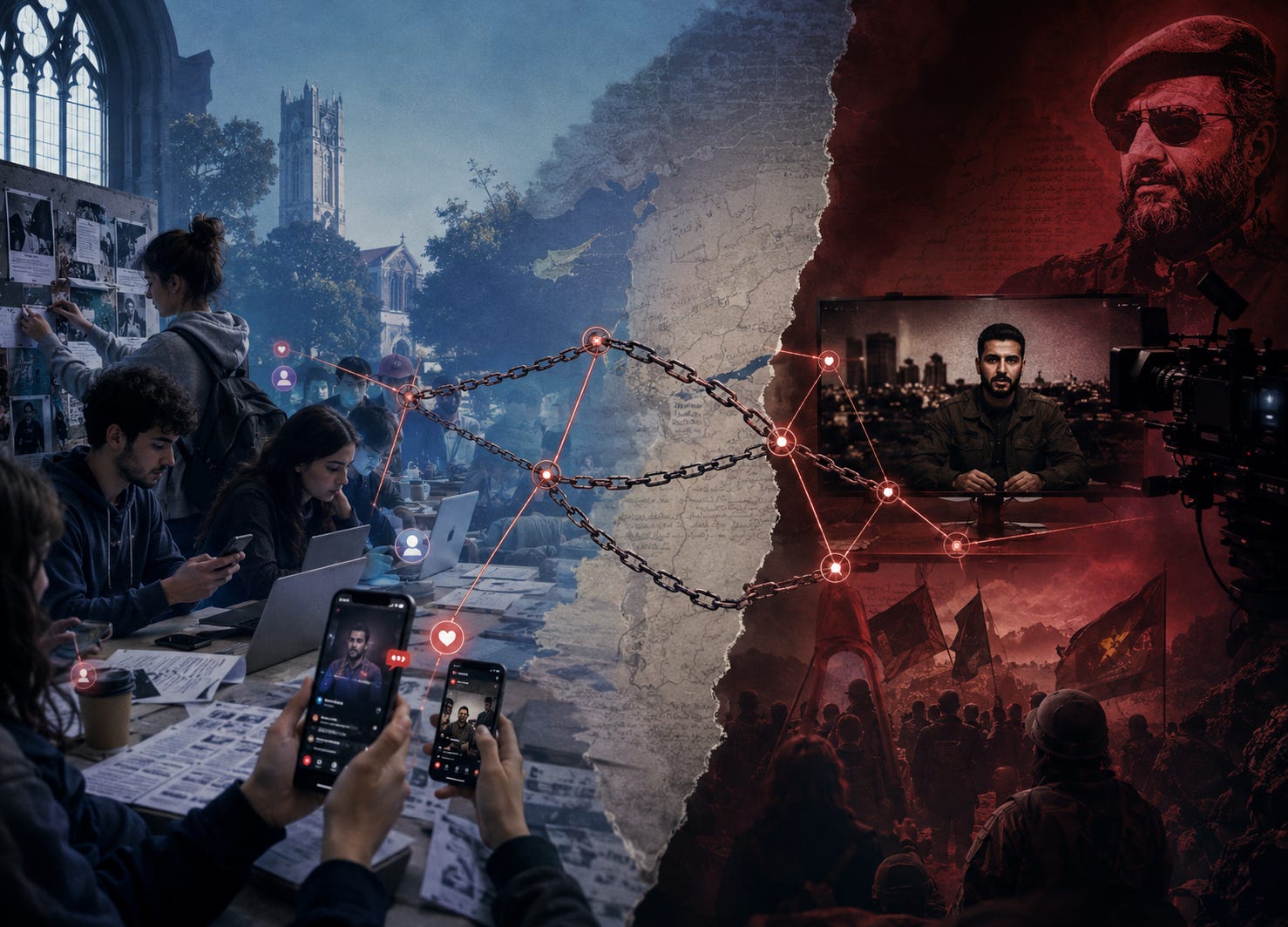
Students at the University of Washington are promoting a June 20 webinar featuring Hussein Mughniyeh, son of Imad Mughniyeh, the former Hezbollah military commander U.S. officials have linked to attacks that killed more Americans than any terrorist before 9/11.
Imad Mughniyeh, widely known as “the Ghost,” was one of Hezbollah’s most notorious military commanders. U.S., Israeli, and Argentine authorities have linked him to some of the deadliest anti-American and anti-Israeli attacks before 9/11. Those include the 1983 Beirut barracks bombing, which killed 241 U.S. service members, and the 1983 U.S. Embassy bombing in Beirut, which killed 63 people, including CIA Near East Division chief Robert Ames. He was also linked to the 1992 Israeli Embassy bombing in Buenos Aires, which killed 29. The U.S. offered up to $25 million for information leading to his capture. He was killed in Damascus in 2008 in an operation later reported to have been carried out jointly by the CIA and Mossad.
Now his son, who also currently writes and translates for a U.S.-sanctioned Hezbollah media network, is being platformed by University of Washington students to discuss “generational sacrifice and resistance, the role of the international student/youth movements, the current situation in Lebanon, and combatting defeatism.”


A Hezbollah Propagandist’s Pen
Al-Manar has published Hussein Mughniyeh’s writing and translations. In 2006, the U.S. Treasury Department designated the Hezbollah television station as a Specially Designated Global Terrorist entity, describing it as an arm of Hezbollah’s terrorist network.
In February 2026, on the 18th anniversary of his father’s death, Mughniyeh published an emotional tribute titled “Imad: The Fabric of a Legend.” The poetic reflection deified his father, describing him as “a gallery no mortal hand could assemble. A gallery that could only be wrought by God.“
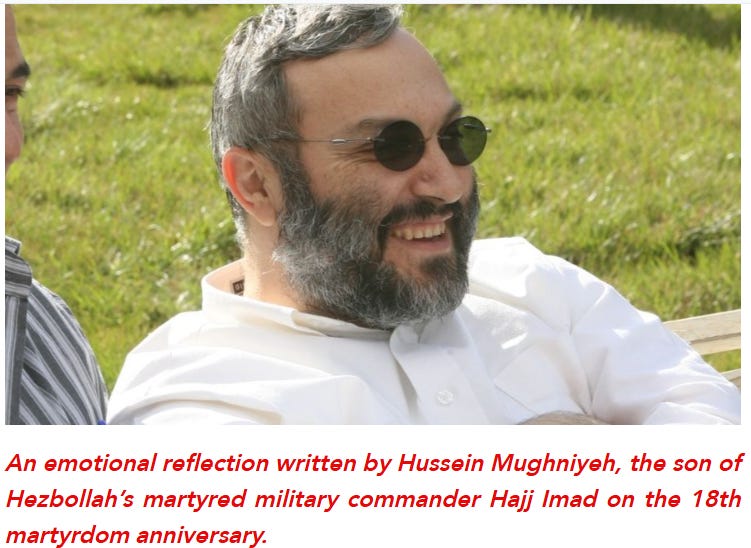
The article romanticized Imad Mughniyeh’s clandestine operations, celebrating his multiple aliases: “You bore many names, each fitted like a different garment... Jihad. Ahmad. Mortada. Ellie. Ridwan. Smoke. Wolf. Fox. Ghost. Names chosen for necessity. Names adopted for terrain.”
Hussein described his father’s military command in artistic terms: “Purple, the flash of your hand as it descended in decisive command... Maestro. Painter. Writer. Architect of motion.“ He concluded: “A tapestry you were. Not chaotic. Not improvised. Woven with intention across time.“
The man Hussein is glorifying has been linked by U.S. officials to the kidnapping and torture of William Buckley, the CIA station chief in Beirut, and to the hijacking of TWA Flight 847, in which U.S. Navy Seabee diver Robert Stethem was tortured and murdered.
Glorifying October 7
Hussein Mughniyeh’s published work for Al-Manar extends beyond memorializing his father. In January 2026, he translated an article by Soummaya Al-Ali titled “Palestine in 2025... The Enemy Never Saw a White Flag,” which glorified the October 7, 2023 Hamas massacre as “the heroic ‘Al-Aqsa Flood’ operation.”
The article, made accessible to English-speaking audiences by Mughniyeh, characterized the attack that killed about 1,200 people in Israel and took roughly 250 hostages into Gaza—as “nothing more than the inevitable culmination of accumulated injustice and oppression inflicted upon the Palestinian people.”
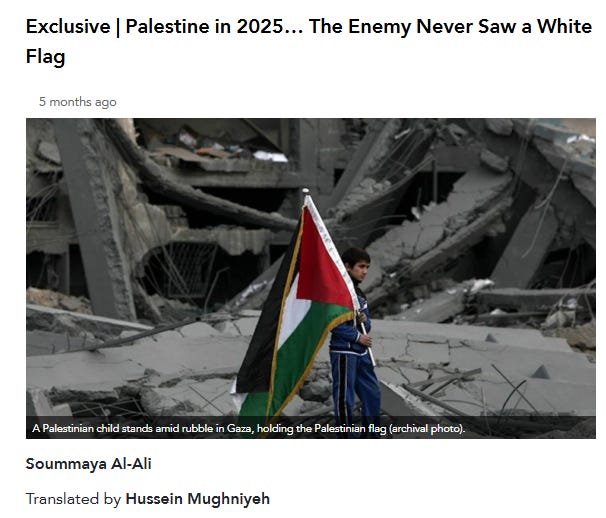
Consistently referring to Israel as “the enemy” and “the enemy entity,” the piece praised how “the resistance succeeded in ‘shattering the myth of strategic deterrence and the claims of Israeli security superiority,’“ crediting “the support fronts in Yemen, the Islamic Republic of Iran, and the resistance in Iraq and Lebanon”—a direct reference to Hezbollah, the Houthis, and Iranian-backed militias.
The article quoted Hamas leader Khalil al-Hayya and celebrated that “the enemy found itself compelled to negotiate exclusively with the resistance in order to secure the release of its prisoners.”
The Organizational Web
The June 20 event’s promotional material lists registration through Tariq el-Tahrir Youth and Student Network, with SUPER UW (Students United for Palestinian Equality & Return) as a collaborator. SUPER UW’s Instagram bio openly lists affiliations with both “@masarbadilmovement” and “@tariq_el_tahrir.”
Tariq el-Tahrir describes itself as the “youth wing” of Masar Badil (Palestinian Alternative Revolutionary Path Movement). Masar Badil, according to the Anti-Defamation League, is led by Khaled Barakat, who was sanctioned by the U.S. Treasury Department on October 15, 2024, as a Specially Designated National for acting on behalf of the Popular Front for the Liberation of Palestine (PFLP), a U.S.-designated Foreign Terrorist Organization.
Masar Badil is closely tied to Samidoun Palestinian Prisoner Solidarity Network, which was designated by both the United States and Canada in October 2024 as a “sham charity” that serves as an international fundraiser for the PFLP.
Masar Badil has hosted webinars featuring senior Hamas leaders Basem Naim, Sami Abu Zuhri, and Osama Hamdan. In a September 2024 webinar, Abu Zuhri referred to Masar Badil as “friends” and supporters, stating: “We appreciate their role and their effort to work on the streets to stand behind the Palestinian people, behind the Palestinian resistance.”
In an April 2026 speech at a Palestinian Prisoners Day rally in Vancouver, a Seattle coordinator for Tariq el-Tahrir identified as Sana’a said the group is the “youth wing of the Masar Badil” and emerged from the 2024 “Global Student Intifada.” She praised Hamas leader Yahya Sinwar for the “’Flood of the Free’” prisoner exchange and concluded: “Glory to our martyrs, freedom for our prisoners, and glory to the resistance.“
Campus Connections and Consequences
SUPER UW has a documented history of destructive activism at the University of Washington. In May 2025, the group occupied an engineering building, leaving nearly $1 million in damage, according to local reporting. The university suspended 21 students and banned them from campus.
UW later allowed the suspended students to re-enroll, but in March 2026 prosecutors charged 33 people with first-degree misdemeanor criminal trespass.
City Journal reported that Tariq el-Tahrir has fostered connections between activists and U.S. adversaries, including sending delegations to the Permanent Mission of the Islamic Republic of Iran to the United Nations. One participant, activist Calla Walsh, later appeared at Iran’s Sobh Festival, where she publicly chanted “Death to America, Death to Israel.”

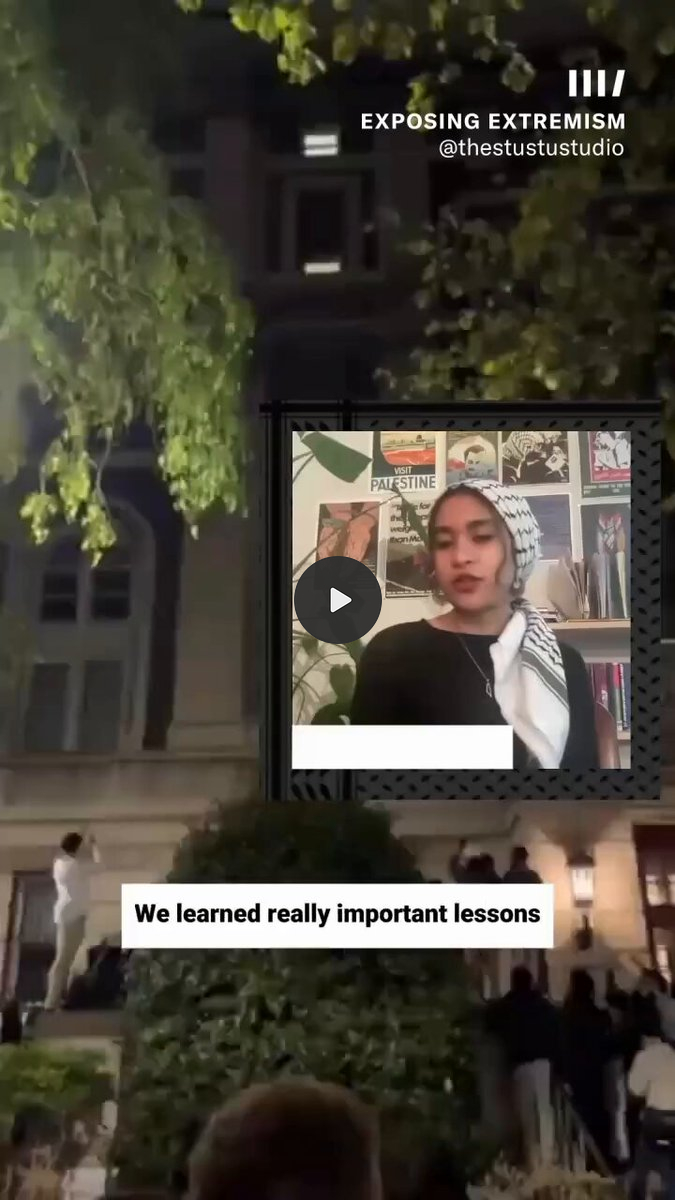
In October 2024, SUPER UW and Tariq el-Tahrir jointly organized a webinar series titled “Path of Liberation.” One session featured Osman Bilal, a Hamas member allegedly involved in planning a lethal bombing attack, who told attendees that “all tools,” including “violent work,” “armed resistance,” and “armed struggle,” “must be employed.”
Another session featured Khaled Barakat, the now-sanctioned Masar Badil founder and senior PFLP member, who laid out his vision for what he called the “revolutionary wing” of the student movement.
A Pattern of Platforming Terrorists
The June 20 webinar featuring Hussein Mughniyeh fits an established pattern. According to ADL research, Masar Badil has repeatedly hosted online events with members of Hamas and the Houthis since October 7, 2023.
In a February 2024 interview with senior Hamas leader Basem Naim—who was later sanctioned by the U.S. Treasury—Masar Badil Executive Committee member Mohammed Khatib described October 7 as a “holy day for us today.”
Masar Badil has released statements mourning the deaths of Hamas leaders Ismail Haniyeh and Yahya Sinwar and Hezbollah’s Hassan Nasrallah, hailing them as “great leaders” and “martyrs.” The statement on Nasrallah’s assassination concluded: “Death to the enemies and the racist Zionist entity, Victory to the resistance.”
The Broader Implications
The University of Washington’s handling of SUPER UW now faces a sharper test. The June 20 webinar is not an isolated campus controversy. It illustrates how a student group can become publicly aligned with activist networks whose leaders, affiliates, and partner organizations have drawn U.S. sanctions and terrorism-related scrutiny.
The chain is documented in public-facing materials: SUPER UW to Tariq el-Tahrir, Tariq el-Tahrir to Masar Badil, and Masar Badil to figures and organizations tied by U.S. authorities to the PFLP. Each layer can be framed as activism, education, or solidarity. But the practical effect is that UW students are being exposed to speakers, media platforms, and activist networks that have glorified or justified violence against Americans and Israelis.
Jewish Onliner contacted the University of Washington for comment, and a university spokesperson said the group “has no affiliation with the University of Washington, regardless of what they call themselves.”
241 Marines died in Beirut in 1983. They were there on a peace mission. They didn’t even have loaded rifles. McFarland and others in the administration convinced Reagan to keep them there. They perished needlessly. And now University of Washington is promoting one of the sons of the Hezbollah commander linked to the bombing? Why is this even allowed in the USA? Our universities have lost their minds with their Jihadi loving communist professors. I saw some of them in my small college way back in the mid 60s. Wake up America! These barbaric savages have mosques in every one of our states now and they plan to take over the USA just as they've done to Europe.
Read Jack Carr's book, Beirut. It is the true story of the massive loss of life.