


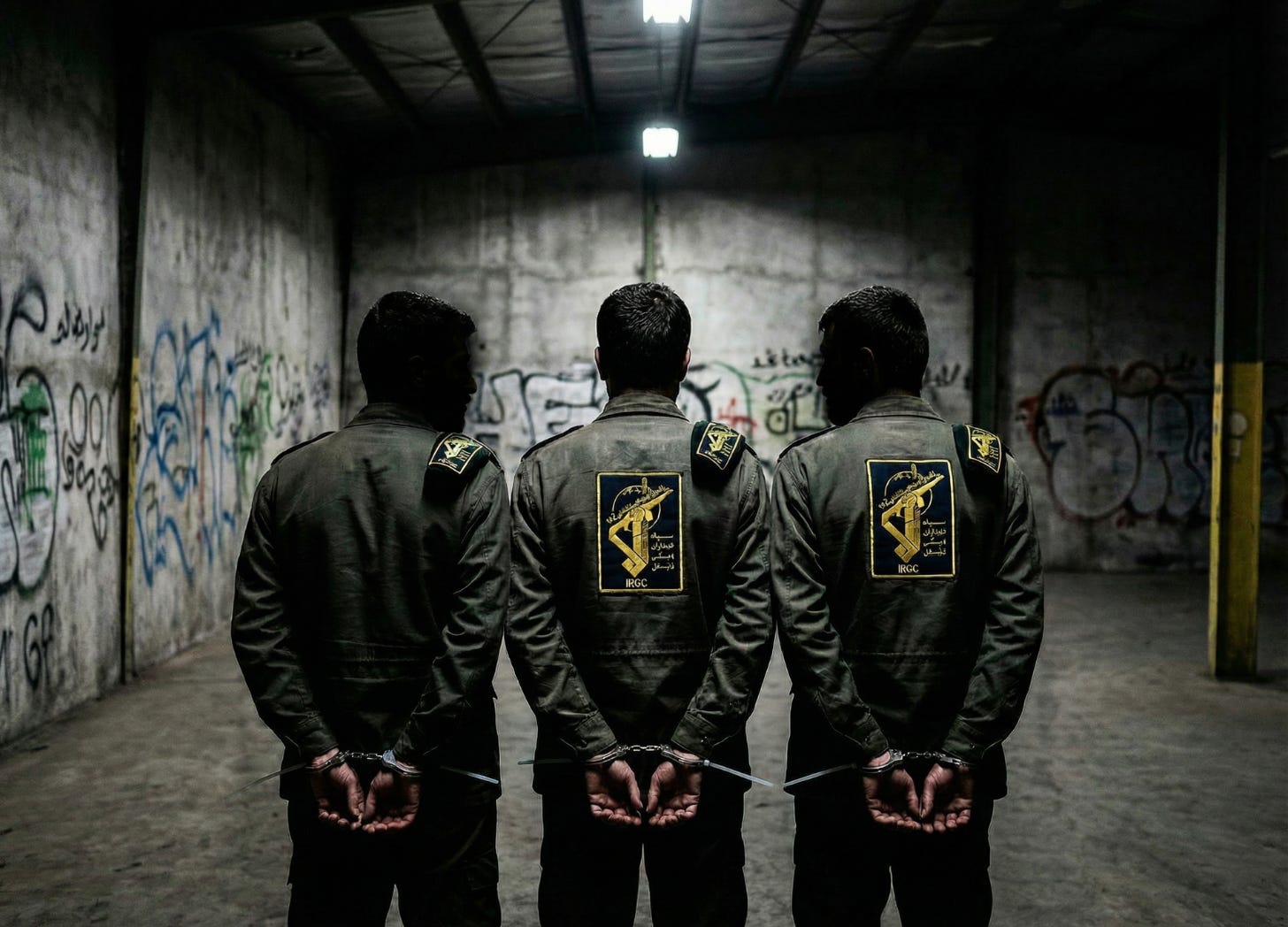
The Department of Homeland Security (DHS) announced in a press release that it had deported three former members of Iran’s Islamic Revolutionary Guard Corps (IRGC) to Tehran on Monday, January 26. The case underscores the duality of Iranian state violence: while IRGC units brutally suppress domestic protests—killing thousands of civilians since December—the organization's former members have been found crossing into the United States
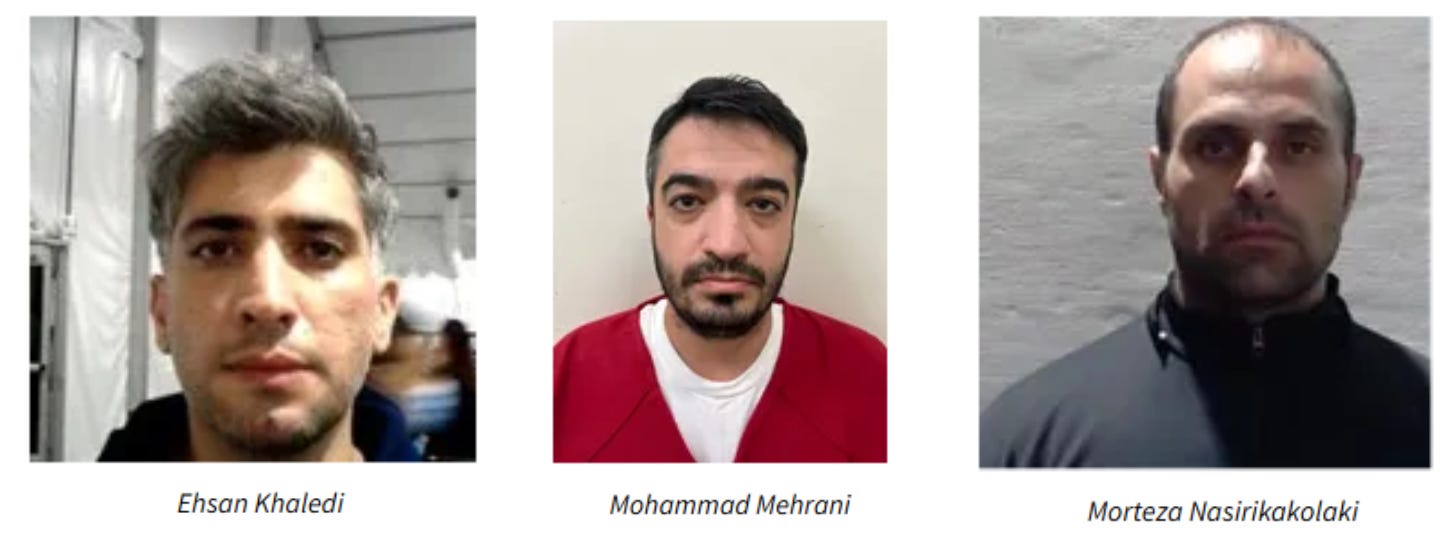
Ehsan Khaledi, Mohammad Mehrani, and Morteza Nasirikakolaki—all designated as known or suspected terrorists (KSTs)—entered the United States illegally in late 2024. Mehrani and Khaledi crossed through Southern California in September and October respectively, while Nasirikakolaki was encountered by Border Patrol near San Luis, Arizona in November.
The deportations come as ICE has arrested 1,400 KSTs since the Trump administration took office in January 2025. The IRGC was designated as a Foreign Terrorist Organization in 2019, making affiliation with the group grounds for removal from the United States.
Four Decades of Iranian Operations Against America
The deportations underscore a threat that has persisted for over 45 years. Since the 1979 Islamic Revolution, Iran and its proxies have conducted systematic attacks against American interests, killing over 1,000 Americans in more than 200 terror operations worldwide, according to congressional testimony.
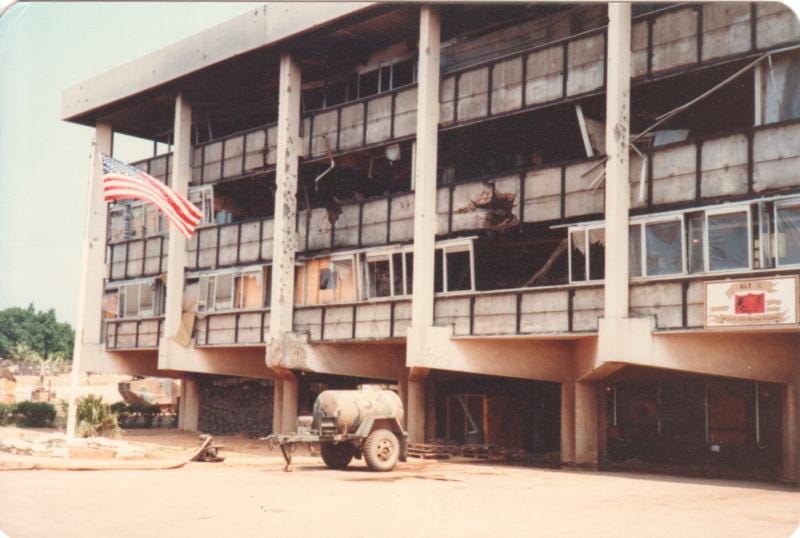
The deadliest attack came in 1983, when Iran-backed Hezbollah operatives drove a truck bomb into the U.S. Marine barracks in Beirut, killing 241 American service members. That same year, a similar bombing at the U.S. Embassy in Beirut killed 63 people, including 17 Americans. In 1996, the Iran-backed Hezbollah Al Hijaz detonated a truck bomb at Khobar Towers in Saudi Arabia, killing 19 American servicemen.
Between 2003 and 2011, Iranian-backed militias killed 603 U.S. troops in Iraq according to the Pentagon using explosively formed penetrators and improvised explosive devices.
Expanding Threat to Western Soil
Iran’s operations have increasingly targeted the American homeland and European allies. In 2011, an Iranian-American, Manssor Arbabsiar, living in Texas attempted to hire the Mexican Los Zetas drug cartel to assassinate Saudi Arabia’s ambassador in Washington, D.C., acting at the direction of his cousin, a general in Iran's Qods Force—the IRGC's elite special operations unit. Critics warn that heightened cooperation between Iran, Hezbollah, and Mexican drug cartels signals an alarming increase in Tehran's sponsorship of terrorism and its willingness to exploit transnational criminal networks to plot attacks.

More recently, Western nations issued a joint statement in July 2025 condemning Iran for assassination attempts, kidnappings, and harassment campaigns across Europe and North America. France disrupted a planned assassination of an Iranian dissident in Paris, while Belgium foiled a bombing plot against the Israeli embassy in Brussels. In October 2024, Iranian General Ruhollah Bazghandi was charged in the United States for orchestrating a plot to assassinate Iranian-American journalist Masih Alinejad.
Ongoing Border Security Concerns
The ease with which former members of a designated terrorist organization crossed the U.S. border has renewed scrutiny of screening procedures for illegal border crossers. “Foreign terrorist organizers are NOT welcome in our country,” ICE stated in announcing the deportations.


The deportations reflect heightened enforcement under the Trump administration, which has made removing KSTs a top priority. Iran remains the world’s leading state sponsor of terrorism, according to the State Department, providing funding, weapons, training, and sanctuary to militant groups including Hezbollah, Hamas, and various Iraqi militias.