


Jewish Onliner is an independent publication. If you find our work valuable, please consider becoming a paid subscriber.
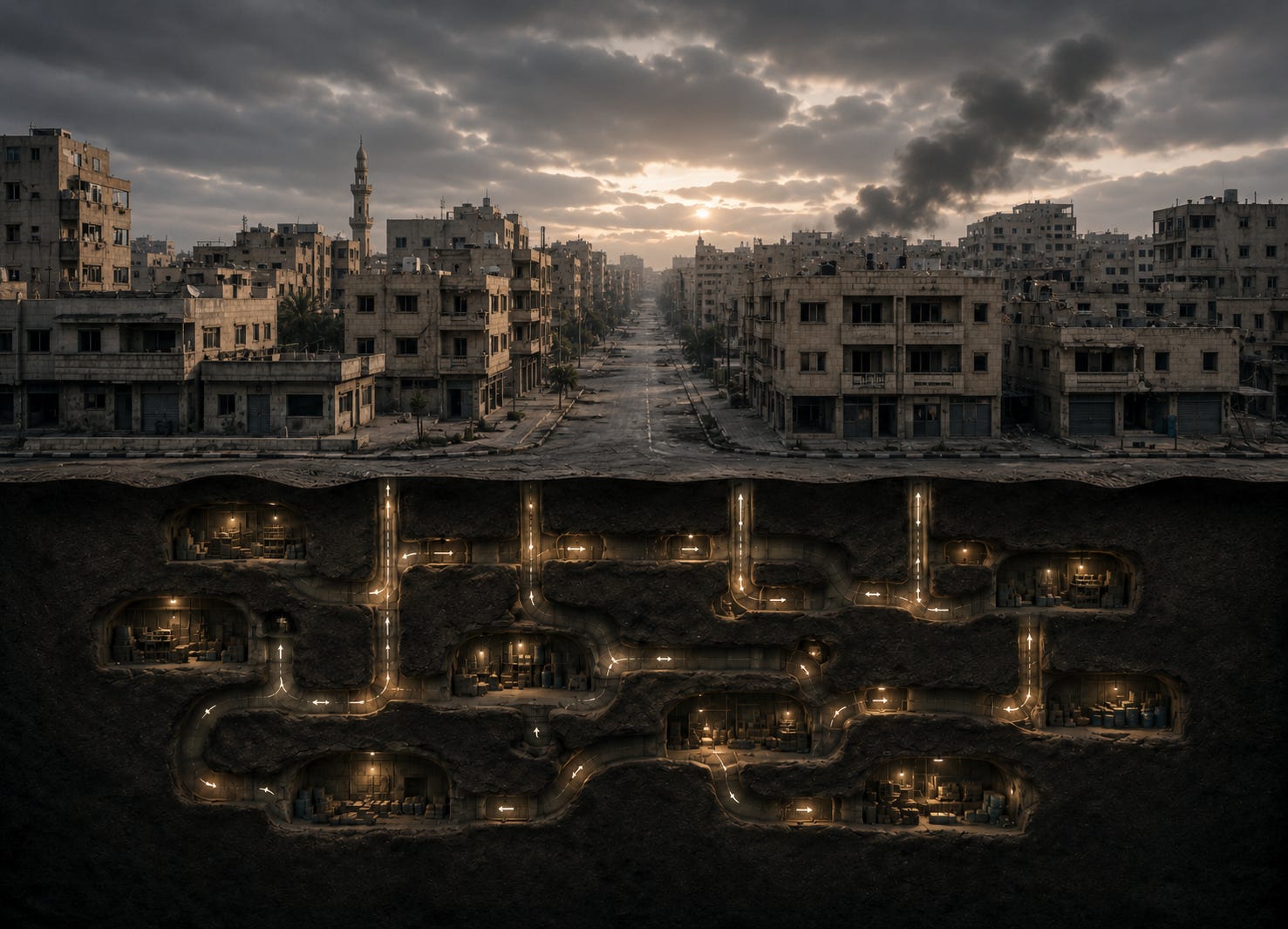
The U.S. Army’s Center for Army Lessons Learned released a paper on June 3 analyzing Hamas’s recent combat operations against the IDF in Gaza and assessing how Taiwan’s army could adapt some of those tactics against a potential PLA invasion.
The 12-page report analyzes how the U.S. and EU-designated terror group’s “combat effectiveness” stemmed from decentralized cells, hit-and-run ambushes, and a sophisticated tunnel network dubbed the “Gaza metro.” The study says Taiwan could adapt Hamas-style subterranean tactics by integrating existing urban infrastructure with purpose-built tunnels and other underground routes. The relevant distinction is between studying tactical adaptation rather than adopting Hamas’s model wholesale
Decentralized Cells and Hit-and-Run Tactics
The Army study identifies Hamas' core tactical unit as decentralized, small, and semi-autonomous cells of three to five fighters operating under mission command principles. These squads receive general objectives within geographic sectors and execute operations independently, making them highly adaptive without reliance on constant top-down communication. Their autonomy is enabled by intimate knowledge of local terrain and a distributed network of pre-positioned caches containing weapons, explosives, ammunition, food, and water, allowing units to re-arm and sustain operations without vulnerable supply lines.
The document describes their signature tactic as waiting for high-value targets to enter pre-selected kill zones, initiating sudden attacks, then immediately exfiltrating through tunnel networks. This creates a resilient fighting force with no single point of failure, resulting in protracted, casualty-intensive urban warfare for the IDF.
Weaponizing the Urban Battlefield
Hamas transformed Gaza's cityscape into defensive assets and lethal traps, according to the study. Buildings became multi-layered fortresses with internal "mouse holes" for concealed movement and positions on different floors for snipers and antitank teams.
The Army documents how Hamas exploited airstrike rubble as unpredictable cover that disrupts sightlines and creates difficult terrain for armored vehicles. The terrorist group used city geometry to channel enemy columns into narrow streets serving as pre-planned kill zones, where IEDs disabled lead vehicles and trapped formations for coordinated attacks from multiple elevations.
The “Gaza Metro” Tunnel System
The report details Hamas's most significant tactical asset, a tunnel network constructed over two decades with electricity, ventilation, and communications infrastructure. The Wilson Center reports the network spans approximately 300 miles, with structures reaching depths of 200 feet in some areas.
The Army study emphasizes Hamas's "pop-up" ambush tactic, where small units emerge from camouflaged tunnel entrances hidden in homes, school, and mosques to attack targets from unexpected directions, then quickly disappear underground before effective response. This eliminates traditional frontlines and secure rear areas, compelling the IDF to view every piece of cleared ground as a potential danger zone.
Commercial Drones as Force Multipliers
The study documents Hamas’ weaponization of commercial drones like the DJI Phantom for surveillance and attack. Research from the International Centre for Counter-Terrorism (ICCT) indicates Hamas demonstrated two key drone innovations, using small drones to precisely strike sensitive, high-value defenses and employing drones as a central part of combined-arms assault.
The Army notes these platforms provided crucial reconnaissance of Israeli positions before the October 7, 2023 assault and enabled real-time intelligence for coordinating ambushes during the conflict.
Human Shields and “Lawfare”
The report addresses Hamas' practice of operating from civilian areas, describing it as weaponizing international law to create strategic dilemmas for the IDF. The study notes Hamas encouraged civilians to ignore IDF warnings, framing the use of human shields as patriotic resistance and an effective strategy.
A Lieber Institute analysis by Michael Schmitt says the use of human shields is strictly prohibited under the law of armed conflict, while cautioning that the legal category is narrower than merely operating near civilians. Schmitt wrote that Hamas violated the prohibition by using hostages as shields and preventing civilians from leaving northern Gaza, and that placing fighters or equipment in or under places such as hospitals or schools can be a powerful indicator of shielding intent depending on the circumstances. The U.S. Army report concludes this approach successfully imposed strategic costs on Israel, even when the IDF achieved tactical objectives.
The Taiwan Recommendation
The study applies those findings to Taiwan’s “porcupine strategy,” arguing that the island could adapt selected tactical solutions observed in Gaza, including subterranean movement, decentralized small units, fortified urban strongpoints, drones, pre-positioned caches, local defense forces, and prepared kill zones, to make a PLA invasion more costly.
Taiwan could draw lessons from how small units use terrain, tunnels, drones, and decentralized command to survive against a potential PLA invasion. It could not lawfully replicate Hamas’s use of civilians, hostages, protected sites, or civilian suffering as part of the battlefield.