


Jewish Onliner is an independent publication. If you find our work valuable, please consider becoming a paid subscriber.
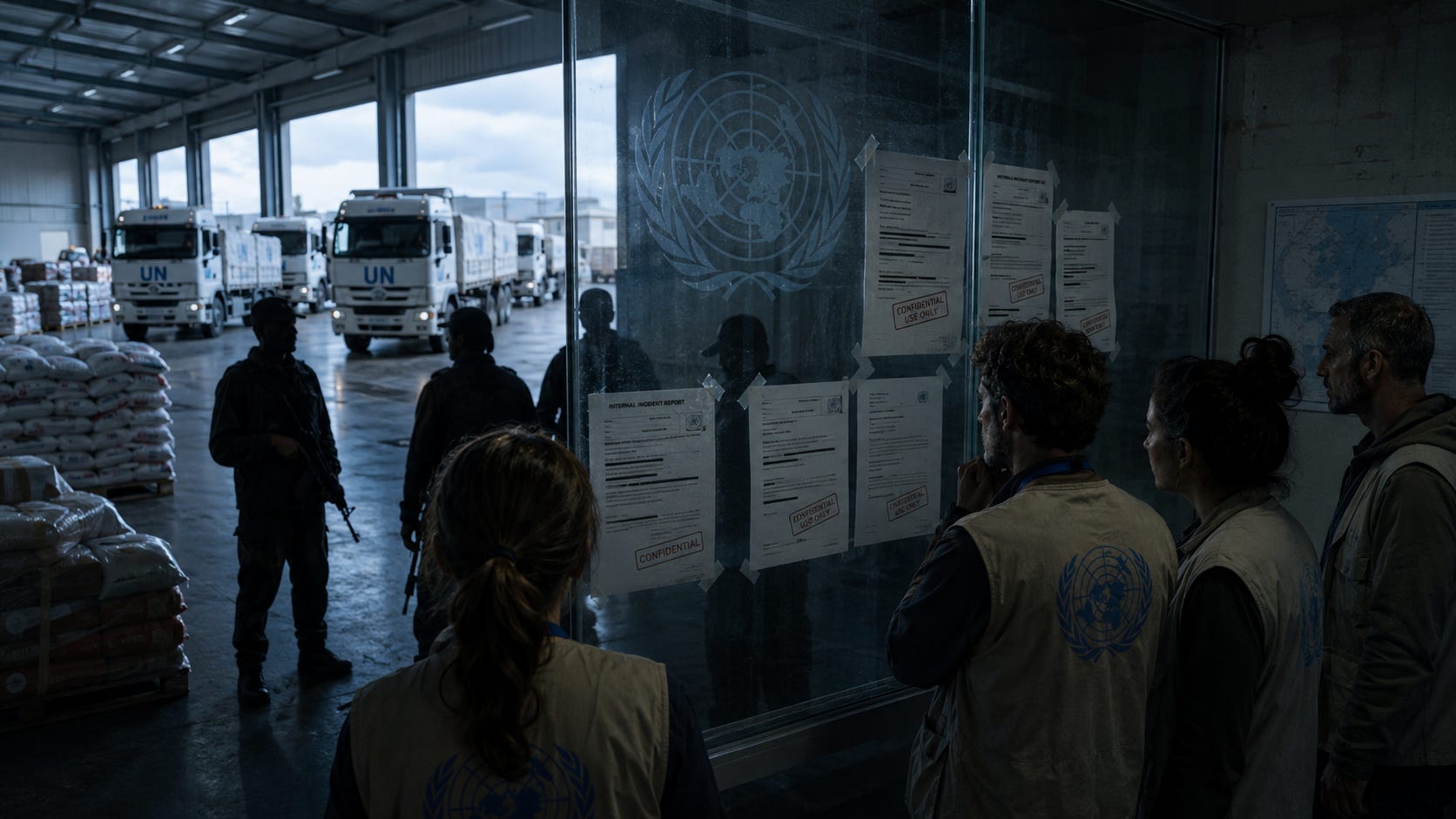
A senior United Nations official has condemned what his office described as “armed personnel affiliated with the de facto authorities” in Gaza for forcibly entering a food-distribution point and a World Food Programme warehouse, intimidating aid workers and assaulting two truck drivers. The July 12 statement by Ramiz Alakbarov, the UN Deputy Special Coordinator for the Middle East Peace Process and Humanitarian Coordinator for the Palestinian territories, said the incidents reflected an “increasingly dangerous pattern of intimidation, violence and obstruction.”
Yet the statement never used the word “Hamas,” continuing a UN practice of documenting coercion in institutional language that stops short of naming the organization most commonly understood to be responsible.
The disclosure adds to a longer record of Hamas-linked confiscation and pressure on humanitarian operations, even as UNRWA has publicly maintained that it has received no specific allegations of “systemic diversion” of the aid it distributes.


Hamas Terrorists Shut Down a Food Distribution Point
According to the statement, Hamas-linked armed personnel, described by the UN only as “armed personnel affiliated with the de facto authorities,” forcibly entered the Abu Rashid food-distribution point in Jabalia, North Gaza, on July 11 and intimidated humanitarian workers, forcing food distribution at the site to be suspended. The personnel also entered a nearby World Food Programme warehouse and reportedly assaulted two truck drivers delivering supplies.
Alakbarov said the incidents were not isolated and reflected a broader pattern of interference, smuggling attempts and abuse directed at humanitarian operations across Gaza, warning that it was placing aid workers at risk and constraining organizations’ ability to operate.
Although the statement never named Hamas, contemporary reporting characterized it as describing Hamas’s conduct — one outlet’s own headline read that the UN official said Hamas was obstructing Gaza aid.
A Documented History of Confiscation
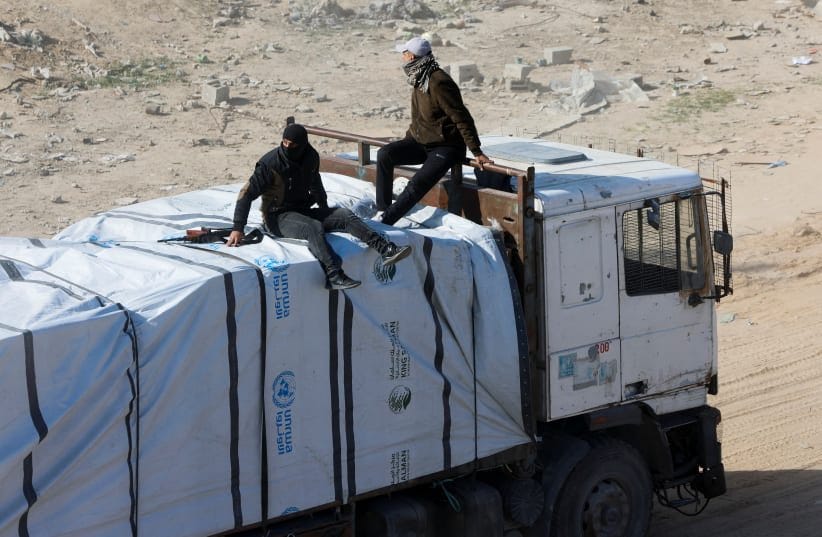
The latest confrontation is not the first time the UN has acknowledged Hamas interference with humanitarian aid — nor the first time it named Hamas directly in doing so.
On February 3, 2009, Hamas terrorists took roughly 3,500 blankets and more than 400 food parcels at gunpoint from an UNRWA distribution store in Gaza’s Beach Camp. Two nights later, ten truckloads carrying a combined 300 metric tons of rice and flour — imported through the Kerem Shalom crossing for UNRWA collection — were seized by trucks contracted to Gaza’s Ministry of Social Affairs.
UNRWA suspended all aid imports into Gaza until the material was returned and it received assurances from “the Hamas government in Gaza” that the thefts would not recur. The supplies were returned within days and deliveries resumed.
That 2009 statement named Hamas outright — a contrast with 2026’s “de facto authorities.” It established, more than seventeen years before the Abu Rashid confrontation, that Hamas possessed both the capacity and the willingness to seize UN-controlled humanitarian supplies.


What “Systemic Diversion” Leaves Out
In a February 2024 “claims versus facts” document, UNRWA stated that it was not aware of and had received no specific allegations regarding any systemic diversion of aid in Gaza by Hamas or other armed groups. The same document said UNRWA used a direct-implementation model with no intermediaries and, as a result, had “full control” of its supply chain from the crossing points into Gaza to the point of distribution.
Those statements are narrowly framed. They address whether UNRWA possesses evidence of a systematic program diverting aid from its own formal distribution system. They do not address every form of humanitarian interference — temporary confiscation, armed intimidation, pressure on contractors, disruption at distribution sites, manipulation after delivery, or seizure of supplies handled by other organizations such as the World Food Programme.
The difference allows UNRWA to deny specific allegations of “systemic diversion” without denying that Hamas members have confiscated aid or interfered with its delivery. Without that context, the agency’s public assurances risk leaving donors with the impression that concerns about exploitation of aid have no factual foundation.

Audits Documented Weaknesses in Gaza Controls
UNRWA’s claims of tight operational control also warrant scrutiny in light of its historical audit record.
A UN Board of Auditors report covering the 2008–2009 biennium, published in 2010, identified weaknesses at UNRWA’s Gaza field office involving long-outstanding purchase orders, emergency advance payments, delayed invoices and goods-received notes, and incomplete physical verification of assets. Auditors recommended that the Gaza office reconcile asset records against physical counts, investigate discrepancies and better document the movement of equipment between locations. The same report flagged a data-entry error in the Gaza office’s fixed-asset register — an item worth $19,580 had been recorded as $195,800, an overstatement of $176,220 — rather than evidence that assets of that value had gone missing.
Oversight Without Full Disclosure
In an investigative summary, USAID’s Office of Inspector General said it had independently connected three current or former UNRWA employees to the October 7 attacks and affiliated fourteen more with Hamas’s military wing, the al-Qassam Brigades. The inspector general’s office said the UN’s Office of Internal Oversight Services allowed it to review OIOS’s own investigation into the broader allegations but redacted the names of the subjects, rendering that report unusable for the Americans’ purposes.
On June 5, 2026, USAID’s inspector general went further, referring 101 additional current or former UNRWA employees — among them school principals, teachers, security personnel and medical staff — to the State Department for consideration of suspension or debarment from future US-funded aid work, citing evidence of October 7 participation or al-Qassam affiliation. Combined with earlier referrals, the office said its investigation had by then produced suspension-or-debarment referrals for 108 individuals.
The Question the UN Has Not Answered
The July 12 statement raises a narrower, more answerable question than whether Hamas is stealing aid at scale: how consistently have UN agencies been willing to name the actors responsible for interference with humanitarian operations, and what more can they disclose about individual incidents without endangering the aid workers and civilians who depend on them?