


Jewish Onliner is an independent publication. If you find our work valuable, please consider becoming a paid subscriber.
Palestine Action, proscribed as a terrorist organization by then–Home Secretary Yvette Cooper in July 2025 and confirmed as lawfully banned by the Court of Appeal on 15 June 2026, is currently soliciting cryptocurrency donations denominated in Monero — a “privacy coin” designed to obscure senders, receivers, and transaction amounts.
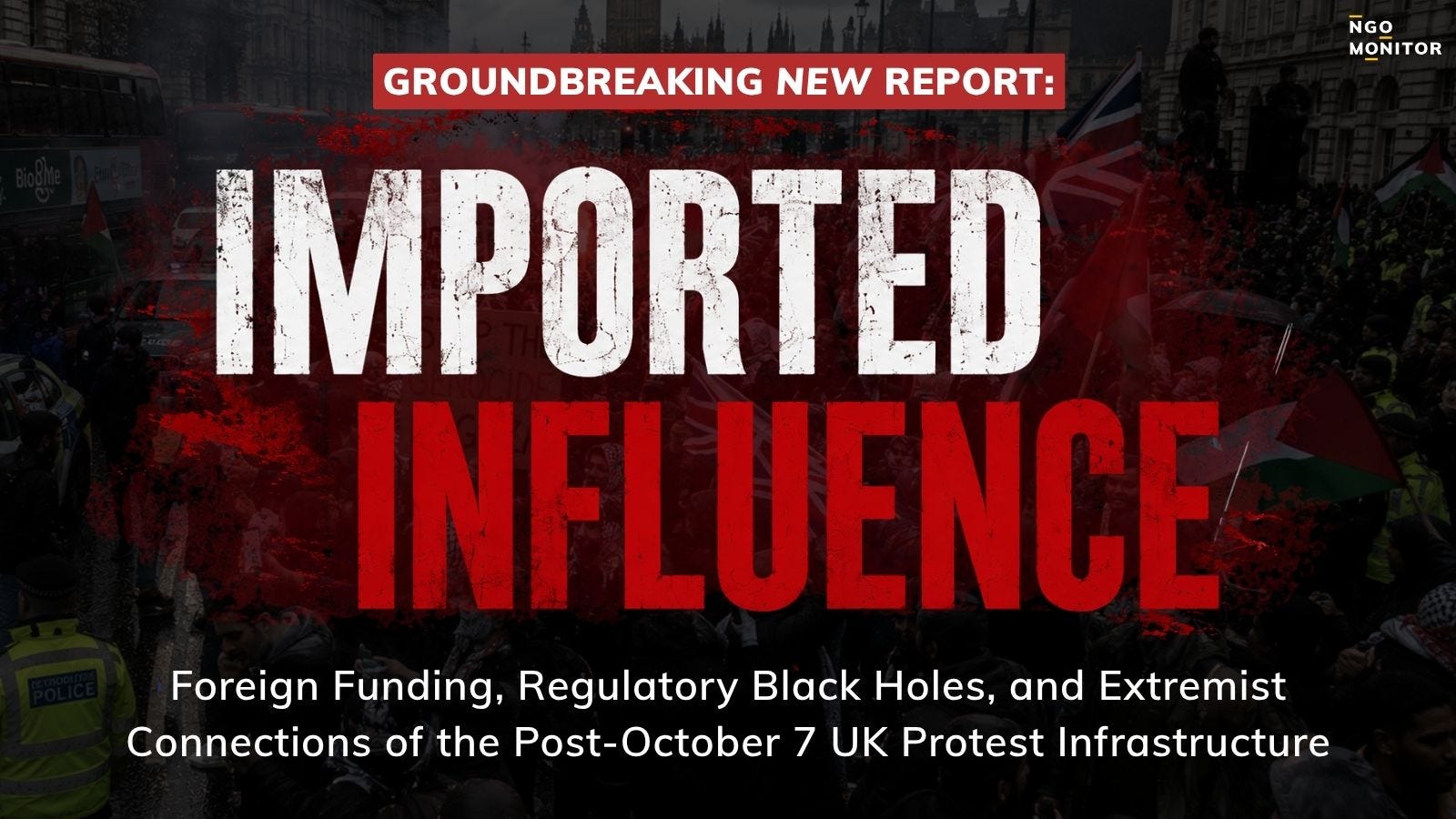
CAGE International, named by UK House of Lords member Michael Gove in March 2024 as a group that “give[s] rise to concern because of their Islamist orientation and views” under the government’s new — and explicitly non-statutory — extremism framework, is publicly soliciting donations in Bitcoin, Ethereum, Solana, and XRP. A new NGO Monitor report published on 8 July 2026 identifies both organizations’ crypto fundraising as part of a wider transparency gap in the UK’s post–October 7th protest ecosystem — one current UK guidance does not adequately address.


The Proscribed Terror Group
Palestine Action was added to Schedule 2 of the Terrorism Act 2000 on 5 July 2025, days after three activists broke into RAF Brize Norton and damaged two military aircraft with spray paint. Offences including membership, inviting support, or recklessly expressing support for the group can carry up to 14 years’ imprisonment on indictment.
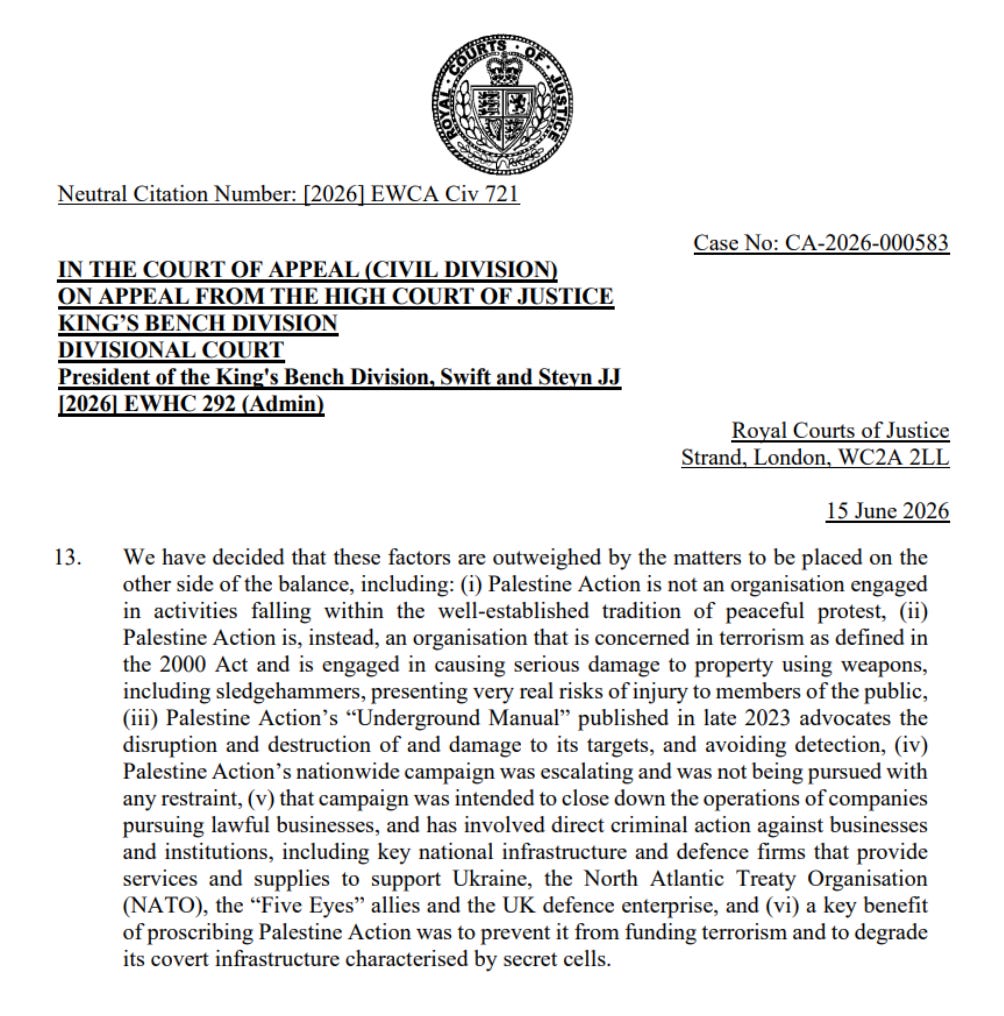
The High Court briefly ruled the proscription unlawful in February 2026, but the Home Secretary appealed, and a five-judge Court of Appeal panel held that the decision to proscribe Palestine Action “was lawful.” The judgment found that “Palestine Action overtly promotes unlawful violence amounting to terrorism,” characterizing the group as a covert organization operating through secret cells to avoid detection.
Palestine Action’s global website solicits cryptocurrency donations in Monero (XMR), which is designed to resist ordinary blockchain tracing by obscuring the sender, recipient, and transaction amount using ring signatures and stealth addresses — making donor identification far harder than with transparent blockchains such as Bitcoin. The currency is also documented as seeing rising use in illicit finance, including money laundering and ransomware payments.
CAGE: Flagged, Not Proscribed
CAGE International is a London-based advocacy organization whose history has drawn sustained scrutiny. According to NGO Monitor’s report, the group invited Anwar al-Awlaki to address a Ramadan fundraising dinner via videolink in 2008, after he had been barred from entering the UK; the U.S.
Treasury later designated him a “key leader” of al-Qaeda in the Arabian Peninsula. CAGE also worked on behalf of Khalid Sheikh Mohammed, the confessed 9/11 mastermind, NGO Monitor found. In 2015, CAGE described ISIS executioner Mohammed Emwazi — “Jihadi John” — as “a beautiful young man.” CAGE spokesman Moazzam Begg, a former Guantanamo Bay detainee, was reportedly classified in a Joint Task Force Guantanamo assessment as a “high threat to the US, its interests and its allies.”
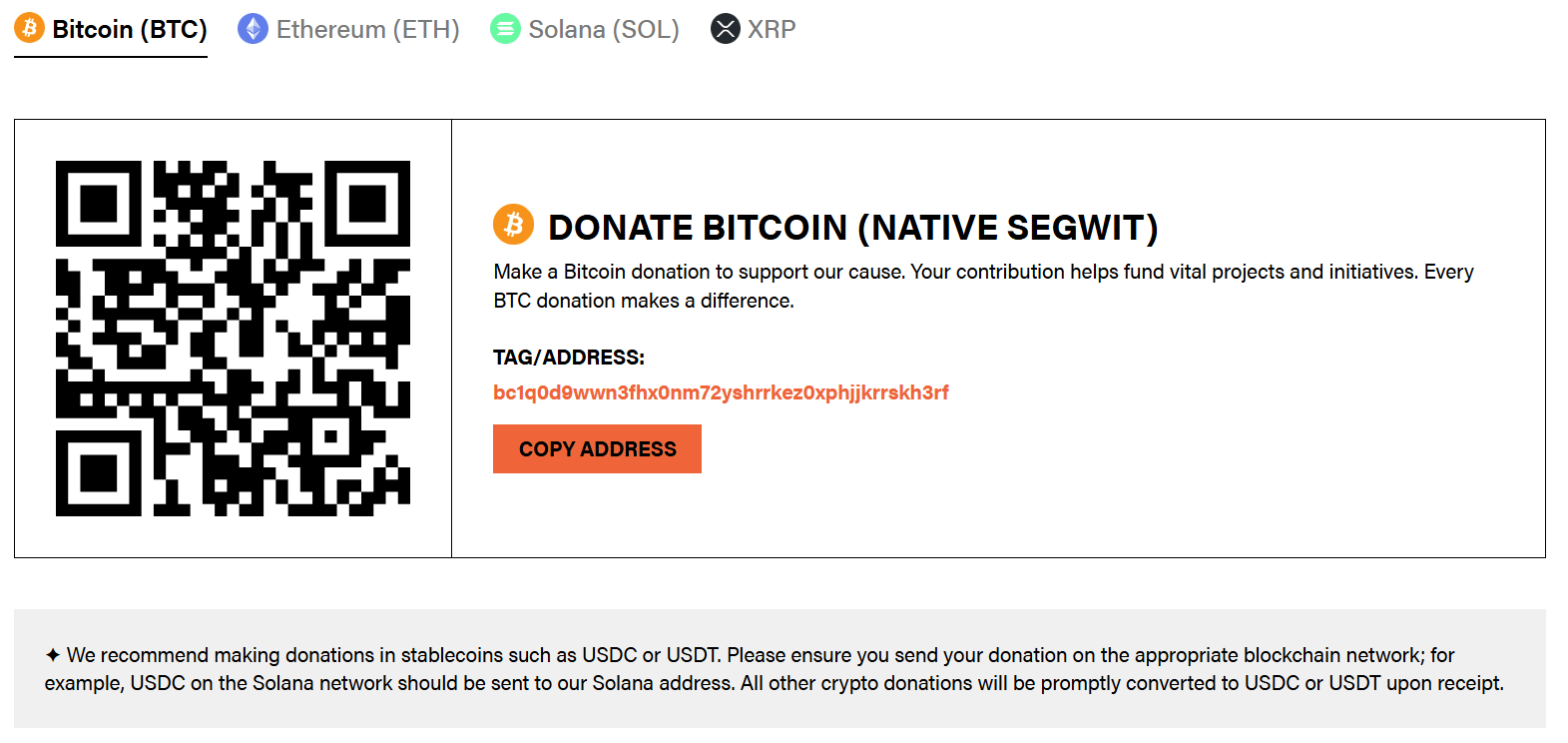
CAGE’s crypto page currently publishes wallet addresses for Bitcoin, Ethereum, Solana, and XRP as part of a Ramadan donation drive, and recommends donors send stablecoins where possible, noting that other cryptocurrency donations “will be promptly converted to USDC or USDT upon receipt.”
The Regulatory Black Hole
The UK Charity Commission has acknowledged since 2022 that identifying donors can be difficult with cryptoassets, since blockchain technology is designed to guarantee “anonymity and secrecy.” Written evidence the Commission later submitted to Parliament confirmed cryptoasset donations are “usually made anonymously,” and that charities are advised to watch for suspicious circumstances.
The Fundraising Regulator’s guidance does list cryptoassets as a due-diligence risk factor — but neither regulator has issued binding rules or a dedicated enforcement mechanism covering crypto donations to advocacy groups linked to terrorism and extremism.
What the Report Recommends
The NGO Monitor report calls on the UK government to “establish monitoring, guidance and regulations regarding cryptocurrency funding,” after identifying that at least two of the forty organizations it mapped raise money this way. It frames CAGE’s and Palestine Action’s crypto fundraising as especially concerning given CAGE’s documented ties to extremist actors and Palestine Action’s proscribed status, and concludes separately that current UK regulations cannot adequately address the wider protest network’s transparency gaps.