


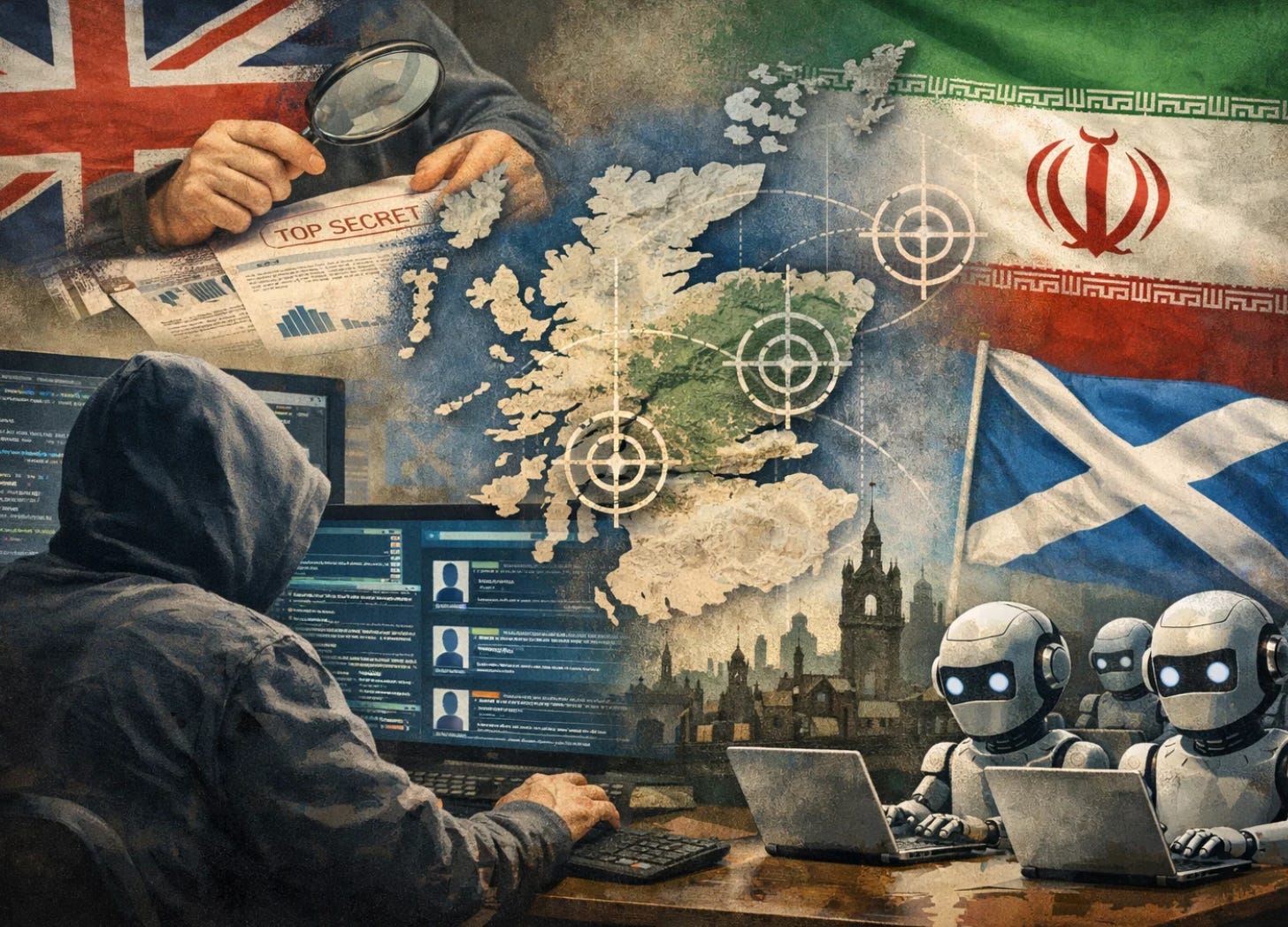
UK Secretary of State for Scotland Douglas Alexander confirmed this week that a UK investigation into foreign political interference will examine an Iranian influence network that deployed thousands of fake social media accounts to promote Scottish independence.
The probe, ordered after former Reform UK politician Nathan Gill received a ten-and-a-half-year prison sentence for accepting Russian bribes, will scrutinize all foreign actors attempting to shape British democratic processes. Alexander specifically identified Iranian operations targeting Scotland’s constitutional debate as falling within the investigation’s scope.
Digital Evidence Links Independence Accounts to Tehran
The interference came to light following the Israel-Iran War in 2025, when strikes on Iranian infrastructure in June triggered a nationwide internet blackout across Iran. During the outage, dozens of X accounts that regularly championed Scottish independence abruptly ceased posting, according to reporting by UK Defence Journal.
Analysis revealed these accounts displayed hallmarks of coordinated inauthentic behavior despite posing as ordinary Scottish activists. Many used Scottish imagery, local references, and independence movement language while their technical footprints told a different story.
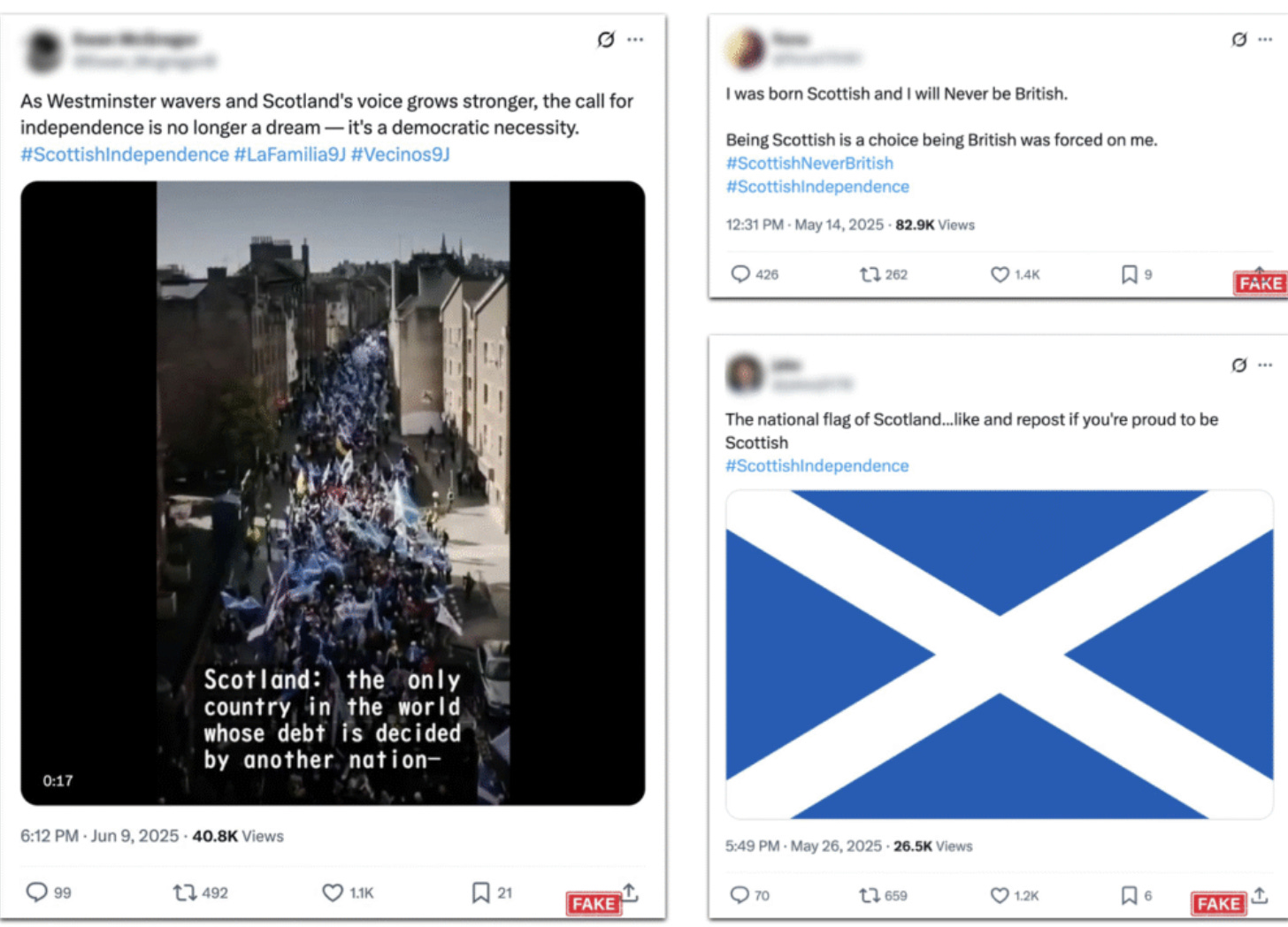
When X introduced a transparency feature allowing users to view account origin data, numerous pro-independence profiles showed connections through Iranian Android app stores, even when routing traffic through VPN servers in the Netherlands. Several accounts that claimed Glasgow locations were flagged as Iran-based.
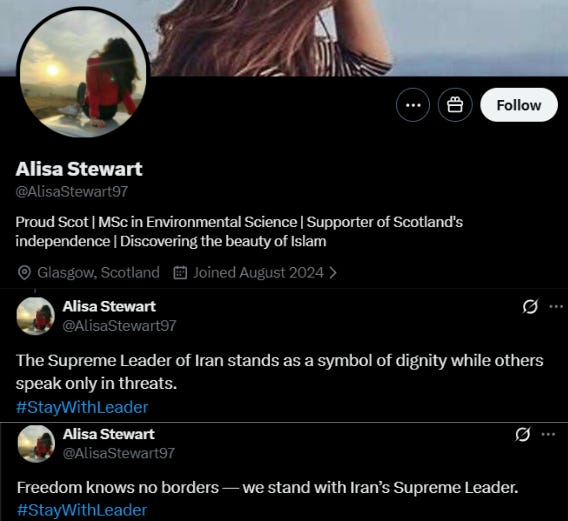
One particularly revealing account, allegedly belonging to a Glasgow environmental science student named Alisa Stewart, began posting messages supporting Iran’s Supreme Leader immediately after the June blackout: “We stand with Iran’s Supreme Leader” and “The Supreme Leader of Iran stands as a symbol of dignity.” The account later resumed posting Scottish independence content, including sharing posts from SNP politicians.
Scale of Operation Revealed Through Multiple Investigations
Research by disinformation monitoring firm Cyabra found approximately 1,300 of 5,083 accounts discussing Scottish independence on X showed characteristics of inauthentic behavior—roughly a quarter of examined profiles. The firm estimated this network generated up to 224 million potential views.
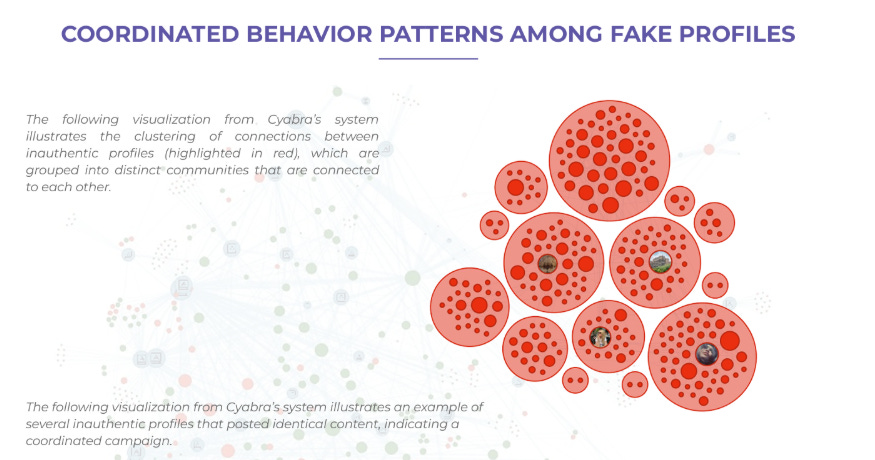
UK Defence Journal’s technical analysis documented that affected accounts displayed mutual amplification patterns, highly similar posting schedules, and frequent use of AI-generated profile images. The coordinated nature suggested professional operation rather than organic grassroots activity.
Scottish Conservative MSP Stephen Kerr formally requested government examination of what he characterized as a coordinated influence operation, citing the accumulated evidence linking the accounts to Iranian infrastructure.
Historical Pattern of Foreign Interference in Scottish Politics
This is not the first indication of foreign powers attempting to influence Scotland’s constitutional future. A 2020 Westminster security report found “credible” evidence that Russia attempted to influence the 2014 independence referendum.
A Commons intelligence and security committee report from summer 2025 confirmed Iran used social media to encourage a Yes vote in the 2014 referendum though it assessed the efforts had “minimal impact” on the outcome.
Analysts assert that Iran views Scottish independence as a way to weaken a key Western adversary. ‘The object is to destabilise Western democracies domestically and thus weaken their ability to act on the international front,’ wrote Stephen Daisley in The Spectator. Israel’s Institute for National Security Studies (INSS) contends Iranian efforts to promote Scottish independence represent a strategy to destabilize the UK, similar to attempts to influence the 2024 US presidential election.
The probe represents the first time a senior UK minister has publicly acknowledged the possibility that Tehran-linked operations specifically targeted Scotland’s constitutional debate, marking a significant expansion of recognized foreign interference in British democracy.