


Jewish Onliner is an independent publication. If you find our work valuable, please consider becoming a paid subscriber.
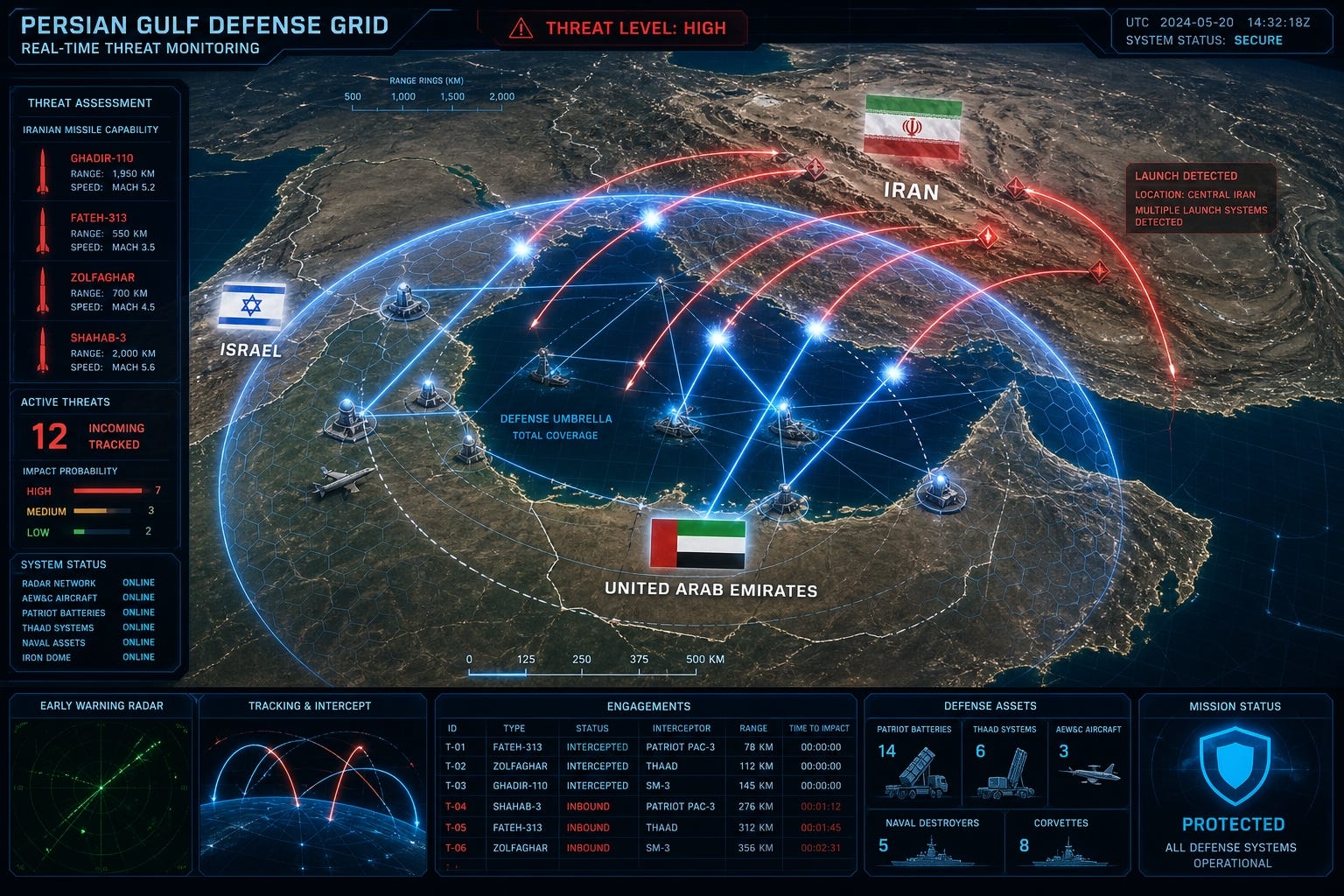
On May 4, 2026, Iran fired 15 ballistic missiles and four drones at the United Arab Emirates, renewing attacks on the Gulf state for the first time since a fragile ceasefire took effect nearly a month earlier. According to a source speaking to CNN, cited by the Times of Israel, an Israeli Iron Dome system deployed in the UAE shot down one Iranian missile fired at the Gulf state.
The attack appeared to come in response to President Trump’s “Project Freedom” effort to reopen the Strait of Hormuz, after U.S. forces said they had escorted commercial ships and sunk six Iranian small boats during related operations.
The use of an Israeli system during an Iranian attack on the UAE, including a strike that sparked a fire at Fujairah, may be one of the most consequential security developments in the post-ceasefire Gulf. The reported interception appears to reinforce JINSA analyst Ari Cicurel’s argument that the Abraham Accords have moved beyond diplomacy and are beginning to operate as a regional defense framework tested under Iranian fire.


A Deployment Born of Necessity
The Iron Dome battery did not arrive in Abu Dhabi through routine channels. Israeli Prime Minister Benjamin Netanyahu personally ordered the IDF to dispatch the system and “several dozen” operators after a direct call with Emirati President Mohammed bin Zayed early in the war. Axios reported that, according to a senior Israeli official, this marked the first time Israel had sent an Iron Dome battery to another country and the first use of the system outside Israel or the United States.
The decision carried unusual risk. Hezbollah had launched over 10,000 projectiles at Israel and JINSA data tracked more than 560 Iranian ballistic missiles targeting the Israeli home front. Netanyahu nonetheless allocated scarce interceptors to help defend a partner that had not formally entered the conflict.


Why the UAE Bore the Heaviest Fire
JINSA data shows that Iran directed 38 percent of its total wartime projectiles — 2,256 drones, 537 ballistic missiles, and 26 cruise missiles — at the UAE, more than any other country, including Israel itself. In JINSA’s view, the pattern reflected a punitive message to Abu Dhabi over normalization with Israel and its growing security alignment with Washington and Jerusalem.
Despite fielding two THAAD batteries and nine Patriot batteries, the UAE faced a documented gap in lower-tier defenses against Shahed drones launched from pickup-truck rails, fiber-optic-guided drones immune to electronic jamming, and jet-powered variants compressing engagement timelines. Iron Dome’s Tamir interceptors, which Israel has used to neutralize thousands of projectiles up to 70 kilometers away, helped fill that gap.

The Strategic Reckoning JINSA Predicted
Cicurel’s argument is that the UAE’s prior “omni-alignment” approach has been exposed by the war: engagement with Tehran did not spare the Emirates from Iranian fire, while U.S. and Israeli systems helped defend Emirati infrastructure.
The UAE announced it would leave OPEC and OPEC+ effective May 1, officially citing its long-term strategic and economic vision, while analysts and news reports framed the move against the backdrop of the Iran war and widening Gulf energy tensions.
Recommendations to Washington
Cicurel argues that the United States should convert the ad hoc Iron Dome deployment into formalized CENTCOM-led integrated air and missile defense, expand Tamir interceptor production capacity, and use the episode as leverage to bring Saudi Arabia and other Gulf states into the Abraham Accords framework. He also recommends acquiring Iron Dome for the U.S. “Golden Dome” homeland defense initiative.