


Jewish Onliner is an independent publication. If you find our work valuable, please consider becoming a paid subscriber.
**Trigger Warning: Contains content describing sexual assault**
After two years of evidentiary work, the Civil Commission on October 7 Crimes by Hamas Against Women and Children has released “Silenced No More,” a 300-page report concluding that sexual and gender-based violence was “systematic, widespread, and integral” to the Hamas-led assault on Israel by Hamas and affiliated Palestinian terror groups, as well as to the captivity that followed.
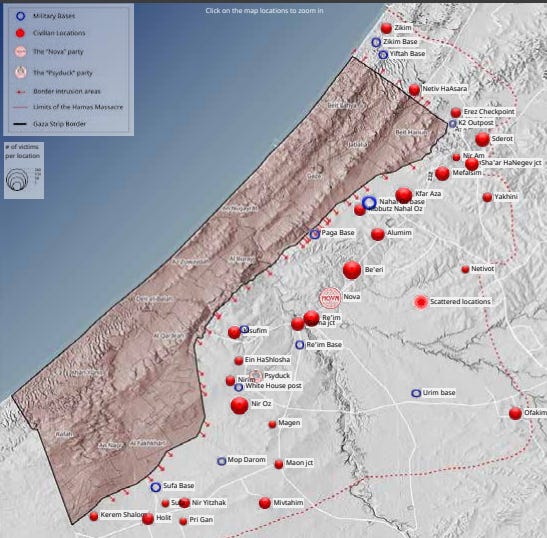
Led by Israel Prize laureate Dr. Cochav Elkayam-Levy and contributed to by former Canadian Minister of Justice and Attorney General Irwin Cotler, the Commission identified 13 recurring patterns of sexual abuse across the Nova festival site, kibbutzim, military bases, transit routes, and Gaza captivity.
The report also introduces what the authors describe as a proposed legal and analytical concept, “kinocide,” defined as the weaponization of family bonds to intensify terror, compound trauma, and attack the family as a social and emotional unit.
The Commission’s legal analysis concludes that the documented conduct constitutes war crimes, crimes against humanity, genocidal acts, and SGBV amounting to torture under international law. The report argues that the brutality documented was compounded by what Elkayam-Levy calls the “fragility of recognition”: denial, distortion, disbelief, hostility, and political resistance that the Commission says have corroded the path to justice.
A Record Built Against Erasure
The Commission conducted more than 430 formal and informal interviews with survivors, witnesses, returned hostages, first responders, and family members. Investigators reviewed over 10,000 photographs and video segments, accumulating more than 1,800 hours of visual analysis. The methodology followed internationally recognized standards, including the Berkeley Protocol on digital open-source investigations and trauma-informed, survivor-centered ethical principles.
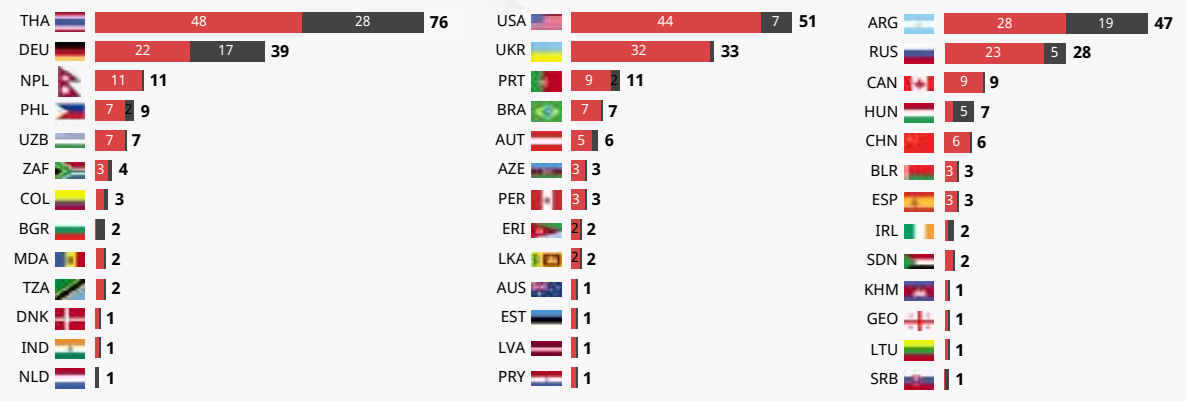
Commission data on the October 7 victims found that civilians from 52 countries were among those murdered or taken hostage, underscoring the international scope of the attack. Materials were logged, coded, geolocated, and integrated into a dedicated secure repository — the Civil Commission’s October 7 War Crimes Archive — designed to meet evidentiary thresholds for domestic and international prosecutions.
Elkayam-Levy told The Times of Israel the urgency was clinical: “We saw silence and denial — and very quick denial — which made me understand that we have to collect evidence as quickly as possible, and establish an archive under stringent international standards.”
Thirteen Patterns of Sexual Terror
Through systematic cross-referencing of evidence, the Commission identified thirteen recurring patterns of sexual and gender-based violence repeated across multiple sites:
Rape, gang rape, and other forms of sexual assault
Sexual torture, including intentional burning and mutilation
Deliberate shootings to the head, face and genital area
Killings and executions following or committed in conjunction with SGBV
Postmortem sexual abuse, humiliation, and desecration of bodies
Forced nudity and exposure
Handcuffing, binding, and restraint of victims
Public displaying and parading of women and children
Abduction of mothers and children
SGBV inflicted in the presence or near vicinity of family members
Filming and digital dissemination of SGBV, including use of social media to document, glorify, and amplify the atrocities
Threats of forced marriage
Rape and other forms of sexual violence against boys and men
The repetition of these patterns, the Commission argues, demonstrates that the crimes “were not isolated acts of brutality but formed part of a broader operational method used during the attack and its aftermath.”
Eyewitness Darin Komarov described what she heard at the Nova festival: “I heard one rape where they were passing her around. She was probably injured, judging by her screams — screams you have never heard anywhere... And after one finished, he told another to go up... And after they finished, they shot her.”
First responder Nachman Shai Reviv reported seeing five women shot in the groin at or near the Nova site. The report also details sexual violence committed against men, citing testimony from a male survivor identified only as “D” who described being gang-raped at the festival: “They injured my genitalia... I was completely naked. They did whatever they wanted to me.”
“Kinocide”
In her preface, Elkayam-Levy introduces the concept of “kinocide” — the deliberate, systematic targeting of families through the weaponization of familial bonds. The report documents incidents in which victims were sexually assaulted or humiliated in the presence of relatives, and at least one case in which family members held hostage in Gaza were coerced into acts of abuse against one another.
“Kinocidal sexual violence weaponizes relational vulnerability, extends harm beyond the immediate victim, and transforms the family itself into a site of compounded trauma and collective devastation,” Elkayam-Levy writes. The Commission argues this pattern is “insufficiently theorized in law” and contributes to the evolving legal understanding of how atrocity operates through human attachment.
Captivity as Continuing Crime
The sexual violence did not end on October 7. The Commission documents that sexual assaults, humiliation, and sexualized torture persisted during prolonged captivity in Gaza, in some cases for months. Former Canadian Minister of Justice and Attorney General Irwin Cotler writes in his foreword that hostages — “women and men, including the elderly and the very young” — were subjected to “ongoing sexual violence, threats of rape, humiliation, and psychological terror in conditions of enforced disappearance.”
Female hostages reported being assaulted during and after showering and being forced to perform sexual acts on captors. The report frames hostage-taking compounded by sexual torture as “an emblematic example” of crimes requiring international accountability.
Visibility as a Weapon
A defining feature documented throughout the report is the perpetrators’ deliberate weaponization of digital dissemination. Armed groups recorded acts of abuse and circulated footage through social media and victims’ own digital accounts. In numerous cases, family members first learned of their loved ones’ fate through images distributed by perpetrators.
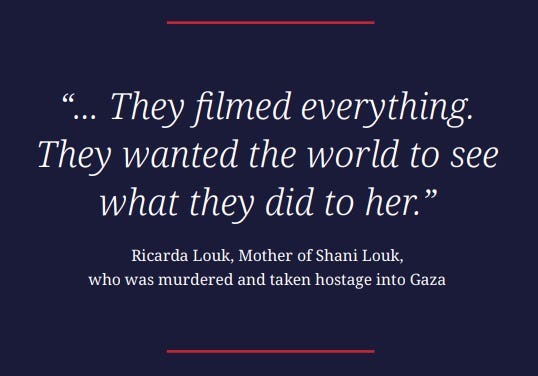
“This deliberate use of digital media transformed acts of violence into instruments of psychological warfare directed not only at victims but also at families and society at large,” the Commission concludes. Former Israeli Supreme Court President Aharon Barak observes in the report’s foreword that “the large-scale visual documentation of the crimes themselves” gives the record “distinct evidentiary and historical significance.”
The Architecture of Denial
The Commission’s most pointed contribution may be its naming of what followed. Cotler warns that “in the months following October 7, that failure has repeated itself with alarming speed: the silencing of testimony, the politicization of sexual violence, the grotesque inversion in which perpetrators are valorized and survivors shamed into silence.”
Elkayam-Levy frames the denial in moral terms: “In light of denial, distortion, disbelief, hostility, and the attempts to dismiss the atrocities, we felt bound by a profound moral obligation to proceed — to ensure that victims were believed, that the historical record could not be erased, and that silence or political motivations would not determine what the world remembers.”
Endorsements and the Path to Prosecution
The report carries endorsements from former U.S. Secretary of State Hillary Rodham Clinton, Sheryl Sandberg, former UN Special Adviser on the Prevention of Genocide Alice Wairimu Nderitu, founding chief prosecutor of the UN Special Court for Sierra Leone David Crane, France’s Ambassador-at-Large for Human Rights Isabelle Rome, and former White House Chief of Staff Rahm Emanuel, among dozens of jurists and human rights leaders.
The Commission recommends specialized prosecutorial structures and gender-competent frameworks, and Elkayam-Levy told The Times of Israel the report will be sent to national parliaments and foreign decision-makers. The release coincides with the Knesset’s passage of legislation establishing a special military tribunal to try suspected October 7 perpetrators, with sexual crimes included among the offenses to be prosecuted.
The Commission’s closing line, distilled from over two years of work, reframes its entire purpose: “Their voices, and the record preserved here, ensure that they are silenced no more.”
Which explains the deflection on the streets of London and the pages of NYT
Well, Israeli Jews do tend to do sexual violence by means of male genital mutilation of their own sons. In Europe, a lot of more enlightened Jews have given up male genital mutilation and call it “Unnecessary and Cruel.”