


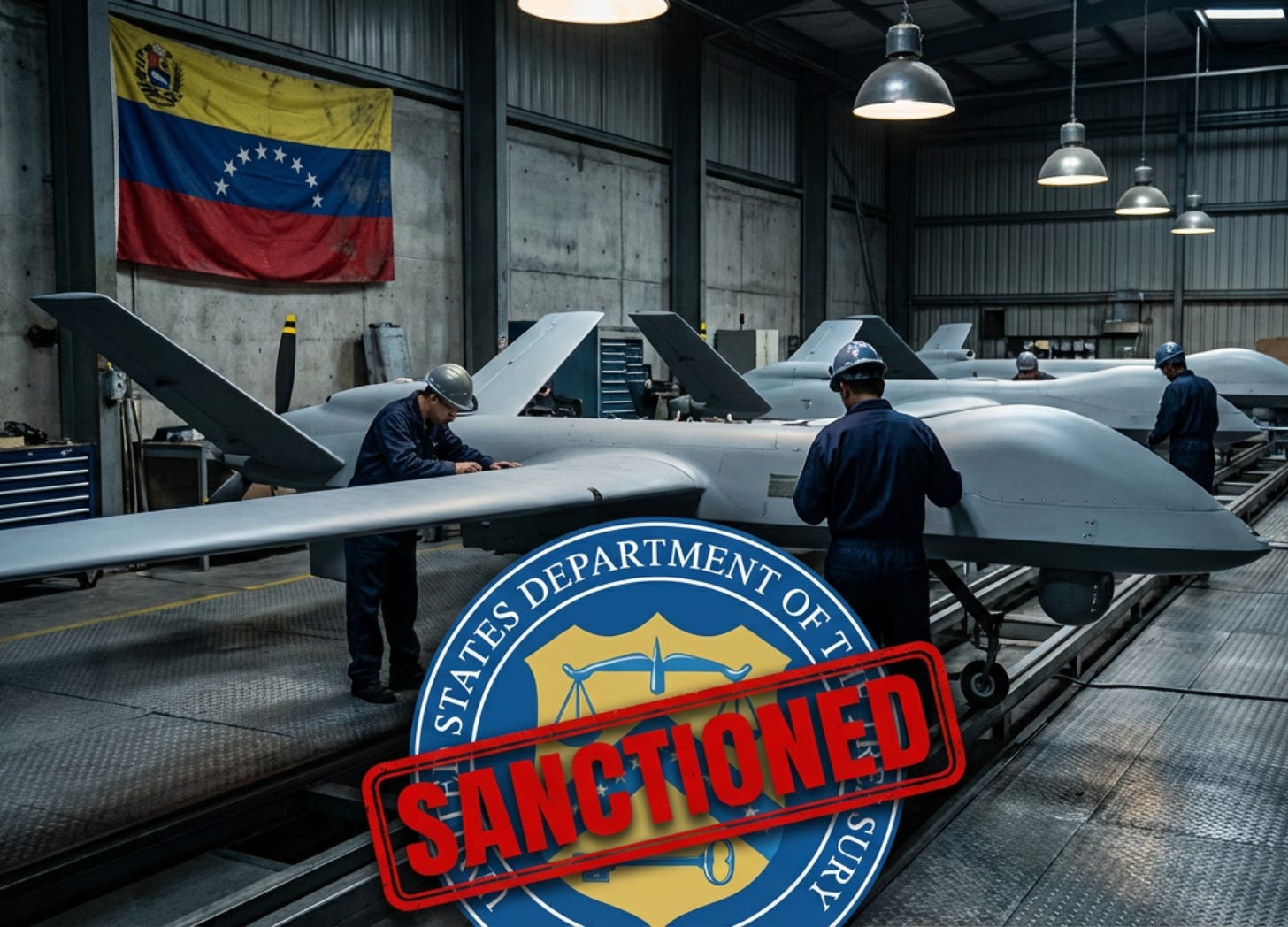
The U.S. Treasury Department announced new sanctions Tuesday targeting a Venezuelan company at the heart of Iran’s expanding military footprint in the Western Hemisphere, designating 10 individuals and entities involved in transferring millions of dollars’ worth of combat drones just miles from American shores.
Venezuelan Firm Facilitates Iranian Drone Operations
The action exposes Empresa Aeronautica Nacional SA (EANSA), a Venezuelan defense firm that has been assembling and maintaining Iranian-designed Mohajer combat drones under the rebrand ANSU-series. The company’s chairman, Jose Jesus Urdaneta Gonzalez, personally coordinated with Iranian and Venezuelan armed forces to establish drone production capabilities that now threaten U.S. interests across Latin America.
“Treasury is holding Iran and Venezuela accountable for their aggressive and reckless proliferation of deadly weapons around the world,” said Treasury Under Secretary John K. Hurley, warning that Iran’s weapons trade with Caracas “constitutes a threat to U.S. interests in the Western Hemisphere, including the Homeland.”
The designations reinforces findings from a recent investigative report by Jewish Onliner titled “Iran’s Hidden War Machine in Venezuela,” which revealed that Iranian firms, including the IRGC-linked Qods Aviation, had established advanced drone manufacturing at Venezuela’s El Libertador Air Base. The Jewish Onliner investigation documented how Iran was producing Shahed-131 drones—the same models Russia deploys against Ukraine—under IRGC supervision on Venezuelan soil.
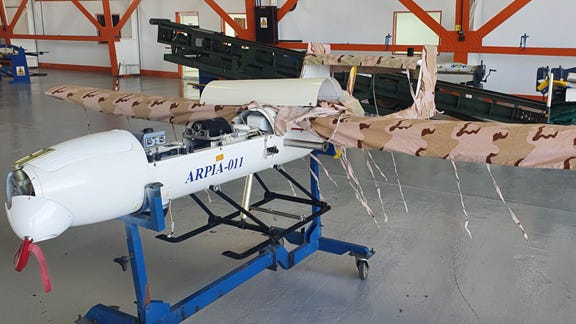
Expanding Iranian Military Infrastructure Threatens U.S. Security
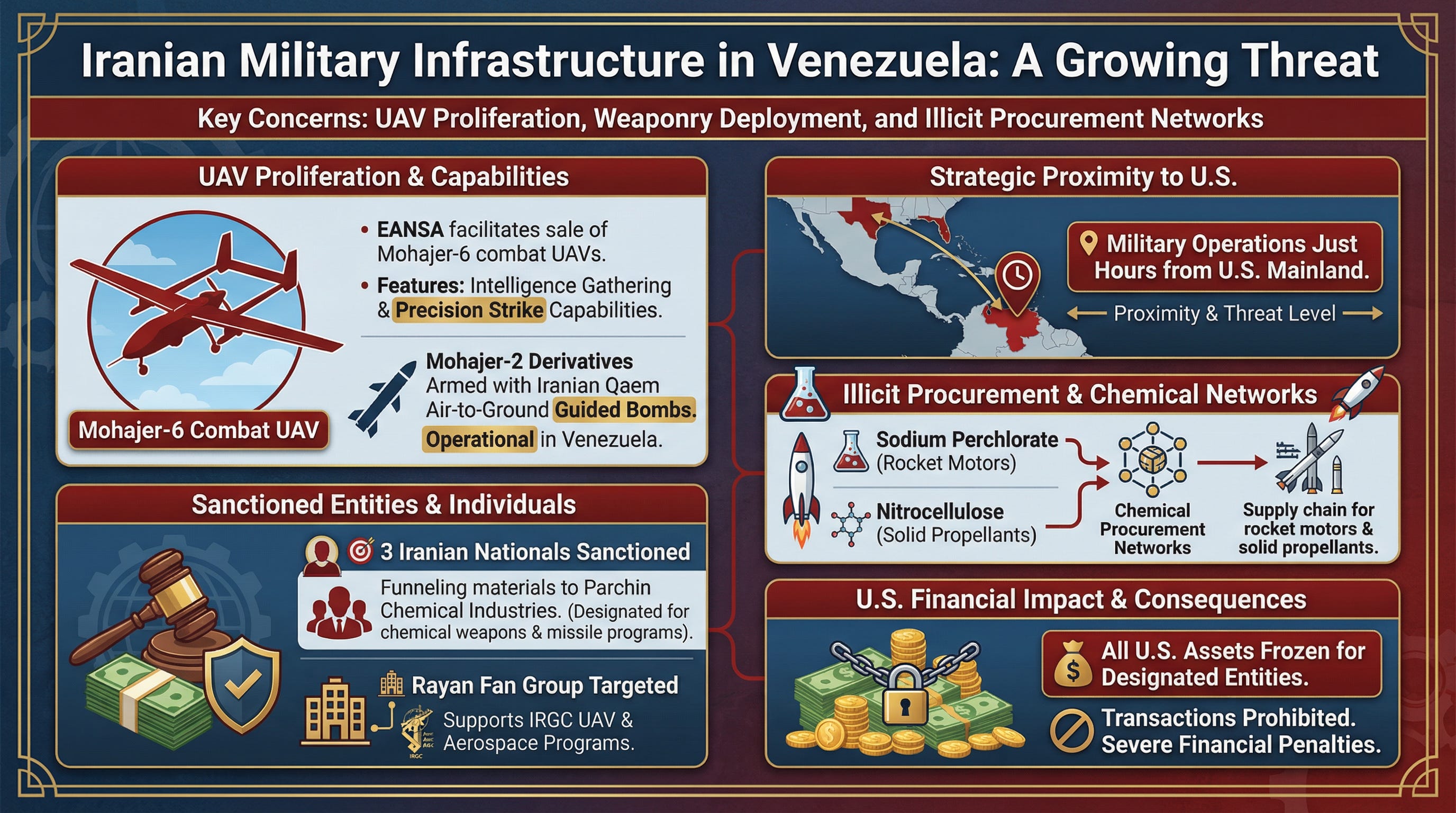
The Treasury action reveals the threat extends beyond the Shahed program. EANSA has facilitated the sale of Mohajer-6 combat UAVs capable of intelligence gathering and precision strikes, while also maintaining Mohajer-2 derivatives armed with Iranian Qaem air-to-ground guided bombs. These weapons systems are now operational in Venezuela, operated by military personnel just hours from the U.S. mainland.
The designations also target Iranian chemical procurement networks supplying materials for ballistic missiles, including sodium perchlorate used in rocket motors and nitrocellulose for solid propellants. Three Iranian nationals were sanctioned for funneling these materials to Parchin Chemical Industries, a key element of Iran’s missile program.
Additional sanctions hit members of the Rayan Fan Group, a defense conglomerate supporting the IRGC’s UAV and aerospace programs.
The action freezes all U.S. assets of designated entities and prohibits American individuals and businesses from transactions with them. Foreign financial institutions face secondary sanctions for facilitating deals with the sanctioned parties.
As Iran entrenches military infrastructure across Latin America, the convergence of drone manufacturing, ballistic missile development, and sanctions evasion networks represents an evolving threat to American security interests in an increasingly contested hemisphere.