


According to publicly-available online pages, WhyIslam appears deeply linked to the Islamic Circle of North America (ICNA). ICNA was previously examined in this series as organization #26 identified in the infamous 1991 Muslim Brotherhood Explanatory Memorandum.
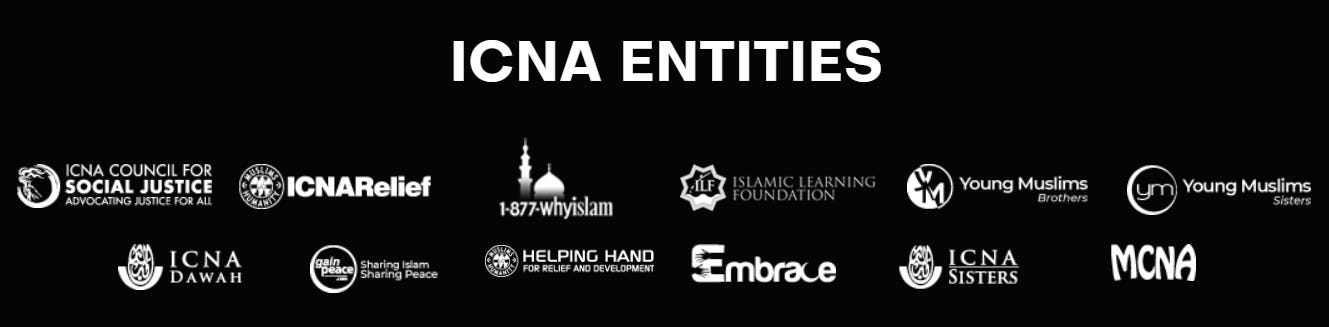
Unlike the parent organizations directly listed in the Brotherhood's strategic document, WhyIslam appears to represent the next generation of this network. Publicly available ICNA materials describe WhyIslam as an ICNA entity. As a distinct brand with its own web and social presence, it can be less immediately recognizable to readers as part of ICNA.
Founded by ICNA as the 877-WHY-ISLAM hotline—a toll-free number Americans could call to ask questions about Islam—WhyIslam has evolved into a sophisticated conversion infrastructure. ICNA officially lists WhyIslam among its entities and describes it as a means to, “organize the dawah work in North America in a professional and effective manner.”
Behind the veneer of interfaith dialogue lies an organization that publishes articles systematically undermining Christian theology while presenting Islam as the correction, promotes the hijab as liberation while deflecting from Afghanistan’s ban on women’s education and public life, and sets up unauthorized booths in public schools distributing hijabs and materials on Sharia law to students.
A Theological Bridge to Christians—Or Deception?
WhyIslam’s website features carefully crafted theological content designed to appeal to Christian audiences while subtly undermining core Christian doctrines. In an article titled “Is Jesus a Prophet? A Closer Look,” the organization presents Jesus as a revered prophet in Islam while systematically dismantling the foundational Christian belief in the Trinity.
“The Islamic perspective offers a resolution to these contradictions that is both logically coherent and scripturally grounded,” WhyIslam asserts. “The Quran did not come to erase Christianity or Judaism but to restore these faiths to their essential truth.” The article describes traditional Christian theology as requiring “theological gymnastics” to maintain, positioning Islam as the correction to Christianity's alleged errors.


This represents a sophisticated conversion strategy: acknowledging Christian reverence for Jesus while rejecting the central tenets of Christianity—His divinity, His resurrection, and salvation through His sacrifice. For Christians unfamiliar with Islamic theology, such materials could appear as common ground rather than what they represent. Namely, a fundamental rejection of Christian faith paired with an invitation to abandon it for Islam.
The Hijab Narrative: Liberation Through Covering
WhyIslam’s messaging on women’s issues similarly presents Islamic practices as liberating while deflecting criticism of oppressive policies in Muslim-majority nations. In an article titled “Hijab and the American Divide,” the organization acknowledges that Afghanistan requires women to wear full-body coverings, but immediately pivots to American failings.
The piece makes no mention that Afghanistan’s Taliban government has banned women from universities, public parks, and most employment. Instead, WhyIslam argues Americans should focus on domestic issues like the wage gap before criticizing Islamic nations. “In fact, we believe that liberation is found not in exposing our body, but in controlling who has access to it,” the article declares.

This rhetorical strategy—tu quoque, or “you too”—redirects legitimate concerns about women’s rights in Islamic societies by pointing to imperfections in Western societies, while presenting the hijab as a woman’s free choice despite its mandatory status in several Muslim-majority nations.
Curent Events Serve as Dawah Opportunities and Hosting Individual with DHS Security Concerns
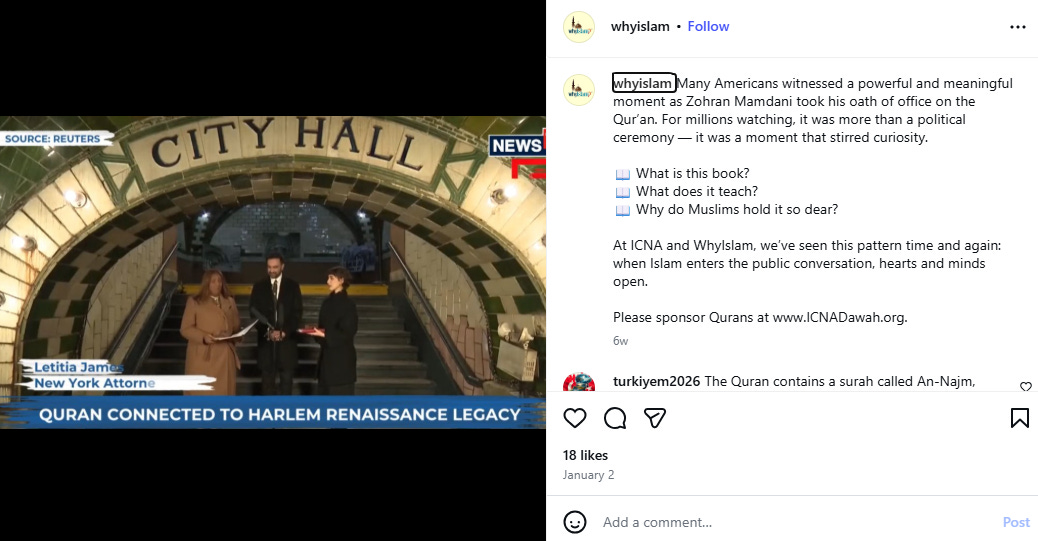
When New York State Assembly member Zohran Mamdani took his oath of office on the Quran, WhyIslam celebrated the moment on Instagram: “Many Americans witnessed a powerful and meaningful moment as Zohran Mamdani took his oath of office on the Qur’an. For millions watching, it was more than a political ceremony—it was a moment that stirred curiosity.” The post continued: “At ICNA and WhyIslam, we’ve seen this pattern time and again: when Islam enters the public conversation, hearts and minds open.”
The organization’s 2025 annual banquet, promoted on Instagram displaying CAIR- New Jersey branding, featured as its main speaker Sami Hamdi, a British political commentator who was detained by U.S. Immigration and Customs Enforcement in October 2025. Hamdi was released and voluntarily departed the United States in November 2025 after his visa was revoked by the Department of Homeland Security, reportedly over security concerns related to his commentary on U.S. foreign policy.

Infiltrating Public Schools
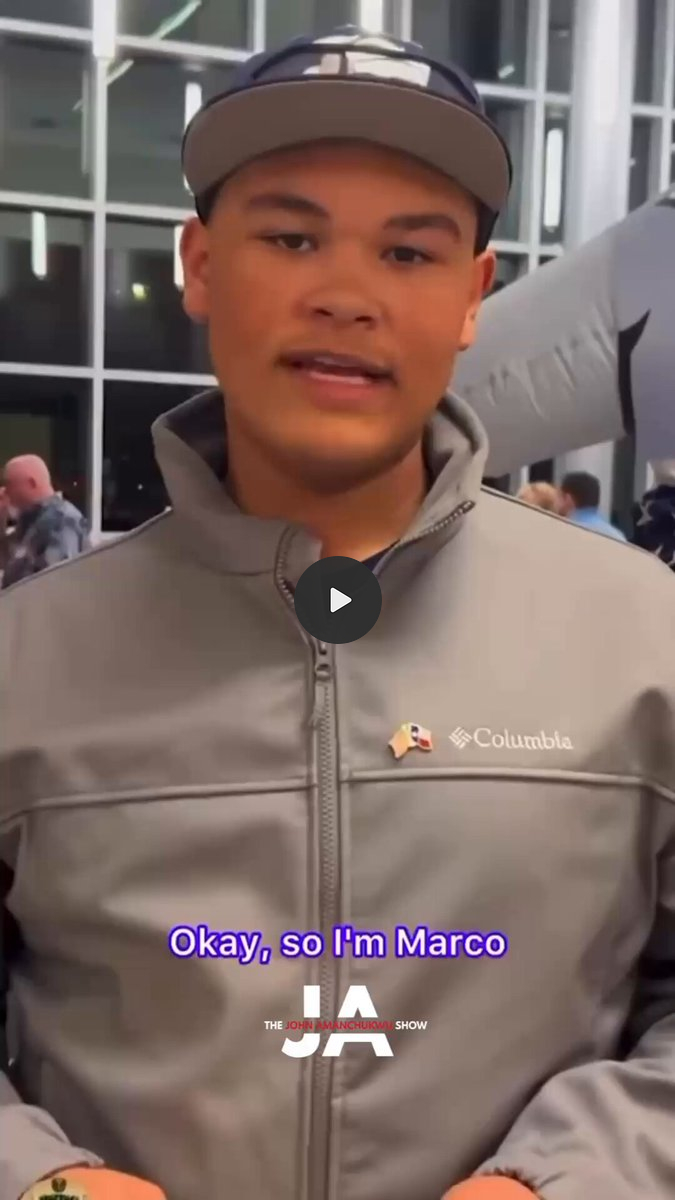
Perhaps most concerning is WhyIslam’s attempts to ingrain itself within taxpayer-funded public schools. The organization’s strategy materialized in February 2026 when four WhyIslam representatives set up an unauthorized booth at Wylie East High School in Texas during school hours.
The representatives distributed Qurans, pamphlets allegely titled “Understanding Sharia,” and hijabs to female students—all without parental notification or district approval. Student videos of the incident went viral after being shared on social media by conservative commentators.
Wylie Independent School District acknowledged a “procedural breakdown” and placed a staff member on leave, stating: “Outside organizations are not permitted to distribute materials to students without prior approval from campus and district administration.” The incident raised questions about how WhyIslam representatives passed through school security with boxes of materials and operated unobserved in a busy area near the administrative office.

Some Wylie parents expressed concerns about double standards, noting that “teachers and staff have been told to remove bibles and crosses from their offices and classrooms” while Islamic proselytizing materials were permitted on campus.
The Interconnected Web
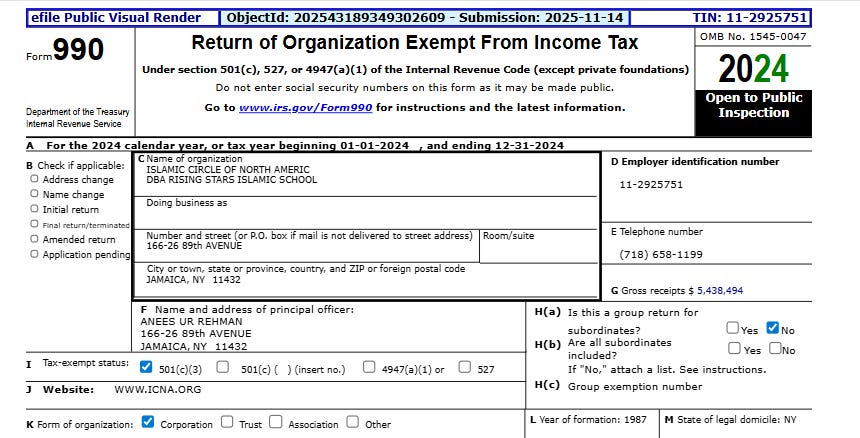
The leadership structure of WhyIslam reveals the interlocking nature of alleged Muslim Brotherhood networks in America. Tax filings show that Anees ur Rehman serves as the principal officer of ICNA—the 501(c)(3) under which WhyIslam operates—making him effectively the head of WhyIslam’s parent organization.
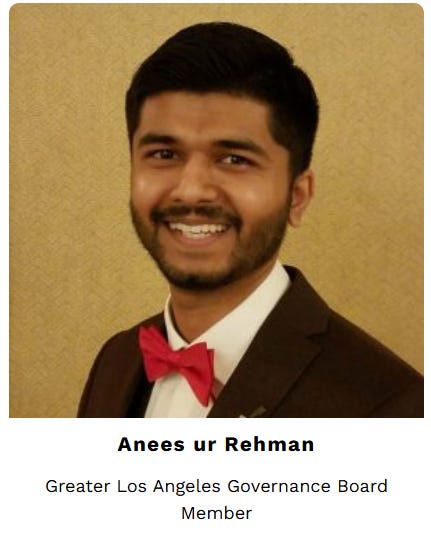
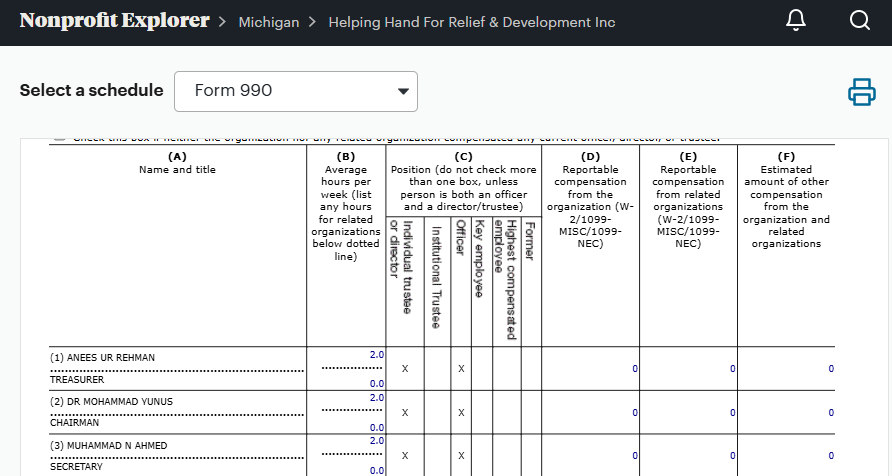
This same individual simultaneously appears to serve as treasurer of Helping Hand for Relief & Development (HHRD), an ICNA-affiliated charity that ICNA describes as part of its humanitarian network, and sits on the board of CAIR- California. A single individual bridging WhyIslam, ICNA, HHRD, and CAIR reveals how these organizations—all with alleged Brotherhood ties—share overlapping leadership and operations.
HHRD itself raises concerns. Multiple members of Congress have requested a State Department investigation into the activities of HHRD including into reported collaboation with Pakistani terrorist network, Lashkar-e-Taiba, a U.S.-designated terrorist organization.
Beyond the Original 29 Alleged Brotherhood Organizations
WhyIslam demonstrates how the Muslim Brotherhood's alleged American network may have expanded beyond the original 29 organizations named in the 1991 Memorandum into a sprawling ecosystem of offshoots and subsidiaries." These newer entities maintain ideological and operational connections to their parent organizations while potentially evading the scrutiny directed at groups explicitly named in Brotherhood documents.
Organizations like WhyIslam present a particular challenge: they combine public-facing community engagement with systematic conversion operations while maintaining alleged ties to parent organizations identified in Brotherhood strategic planning documents.
@bridiigt Gabriel has been saying this for ages