


Jewish Onliner is an independent publication. If you find our work valuable, please consider becoming a paid subscriber.

Until now, Jewish Onliner’s investigation into the 1991 “Explanatory Memorandum”— a document identified by federal prosecutors as a Muslim Brotherhood strategic plan— has focused on organizations from the list of 29 that remain active today. Groups like Islamic Society of North America (ISNA), North American Islamic Trust (NAIT), and International Institute of Islamic Thought (IIIT) continue to operate in American Muslim communities and maintain relationships with policymakers.
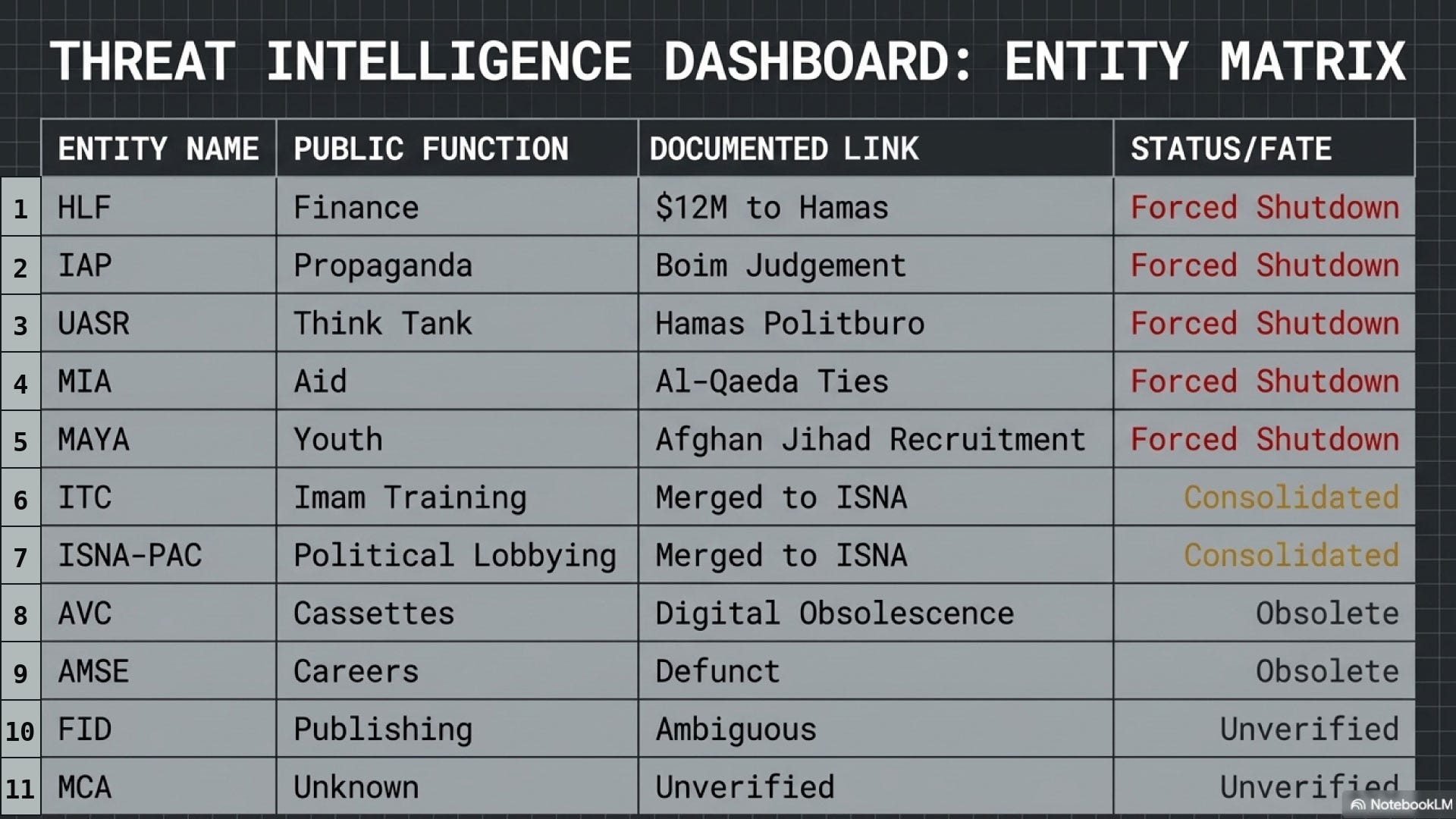
But eleven organizations on that list no longer exist. Some collapsed after federal designations, civil judgments, criminal prosecutions, or sustained post-9/11 scrutiny. Others appear to have faded, merged, or been absorbed into broader institutional functions without any criminal finding against them. This article examines those defunct networks.
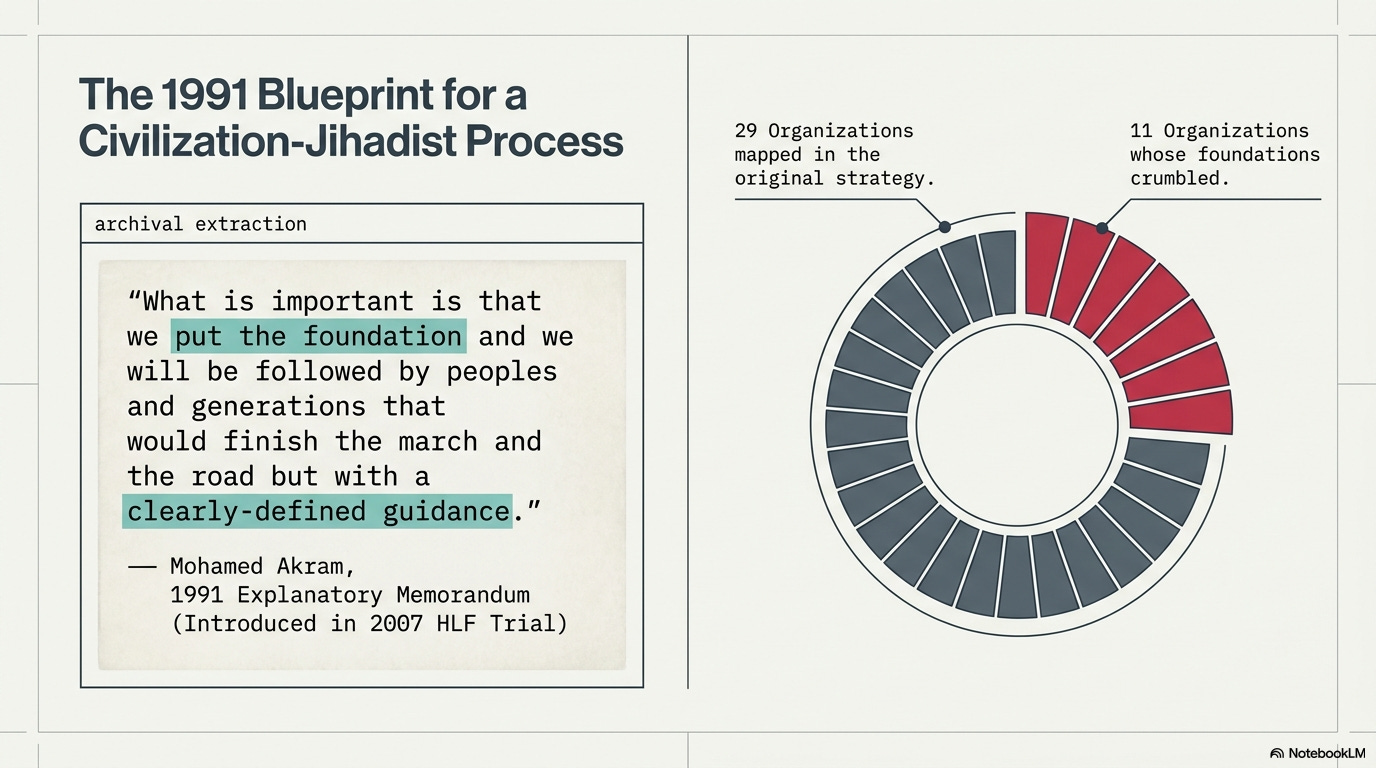
The 1991 memorandum, written by Mohamed Akram and introduced as evidence in the 2007 Holy Land Foundation terrorism trial, laid out an ambitious vision: each of the 29 listed organizations would become a “comprehensive organization” working toward what Akram described as a “civilization-jihadist” process. “What is important,” Akram wrote, “is that we put the foundation and we will be followed by peoples and generations that would finish the march and the road but with a clearly-defined guidance.”
Some of those foundations crumbled. Here’s what happened to them—and what they accomplished before they fell.
1. Occupied Land Fund (OLF) / Holy Land Foundation for Relief and Development (HLF)
Originally called the Occupied Land Fund when listed in the 1991 memorandum, it later became the Holy Land Foundation for Relief and Development — once the largest Muslim charity in the United States, based in Richardson, Texas.
The Holy Land Foundation was identified in federal court as the fundraising arm of the Hamas support network in America. In 2008, following the largest terrorism-financing trial in U.S. history, five former HLF leaders were convicted of funneling more than $12 million to Hamas. Evidence introduced at trial included the 1991 Muslim Brotherhood memorandum itself, which named the Occupied Land Fund as one of the 29 organizations.
Prosecutors argued, and jurors accepted, that HLF routed funds through Hamas-controlled charitable committees that helped sustain Hamas’s social and political infrastructure. Internal documents introduced at trial showed HLF leaders meeting with Hamas-linked figures and discussing fundraising strategies that prosecutors said supported Hamas’s infrastructure.
When and Why They Shut Down: The U.S. government designated HLF as a Specially Designated Global Terrorist in 2001, froze its assets, and shut down its operations. In 2009, after the criminal convictions, federal judges handed down sentences ranging from 15 to 65 years in prison for the organization’s leaders.
2. Islamic Association for Palestine (IAP)
Federal court records and congressional testimony have described IAP as a central Hamas-support organization in the United States. IAP operated under multiple names —American Muslim Society (AMS) and American Middle Eastern League for Palestine (AMEL) — but according to court evidence, its mission remained constant: promote Hamas’s agenda and raise funds for its operations.
According to federal court testimony and documents, IAP was part of the “Palestine Committee,” a Hamas support network in America that included the Holy Land Foundation (fundraising) and the United Association for Studies and Research (think tank). Congressional testimony identified IAP as Hamas’s “primary propaganda organization” in the United States. The organization reportedly held joint conferences with MAYA where Hamas and Islamic Jihad openly recruited and fundraised.
In 2004, the family of David Boim — an American teenager murdered by Hamas in 1996 — won a landmark $156 million civil judgment against IAP and AMS for materially supporting Hamas terrorism.
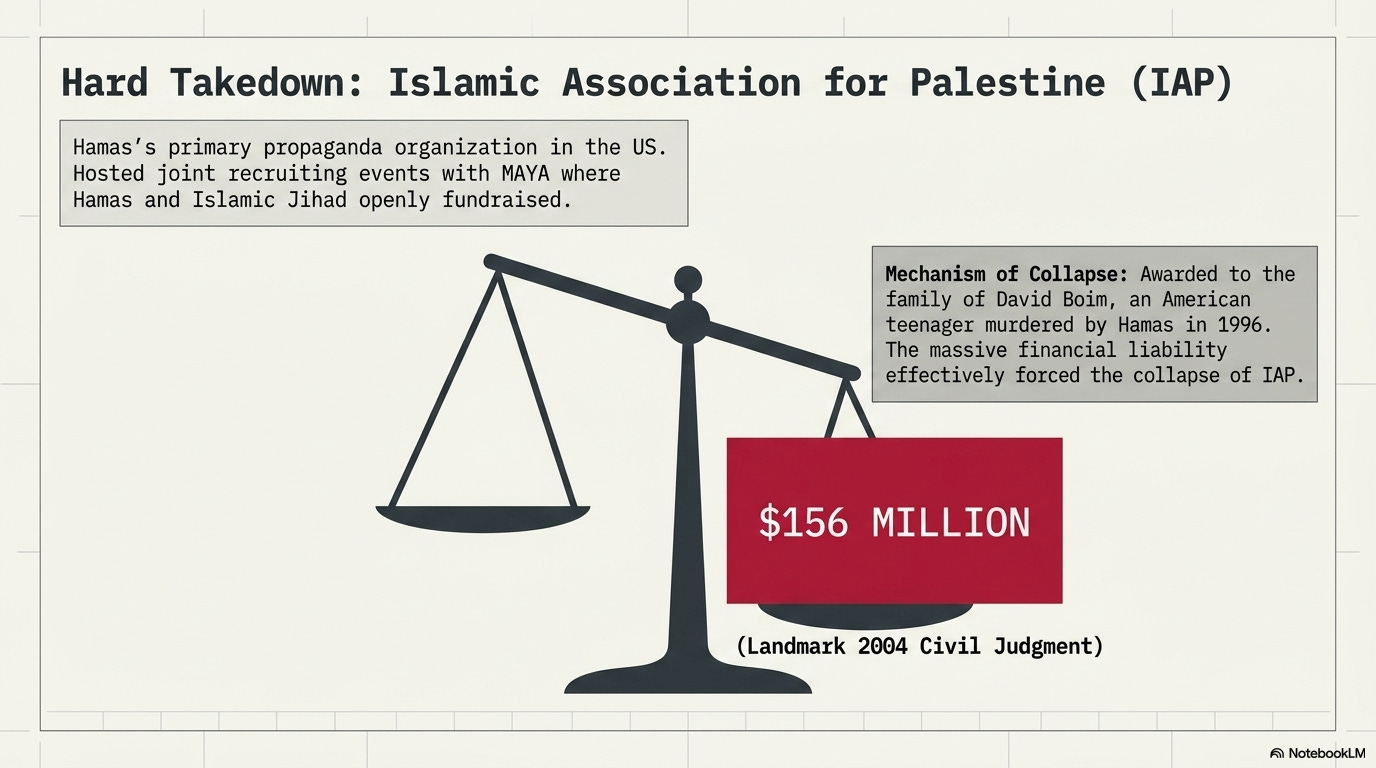
When and Why They Shut Down: IAP effectively collapsed after the Boim civil judgment in 2004. Some former IAP-linked figures later became active in American Muslims for Palestine, which was founded in 2006. In ongoing litigation, plaintiffs have alleged that AMP and related entities are successors to the former IAP network; those claims remain contested.
3. United Association for Studies and Research (UASR)
A Virginia-based think tank founded in Chicago in 1989, identified as the intellectual arm of the alleged Hamas support network in America alongside IAP (propaganda) and HLF (fundraising).
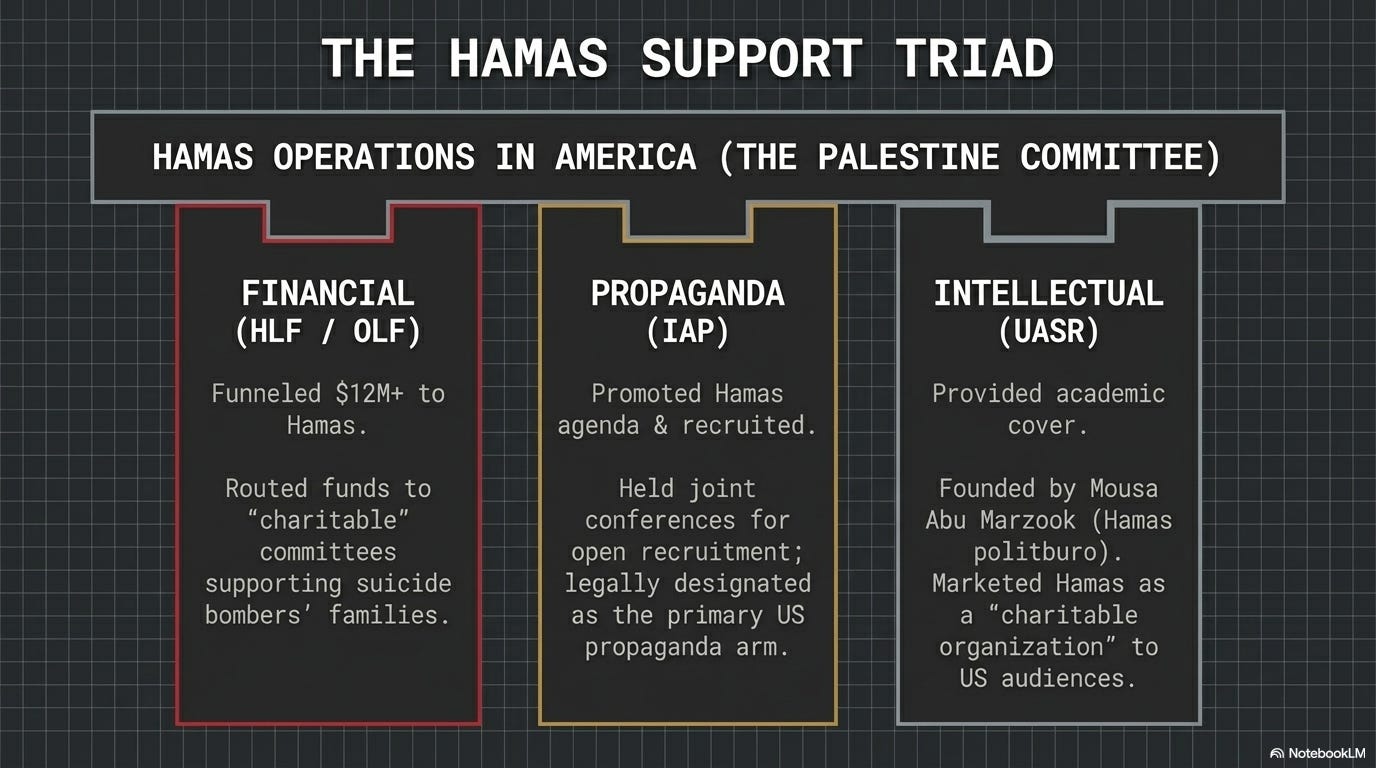
UASR was founded by Mousa Abu Marzook, identified as a senior Hamas politburo member who served as the organization’s political leader. According to federal investigators, the think tank operated as an alleged Hamas front, providing academic cover for the terrorist organization’s activities in the United States. UASR director Ahmad Yusuf publicly described Hamas as “a charitable organization.”
Based in Annandale, Virginia, UASR was reportedly linked to individuals arrested in Israel for bringing funds into the country to organize Hamas activities. When Hamas had internal disputes over U.S. fundraising operations in 1994, Mousa Abu Marzook—UASR’s founder — personally settled the disagreement between competing charities, according to investigative reports.
When and Why They Shut Down: The organization is defunct. According to Georgetown University researchers, UASR ceased operations following increased scrutiny in the 2000s. Its founder, Mousa Abu Marzook, remains a senior Hamas leader. The European Council on Foreign Relations identifies him as a Hamas Politburo member and deputy head of the group's external politburo.
4. Mercy International Association (MIA)
Founded in 1980 in Canada as Human Concern International, MIA rebranded in 1989 and moved its headquarters to Michigan. Officially, it delivered humanitarian aid -food, medicine, shelter - to people affected by disasters and war. According to investigative reports, it potentially operated as a subsidiary of the Muslim Brotherhood and became one of the most extensively documented alleged terrorism-financing operations ever uncovered. Mercy International-linked entities appeared in multiple terrorism-financing investigations, though similarly named organizations make this history difficult to describe without careful distinction.
According to federal investigators, court testimony, and investigative reporting, Mercy International-linked offices and personnel were alleged to have had ties to Osama bin Laden’s al-Qaeda network. Its Pakistan chapter was reportedly headed by Ahmed Khadr, identified as a close bin Laden associate, and later by Zahid Shaikh Mohammed, brother of 9/11 mastermind Khalid Shaikh Mohammed and uncle of convicted 1993 World Trade Center bomber Ramzi Yousef. When U.S. investigators raided Mohammed’s home in 1993, they reportedly found documents and photographs indicating his relationship with bin Laden; the Kuwaiti government later confirmed Mohammed was an al-Qaeda member.
MIA’s most significant documented connection came in 1998. Before al-Qaeda’s embassy bombings in Kenya and Tanzania that killed 224 people, MIA director Ahmad Sheik Adam allegedly corresponded by phone with bin Laden numerous times. After the attacks, raids on MIA’s Kenya office uncovered files belonging to convicted al-Qaeda operative Wadih El-Hage — and revealed that MIA had allegedly issued identity cards for Osama bin Laden, Ali Mohamed, and Mohammed Atef. During the 2001 embassy-bombings trial, al-Qaeda operative L’Houssaine Khertchou testified about Mercy International’s Kenya branch and alleged links between its personnel and al-Qaeda operatives.
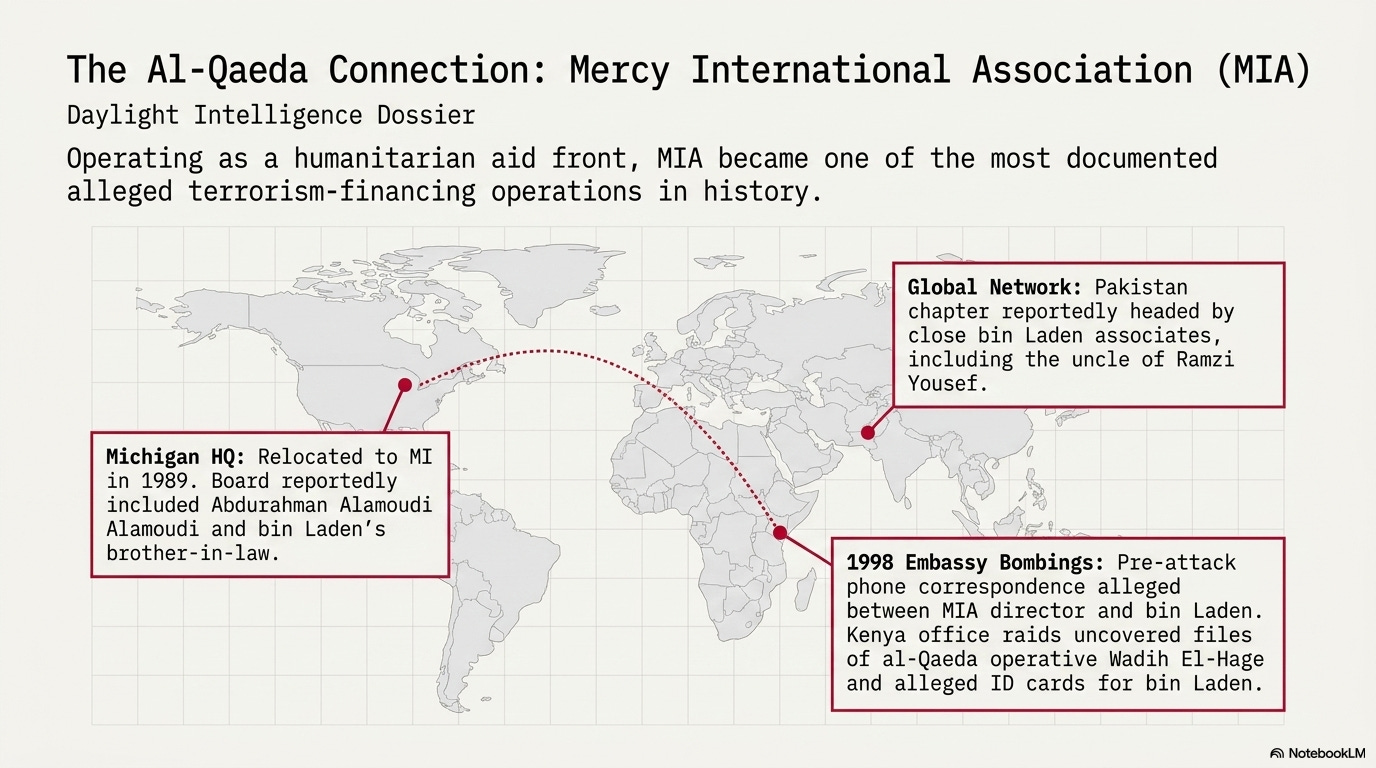
MIA’s board reportedly included Abdurahman Alamoudi (later convicted of terrorism-related charges) and bin Laden’s brother-in-law Mohammad Jamal Khalifa, who allegedly used MIA to fund operations in the Philippines.
When and Why They Shut Down: The memorandum-listed Mercy International Association appears to have become inactive by the early 2000s, though similarly named Mercy organizations have existed separately.
5. Muslim Arab Youth Association (MAYA)
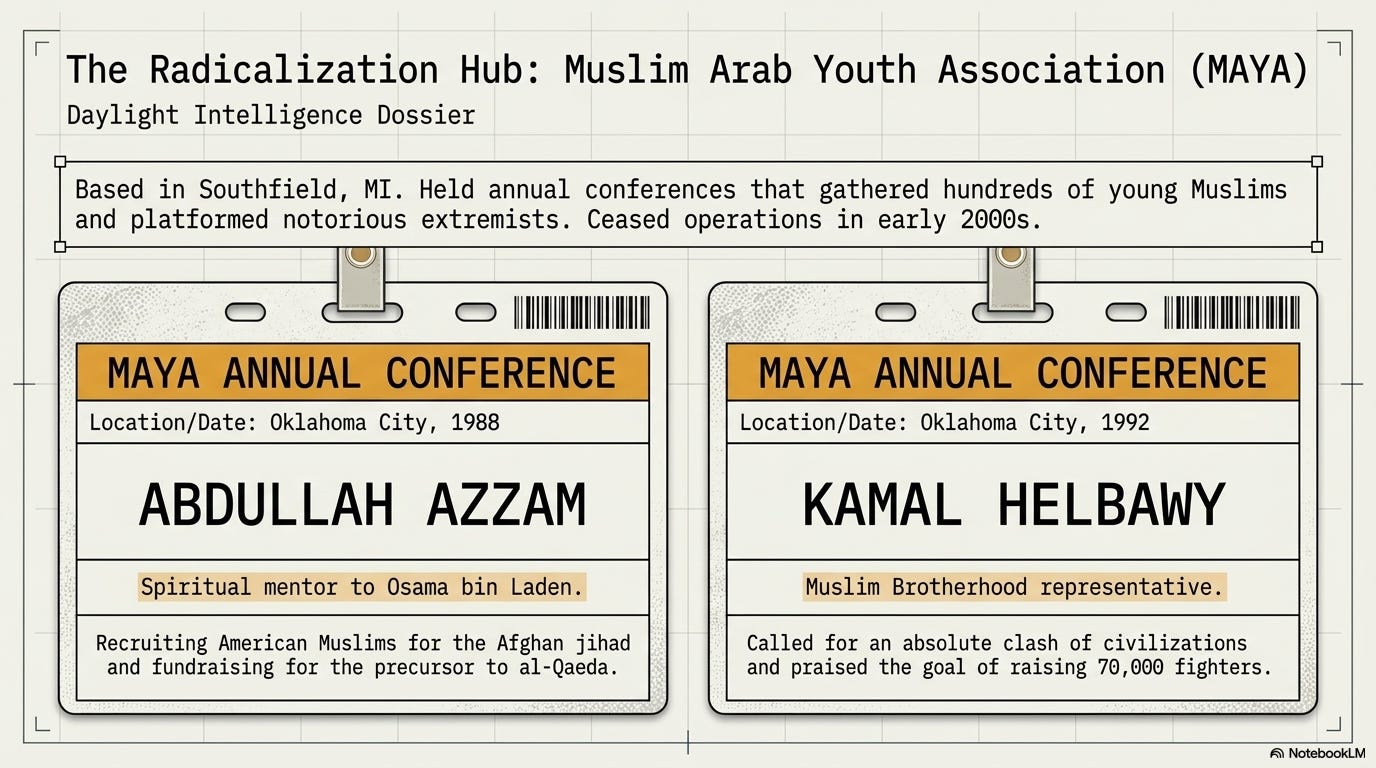
Founded as a youth/ethnic subgroup of the Muslim Students Association, MAYA became one of the most visible organizations listed in the Brotherhood memorandum during the 1980s and 1990s. Based in Southfield, Michigan (26300 Telegraph Rd), it held annual conferences that brought together hundreds of young Muslims and, according to investigative reports, some of the world’s most notorious extremists.
MAYA’s Oklahoma City conferences in 1988 and 1992 featured speakers later identified as terrorist leaders. At the December 1988 conference, the keynote speaker was Abdullah Azzam — identified as Osama bin Laden’s spiritual mentor and architect of the modern jihadist movement. As The Atlantic documented, Azzam reportedly used these MAYA platforms to recruit American Muslims for the Afghan jihad and fundraise for what would become al-Qaeda. Other speakers included individuals identified as Hamas leader Muhammad Siyyam and Muslim Brotherhood leader Mustapha Mashhour. According to records, Hamas and Islamic Jihad allegedly set up recruiting and fundraising stands at the event.
At the 1992 Oklahoma City conference, Muslim Brotherhood representative Kamal Helbawy delivered a speech calling for an “absolute clash of civilizations” against Jews and Christians, praising Hassan al-Banna’s goal of raising 70,000 fighters, and declaring that “the Palestinians became strong fighting battalions.”
MAYA held joint conferences with the Islamic Association for Palestine (IAP), which was later determined in federal court to be Hamas’s propaganda arm in America. Several terrorism cases in the 1990s involved individuals who moved through overlapping Islamist and jihadist circles in the United States, including networks that appeared at or around MAYA-linked conferences.
When and Why They Shut Down: Last IRS filings were for 2000 and 2001 (EIN 35-1789374). The organization appears to have ceased operations in the early 2000s amid post-9/11 scrutiny of alleged jihadist recruitment networks.
6. Islamic Teaching Center (ITC)
Founded in 1977 in Plainfield, Indiana by the Muslim Students Association, ITC served from Plainfield, Indiana as an educational and training center connected to ISNA until 1994.
ITC ran an extensive prison ministry that in 1981 contacted approximately 4,000 inmates across 310 prisons and enrolled more than 500 in Islamic correspondence courses. The center published educational materials and trained religious leaders across North American mosques.
ITC’s director from 1985-1991 was Ihsan Bagby, and board member Dr. Abdullah Idris Ali later became ISNA president (1992-1997), showing the organization’s integration into leadership structures identified in the 1991 memorandum.
When and Why They Shut Down: ITC disbanded in 1994 when ISNA moved its headquarters and re-absorbed the center’s functions. Unlike other defunct organizations shut down by federal authorities, ITC’s closure was a strategic consolidation rather than a forced shutdown.
7. ISNA Political Awareness Committee (ISNA-PAC / IPAC)
Identified as a subdivision of ISNA founded in 1987 to promote Muslim political engagement in U.S. politics and to to promote the injection of Muslim values into American political and social institutions.
ISNA-PAC never achieved significant traction. It failed as a standalone committee by the mid-1990s seemingly due to limited Muslim voting participation at the time, internal opposition, community apathy, and lack of unity among American Muslims on political strategy.
When and Why They Shut Down: The committee appears defunct as a separate entity. ISNA later developed other civic and government-relations functions, though the record does not prove a direct institutional continuation from ISNA-PAC. ISNA now maintains an Office for Interfaith, Community Alliances, and Government Relations in Washington, D.C. (headed by Imam Saffet Abid Catovic since 2021) and co-sponsors the annual National Muslim Advocacy Day on Capitol Hill, which drew over 1,000 participants in 2026. The broader political-engagement function later appeared in other ISNA civic and government-relations work.
8. Audio-Visual Center (AVC)
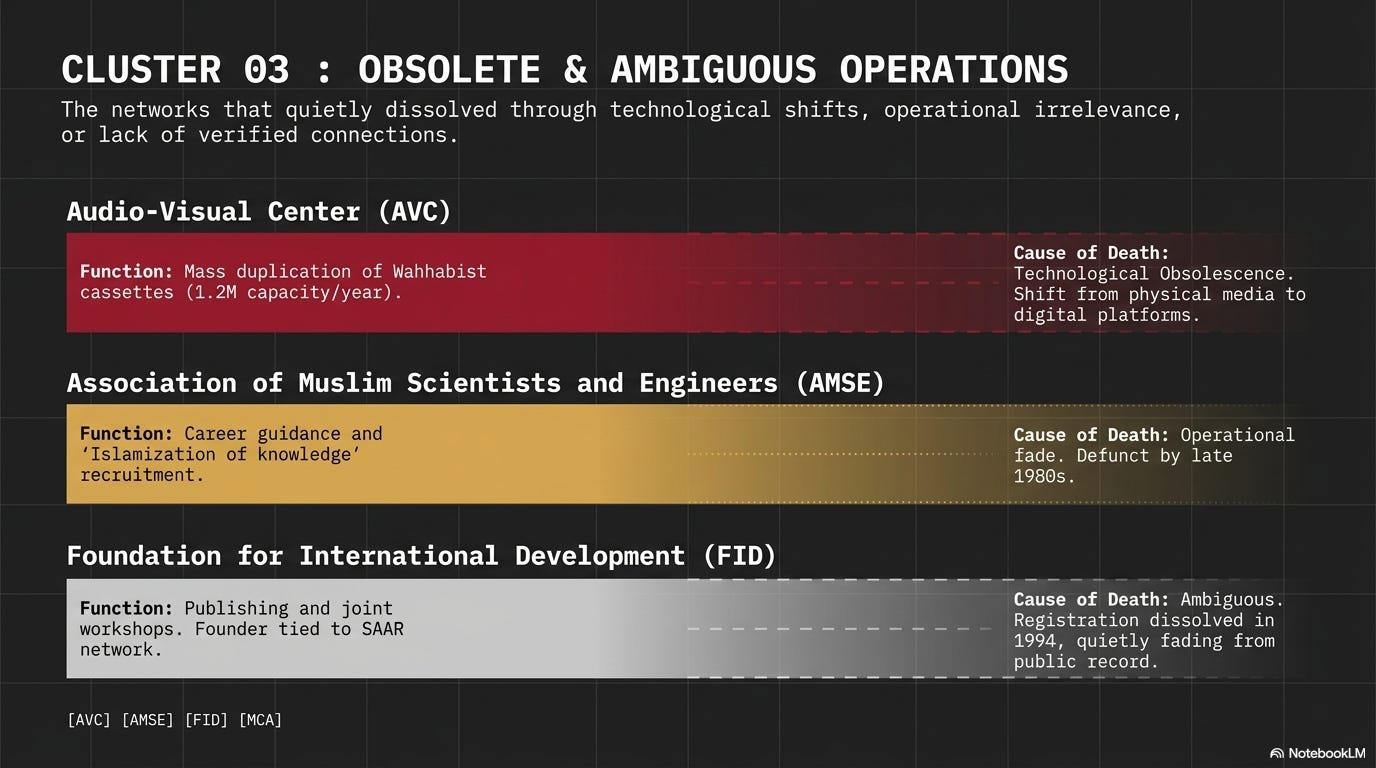
Identified as a division of the North American Islamic Trust (NAIT), AVC was founded by ISNA in 1981 to provide Islamic audiovisual materials. In 1983, AVC opened what was described as the largest Muslim-owned cassette-duplication facility in the United States, with production capacity of 1.2 million cassettes and CDs per year.
According to investigative reports, AVC’s books and recordings promoted Wahhabism— the extremist interpretation of Islam which originated in Saudi Arabia. Operating from ISNA’s Plainfield, Indiana headquarters, AVC mass-produced and distributed content across American mosques and Islamic centers throughout the 1980s.
The organization worked in tandem with Islamic Book Service (IBS), another media operation listed as #14 in the 1991 memorandum, creating a publishing network that disseminated Islamist materials through print and audio.
When and Why They Shut Down: AVC appears defunct with no website or online presence and no recent ISNA/NAIT references. Last documented activity was in the late 1980s/early 1990s. The shift from physical media to digital platforms may have contributed to the disappearance of AVC as a distinct operation.
9. Association of Muslim Scientists and Engineers (AMSE)
Founded in 1969, the Association of Muslim Scientists and Engineers (AMSE) described itself as “a group of professionals, para-professionals and near-professionals in science and engineering and related fields, who are also Muslims by faith.” AMSE originated — along with the Islamic Medical Association of North America and the Association of Muslim Social Scientists — as an outgrowth of the Muslim Students Association of the U.S. and Canada (MSA). After the Islamic Society of North America (ISNA) was established in 1981, AMSE became one of its constituent groups.
AMSE’s stated mission included:
“to channel the talents of Muslim scientists and engineers in providing Muslim individuals and communities assistance and guidance in all spheres of human activity”
AMSE held its 14th annual conference in October 1988 at the Islamic Center of North America in Plainfield, Indiana — the same Brotherhood hub that allegedly housed the Islamic Teaching Center, Audio-Visual Center, and other memorandum-listed entities. The organization served as a recruitment pool for activists and helped establish the “Islamization of knowledge” academic movement through collaboration with the Foundation for International Development and the International Institute of Islamic Thought.
AMSE’s president from 2005-07 was Khurshid Qureshi, who during his student days at Oklahoma State University coordinated the establishment of Muslim Students Association chapters in Texas, Oklahoma, Arizona, Kansas, and Arkansas—demonstrating the organization’s role in expanding the Brotherhood’s infrastructure.
When and Why They Shut Down: The organization is now defunct with no activity recorded since the late 1980s-early 2000s. Its former website (amseweb.org) no longer functions.
10. Foundation for International Development (FID)
Identified as a subsidiary of ISNA, FID was also registered in Plainfield, Indiana by Iqbal Unus in the 1980s. Officially, it published the International Journal of Science and Technology and supported professional Muslim associations.
Unus was identified as a long-time associate of individuals linked to the Muslim Brotherhood and a member of the SAAR network — a web of Islamic organizations raided by federal authorities in 2002’s Operation Green Quest for suspected terrorism financing. The SAAR network became a focus of federal investigations into suspected terrorism financing, though not every entity or individual connected to that network was charged.
FID allegedly collaborated with other organizations listed in the 1991 memorandum including the Association of Muslim Scientists and Engineers (AMSE), which is also covered on this list, the International Institute of Islamic Thought (IIIT), and the Islamic Medical Association (IMA). An IIIT publication from the 1980s noted FID facilitating joint workshops to advance the “Islamization of knowledge.”
The Indiana registration dissolved in 1994, though some sources suggest possible continued operation beyond that date. Current status is ambiguous. Unus later remained active in other Islamic organizations.
11. Muslim Communities Association (MCA)
According to Discover the Networks, the California-based Muslim Communities Association (MCA) was co-founded in 1982 by Mahboob Khan and his wife, Malika Khan. Mahboob Khan served as the organization’s board chairman from its inception until 1999, the year he died. Formerly known as the Muslim Community Association, the MCA declared its affiliation with the Islamic Society of North America and grew out of the Muslim Students Association of the U.S. and Canada. The organization comprised two mosques, a cultural center, and an elementary school. From its inception, MCA’s stated purpose was “to cater specifically to the needs of students who had chosen to reside permanently in North America.”
According to the San Francisco Chronicle, at least twice in the 1990s, an MCA mosque hosted Ayman al-Zawahiri, who would later become al-Qaeda’s No. 2 leader, and helped raise money for him. Al-Zawahiri went on to orchestrate multiple terrorist attacks and succeeded Osama bin Laden as head of al-Qaeda.
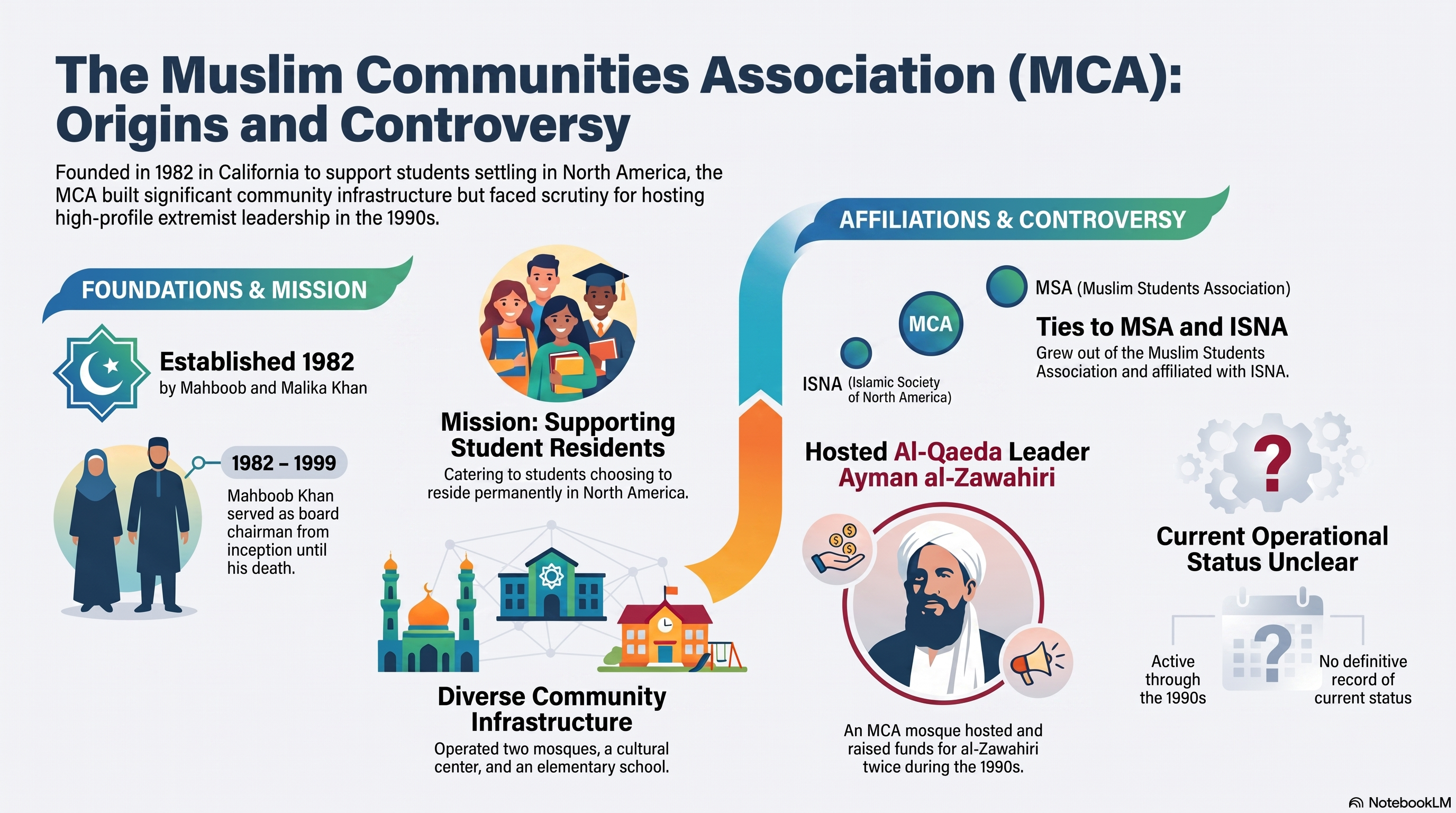
When and Why They Shut Down: Current status unclear. While the organization was documented as active through the 1990s (when it hosted al-Zawahiri), public records do not definitively establish whether the organization formally dissolved, continues to operate under a different name, or merged with another entity. The California organization co-founded by Mahboob Khan in 1982 has not appeared in recent investigative reports or federal proceedings, suggesting it may no longer function as a distinct entity.
What Comes Next
The eleven organizations profiled here represent a specific era documented in federal investigations and court proceedings — one characterized by alleged terrorism financing, documented ties to al-Qaeda and Hamas, and the criminal convictions that followed. Most collapsed involuntarily because federal authorities shut them down or post-9/11 scrutiny made their operations untenable.
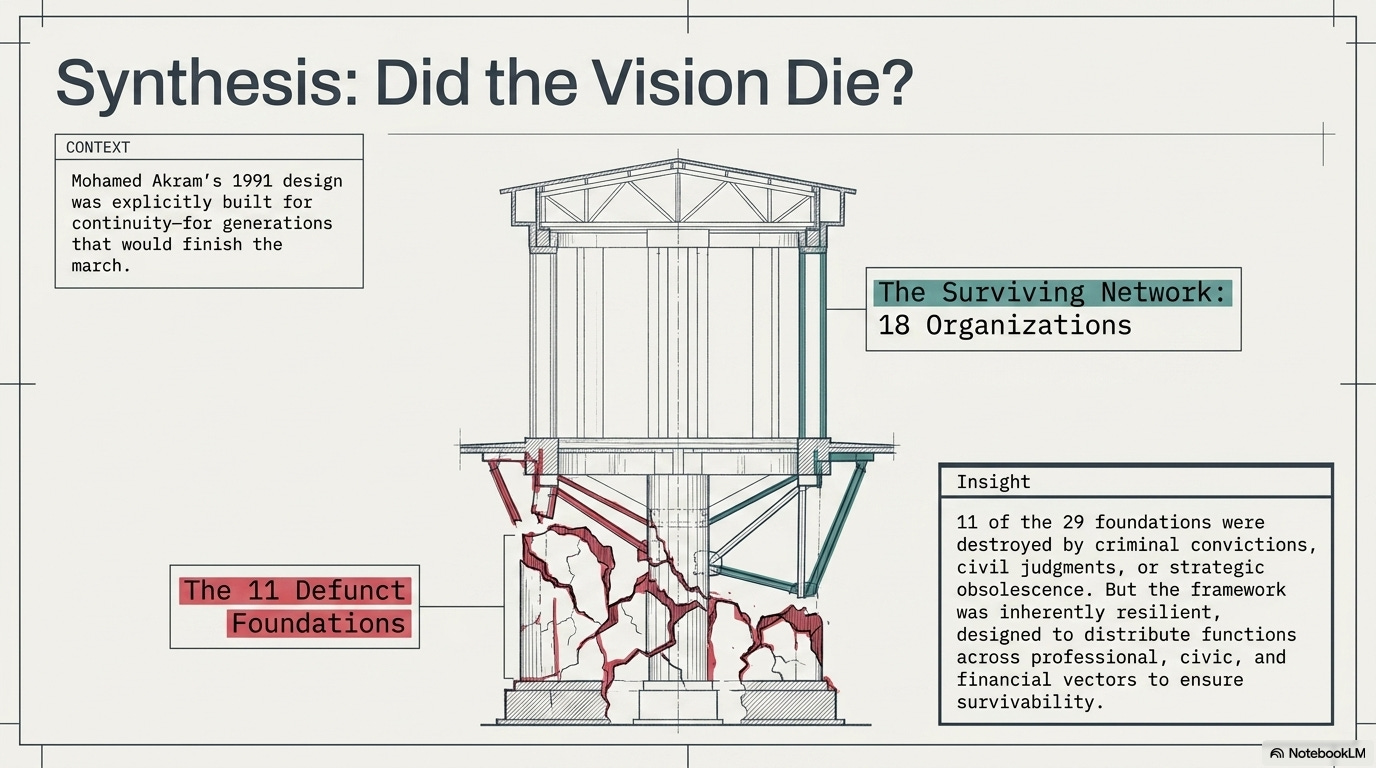
The 1991 memorandum anticipated continuity. Mohamed Akram wrote that these organizations would “put the foundation” and that “peoples and generations” would follow to “finish the march.” The question for investigators, policymakers, and the American public is whether the organizations that survived — and those founded after 2001 — continue operating according to the strategic vision laid out in that document.
This investigation relies heavily on documentation compiled by Discover the Networks, an invaluable resource for tracking organizations identified in the 1991 memorandum — particularly those that closed decades ago.