


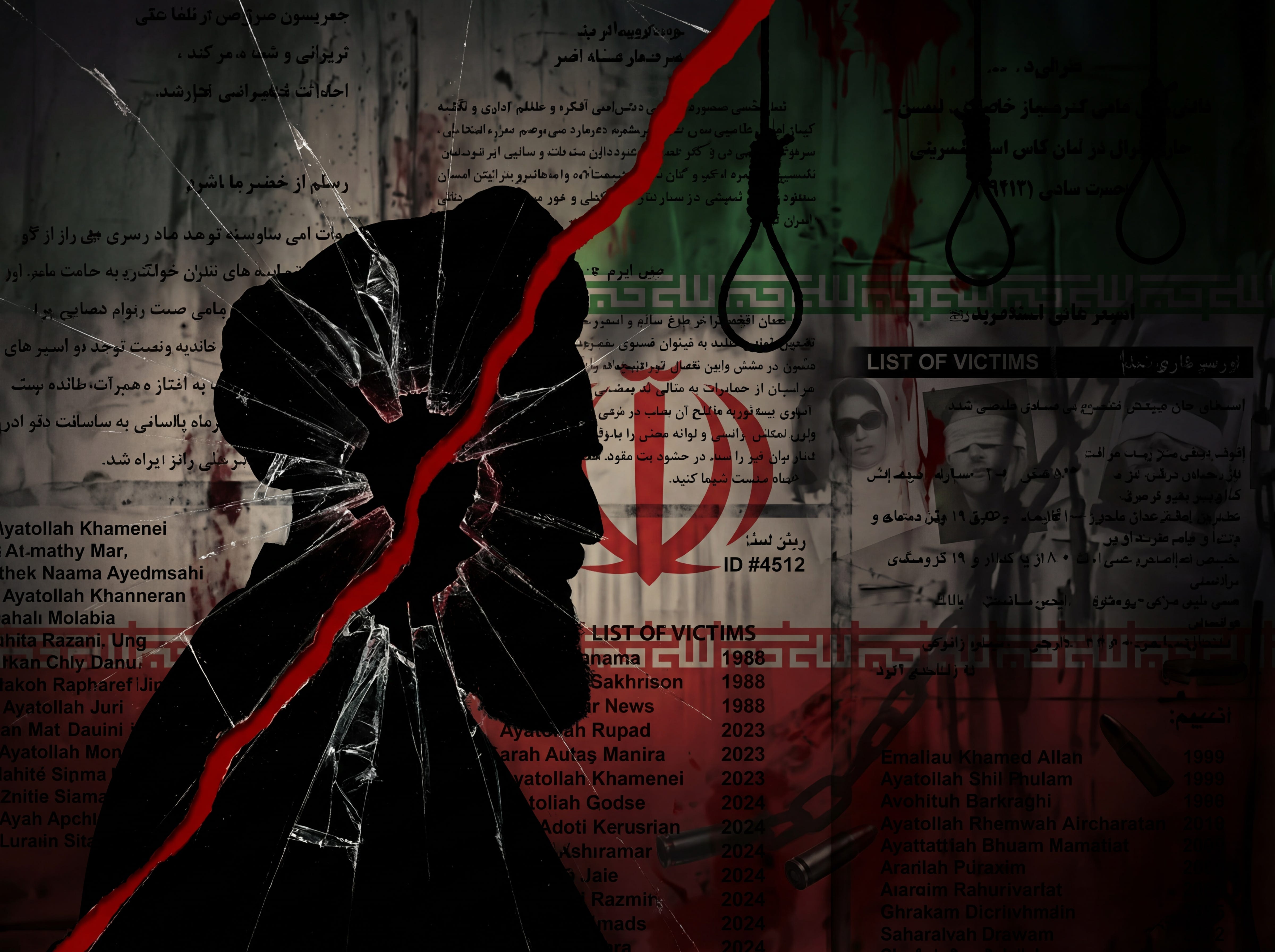
Ayatollah Ali Khamenei’s 37-year tenure as Supreme Leader of the Islamic Republic of Iran, which ended with his death in airstrikes on February 28, 2026, was marked by systematic human rights abuses, mass executions, and the violent suppression of dissent, according to documentation from international rights organizations and the United Nations.
From his ascension in 1989 until his death, human rights monitors recorded a consistent pattern of state-sanctioned violence. Reports from Amnesty International, Human Rights Watch, and United Nations experts detail a governance structure that relied heavily on capital punishment, arbitrary detention, and the persecution of religious and ethnic minorities to maintain power.
Execution Rates Reached Record Highs
Data compiled by rights groups indicates that execution numbers surged in the final years of Khamenei’s rule. In 2025 alone, the National Council of Resistance of Iran (NCRI) reported over 2,200 executions, the highest annual figure recorded during his leadership. This followed a trend of increasing capital punishment; the United Nations reported at least 901 executions in 2024.
The pace of executions accelerated significantly in late 2025. Amnesty International reported that by September 2025, authorities had already executed over 1,000 individuals that year. In October 2025, Iran International documented 241 executions in a single month, the highest October figure in two decades.
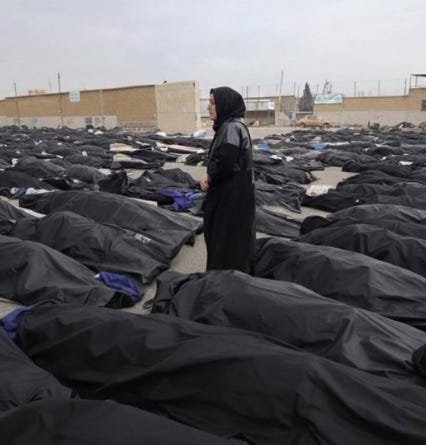
Khamenei’s tenure began in the shadow of the 1988 prison massacres, during which an estimated 5,000 to 30,000 political prisoners were executed across Iran. Human Rights Watch and the NCRI have documented Khamenei’s role in the leadership structure that authorized these killings.
Iran also remained one of the few nations to execute juvenile offenders. Iran Human Rights Monitor reported that in 2019 alone, at least 10 individuals were executed for crimes committed as minors,, in violation of the International Convention on the Rights of the Child, to which Iran is a signatory.
Mass Casualties in Protest Crackdowns
The state response to civil unrest under Khamenei involved lethal force, resulting in significant loss of life. During the widespread protests of late 2025 and early 2026, documents reviewed by Iran International indicate that over 36,500 people were killed. Khamenei himself publicly acknowledged 3,090 deaths, though rights groups suggest the true toll was far higher.
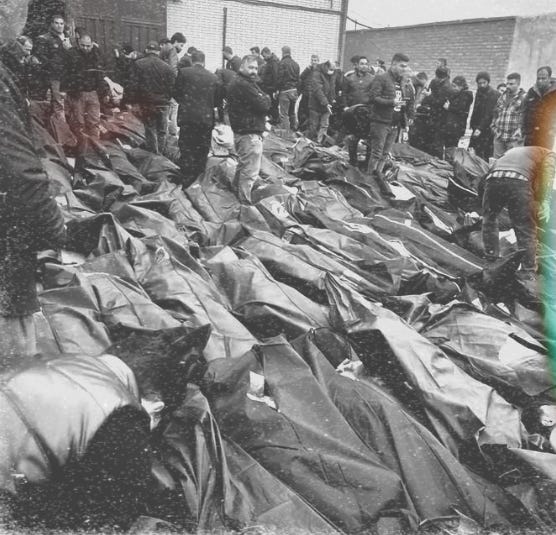
Medical professionals corroborated accounts of state violence. Forty Iranian doctors and nurses told The New York Times they treated protesters with gunshot wounds consistent with combat-style targeting. Human Rights Watch cited “growing evidence of countrywide massacres” during this period.
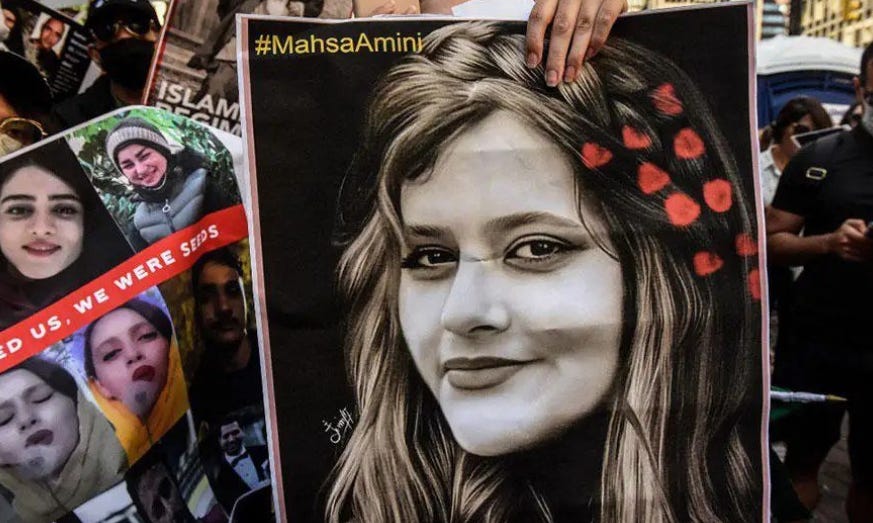
Previous uprisings met similar responses. During the November 2019 protests, Amnesty International confirmed 321 deaths but estimated the actual number between 1,000 and 1,500. Following the 2022 “Woman, Life, Freedom” protests sparked by the death of Mahsa Amini in captivity, a UN fact-finding mission reported over 500 protesters killed and approximately 18,000 to 19,000 arrested.
Arbitrary Detention and Allegations of Torture
The crackdown on dissent extended beyond street protests to systemic detention and abuse. In February 2026, Human Rights Watch described a “tsunami of arbitrary arrests” sweeping the country.
Detainees frequently faced coerced confessions. The International Federation for Human Rights (FIDH) documented that between 2009 and 2019, Iranian state media broadcast forced confessions from at least 355 individuals. In early 2026, France 24 reported that state television aired over 100 forced confessions following the latest unrest.
Torture methods documented by the U.S. State Department, Amnesty International, and Human Rights Watch included threats of execution, rape, and sexual assault against detainees.
Systematic Persecution of Minorities
Religious and ethnic minorities faced institutionalized discrimination throughout Khamenei’s rule. The Baha’i community, Iran’s largest non-Muslim religious minority numbering approximately 300,000, was a particular target. A 2024 Human Rights Watch report titled “The Boot on My Neck” documented systematic persecution of Baha’is, including bans on education and employment.
The state also targeted the LGBTQ+ community. Homosexuality remained a capital offense, and German intelligence reports noted a “high number” of executions of gay men. In 2022, NBC News reported the execution of two men on sodomy charges.
Other groups, including Christians, Jews, and Sunni Muslims, faced varying degrees of discrimination, imprisonment, and restrictions on religious practice.
Restrictions on Press and Women’s Rights
Freedom of the press was severely curtailed. Iran consistently ranked among the world’s worst jailers of journalists, placing 176th out of 180 countries on the 2025 Reporters Without Borders (RSF) World Press Freedom Index. At the time of the report, at least 21 journalists were detained.
Women's rights were severely restricted under the guise of Islamic law. The mandatory hijab laws were enforced by the so-called "morality police," who subjected women to harassment, violence, and arrest.Amnesty International stated that Iran’s morality police placed the “entire female population under surveillance,” using patrols and cameras to enforce dress codes.
Despite 63 separate condemnations by the United Nations regarding its human rights record, Khamenei faced no meaningful accountability during his lifetime. His death leaves behind a fractured nation and a legacy defined by state terror, mass graves, and the silence of thousands of voices extinguished by his orders.
The Islamic Republic of Iran regime is behind most terrorist attacks against Israel and Jews. Until recently, it was masterminded by Khamenei.
Behind Khamenei stands a dubious but dangerous sect, “the 12ers,” who believe that the 12th Imam is the messiah, savior, or mahdi. He will appear during an immense catastrophe. That is the real reason Iran will build the atomic bomb.
It's a very complicated matter. For more information, see Wikipedia.