


Jewish Onliner is an independent publication. If you find our work valuable, please consider becoming a paid subscriber. You can also subscribe to us on WhatsApp and Telegram. Follow us on YouTube, TikTok, Instagram, Discord, and X.
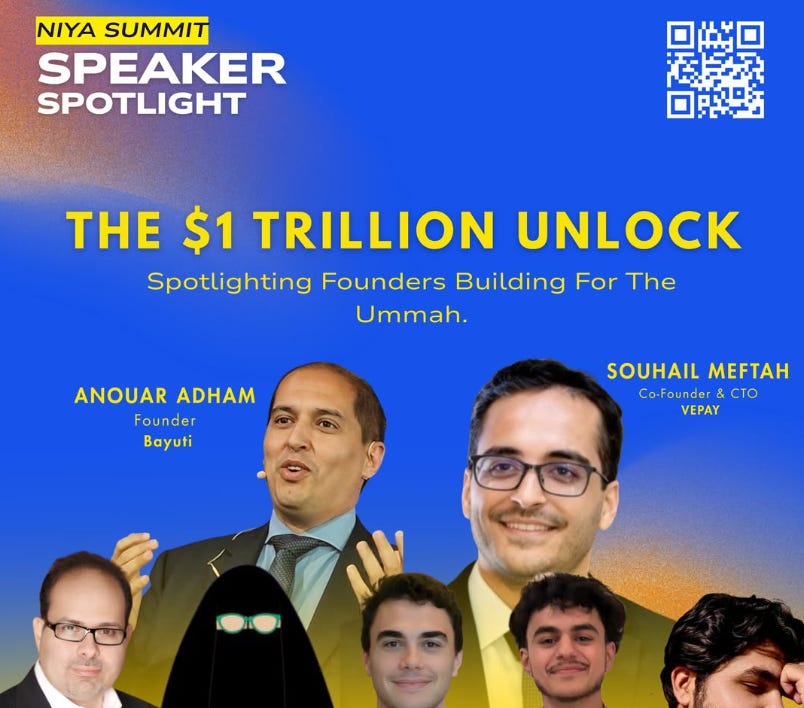
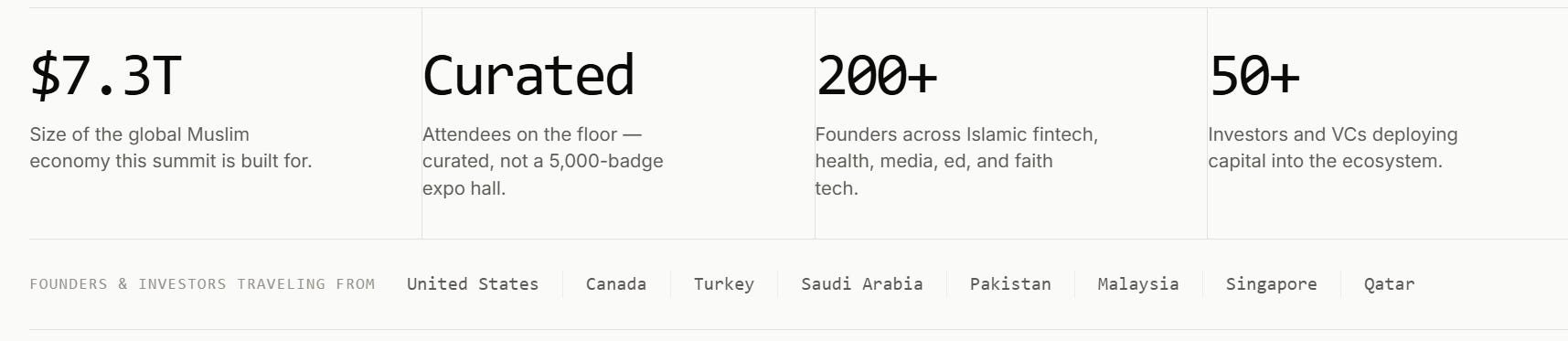
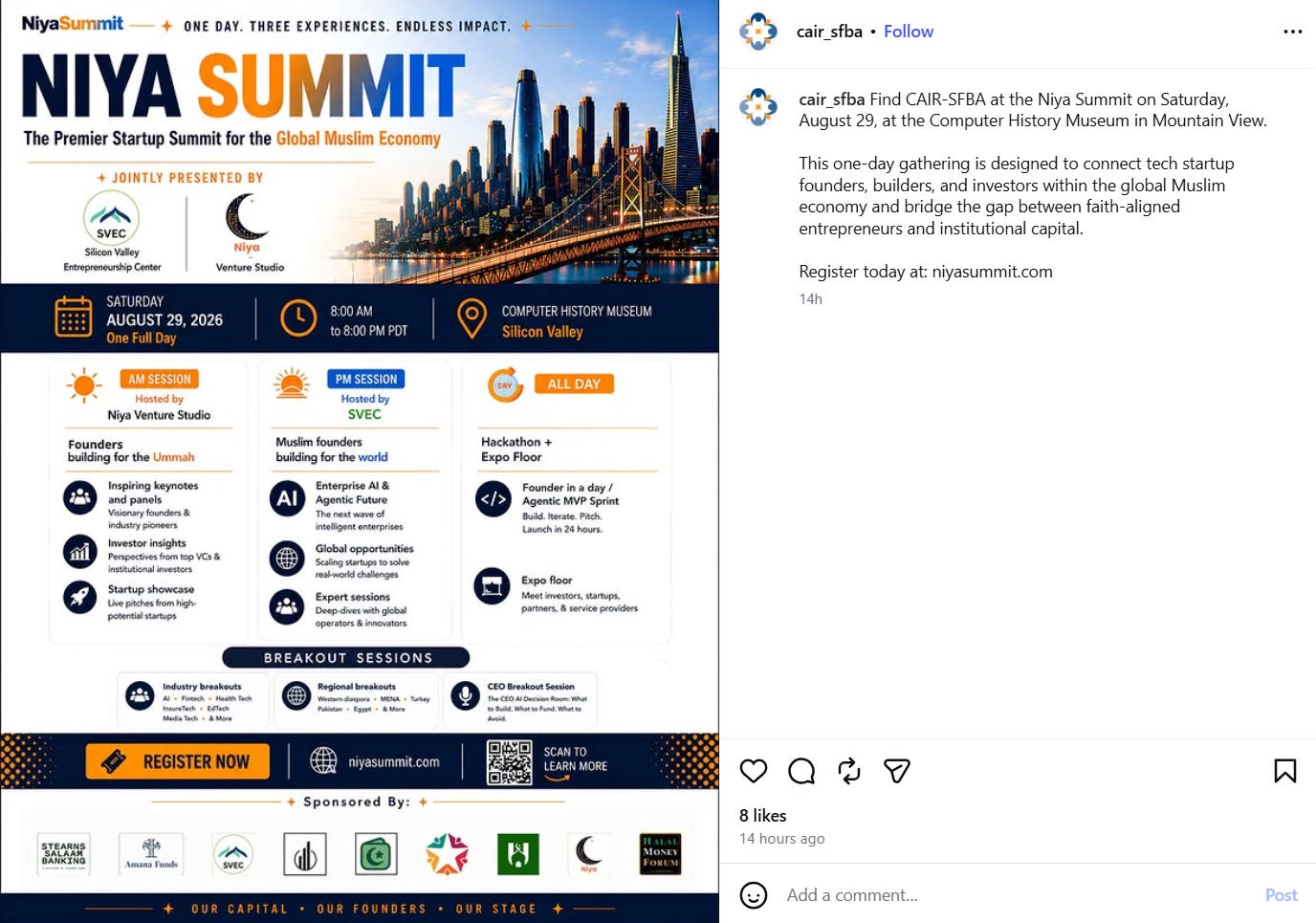
On August 29, 2026, the Niya Summit is scheduled to take place at the Computer History Museum in Mountain View, California. Organizers bill it as a gathering for the “$7.3 trillion global Muslim economy.”
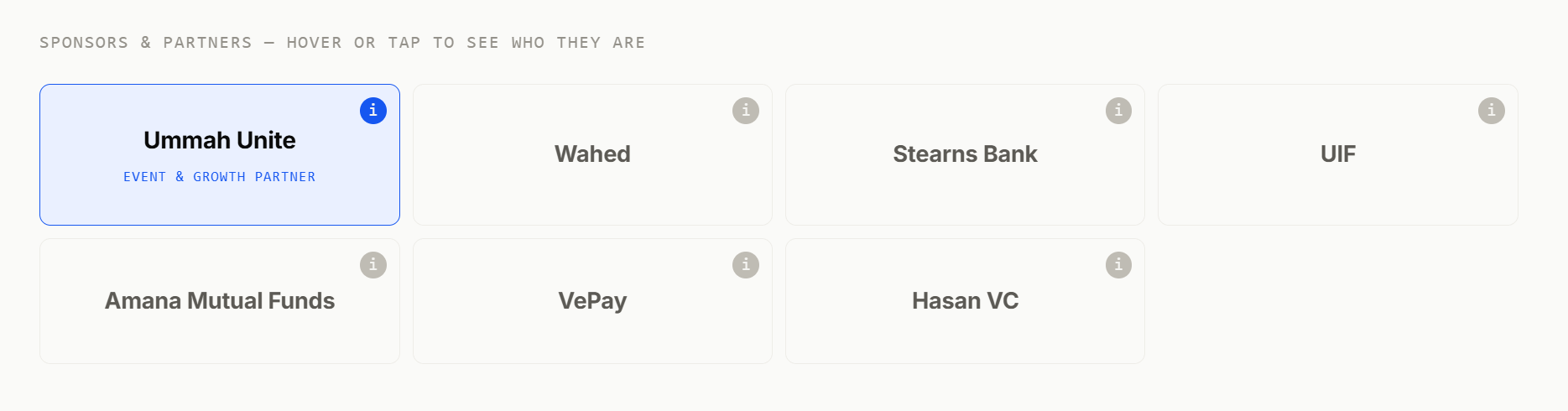
But the summit’s partner list and promotional language point to a more specific ambition than a typical fintech conference. Wahed, one of the companies listed under the event’s “Sponsors & Partners” section, has received investment from Saudi Aramco’s venture fund and the state-owned Qatar Development Bank. Meanwhile, organizers explicitly promote what they call “parallel infrastructure” for Muslim banking, investment and insurance.
The summit is co-organized by the Silicon Valley Entrepreneurship Club, Niya Venture Studio and the Halal Money Forum. Its current draft program divides the event into a morning track called “Building for the Ummah” and an afternoon track called “Building for the World.”
The summit describes the morning track as “parallel systems, built with intent,” including banking, investing and insurance designed specifically for Muslim communities. The afternoon track is aimed at founders taking values-based products to mainstream markets.
The current program also advertises breakout rooms organized by region, listing the United States, the Middle East, Turkey and Pakistan, alongside industry-specific rooms focused on fintech, health, media, education and faith technology. Organizers label the agenda a draft subject to change.
Wahed: Saudi Aramco and Qatar Development Bank Backing
Wahed is listed among the summit’s “Sponsors & Partners,” while its founder and chairman, Junaid Wahedna, is scheduled to deliver the morning track’s closing keynote.
Wahed has received major backing from state-linked Gulf investors. Saudi Aramco’s Wa’ed Ventures led Wahed’s $50 million Series B funding round, announced on June 17, 2022. The announcement identified Wa’ed as the venture capital arm of the Saudi Aramco Entrepreneurship Center and named several other participants in the round. Wa’ed Ventures currently describes itself as a $500 million venture capital fund backed by Aramco.
In November 2024, Qatar Development Bank announced a separate strategic investment in Wahed. The amount was not disclosed. Qatar Development Bank describes itself as a fully funded entity owned by the State of Qatar.
SEC Settlement and CAIR Partnership
Wahed also has a documented U.S. regulatory history. In February 2022, the Securities and Exchange Commission charged Wahed Invest with making misleading statements, breaching its fiduciary duty and failing to maintain adequate compliance procedures related to its Shariah advisory business.
In August 2017, Wahed partnered with CAIR-NY to display an Eid greeting at the Nasdaq MarketSite in Times Square.
Federal prosecutors included the national Council on American-Islamic Relations on a 2007 list of “unindicted co-conspirators and/or joint venturers” filed before the Holy Land Foundation terrorism-financing trial. The Holy Land Foundation and five of its leaders were convicted in a 2008 retrial of providing material support to Hamas. In 2014, the United Arab Emirates also placed CAIR on its official list of designated terrorist organizations.
Singapore, Saudi and Malaysian Networks
The summit’s speaker and partner network extends beyond Wahed. Umar Munshi, general partner at HASAN.VC, is a featured speaker.
HASAN.VC is part of Ethis Group. Its corporate structure includes a Singapore-registered accelerator and a venture fund managed under the Labuan Financial Services Authority in Malaysia. Ethis Group is headquartered in Malaysia and operates financial platforms across Asia and the Gulf.
Munshi co-founded Ethis with Ronald Yusuf Wijaya. The group’s ventures include HASAN.VC and GlobalSadaqah, an Islamic social-finance platform connecting donors with NGO campaigns.
Muslim Ad Network identified itself as the Niya Summit’s official media and advertising partner on August 14, 2026.
Takadao, a fintech described by Wamda as Saudi Arabia-based, is represented at the summit by CEO Morrad Irsane and co-founder Sharene Lee. The company develops Shariah-compliant, blockchain-based savings and mutual-protection products.
Takadao raised $1.5 million in November 2025 from investors including HASAN.VC, Syla Invest, Ice Blue Fund, Istari Ventures, Adverse and Wahed Ventures, bringing its reported total funding to $3.1 million. Takadao describes its wider project as a community-owned ecosystem offering bankless financial alternatives. Its LifeDAO product includes mutual-protection funds, investment pools and a payment card, which the company presents under the concept of a community-owned “Nobank.”


Regulated Finance Alongside the “Parallel Systems” Pitch
The Niya Summit’s “Our Founders. Our Capital. Our Stage.” slogan and explicit promotion of “parallel systems” frame the event as an effort to build a distinct Muslim economic lane across banking, investment and insurance. Its infrastructure extends beyond finance: ticketing is handled through Ummah Unite, an event-management platform co-founded by Rayyan Naik and Yasin Amawi. Ummah Unite’s about page describes Rayyan as a 17-year-old “student of knowledge,” khateeb and youth leader. The platform advertises “all-in-one event management, Muslim vendor marketplaces, and seamless ticketing” while describing its mission as leading the Muslim community through a “Digital Hijrah.”
The summit’s network connects Silicon Valley with Islamic-finance ventures spanning the Gulf and Southeast Asia, including Wahed, a listed partner backed by Saudi Aramco’s venture fund and the state-owned Qatar Development Bank. At the same time, its roster includes regulated American financial institutions. The summit’s significance lies in that intersection: Gulf state-linked capital, American financial infrastructure and an explicit campaign to consolidate a Muslim-focused economic ecosystem.
A gathering of the terrorist financiers!!!!