


Jewish Onliner is an independent publication. If you find our work valuable, please consider becoming a paid subscriber.

When four Hatzola ambulances were set on fire outside a synagogue in Golders Green, north London, on March 23, the attack appeared at first to be another violent episode in a worsening climate for British Jews. But investigators and analysts are now examining such incidents within a wider pattern: low-cost, online-enabled sabotage allegedly outsourced by hostile-state-linked networks to teenagers and criminal intermediaries.


A recent Financial Times report found that Russia- and Iran-linked actors are recruiting minors across Europe and the Middle East for espionage, propaganda, arson, sabotage, and bombings through platforms including Telegram, TikTok, Discord, and gaming communities.
The emerging model is simple and alarming: handlers identify vulnerable or thrill-seeking young people online, offer money or status, and direct them toward low-level tasks that can escalate into violence. For Jewish communities, the threat is especially acute on the Iran-linked side, where recent attacks have targeted synagogues, Jewish schools, charity vehicles, and visibly Jewish civilians.
A New Kind of Proxy Warfare
The operational appeal is obvious. Teenagers are cheap, available online, and often unaware of the strategic purpose behind the task. They can be paid small sums to photograph a site, spray graffiti, start a fire, plant a device, or spread a message. If arrested, the handler remains far away, the chain of command is murky, and the state sponsor can deny involvement.
That same “disposable agent” model is now being investigated in connection with antisemitic violence in Europe.

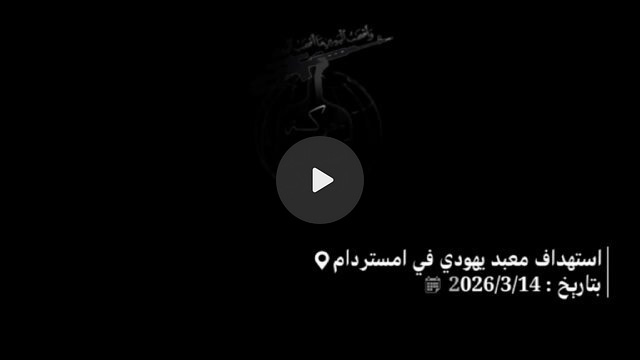
The Iran-Linked Network Around HAYI
The clearest Jewish-community thread centers on Harakat Ashab al-Yamin al-Islamia, or HAYI, an obscure pro-Iranian network that has claimed attacks against Jewish, Israeli, American, and Western-linked targets in Europe. The Guardian reported that security officials, analysts, and police documents indicate Iranian intelligence services and Revolutionary Guards operatives are suspected of using criminal intermediaries to recruit teenagers for low-level hybrid-warfare attacks in the UK and Europe.
In one London case, a 17-year-old boy pleaded guilty to arson after an attack on Kenton United Synagogue. According to The Guardian, he told police he had “no hate towards the Jewish people” and claimed he did not know the building was a synagogue. That detail underscores the strategic logic of the model. The recruit may not need to understand the target. The handler does.


The U.S. Justice Department has provided the strongest public legal anchor for the alleged network. Federal prosecutors charged Mohammad Baqer Saad Dawood Al-Saadi, a senior Kata’ib Hizballah member, with terrorism-related offenses for acting as an operative of Kata’ib Hizballah and Iran’s Islamic Revolutionary Guard Corps. A subsequent indictment described Al-Saadi as a dual Iranian-Iraqi national allegedly involved in nearly 20 attacks and attempted attacks across Europe and the United States. The charges remain allegations, and Al-Saadi is presumed innocent unless proven guilty.
Golders Green as a Warning
The Golders Green attack shows why Jewish communal infrastructure is vulnerable to this kind of campaign. A UK parliamentary record stated that four Hatzola ambulances were set on fire in the car park of a local synagogue on Highfield Road on March 23. Police treated the incident as an antisemitic hate crime, and Counter Terrorism Policing led the investigation.
Hatzola is a Jewish volunteer emergency medical service. Burning its ambulances did not only damage vehicles; it struck at a community safety network relied on by Jewish and non-Jewish residents in north London.
The Washington Institute described the HAYI pattern as “deniable, disposable, disruptive,” warning that the campaign exposed vulnerabilities in Western protection of soft targets and Jewish communities.
Russia’s Parallel Playbook
The Russia-linked cases provide the broader template. Across Europe, investigators have increasingly warned that Moscow is using online recruitment and criminal outsourcing to conduct sabotage below the threshold of conventional war. The New Yorker reported that European prosecutors viewed Russia’s military intelligence service, the GRU, as the main organizer behind “single-use agent” operations involving espionage, arson, sabotage, and intimidation.
Governments Are Moving, Slowly
Western governments are beginning to respond. Reuters reported on June 9 that the UK expects a new law to come into force next month targeting hostile-state proxies, including groups allegedly used by Iran, Russia, and China, with penalties of up to 14 years in prison.


A day later, Reuters reported that the United States, Australia, European allies, and others condemned Iran-backed “lethal plotting” against Iranian dissidents, journalists, Jewish communities, and other targets abroad. The statement identified the IRGC Intelligence Organization, the Quds Force, and Iran’s Ministry of Intelligence and Security as responsible for alleged covert operations, and also condemned attacks in Europe claimed by HAYI.
For Jewish communities, the lesson is clear: antisemitic attacks are no longer only a matter of local radicalization or street-level hate. They may also be the visible edge of hostile-state-linked campaigns that use children and petty criminals as disposable instruments of hybrid warfare.