


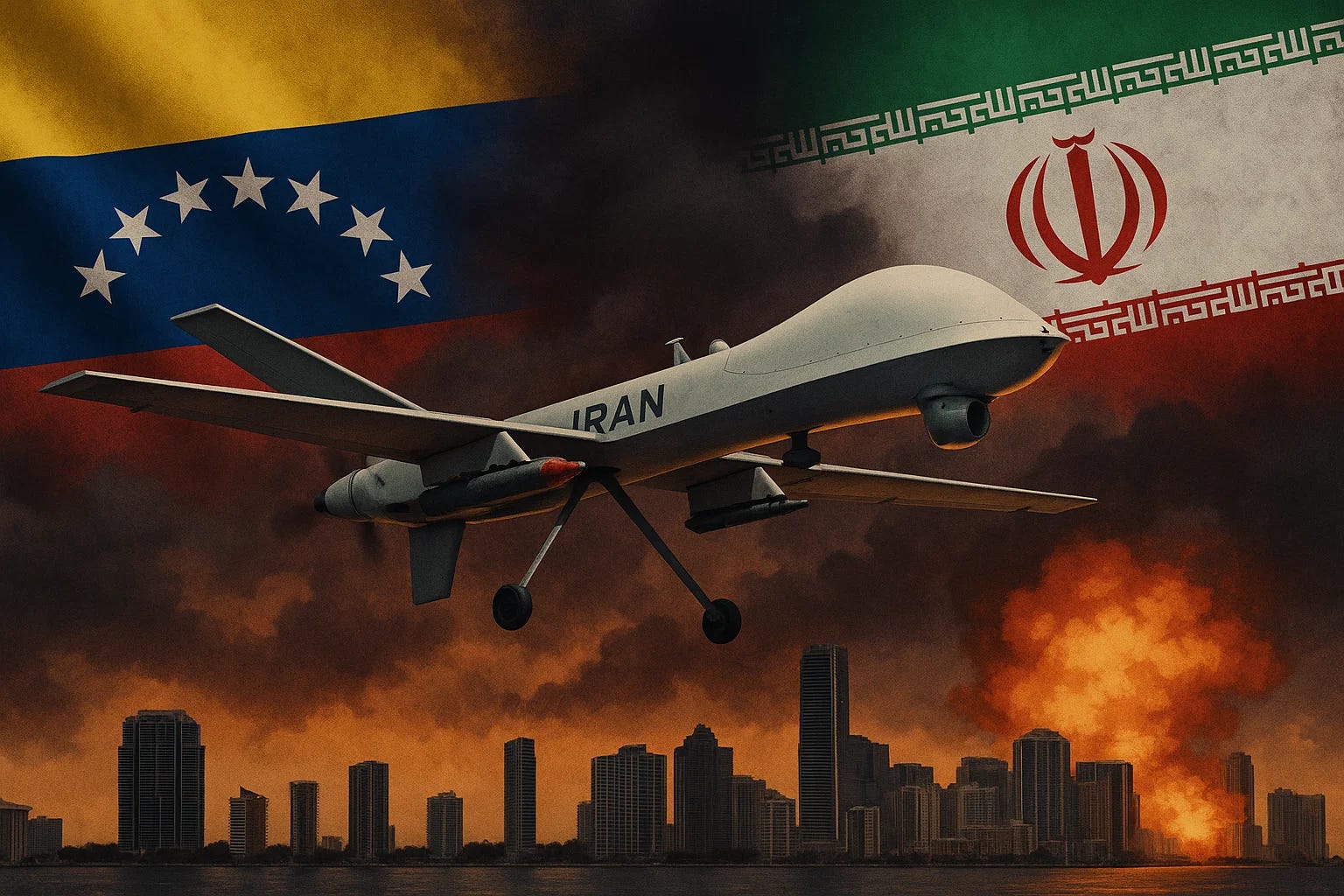
US Secretary of State Marco Rubio publicly characterized Venezuela as “a regional platform for Iranian influence” hosting Revolutionary Guard forces and Hezbollah operatives in a December 3 statement that marks the first official acknowledgment of Iranian influence, possibly militarily this close to American territory. The declaration comes amid revelations that Venezuela possesses Iranian-made drones capable of striking Miami and has recently requested even more sophisticated weapons systems from Tehran.
Rubio described the Maduro government as a narcotics transit hub that hosts Iran’s Islamic Revolutionary Guard Corps and its Lebanese ally Hezbollah, framing Venezuela as an active threat rather than merely a sanctions-evading state. The statement represents a significant escalation in how Washington characterizes the Caracas-Tehran relationship.
Active Weapons Request to Tehran
Rubio’s assessment gains urgency from internal US government documents obtained by The Washington Post revealing Venezuela recently requested additional military equipment from Iran, including drones with 1,000-kilometer range, GPS jamming devices, and passive detection equipment. Venezuelan Transport Minister Ramon Celestino Velasquez reportedly coordinated the request, which would provide strike capability covering all of Florida and much of the southeastern United States.
The requested systems would significantly upgrade Venezuela’s existing Iranian arsenal. GPS jamming equipment could disrupt US military operations throughout the Caribbean, while passive detection systems allow identifying aircraft and ships without being detected themselves—creating what defense analysts call an anti-access/area-denial bubble.
Confirmed Iranian Weapons Already Operational
Israeli defense research center Alma documented extensive Iranian weapons transfers to Venezuela dating to 2020. The inventory includes Mohajer-6 unmanned aerial vehicles with 2,000-kilometer range—enough to reach any target in Florida—and Zolfaghar-class fast attack boats armed with anti-ship missiles. Photos from Venezuelan military parades in 2021-2023 show these systems publicly displayed with offensive armaments.
“Miami is less than 1,200 miles away from the Venezuelan coast,” the Alma report noted, adding that IRGC operatives stationed in Venezuela “can target US assets or navy ships in the Caribbean or directly attack American soil.” A Just The News analysis confirmed these UAVs possess capabilities to “conduct suicide explosive attacks” against surface targets.
The geographic threat is not theoretical. Venezuela’s 2,000-kilometer range drones match exactly the aerial distance between Caracas and Florida, placing the entire state within strike range.
Alma documented a military parade in Venezuela from July 5, 2022 where attacking Iranian UAVs (from the Mohajer and Shahed family). The video can be seen below:
Domestic Production Facilities Established
Additionally, Iran has outsourced drone production to Venezuela over the past decade, establishing manufacturing facilities rather than merely exporting finished weapons. This technology transfer means Venezuela can produce offensive drones domestically, creating a permanent Iranian weapons production base in the Western Hemisphere.
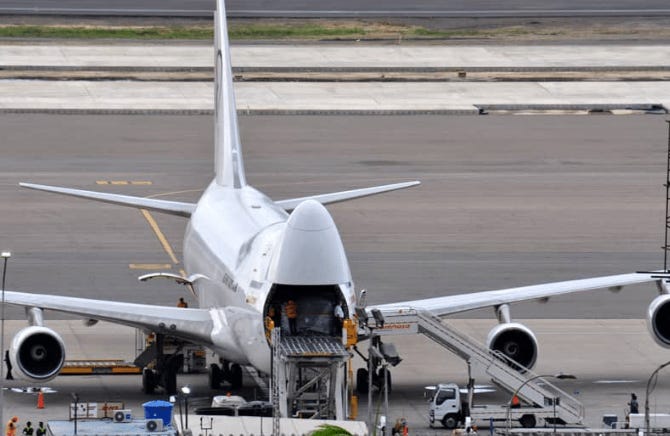
An October 2020 IRGC cargo flight from Tehran to Caracas, documented by flight tracking services, was met by approximately 10 container trucks and 40 personnel upon landing. The suspected cargo included heavy weapons or missiles in multiple pieces. Then-State Department official Elliott Abrams warned at the time that “transfer of long-range missiles from Iran to Venezuela is not acceptable to the United States and will not be tolerated or permitted.”
Iran’s Strategic Declaration
Iran’s own propaganda reveals the relationship’s strategic depth. A 2020 Iranian illustration released for “Jerusalem Day” and titled “We Shall Pray in Jerusalem” allegedly depicted Venezuelan President Nicolás Maduro in the front row alongside Hezbollah leader Hassan Nasrallah and Hamas officials—positioned ahead even of Syrian President Bashar al-Assad. Iranian sources explicitly described Venezuela as a “backyard for Iranian activity against the United States.”

The placement indicates Venezuela ranks among Iran’s most strategic allies, comparable to Hezbollah in Lebanon. This suggests the relationship transcends arms sales into ideological alliance within what Tehran calls its “Axis of Resistance.”
Venezuelan-Iranian Coordination Timeline
The relationship has intensified significantly in recent years. Velasquez visited Tehran in September 2024, meeting with Iranian Defense Minister Brigadier General Aziz Nasir Zadeh, who oversees military equipment sales. In November 2024, Nasir Zadeh and Maduro signed a memorandum of understanding to increase trade and mobility between the countries.
Iran’s Foreign Affairs Ministry responded to reports of Venezuela’s weapons request by stating that “Venezuela can defend itself” while Iran “will certainly continue to cooperate with Venezuela.” The ambiguous response neither confirmed nor denied the transfer, leaving open whether Tehran can fulfill the request given Iran’s depleted weapons stockpiles following its recent war with Israel.
Strategic Implications
Rubio’s characterization represents a fundamental shift in US policy, moving beyond viewing Venezuela as a sanctions-evading narco-state to recognizing it as an Iranian military platform. The combination of confirmed weapons transfers, domestic production capability, active upgrade requests, and Hezbollah operational networks creates what administration officials appear to view as an intolerable strategic situation.
The presence of Iranian weapons production facilities particularly complicates any response, as they cannot be eliminated through maritime interdiction or sanctions alone. The infrastructure represents a permanent Iranian military-industrial presence in the Western Hemisphere, capable of producing strike systems threatening American territory indefinitely.
https://mdavis19881.substack.com/p/the-distractions-strike-back