


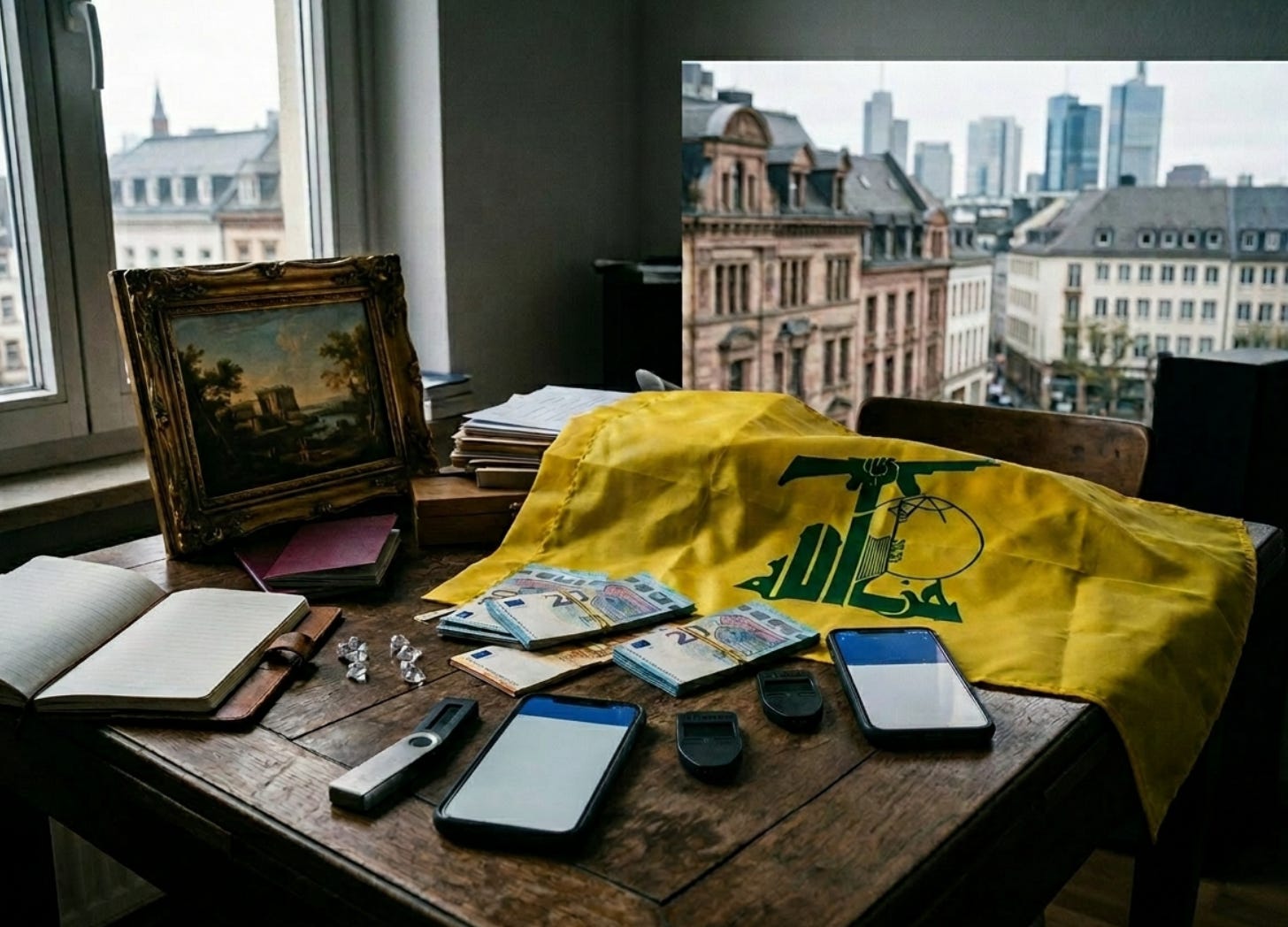
A study by Lina Khatib for Austria’s Documentation Centre Political Islam says Hezbollah’s annual budget exceeds $1 billion, with $700 million coming from Iran and roughly 30% generated through illicit activities globally. The report also documents Hezbollah-linked financing networks in Europe involving money laundering, luxury goods, art, and cryptocurrency.

The organization’s Business Affairs Component (BAC) has laundered roughly €1 million per week through Germany, Belgium, and France while offering money laundering services to Latin American drug cartels. The report identifies operations in at least 15 European countries and documents how Hezbollah exploits fragmented terrorism designations and minimal port inspections to move illicit funds through legitimate trade channels.
The Luxury Goods Pipeline
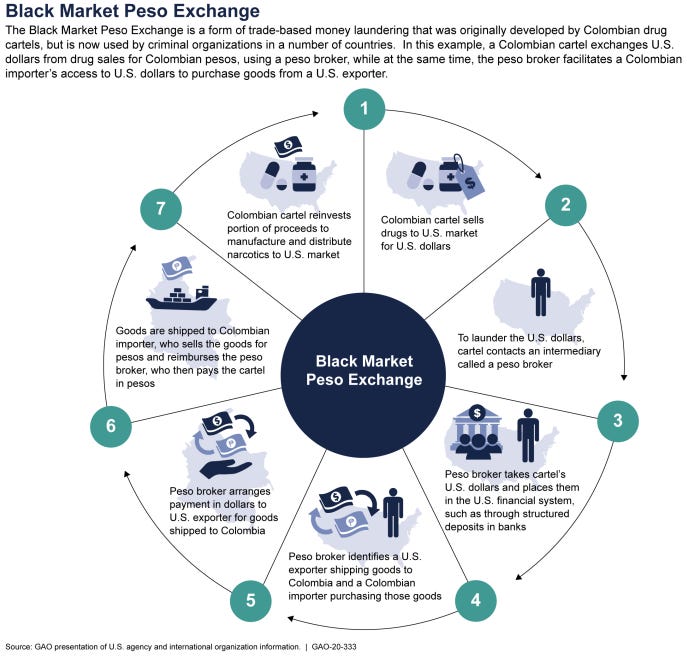
The report reveals how Hezbollah’s financial networks utilize a trade-based money laundering scheme known as Black Market Peso Exchange. The Cedar Network, exposed through Project Cassandra investigations, purchased luxury cars and watches in Europe using drug proceeds from South American cocaine cartels. These goods were then shipped to West Africa where they were sold to generate clean funds transferred to Lebanon. The network operated through a Beirut office in the Stock Exchange and a car dealership in Germany managed by Hassan Trabulsi.
The report documents a 2021 Austrian case where authorities intercepted a network preparing to smuggle 30 tons of Captagon through a pizza restaurant shell company in Bürmoos. The Lebanon-manufactured drugs were hidden inside pizza ovens and sent by sea to Belgium, then trucked to Austria before heading to Saudi Arabia via Italian ports. The European route was specifically chosen because Saudi Arabia applies less stringent inspection procedures to goods arriving from Europe than those sent directly from Lebanon.
Art Market and Blood Diamond Operations
Nazem Said Ahmad, a designated Hezbollah financier, moved $54 million through UK and Belgian art markets since 2012 while smuggling blood diamonds to finance the organization. Ahmad exploited fine art markets by using front companies to acquire works by artists including Warhol and Picasso, manipulating artwork valuations to either inflate or deflate prices for capital movement across borders.


His diamond operation involved sending 482 diamond parcels totaling approximately 1,546 carats to US-based grading companies through front companies outside America. One 45-carat diamond was valued at $80 million in 2021. Ahmad then exported the newly appraised diamonds back to Lebanon. The network manipulated Kimberley Process certificates to engineer fraudulent diamond prices and tax schemes.
Diplomatic Cover and State Capture
Mohammad Ibrahim Bazzi, a Lebanese-Belgian national, leveraged his position as honorary consul for Gambia to help divert $50 million in state funds while managing fuel imports and laundering millions for Hezbollah. The case illustrates how diplomatic immunity becomes an obstacle to detecting or investigating financial crimes, as this status enables individuals to easily bring funds out of their country of origin while evading normal scrutiny applied to financial transactions.

Once funds reach Lebanon, tracking becomes virtually impossible. Hezbollah’s control over Lebanese state institutions, including direct representation in government and dominance over the Central Bank and ports, provides the organization with comparative advantages over other illicit networks. Lebanese banking secrecy remained in place until 2025 and was lifted only retroactively for ten years. Unregulated money exchange bureaus continue to operate throughout the country.
Cryptocurrency Pivot
Hezbollah has shifted toward using Tether (USDT) on the Tron network to move funds with greater anonymity. In May 2023, Israeli government seized $1.7 million in cryptocurrency from 40 wallets linked to Hezbollah (and Iran’s Quds Force). The adoption of digital currencies represents an evolution in the group’s financial operations as traditional banking channels face increased scrutiny.

Structural Challenges
The fragmented approach to terrorism designations creates enforcement gaps. While the United States and United Kingdom designated Hezbollah in its entirety as a terrorist organization, the European Union and countries like France maintain designations only for what they call the group’s military wing. This distinction allows the political wing to legally raise funds despite clear financial links between the two structures.
European ports inspect only 2% to 10% of shipping containers according to Europol estimates, facilitating the infiltration of drugs and smuggled goods. Following the December 2024 collapse of the Assad regime in Syria, which disrupted Hezbollah’s Captagon manufacturing and smuggling operations conducted jointly with Syria’s Fourth Armoured Division, the organization is reportedly attempting to scale up drug sales in Europe to compensate for lost revenue streams.