


Jewish Onliner is an independent publication. If you find our work valuable, please consider becoming a paid subscriber. You can also subscribe to us on WhatsApp and Telegram. Follow us on YouTube, TikTok, Instagram, Discord, and X.
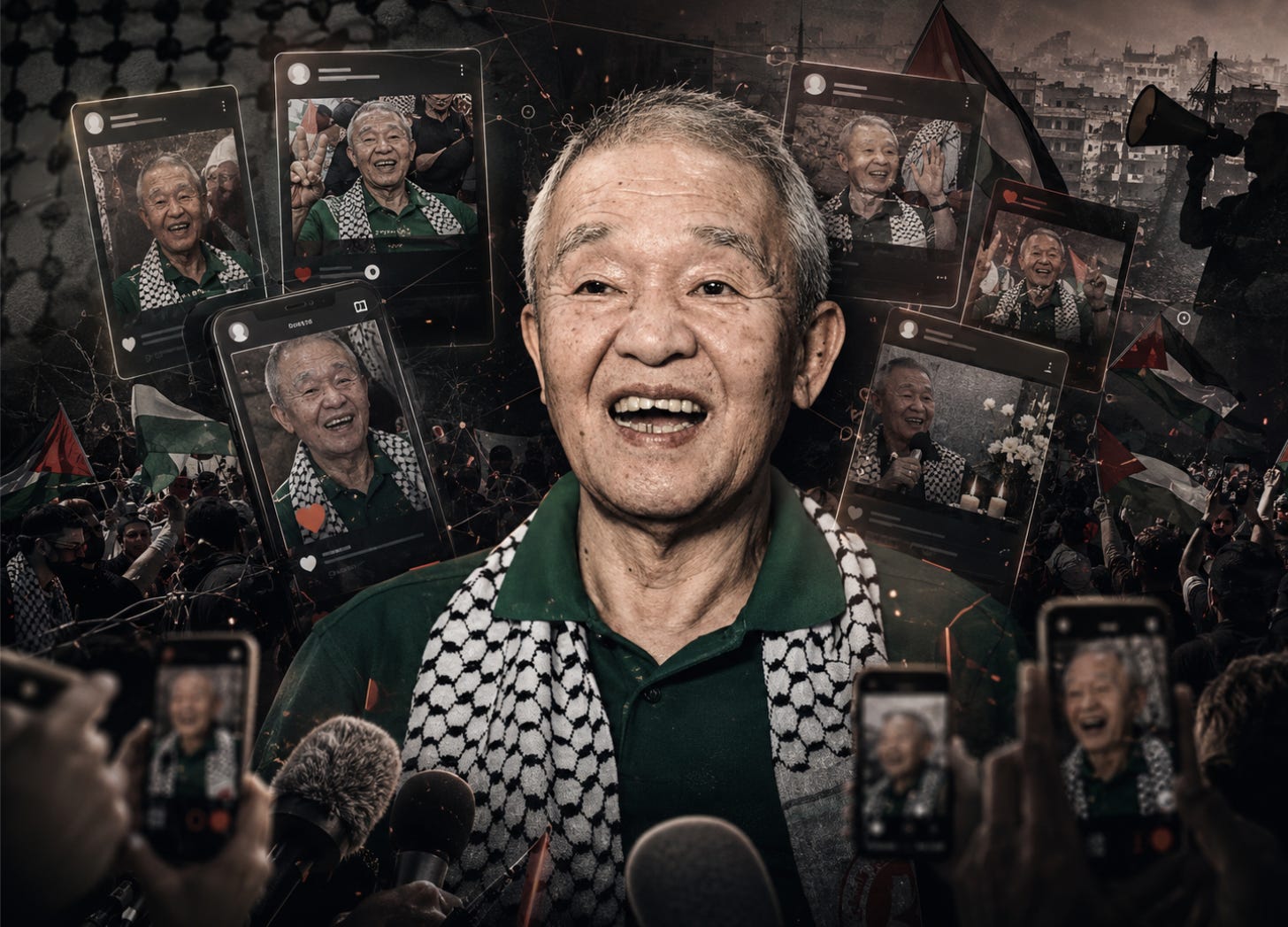
Japanese Red Army member Kozo Okamoto, one of three attackers who opened fire on civilians at Lod Airport near Tel Aviv in a May 1972 terror attack carried out jointly with the Popular Front for the Liberation of Palestine (PFLP) that killed 26 people, died in Beirut on July 23, 2026, at age 78. Shortly after, a wave of pro-Palestine media outlets and activist figures began eulogizing him as a hero of international resistance and cross-border solidarity: a narrative that, across much of the coverage, downplayed the mass-casualty nature of the attack and the North Korean support that helped sustain the network responsible for it.


Of the 26 people killed, 17 were American citizens from Puerto Rico on a religious pilgrimage, according to the federal court decision addressing the attack. Eight Israelis and one Canadian also died, with roughly 80 others wounded
Several Outlets Use Laudatory Language
Georges Ibrahim Abdallah appeared alongside PFLP supporters in Okamoto’s funeral procession in Beirut, which Cradle Media covered on video. Abdallah is a former leader of the Lebanese Armed Revolutionary Factions (LARF) and longtime PFLP associate, released from French custody in July 2025 after more than four decades’ imprisonment for complicity in the killings of a U.S. military attaché and an Israeli diplomat.


Doha News referred to Okamoto as a “Japanese revolutionary” and presented his life as evidence that “resistance has no nationality.” TMJ News Network posted a video announcing Okamoto’s death that framed him as a “Japanese pro-Palestine resistance fighter.”

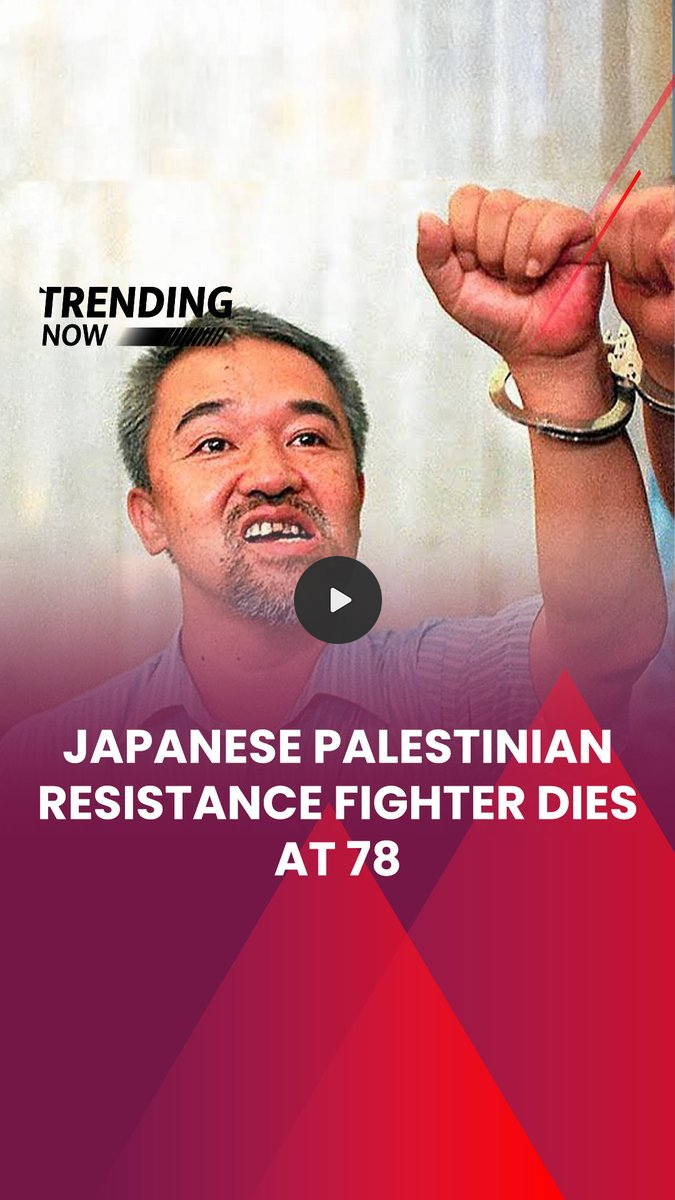
Al Mayadeen, a pro-Hezbollah media outlet, called Okamoto’s death the close of “a remarkable chapter in the history of international solidarity with the Palestinian cause” and described him as a “revolutionary.” Drop Site News posted a thread on X headed “Pro-Palestinian JRA Militant Dies,” detailing the 1972 operation.


Palestine Chronicle (whose nonprofit operator, People Media Project, is a defendant in an unresolved federal civil lawsuit brought by former Hamas hostages alleging the outlet’s Gaza-based contributor network provided material support to Hamas) mourned Okamoto as a fighter “devoted to the Palestinian liberation struggle,” in a piece titled “’The Japanese’: Kozo Okamoto, Fighter Who Devoted His Life to Palestine, Dies at 78.”


Middle East Eye reported his death under the headline “Japanese ‘Arab resistance fighter’ Kozo Okamoto dies at 78.” Its subheadline referred to him simply as a “leftist” and stated only that “26 people died,” framing the perpetrator through his political identity while reducing his victims to an anonymous death toll.

Activist Networks Join Institutional Eulogies
Beyond institutional outlets, a constellation of activist figures amplified the memorials. Susan Abulhawa, a prominent pro-Palestine writer and activist, posted on X: “Rest in power Comrade Kozo Okamoto. You were an inspiration to all who knew you and all who knew of your heroic life. You were an embodiment of solidarity and love of the people.”


At a single PFLP-organized ceremony at a Beirut cemetery associated with Palestinian militants, held in May 2022 to mark the 50th anniversary of the attack, Okamoto laid a wreath for his two deceased accomplices and made a V-sign for photographers. Palestinian and Lebanese leftist factions protected Okamoto at various points during his decades in Lebanon; the PFLP said it had been supporting him at the time of his death.
North Korean Support Absent From Much of the Coverage
Notably absent or minimized in most of the eulogies is North Korea’s documented role in sponsoring and sustaining the Japanese Red Army network responsible for the 1972 attack, though North Korea did not, as is sometimes suggested, originate the JRA itself, which Japanese radicals founded independently in 1971.
A 2010 U.S. federal default judgment (issued after North Korea failed to appear or contest the claims in court) found, based on evidence and expert testimony presented by the plaintiffs, that North Korea provided material logistical, financial, training, and ideological support without which the JRA could not have carried out the Lod Airport attack.
This geopolitical dimension (the extent to which a hostile authoritarian regime helped sustain the terror network behind the Lod Airport attack) receives minimal attention in the recent eulogies, which emphasize anti-imperialist ideology and Palestinian solidarity instead.
The accountability fight over North Korea’s role is also live right now: on July 22, 2026, two days before Okamoto’s death, the U.S. District Court for the District of Columbia issued a procedural order in a separate, ongoing case, Estate of Carmen E. Crespo v. Democratic People’s Republic of Korea, moving toward a default judgment against North Korea over the same attack.
The Path to Protected Status
Okamoto was sentenced to life imprisonment by an Israeli court following his 1972 capture. He remained imprisoned until Israel released him in May 1985 as part of the Jibril Agreement, a prisoner exchange in which roughly 1,150 Palestinian and Lebanese terrorists were freed for three Israeli soldiers held by the PFLP-General Command.
In 1997, Lebanese authorities arrested Okamoto and four other Japanese Red Army members on immigration and forged-document charges after they had been living in the country illegally; Okamoto was sentenced to three years. In 2000, Lebanon granted him political asylum while handing the four others over to Japan, making him the first person reported to have received asylum status in the country.