


Jewish Onliner is an independent publication. If you find our work valuable, please consider becoming a paid subscriber.
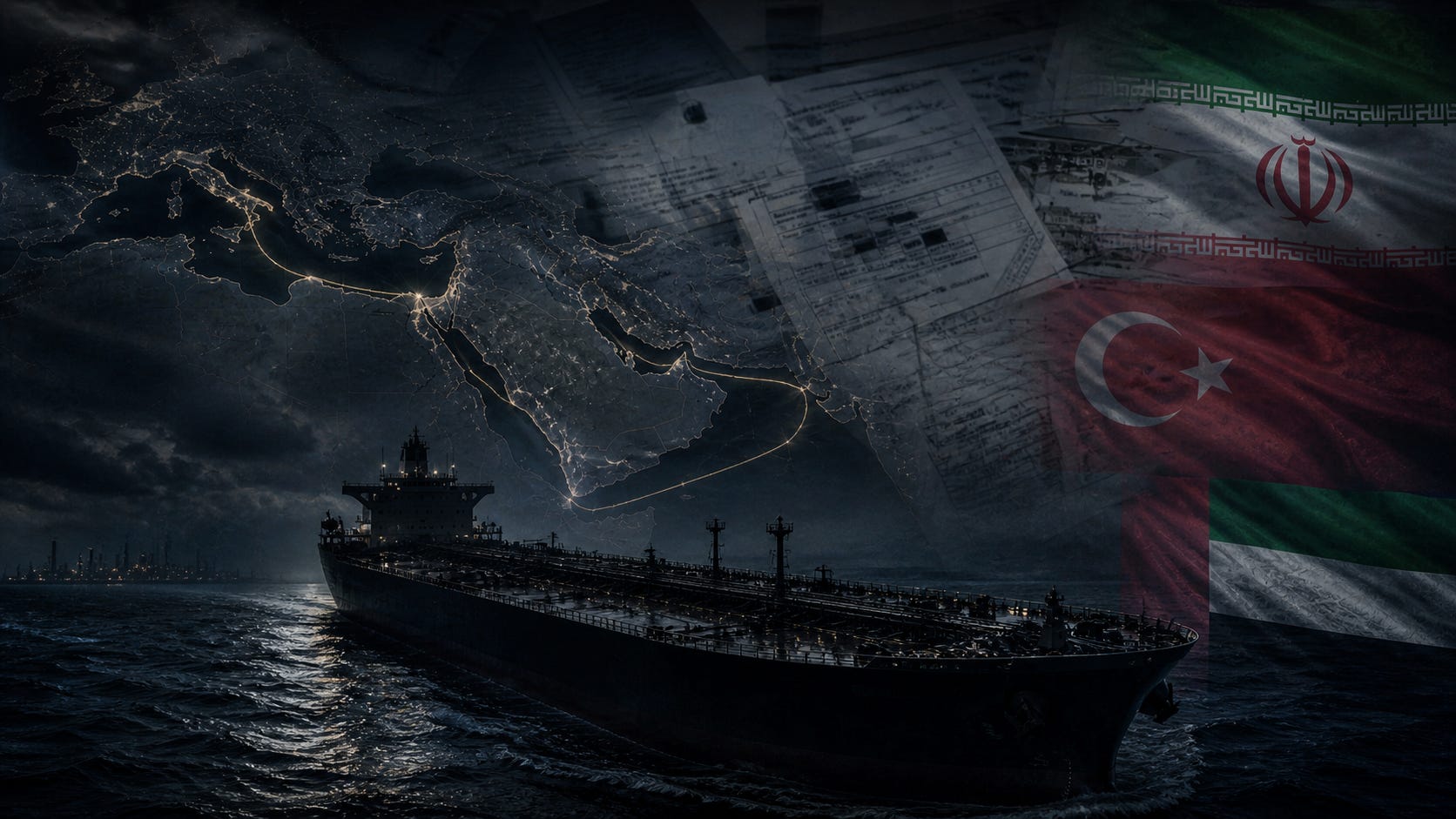
A new Nordic Monitor investigation details how Aspan Petrokimya, a Turkish company reportedly controlled by a U.S.-sanctioned Iranian national Mahdieh Sancoulli/Sanchuli, became entangled in an alleged oil-smuggling network that U.S. prosecutors said helped Iranian state-linked actors, including the IRGC, monetize sanctioned crude shipments.
The report examines a U.S. federal forfeiture case that culminated in an April 21 appellate ruling affirming the judgment over more than 700,000 barrels of Iranian crude oil seized in the Mediterranean and later sold for more than $50 million.
Aspan Petrokimya’s Reported Ownership Structure
According to Nordic Monitor’s review of Turkish trade registry records, Aspan Petrokimya Ticaret Anonim Şirketi was registered in Istanbul’s Şişli district on February 20, 2020. The report notes the company was granted an unusually broad commercial mandate covering petrochemical trading, oil and fuel activities, international logistics, financial transactions including lending and borrowing, and the establishment of partnerships and joint ventures.
Nordic Monitor identified Zumrad Urazajiyeva, a Kazakhstan-linked individual, as a founding figure with significant control over the company’s initial operations. The investigation documents a significant ownership change in May 2023 when control transferred to Mahdieh Sancoulli, an Iranian national who declared residence in the United Arab Emirates. The report highlights that in a February 2025 filing, Sancoulli requested amendments to his identity records, listing the nationality as a UAE national rather than Iranian, suggesting an attempt to obscure his background while operating within a sanctions-sensitive network.
The Sanctioned Figure Reportedly Behind the Company
Nordic Monitor’s investigation details that Sancoulli is far from an ordinary businessman. The report cites US Treasury Department documents showing he was designated in July 2022 under Executive Order 13846 for materially supporting Naftiran Intertrade Company, the marketing arm of Iran’s National Iranian Oil Company.
According to Treasury records reviewed by Nordic Monitor, Sancoulli has partnered since 2019 to export Iranian crude oil and petrochemicals, serving as a representative of UAE-based companies Petrogat FZE and Emerald Global FZE, both also sanctioned entities. The designation documents show Sancoulli purchased crude oil shipments worth tens of millions of dollars from NICO and facilitated payments for multiple oil shipments from Iran to East Asia.
The Alleged Smuggling Operation Documented in Court Filings
Nordic Monitor’s examination of US District Court documents describes a carefully orchestrated deception designed to conceal Iranian oil origin at every stage. The report details how crude was initially loaded at Kharg Island, Iran’s primary oil export terminal, in October 2020 before being transferred through multiple ship-to-ship operations.
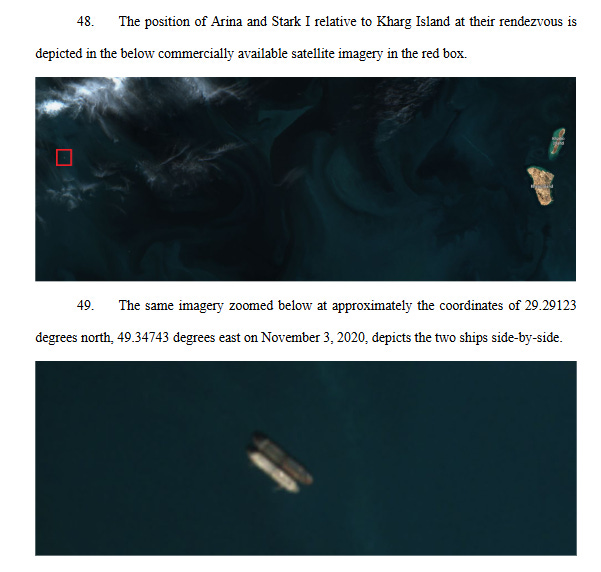
The investigation documents that vessels deliberately disabled their Automatic Identification System transponders to evade maritime tracking systems during these transfers. Nordic Monitor notes that satellite imagery cited in court filings visually confirmed vessels positioned side by side in the Persian Gulf during covert transfer operations. The report emphasizes that falsified shipping documents fraudulently identified the cargo as originating from Oman rather than Iran.
According to the court complaint reviewed by Nordic Monitor, the cargo amounting to more than 733,000 barrels remained onboard for months and traversed the Persian Gulf, Arabian Sea, Suez Canal, and Mediterranean. The report highlights that the oil cargo transited the Bosporus Strait under Turkish jurisdiction, underscoring Turkey’s geographic exposure to sanctions evasion schemes.
The Legal Challenge and Court Ruling
Nordic Monitor reports that rather than Iranian entities openly challenging the seizure, it was Aspan Petrokimya that filed a legal claim in April 2022, asserting ownership of the seized oil and seeking to recover proceeds from interlocutory sales exceeding $50 million. The investigation notes that US prosecutors argued the evidence demonstrated NIOC’s ownership and control, with Certificate of Origin documents produced by NIOC identifying the company as the consignor.
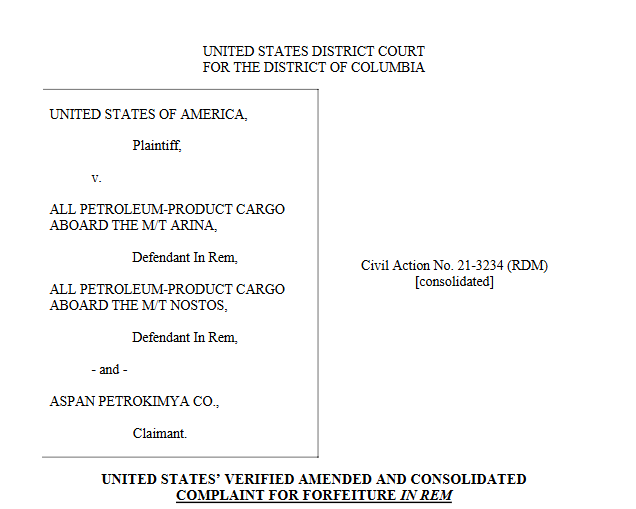
According to Nordic Monitor’s analysis of the DC Circuit Court ruling, the court held that ownership must be assessed at the time of the underlying illegal conduct and found available evidence plausibly demonstrating NIOC’s control. The court also noted that NIOC’s coordination with the IRGC supported the inference that transactions were intended to support activities targeting the United States government.
Turkey’s Pattern as Sanctions Evasion Hub
Nordic Monitor places the Aspan case within a broader pattern of Turkish companies serving as sanctions evasion conduits. The report references the Halkbank prosecution, which first surfaced during 2013 corruption probes and demonstrated how the Turkish state-owned bank facilitated laundering of $20 billion on behalf of Iran. U.S. prosecutors presented evidence alleging that the schemes were approved at senior levels of the Turkish government.
The investigation notes that since the Halkbank case, dozens of Turkish companies have faced criminal scrutiny in the United States, while the US Treasury and State Department have designated numerous Turkey-based entities for facilitating illicit trade. Nordic Monitor argues that the findings highlight structural vulnerabilities exposing Turkish companies to secondary sanctions and reinforce perceptions that Turkey under President Recep Tayyip Erdogan increasingly serves as a conduit for sanctions evasion networks supporting terrorist financing.