


In the first week of Operation Epic Fury, X was awash in negative commentary portraying the U.S.-Israeli campaign against Iran as illegitimate, politically toxic, or contrary to American interests. But much of that framing, a new review suggests, was not being driven by Americans at all. Jewish Onliner partnered with an independent firm specializing in large-scale social media data processing to examine 100 highly viral posts of +10,000 shares each. What the data revealed was a platform environment in which foreign-based accounts played an outsized role in shaping the volume, virality, and tone of what millions of users saw.
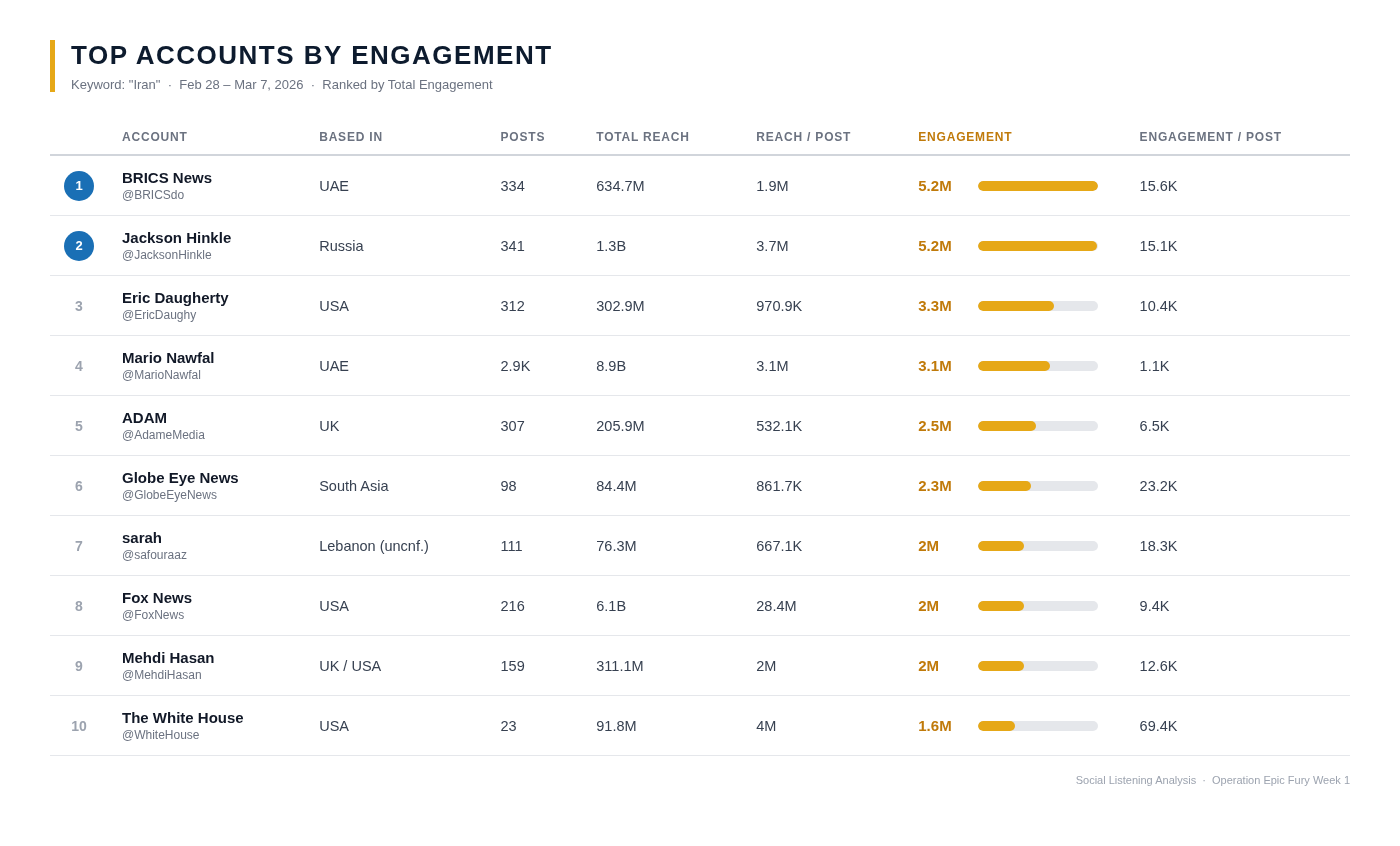
The firm’s seven-day social listening review, covering February 28 through March 7, tracked posts containing the keyword “Iran” and found an information environment of extraordinary scale: 98 million posts, 696.4 million interactions, and a staggering 1.5 trillion potential views. Within that volume, a clear pattern emerged at the top of the engagement hierarchy. Seven of the ten accounts generating the most interaction on the topic were based outside the United States, and every one of those foreign-based accounts was negative toward the operation.
At the Top of the Feed, Foreign Accounts Ruled
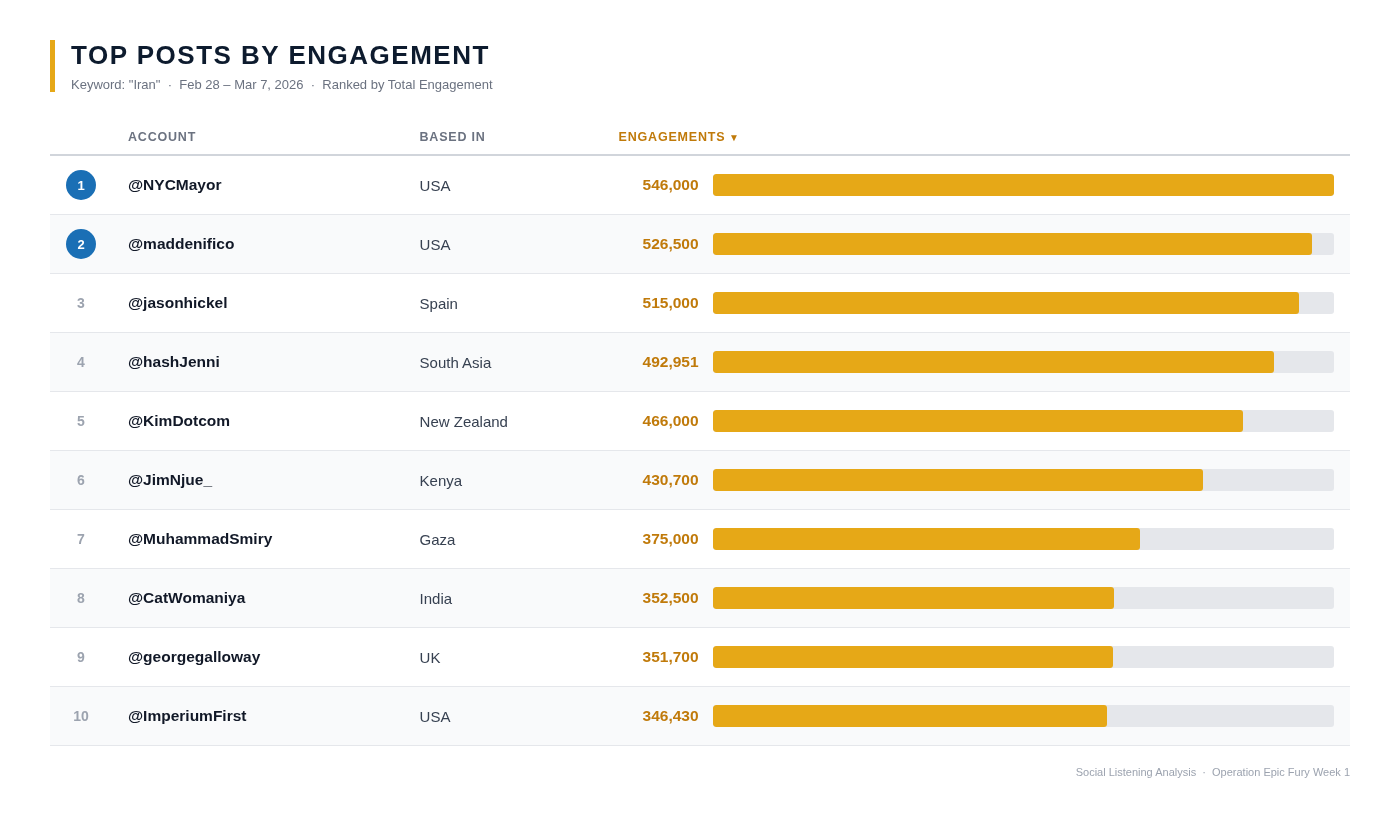
A separate cut of the data — looking specifically at the ten most viral individual posts — told the same story. Seven of those ten posts were authored by foreign accounts, and all seven expressed opposition to Epic Fury. The ten posts in descending order are:
@NYCMayor — USA; @maddenifico — USA; @jasonhickel — Spain; @hashjenni — South Asia; @KimDotcom — New Zealand; @jimNjue_ — Kenya; @MuhammadSmiry — Gaza; @CatWomaniya — India; @georgegalloway — Europe; @ImperiumFirst — USA.
Deeper in the Data, the Pattern Held — and the Reach Gap Was Stark
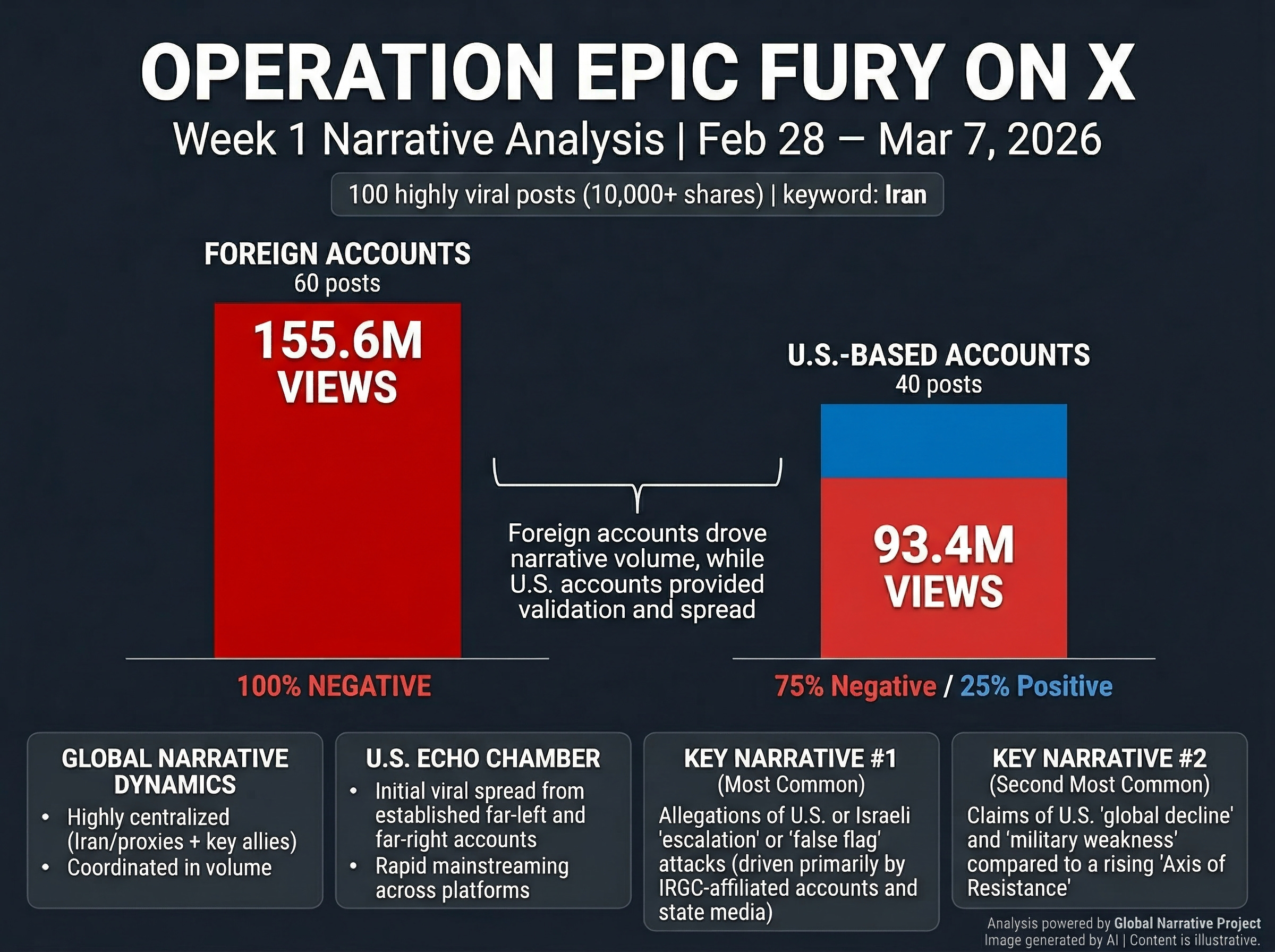
To get a closer look at the post level, the firm reviewed 100 highly viral “Iran” posts from the same period — which are available to view here — each of which had received more than 10,000 shares. The reach disparity in that sample was immediate and significant: the 60 foreign-origin posts generated approximately 155.6 million views, compared to 93.4 million for the 40 U.S.-based posts — a gap of more than 62 million views.
Foreign accounts, in other words, were reaching a substantially larger audience. And they were doing so with complete uniformity. Not one of those 60 non-U.S. posts expressed support for the operation. Among U.S.-based posts, opinion was split (75 percent were negative, 25 percent positive). The bottom line is that 90 of the 100 most-shared posts in the dataset were hostile to Epic Fury, and every single one of the ten pro-operation posts came from an American account.
The foreign accounts driving much of that engagement were not fringe voices. Several were large, established presences on X with audiences in the millions — and their approaches differed in instructive ways. Some leaned into broad geopolitical framing: BRICS News and media personality Mario Nawfal, both operating out of the UAE, cast the operation in an anti-Western register.
Others reached deeper into American domestic politics to find their wedge. Jackson Hinkle, posting from Russia, and UK-based commentators including AdameMedia and George Galloway used the language of the American right against the operation itself — framing the strikes as a “betrayal of MAGA” and claiming the campaign was “highly unpopular with the American people.”
Account locations were verified by the firm through a combination of platform data, publicly available profile information, and independent corroboration.
What the Numbers Actually Mean
None of this is to say that criticism of Operation Epic Fury was purely manufactured or that no genuine domestic opposition existed. The point is that foreign-based accounts were disproportionately influential in driving the most visible anti-operation narratives on the platform. That matters because visibility is easily mistaken for consensus. When the most viral posts on a subject relentlessly push a single line, it creates the impression of a broad, organic public mood. As the week-one data makes clear, that impression was not fully accurate.
X remains one of the most influential platforms for political perception and real-time war coverage. But as this first-week snapshot illustrates, what looks like a spontaneous national reckoning can sometimes be a highly amplified signal from abroad — a reminder that the loudest voices online are not always the most representative ones.