


Jewish Onliner is an independent publication. If you find our work valuable, please consider becoming a paid subscriber. You can also subscribe to us on WhatsApp and Telegram. Follow us on Instagram, Discord, and X.
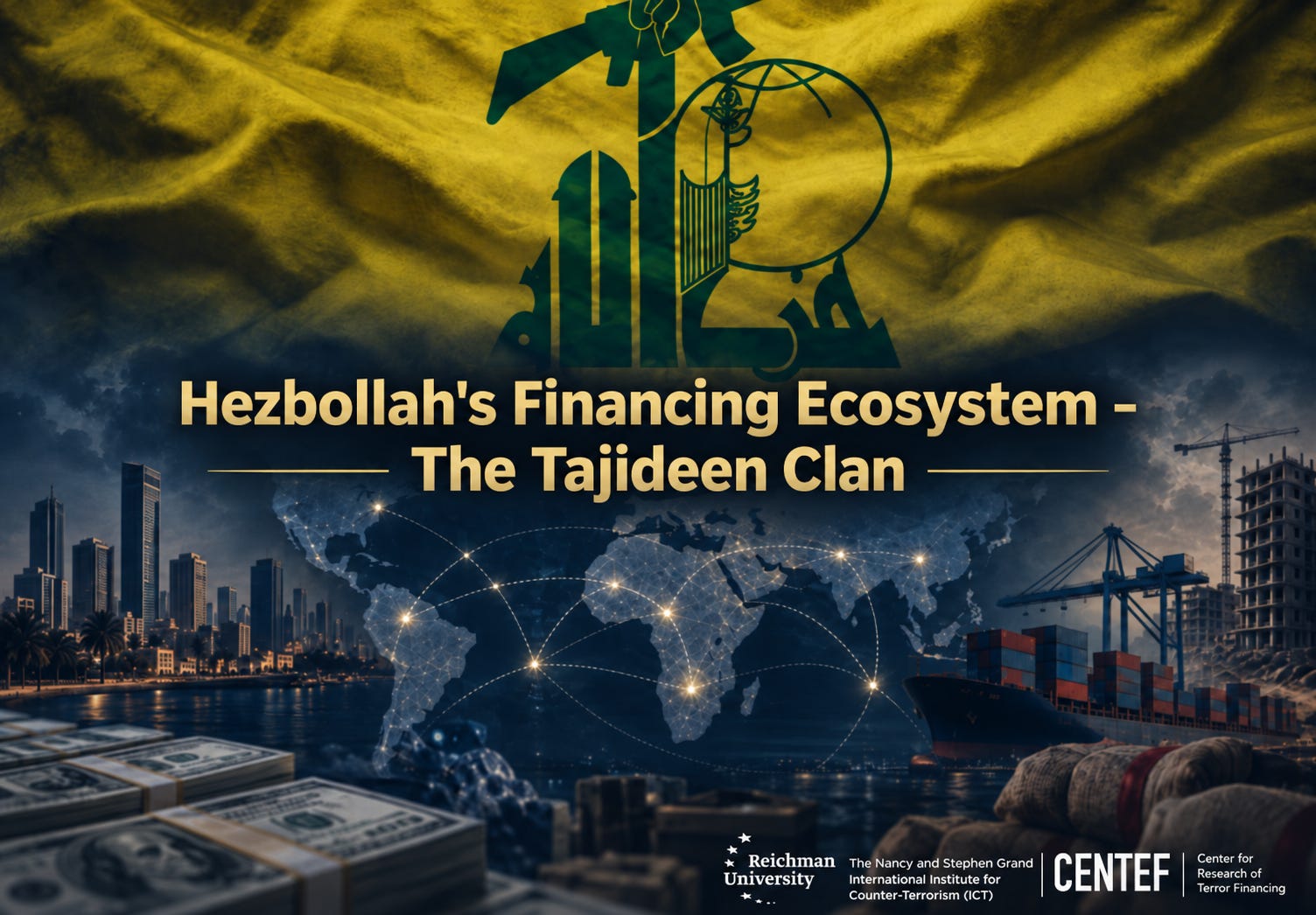
A new study of Hezbollah’s global financing ecosystem is drawing fresh attention to Soafrimex, a Belgian trading company previously linked through separate reporting to the brother of Hind Rajab Foundation founder Dyab Abou Jahjah.


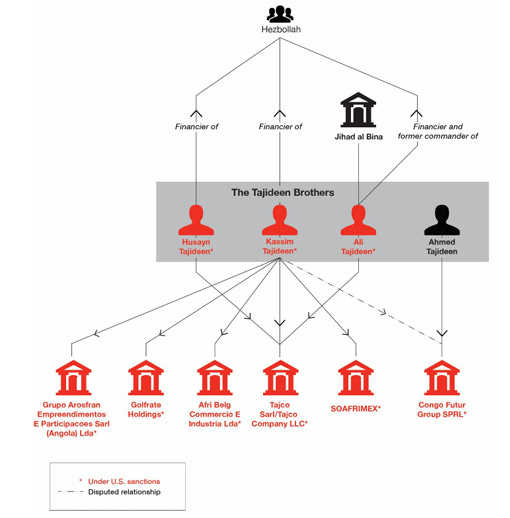
Published September 7 by the International Institute for Counter-Terrorism (ICT), the study maps Soafrimex as part of the sprawling commercial network built by the Tajideen family, three of whose members were sanctioned by the United States for providing financial support to Hezbollah.
The study does not discuss the Hind Rajab Foundation or the Abou Jahjah family. But its findings provide new context for an earlier documented overlap: Dyab Abou Jahjah’s brother Ziad worked for Soafrimex and was later involved in another company alongside Hussein Tajideen, one of the U.S.-designated brothers.
The Hind Rajab Connection
A 2025 investigation by The Jerusalem Post reported that Ziad Abou Jahjah previously worked for Soafrimex, which was owned and operated by Kassim Tajideen. That connection is also supported by much earlier Belgian reporting. In 2003, De Morgen reported on a Belgian investigation into Soafrimex and directly quoted Dyab Abou Jahjah referring to the company as “the company where my brother works.”

The Post identified a second connection to the Tajideen family through Zaimex, a Brazilian food-trading company. Ziad was reportedly a prominent shareholder in the company alongside Kassim’s brother Hussein Tajideen. Brazilian corporate records independently show Ziad Khalil Abou Jahjah listed as a partner-administrator of Zaimex beginning in 2008, while Hussen Tajideen was listed as a foreign-resident partner beginning in 2009.

Hussein Tajideen was subsequently designated by the U.S. Treasury in December 2010 alongside his brother Ali. Treasury said the brothers were Hezbollah fundraisers and that their multinational business network generated millions of dollars in funding for the terrorist organization.
The Washington Free Beacon later reported on an investigation highlighting the same Soafrimex connection through Ziad. The Hind Rajab Foundation denied having financial, operational or organizational ties to Hezbollah, Hamas or any other designated terrorist organization.

Soafrimex and the Tajideen Network
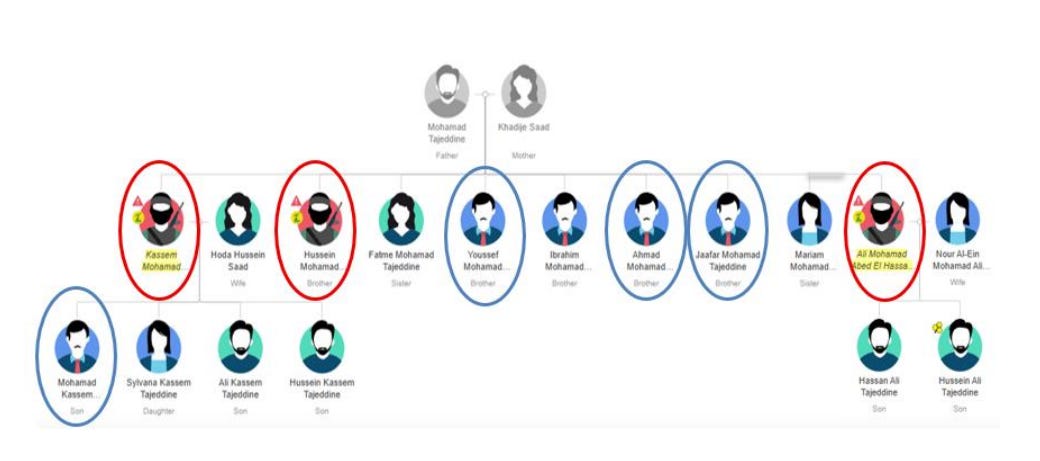
The new ICT research places Soafrimex firmly within the broader Tajideen commercial ecosystem. According to the study, Kassim Tajideen established his business headquarters in Antwerp in 1989, where Soafrimex became a major exporter of food commodities to Africa. His wife, Huda Saad, and his brothers Ahmed and Jaafar were also involved in the company.
ICT says Soafrimex traded commodities including rice and flour across several African countries while facing allegations that its commercial operations were also used to move diamonds of questionable origin into Europe. The company was additionally investigated for major tax fraud and money laundering.
Belgian Judicial Police raided Soafrimex’s Antwerp offices in 2003, arrested Tajideen and his wife and froze the company’s bank accounts. Belgian investigators ultimately did not establish the terrorism-financing or diamond-smuggling allegations, but uncovered a system of false invoicing involving tens of millions of euros.
At the end of 2009, the Antwerp Court of Appeal convicted Kassim Tajideen, his wife and two of his brothers of forgery and money laundering, imposing sentences of up to two years.
ICT says that following the Belgian legal troubles, Soafrimex’s business functions and network were transitioned into Ovlas Trading SA. Treasury designated Ovlas in 2010 as part of its action against the Tajideen network. ICT describes the company as a central corporate vehicle with subsidiaries operating across Africa, Europe and the Middle East.
Kassim Tajideen himself had been designated as a Specially Designated Global Terrorist by the U.S. Treasury in 2009. Treasury said he was an “important financial contributor” to Hezbollah who had provided the group with tens of millions of dollars.
He later pleaded guilty to conspiring to launder money in furtherance of violating U.S. sanctions. In 2019, he was sentenced to five years in prison and ordered to forfeit $50 million.

A Network Built to Survive
The broader ICT study describes the Tajideen operation as a sophisticated international network that relied on legitimate businesses, front companies, shell companies and changes in corporate ownership to continue operating despite sanctions and law-enforcement pressure.
https://ict.org.il/hezbollahs-financing-ecosystem-crime-families-as-a-case-study-the-tajideen-clan/
The researchers conclude that the family repeatedly adapted its commercial structures after sanctions, transferring operations among companies and relatives while continuing large-scale international transactions.
ICT independently maps Soafrimex itself as a significant component of the commercial ecosystem built by U.S.-designated Hezbollah financier Kassim Tajideen. Separate reporting and corporate records show that the brother of Hind Rajab Foundation founder Dyab Abou Jahjah worked for that company and later served as a partner-administrator in another business alongside a second U.S.-designated member of the Tajideen family.