


Editor’s note: This article is part of an ongoing series examining organizations in the United States named in the infamous 1991 Muslim Brotherhood Explanatory Memorandum, outlining a “Civilization-Jihadist Process” to destroy Western civilization from within. With renewed U.S. government focus on Brotherhood networks and recent congressional scrutiny, this series investigates the documented connections between these groups and their historical advancement of Brotherhood strategic objectives in America.
The Association of Muslim Social Scientists (AMSS), listed as organization #4 in the Muslim Brotherhood’s 1991 “Explanatory Memorandum,” has successfully rebranded itself as the North American Association of Islamic and Muslim Studies (NAAIMS) and cultivated partnerships with America’s most prestigious universities.
Several AMSS founders or close associates later held roles in the SAAR/IIIT network, which federal investigators searched in 2002 as part of a terrorism-financing probe. Despite this, the organization has co-sponsored academic conferences at Harvard, Yale, Princeton, Columbia, and Georgetown.
The 2013 name change came years after the Holy Land Foundation trial exposed the Muslim Brotherhood’s American network and made public the 1991 memo describing the Brotherhood’s work as “a kind of grand Jihad in eliminating and destroying the Western civilization from within.” AMSS was explicitly listed among 29 “organizations of our friends” working toward this objective.
Today, NAAIMS presents itself as an independent academic organization promoting “reflective and analytical studies about Islam and Muslim societies.” Its 2024 conference, co-sponsored by Michigan State University, focused on “Palestine, Israel, and Questions of Free Speech and Inter-religious Relations”—featuring panels on topics including “Palestine Solidarity and Islamophobia” and “Religious Responses and the Question of Genocide.”
Yet the organization’s documented history reveals founders with alleged ties to the Muslim Brotherhood’s American infrastructure, several of whom held leadership positions in the SAAR Foundation network—raided by the FBI in March 2002 on allegations of facilitating terrorism financing.
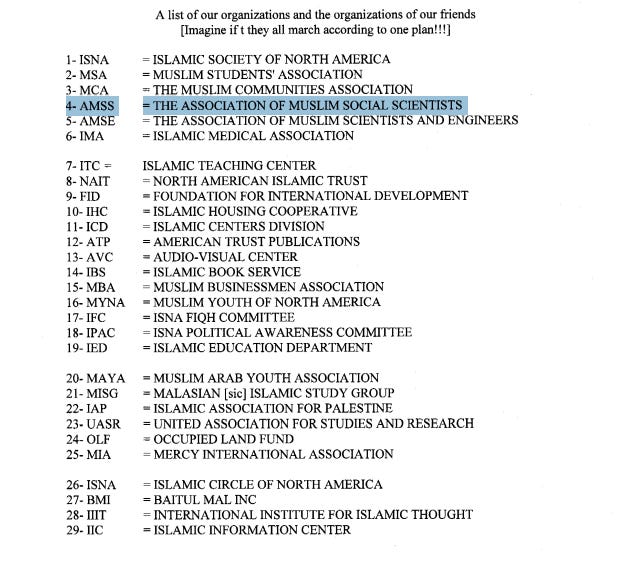
The Founding: Alleged Muslim Brotherhood Academics Establish AMSS
AMSS was founded in 1972 by Temple University professor Ismail Raji al-Faruqi and University of Pennsylvania graduate student Abdulhamid AbuSulayman. Both men would go on to co-found the International Institute of Islamic Thought (IIIT) in 1981—another organization listed in the 1991 Brotherhood memorandum and described in academic studies as central to the Brotherhood’s American operations.
According to multiple sources, the idea for IIIT emerged at a 1977 Islamic conference in Lugano, Switzerland, sponsored by AMSS. The conference was reportedly held at the house of Youssef Nada—a prominent Muslim Brotherhood member whom the U.S. Treasury Department designated as a Specially Designated Global Terrorist in 2001.
AbuSulayman, who died in 2021, served as Secretary General of the World Assembly of Muslim Youth (WAMY) from 1973 to 1979—an organization that Congressional testimony linked to terrorism support networks.
The “Iraqi Kurd Trio”: AMSS’s Strongest Backers
Supporting AMSS’s founding were three Iraqi-born Muslim Brotherhood members: Jamal Barzinji, Ahmad Totonji, and Hisham al-Talib. All three had arrived in the United States via engineering studies in the United Kingdom and would play founding roles in virtually every major alleged Muslim Brotherhood-linked organization in America.
Jamal Barzinji (1939-2015) exemplified the overlapping leadership structure that connected AMSS to the broader Brotherhood network. The American Journal of Islamic Social Sciences—co-published by AMSS and IIIT—proudly identified Barzinji as “one of its strongest supporters.”
Beyond his AMSS involvement, Barzinji was a founding member of the Muslim Students Association (1963), served as MSA president (1972), became the founding general manager of the North American Islamic Trust (1973), and sat on ISNA’s governing board.
Most significantly for understanding AMSS’s origins, FBI documents obtained through a Freedom of Information Act request listed Barzinji among “members and leaders of the IKHWAN”—the Arabic term for Muslim Brotherhood. When Barzinji died in 2015, Islamic media outlets openly described him as a “founding father of the US Muslim Brotherhood.”
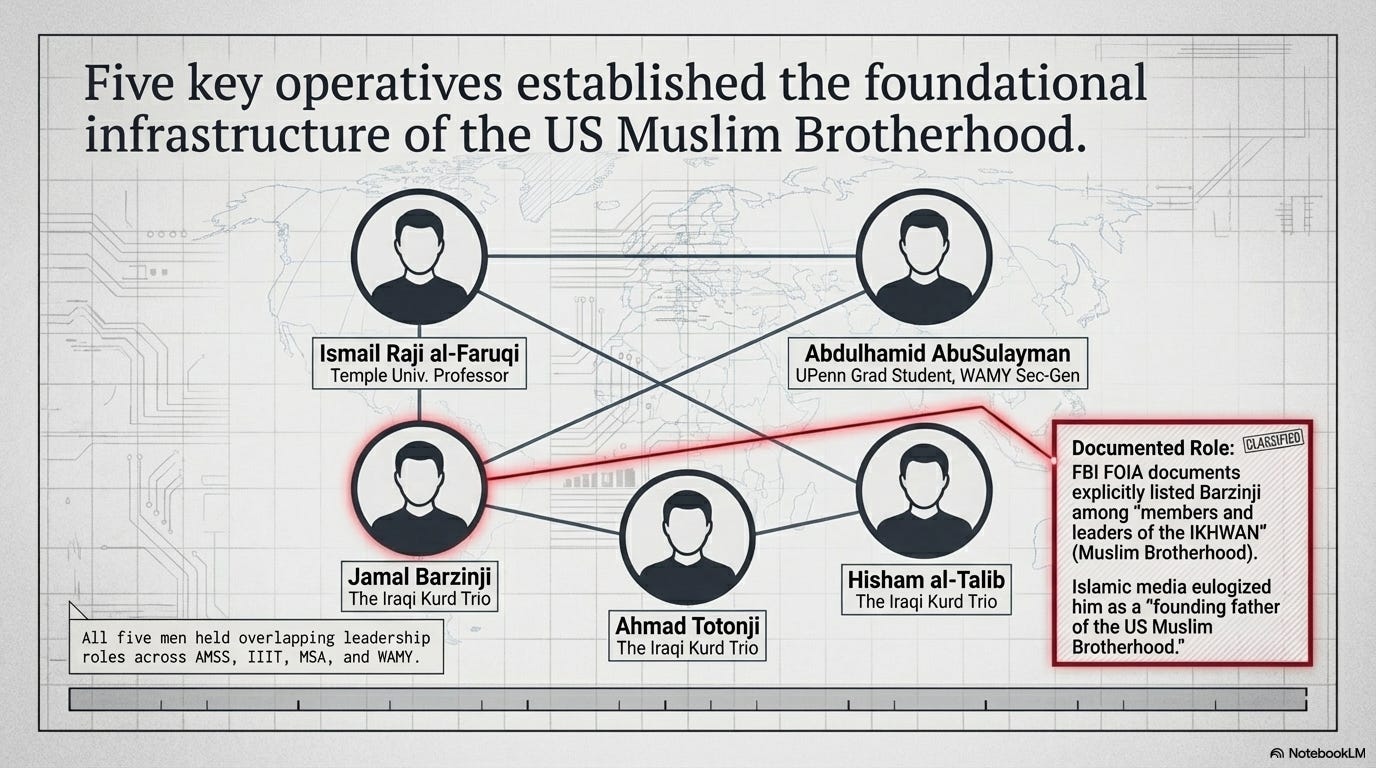
In 1983, Barzinji served on the initial board of trustees of the SAAR Foundation in Herndon, Virginia, alongside fellow AMSS co-founder Abdulhamid AbuSulayman and supporters Totonji and al-Talib. Federal investigators would later allege that SAAR was a network of approximately 100 organizations “interrelated through corporate officers...to facilitate the funding of terrorist operations” with alleged ties to Hamas, Hezbollah, Palestinian Islamic Jihad, and al-Qaeda. All four AMSS figures held leadership positions across multiple SAAR entities.
March 2002: The FBI Raids Target AMSS Founders’ Network
On March 20, 2002, federal agents raided 14 homes and offices in Northern Virginia, including 555 Grove Street in Herndon—the headquarters of IIIT, the think tank co-founded by AMSS founders al-Faruqi and AbuSulayman. The raids targeted what investigators called the SAAR Network, examining potential terrorism financing connections involving the same individuals who had established AMSS three decades earlier.
An FBI affidavit stated that the network consisted of “interrelated” nonprofit and for-profit organizations operating through shared leadership to potentially facilitate funding for terrorist operations. The document specifically named AMSS’s key supporter Barzinji as holding director positions in multiple SAAR entities, including IIIT, Safa Trust, and Mar-Jac Poultry.
While no criminal charges resulted from the 2002 raids, the investigation revealed that AMSS’s founders and primary supporters—the men who had established the organization as an academic association in 1972—were simultaneously operating a complex web of organizations under federal scrutiny for potential terrorism financing.
Alleged Ties with Palestinian Islamic Jihad (PIJ)
Allegations of ties between AMSS’s founding circle and PIJ emerged from the prosecution of Sami al-Arian, a University of South Florida professor convicted in 2006 of conspiracy to provide services to Palestinian Islamic Jihad, a U.S.-designated terrorist organization.
A November 6, 1992 letter from Taha Jabir al-Alwani, president of IIIT, the think tank co-founded by AMSS founders, to al-Arian was entered as trial evidence. In it, al-Alwani explicitly stated that he and his colleagues considered themselves “indistinguishable” from al-Arian, Ramadan Abdullah Shallah (who would become Secretary-General of Palestinian Islamic Jihad), and other PIJ founders.
Crucially, al-Alwani named all the key AMSS figures in his statement of solidarity with PIJ operatives: “I would like to affirm these feelings to you directly on my behalf, and on the behalf of all my brothers, Drs. Abdel-Hamid [AbuSulayman], Jamal [Barzinji], Ahmad [Totonji], and Hisham [Al-Talib]“—the very men who had founded or supported AMSS and continued to shape its direction.
The letter also discussed a $45,000-50,000 payment from the SAFA Group (another name for the SAAR Network) to al-Arian’s organizations, stating: “when we make a commitment to you, or we try to offer, we do it for you as a group, regardless of the party or the facade you use the donation for.”
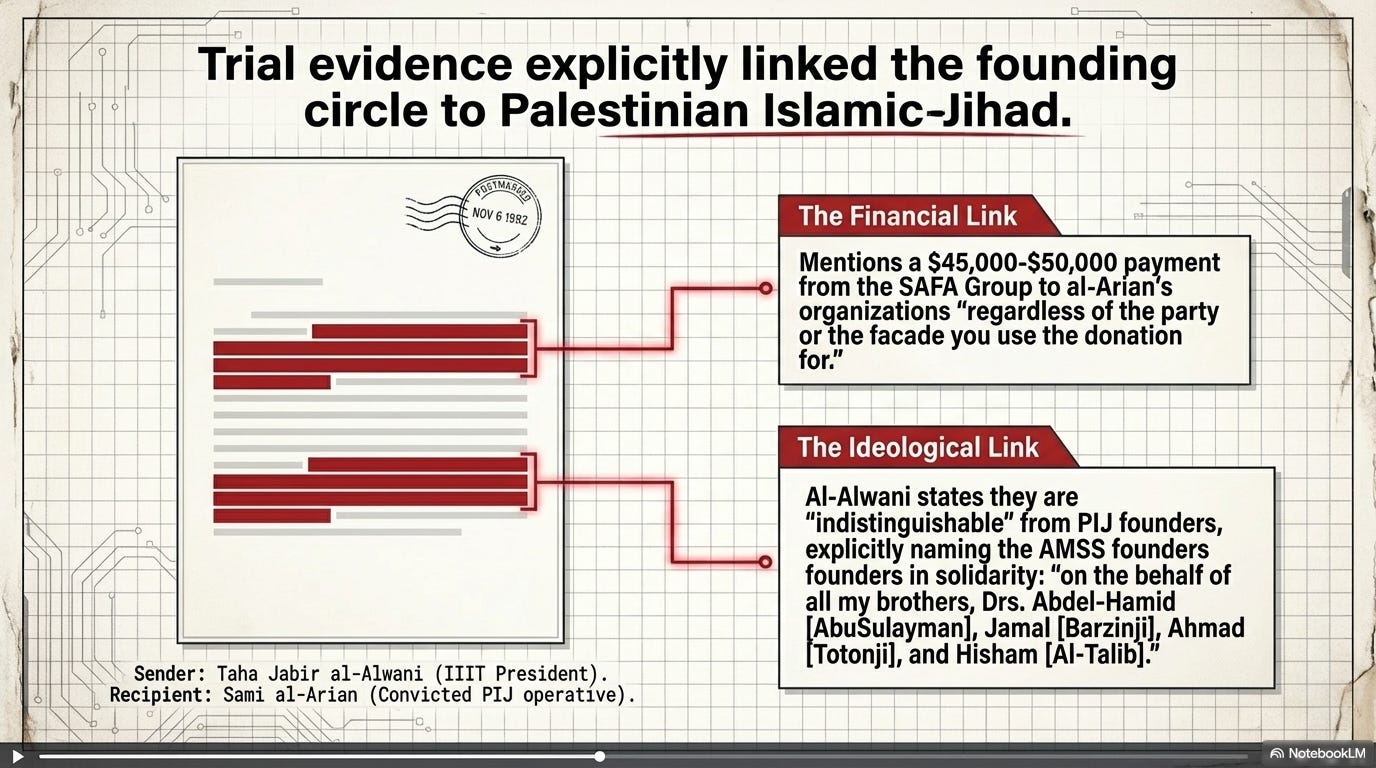
The al-Arian case placed parts of the IIIT/SAAR orbit under additional scrutiny and raised questions about overlaps between some of those figures and al-Arian’s organizations
AMSS Founders’ Alleged Terror Ties
AMSS supporter Barzinji, as founding general manager of NAIT, established the financial infrastructure for hundreds of mosques, some of which were alleged to have links to terror activity.
Two 9/11 hijackers, Khalid al-Mihdhar and Nawaf al-Hazmi, had close ties with members of the NAIT-funded Islamic Center of San Diego, according to Newsweek reporting. In 2001, al-Hazmi visited the NAIT-affiliated Dar al-Hijrah mosque in Falls Church, Virginia, during the period when Anwar al-Awlaki—who later became a top al-Qaeda operative, served as imam.
Treasury Department records alleged that Dar al-Hijrah “operates as a front for Hamas operatives in U.S.” and “is associated with Islamic extremists.” The mosque also hosted other convicted terrorists, including Ahmed Omar Abu Ali and Abdurahman Alamoudi.
The 2013 Rebrand: From AMSS to NAAIMS
In 2013, the Association of Muslim Social Scientists formally changed its name to the North American Association of Islamic and Muslim Studies. The Virginia State Corporation Commission approved the change on April 17, 2013.
The organization’s official explanation emphasized expansion: “Although the former name AMSS highlighted only the social sciences and Muslim scholars, the topics and themes examined in its conferences and lectures went beyond the social sciences, and its membership, conference participants, and board of directors included non-Muslims.”
The timing is notable. The Holy Land Foundation trial concluded in 2008 with guilty verdicts on 108 counts. The trial’s evidence, including the 1991 Explanatory Memorandum listing AMSS, became public record. Five years later, AMSS adopted a new name that eliminated the explicit reference to “Muslim Social Scientists” that appeared in the Brotherhood document.
The rebrand allowed the organization to distance itself from its alleged Muslim Brotherhood origins while maintaining the same leadership structure, mission, and operational approach. As NAAIMS, the organization could present itself as a purely academic association rather than an advocacy group founded by Muslim Brotherhood members under investigation for terrorism financing.
The Academic Legitimacy Strategy
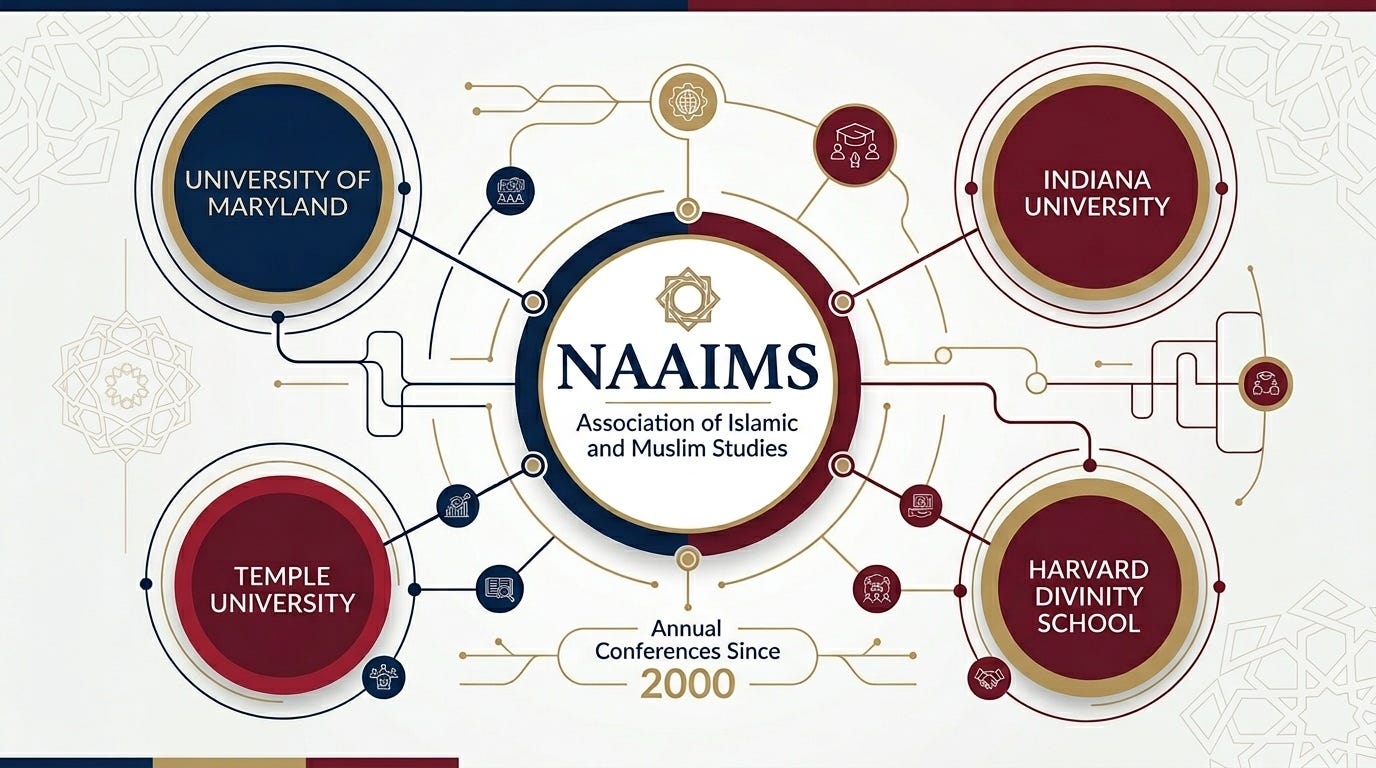
NAAIMS states that AMSS “created a unique niche in academia” through events “cosponsored solely by universities,” which it describes as “unrivaled by other Muslim organizations.” According to the organization’s introduction page, its annual conferences since 2000 were cosponsored or hosted by institutions including Georgetown University, Indiana University, Temple University, the University of Maryland, Harvard Divinity School, the University of Virginia, Yale Divinity School, and Princeton University.
Controversial Speakers and Conferences
NAAIMS’s 33rd annual conference in September 2004 featured Tariq Ramadan as keynote speaker, the grandson of Muslim Brotherhood founder Hasan al-Banna. The U.S. State Department revoked his visa that same year, preventing him from taking a teaching position at the University of Notre Dame.
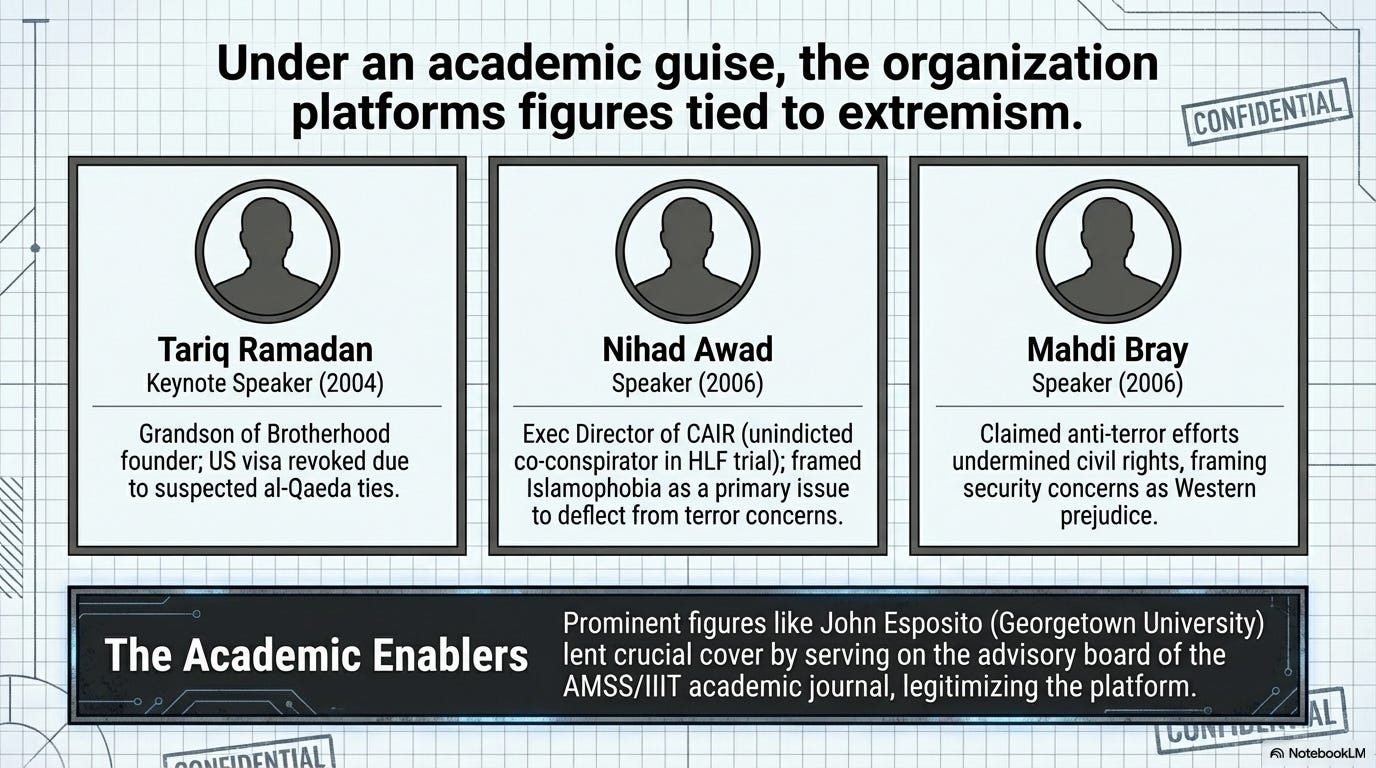
A December 2006 conference at the Brookings Institution, co-sponsored by AMSS and the Institute for Social Policy, focused on defining “Islamophobia.” The event featured Nihad Awad, executive director of CAIR (Council on American-Islamic Relations)—an organization also named as an unindicted co-conspirator in the Holy Land Foundation trial. Awad claimed hate crimes against Muslims had risen 29 percent and argued that Islamophobia was a new word but not a new phenomenon.
Another featured speaker, Mahdi Bray, executive director of the Muslim American Society, blamed “Westerners’ overriding ignorance about Islamic tenets” for Islamophobia and claimed U.S. government anti-terror efforts had “undermined the civil rights of Muslims nationwide.” The conference framed concerns about terrorism as primarily an issue of Western prejudice rather than legitimate security concerns stemming from documented terror financing networks—networks in which AMSS founders themselves had been implicated.
At AMSS’s Canadian Regional Conference in November 2007, keynote speaker Regina Lewis of the London College of Fashion defended the niqab (face veil), questioning whether requiring its removal “hampers communication” more than having a blind politician. Board member Jasmin Zine stated: “Following the tragic events of 9/11, Muslim identities and the religion of Islam have been under siege.”
2024: The Palestine Conference
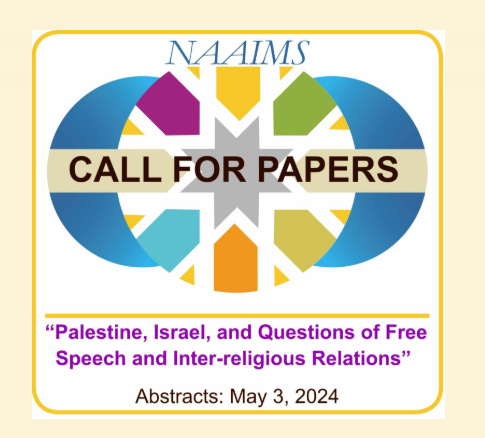
NAAIMS’s 53rd annual conference in October 2024, co-sponsored by Michigan State University’s Muslim Studies Program, focused on “Palestine, Israel, and Questions of Free Speech and Inter-religious Relations.”
The conference call for papers invited submissions on topics including:
“Palestine Solidarity and Islamophobia”
“Religious Responses and the Question of Genocide”
“Gaza and the Limits of Inter-religious Relations”
“Palestine, Israel, Islamophobia, and Antisemitism”
“Use and Abuse of Scripture in War (in relation to Palestine and Israel)”
The conference background statement noted that following Hamas’s October 7, 2023 attacks, “the Israeli government launched a devastating bombardment on Gaza” and described “heated protests and debates about the limits of free speech and the line between justifiable criticisms and bigotry.”
The conference background statement referenced the October 7 Hamas-led attacks, but it did not describe them as terrorism or cite the widely reported figures of about 1,200 people killed in Israel and 251 hostages taken.
NAAIMS president Mohammad Hassan Khalil, who also directs Michigan State’s Muslim Studies Program, chaired the conference program.
The Legitimacy Questions
The transformation from AMSS to NAAIMS represents a case study in organizational rebranding and legitimacy-building. By emphasizing academic conferences, peer-reviewed publications, and university partnerships, the organization has successfully repositioned itself as a scholarly association rather than an advocacy group with alleged Muslim Brotherhood origins.
A 2007 analysis by defense analyst Stephen Coughlin, written as the Explanatory Memorandum was entered into evidence at the Holy Land Foundation trial, specifically identified AMSS among the organizations listed in the Brotherhood memo’s Attachment 1. Coughlin noted that “outreach strategies must be adjusted in the face of credible information that seeming Islamic humanitarian or professional non-governmental organizations may be part of the global jihad.”