


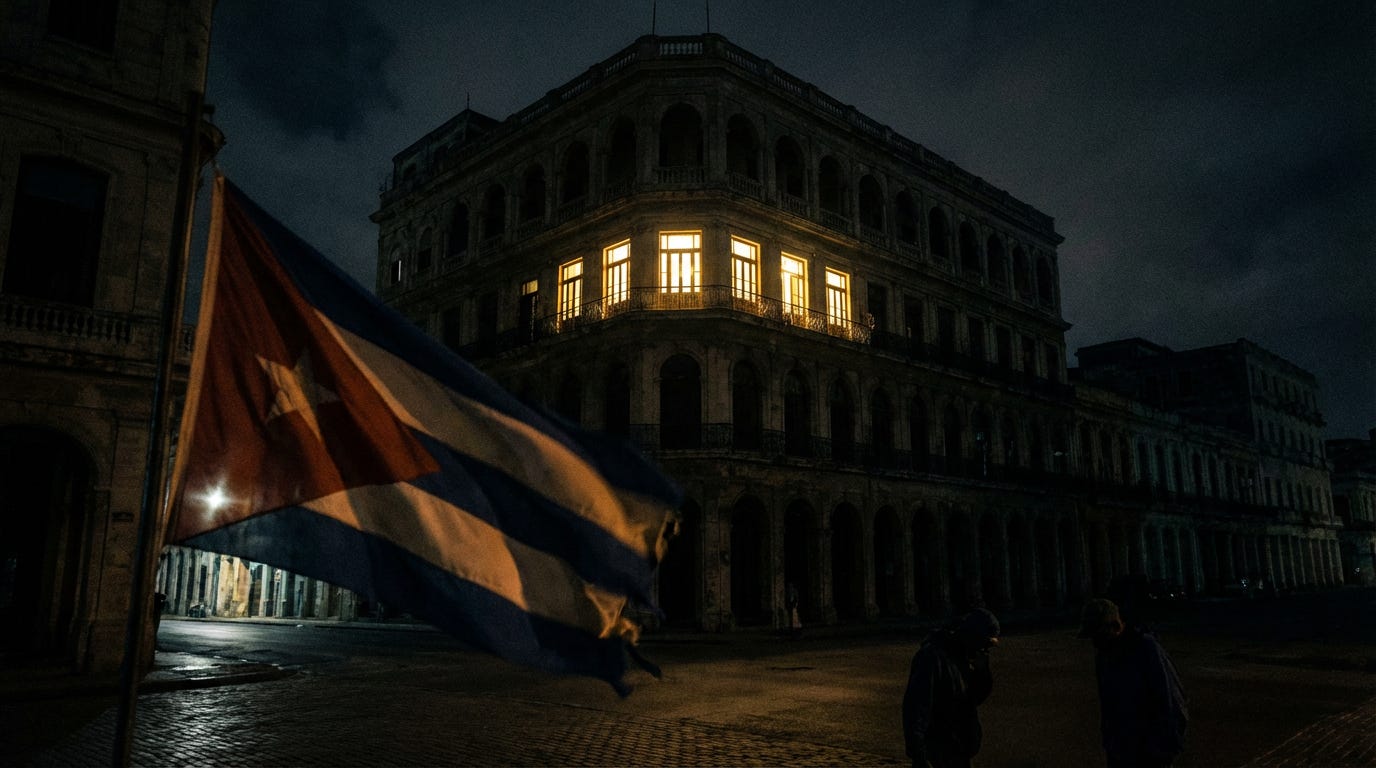
Code Pink, streamer Hasan Piker, and scores of far-left American activists arrived in Havana this week for a “humanitarian convoy” but they’re not experiencing the humanitarian crisis firsthand. While Cuba suffered a nationwide blackout leaving 11 million people without electricity for over 20 hours at a time, the delegation stayed in five-star hotels with backup generators, air-conditioned buses, and pristine internet connections.
According to Founder and President of Combat Antisemitism, Gabe Hoffman, Streamer Hasan Piker appears to have stayed at the Gran Hotel Bristol Kempinski, a property explicitly banned for U.S. citizens under the State Department's Cuba Prohibited Accommodations List, raising questions about whether he and potentially other activists are breaking federal sanctions law while enjoying regime hospitality as ordinary Cubans sit in darkness.
The Humanitarian Safari
The “Nuestra America Convoy” brought hundreds of activists from North America and Europe to Cuba, ostensibly to deliver 20 tons of aid and protest U.S. sanctions. The delegation includes Twitch streamer Hasan Piker, who broadcast to his 1.6 million Instagram followers with a spotless internet connection. Also present: Isra Hirsi, daughter of Rep. Ilhan Omar, and delegations from groups the State Department has identified as vectors of Chinese influence operations, including The People’s Forum and Code Pink.


While the activists traveled in air-conditioned buses and stayed at hotels charging $130 to $520 per night, ordinary Cubans endured power outages exceeding 20 hours daily. Activists posed for photos with President Miguel Díaz-Canel at the Palacio de Convenciones. Code Pink founder Jodie Evans appeared in images wearing a pink keffiyeh alongside Piker.


Investigative analyst at the Manhattan Institute Stu Smith identified leaders of the Palestinian Youth Movement at the conference, including two heavily involved in targeting the F-35 supply chain, alongside Rutgers professor Noura Erakat and George Mason professor Bassam Haddad.

Cuban Exile Response
The optics enraged Cuban exiles, many of whom are barred by the communist government from returning home. “This is a gigantic mockery of the entire Cuban people,” said Mayra Dominguez, a Cuban living in exile in the U.S. “The left visits Cuba as if it were a party at a zoo and they go to admire the misery from a luxury hotel.”
One video circulating online showed an angry Cuban man confronting the hotel where Code Pink activists stayed, highlighting the generator-powered electricity available to foreign guests while the rest of the country sat in darkness.

The Aid Distribution Mystery
The convoy is organized by Mariela Castro, daughter of former president Raúl Castro, through the nonprofit Progressive International. Few details emerged about how the promised aid would be distributed. One of the organizations involved in distribution, the Cuban Institute of Friendship with the Peoples, has been described in U.S. intelligence assessments as a front for Cuban intelligence services.
Revolutionary Tourism
The convoy represents the latest iteration of what critics call "solidarity tourism" — Western activists visiting authoritarian states under official auspices. The contrast, however, is documented: as the island's electrical grid collapsed and Cuban President Miguel Díaz-Canel reported no oil shipments in over three months, American activists broadcast from hotels with backup generators, traveled in climate-controlled buses, and posed for photographs with the government officials overseeing the distribution of the aid they delivered.
Fear not! Cuba’s Saviour Jeremy Corbyn is in route from the UK
Those hotels with backup generators are being given the fuel to operate them by the Cuban regime.
The distribution of whatever "aid" these American activists have brought with them will be totally controlled by the Cuban regime and used to support the regime, not given to members of the general public.
No different than how Hamas seizes humanitarian aid to Gaza and uses it for its own purposes.