


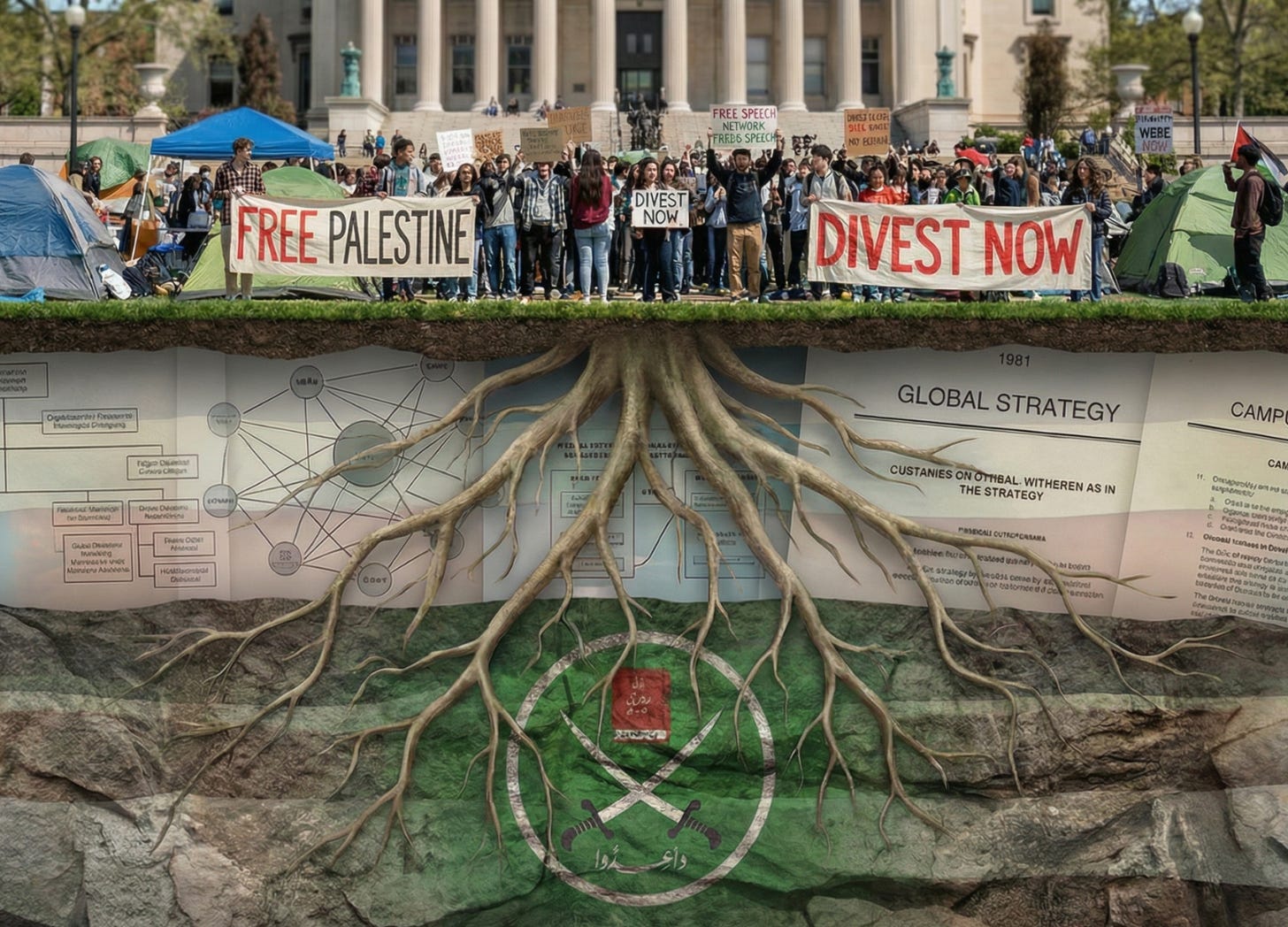
A newly published academic study reveals that pro-Palestinian activism sweeping American college campuses and influencing Democratic politics is not a spontaneous grassroots uprising, but rather the product of a coordinated, decades-long organizational strategy rooted in the Muslim Brotherhood’s 1991 strategic blueprint.


Kobby Barda, a lecturer at the Holon Institute of Technology, spent nearly two years investigating the operational roots of the movement following the October 2023 massacre. His research draws on exclusive internal training materials—confidential toolkits and handbooks circulated among organizers through closed networks—to document how classical social movement theory has been applied with precision to build what he describes as a "disciplined, efficient political machine."
Barda's analysis challenges the prevailing assumption in the West that current activism represents organic student dissent, arguing instead that it reflects a mature application of resource mobilization, strategic framing, and political opportunity exploitation established in blueprint form three decades ago.
The 1991 Blueprint: A Decades-Old Strategy
A key element centers on a 1991 document written by Mohamed Akram, a prominent figure in the Muslim Brotherhood, which described a ‘civilizational-jihadist process’ with the ultimate goal of integrating Islamic influence within the American society. Early in the document, Akram states that: “the Ikhwan [The Muslim brotherhood] believe that their work in America is a kind of grand Jihad in eliminating and destroying the western civilization from within and want to sabotage its miserable house by their hands until it is eliminated and God’s religion is made victorious over all other religions.”
“The Ikhwan [The Muslim brotherhood] believe that their work in America is a kind of grand Jihad in eliminating and destroying the western civilization from within and want to sabotage its miserable house by their hands until it is eliminated and God’s religion is made victorious over all other religions.”
The memorandum emphasizes the need to establish ‘a stable organization that can move the brothers to the position of leadership’, and specifically identifies ‘universities, student unions, and educational institutions’ as essential targets ‘for long-term influence.’ Universities are described as ‘the theaters of future leadership, the place where the Muslim student must be shaped as a committed soldier in the movement.’
The document identifies numerous organizational networks operating within what it describes as a ‘structure of support.’ These include student associations, academic research centers, legal advocacy groups, and community organizations. Several entities are explicitly named as Brotherhood-affiliated, including the Muslim Students’ Association (MSA), the Islamic Association for Palestine (IAP), and the Islamic Society of North America (ISNA).
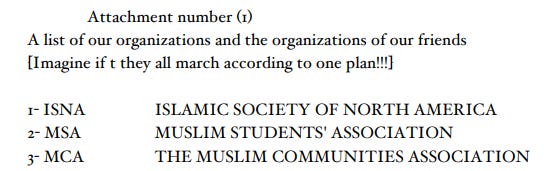
Critics suggest that today's campus protest and boycott movements are not disconnected or accidental phenomena, but rather the manifestation of a decades-old organizational strategy.
The Holy Land Foundation: How America's Biggest Terror Finance Case Exposed a Network
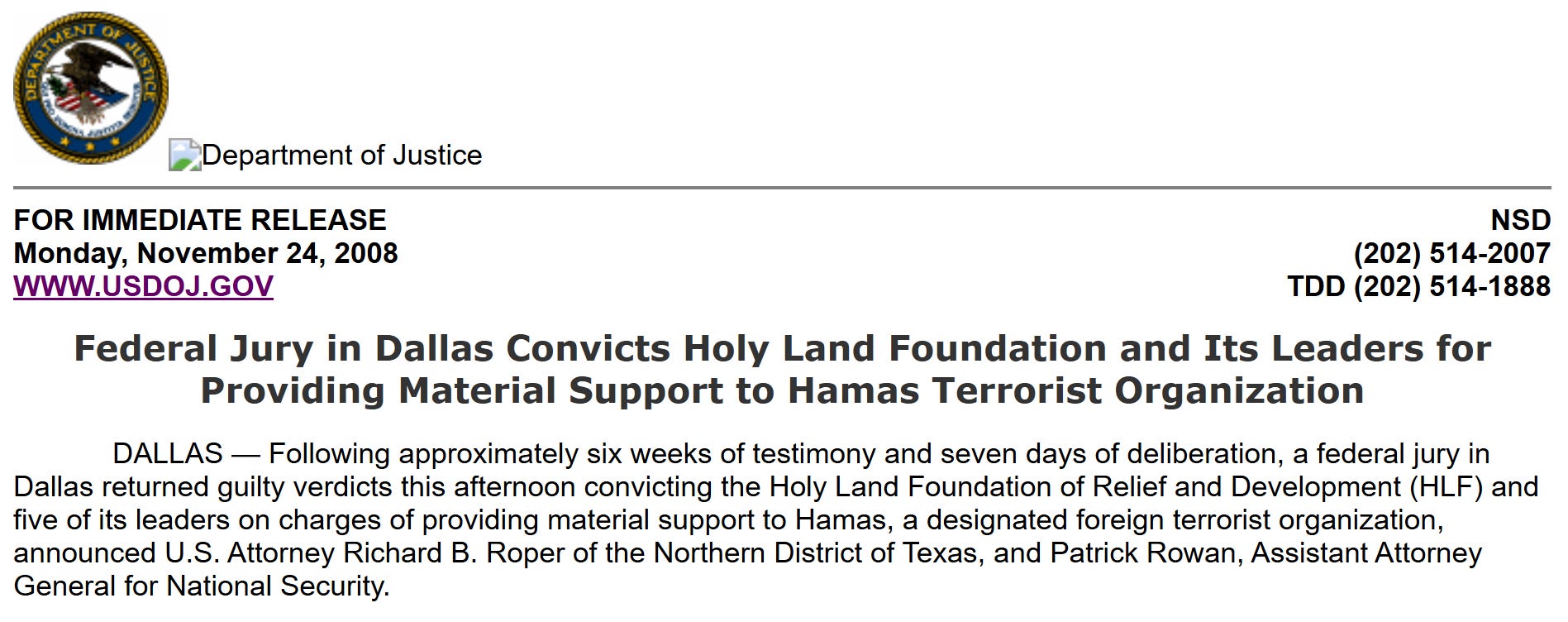
The Holy Land Foundation (HLF) case, the largest terrorism-financing prosecution in U.S. history, exposed an extensive network of American charitable organizations that channeled financial support and resources to Hamas. A 2007–2008 federal trial resulted in the conviction of five senior HLF officials for providing material support to a designated terrorist organization, revealing financial flows and organizational ties linking American Muslim entities to terror groups in the Middle East.
In the years following the HLF trial, student-centered organizations adopted strategies that mirrored patterns outlined in the 1991 memo. Students for Justice in Palestine (SJP), founded in 1993 at UC Berkeley, expanded to over 200 chapters across North America.
Among its organizers was Zohran Mamdani, who co-founded the Bowdoin College chapter before eventually being elected as New York City’s current mayor. While these groups publicly deny formal Brotherhood affiliation, Dr. Barda notes that their organizational structures, tactics, and messaging closely parallel the blueprint established decades earlier.
How Campus Activism Scaled: The Strategy Behind the Movement
To understand how pro-Palestinian campus activism evolved from isolated protests into a coordinated national force, Dr. Barda points to three key organizational dynamics: resource mobilization, narrative framing, and political opportunity.
Building Infrastructure
Academic analysis suggests that the movement’s strength has hinged on its ability to acquire and deploy resources efficiently. Since 2009, Students for Justice in Palestine (SJP) chapters have deliberately built organizational capacity through digital tools—mass email platforms, text alert systems, and social media coordination—that transformed scattered sympathizers into an activated network.
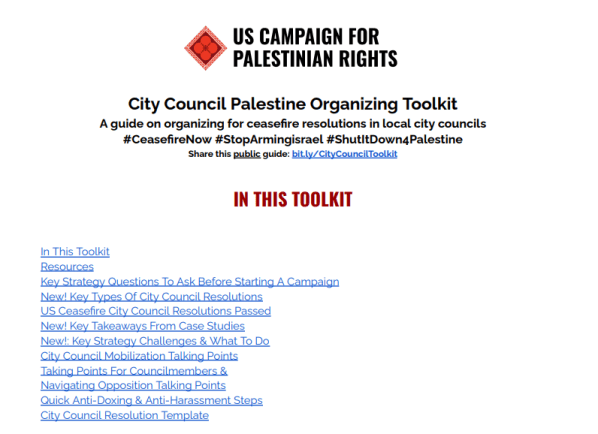
A significant development was the emergence of national coordinating organizations. The U.S. Campaign for Palestinian Rights (USCPR) functions as a resource hub, producing detailed tactical guides and toolkits circulated among organizers. These materials outline specific strategies, from phone banking to council testimony, while also including safety protocols and media guidance.
In one documented case mentioned by Dr. Barda in his study, St. Louis activists orchestrated a ten-day campaign that combined neighborhood canvassing (1,000 doors knocked), organized phone banks (40 volunteers calling officials), mass public testimony (50+ people), and visual demonstrations designed to maximize impact.
Critically, the movement adapted after the 2008 Holy Land Foundation prosecutions cut off certain funding channels. Rather than relying on direct financial support, activists diversified resources through community partnerships with established nonprofits, small grants, volunteer labor, and crowdfunding, allowing the movement to sustain itself despite institutional pressure.
Crafting the Message
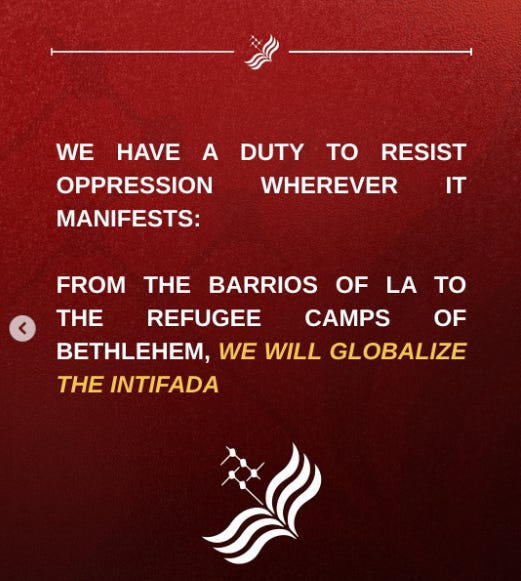
Beyond logistics, the movement’s growth depended on how activists framed their cause. According to Dr. Barda, after 2001 organizers deliberately shifted their messaging away from religious or partisan language toward universal values: human rights, anti-colonialism, and social justice.
This reframing allowed the movement to align with broader progressive causes, drawing parallels to anti-apartheid activism and civil rights movements, and appeal to constituencies beyond Muslim communities.
Seizing Political Moments
The movement’s timing also mattered. Dr.Barda’s study asserts that the early 1990s offered a permissive environment as Muslim student groups expanded with little scrutiny. After 9/11, heightened surveillance and restrictive laws created obstacles, but also opportunities: criticism of the Patriot Act allowed activists to frame their work as defending academic freedom and minority rights, building coalitions with civil liberties groups. When political conditions tightened, activists shifted tactics, moving from open protest to educational events and interfaith dialogues.
Internal documents reviewed by Dr. Barda reveal sophisticated campaign planning through group chats, spreadsheets, and training sessions—infrastructure he classifies as indicative of a 'stable organization.' This operational framework, outlined in the Brotherhood's 1991 memo, operates largely invisibly but enables the movement to punch above its numerical weight in American politics.
The 2024 Uncommitted Campaign: From Campus to the Ballot Box
Dr.Barda argues that the evolution of pro-Palestinian activism reached a new threshold in early 2024 when campus-based organizing translated into electoral politics. In Michigan, a grassroots coalition led by Arab-American activists and supported by U.S. Congresswoman Rashida Tlaib launched the “Uncommitted” campaign, urging Democratic primary voters to withhold support from President Biden as a protest against his backing of Israel’s military campaign against Hamas in Gaza.
In just four weeks, volunteers made over 500,000 phone calls, resulting in more than 100,000 Michiganders casting uncommitted ballots—far exceeding organizers’ initial goal of 10,000 votes. The movement rapidly scaled nationally. By the end of primary season, over 600,000 Democrats across multiple states had cast protest votes, securing dozens of delegates to the Democratic National Convention.
The Uncommitted movement demonstrated that decades of organizing infrastructure and narrative framing built on college campuses could be mobilized into a potent electoral force capable of influencing the highest levels of American politics.