


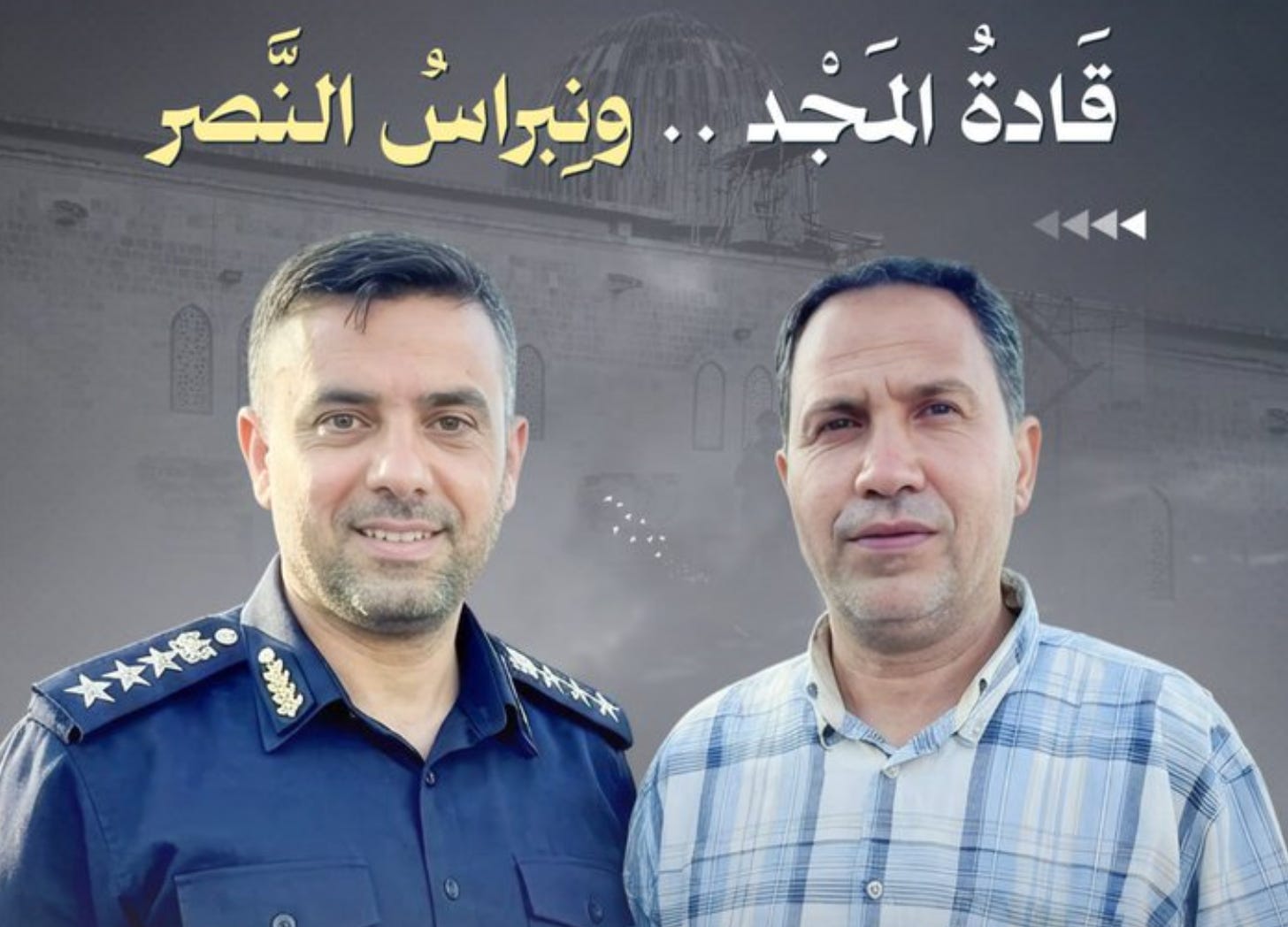
In December 2023, an Israeli airstrike killed the director of Gaza’s Kerem Shalom border crossing, prompting international condemnation. Al Jazeera reported that the man — identified at the time as Bassem Ghaben — “was working to bring humanitarian aid into Gaza.” The New Arab described the strike as evidence that Israel “was targeting routes relied on for the entry of much-needed aid into the enclave.” More than a year later, Hamas’ own records tell a different story.
New posts on popular Gazan militant obituary channels, identified by analyst Gabriel Epstein (@GabrielEpsteinX), reveal that the crossing’s police director — listed under his full name, Bassem Salah Mohammed Ghubn — was a longstanding member of Hamas’ military wing.
Hamas has catalogued him under ID #900657131, age 45. The martyr notice confirms that Ghubn joined the Izz al-Din al-Qassam Brigades and subsequently assumed command roles within the organization before being appointed a police colonel and placed in charge of the Kerem Shalom crossing.
A Lifelong Hamas Partnership
The obituary channels describe Ghubn as a lifelong friend of Alaa al-Hadidi, who served as the head of supply in Hamas’ weapons manufacturing headquarters. Both men joined Hamas’ military wing according to the notices, and later took on command positions in different branches of the organization.


The Israeli Defense Forces and Shin Bet confirmed in November 2025 that they eliminated Hadidi in an airstrike in Gaza on November 22, 2025. The Meir Amit Intelligence and Terrorism Information Center documented that Hamas confirmed Hadidi’s death, identifying him as “Abu al-Mua’man,” who “commanded supply and armament and was one of the heads of the military production department.”
According to Epstein’s findings, Hadidi was killed in the same strike that also killed Khalil Amr al-Serry, the head of the Patient Affairs Department at Al-Shifa Hospital — further illustrating the overlap between civilian administrative positions in Gaza and Hamas’ military apparatus.
How International Media Covered the 2023 Strike
When Ghubn was killed on December 21, 2023, alongside three others in what the UN described as a “drone strike,” international coverage overwhelmingly framed the event as an attack on humanitarian infrastructure.
Al Jazeera’s correspondent stated that the strike demonstrated Israel’s military was “not only targeting infrastructure and homes, but also places that Palestinians rely on for humanitarian aid they need for their survival.” The Times of Israel noted that the IDF did not comment on the claims at the time. VOA identified Ghubn as “the Hamas-appointed senior border official,” while the UN’s Stephane Dujarric said the strike “hampered relief operations.”
Anadolu Agency framed it as Israel targeting a commercial crossing and "killing director." The BBC reported that "crossing director Bassem Ghaben and three others were killed" at the "newly-reopened" Kerem Shalom crossing, contextualizing the strike squarely within the humanitarian aid corridor.
The Jerusalem Post was among the few outlets that identified Ghubn at the time by his rank — colonel — in its reporting, attributing the information to Hamas itself. The newly surfaced martyr notice now provides the fuller picture: that the colonel was within Hamas’ own security structure, and that Ghubn’s military career in the Qassam Brigades predated his appointment to the crossing by years.
A Pattern: Hamas Operatives in Civilian Crossing Roles
Ghubn is not the only Hamas military figure to have held a senior position at a Gaza border crossing. In December 2025, Montaser Abu Samak — the head of the Rafah commercial crossing — was reportedly killed by the Popular Forces, an anti-Hamas militia operating in Gaza. Abu Samak simultaneously served as head of a sniper unit in Hamas’ East Rafah Battalion, according to Epstein’s analysis of militant channel postings.
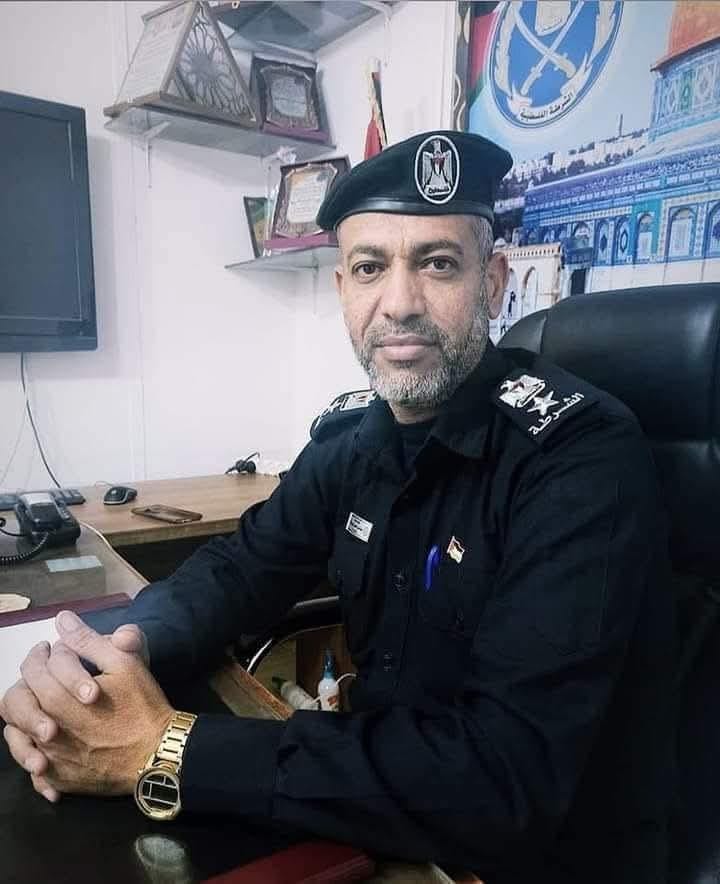
The Ghubn case illustrates how Hamas’ own posthumous documentation can contradict the narrative established in real-time international reporting. The martyr notice — issued by Hamas-aligned channels that routinely catalogue fallen fighters with ID numbers, ranks, and unit histories — serves as an internal admission that the man running one of Gaza’s most strategically important border crossings was a career military operative in the organization’s armed wing.
Classic