


Jewish Onliner is an independent publication. If you find our work valuable, please consider becoming a paid subscriber. You can also subscribe to us on WhatsApp and Telegram. Follow us on YouTube, TikTok, Instagram, Discord, and X.
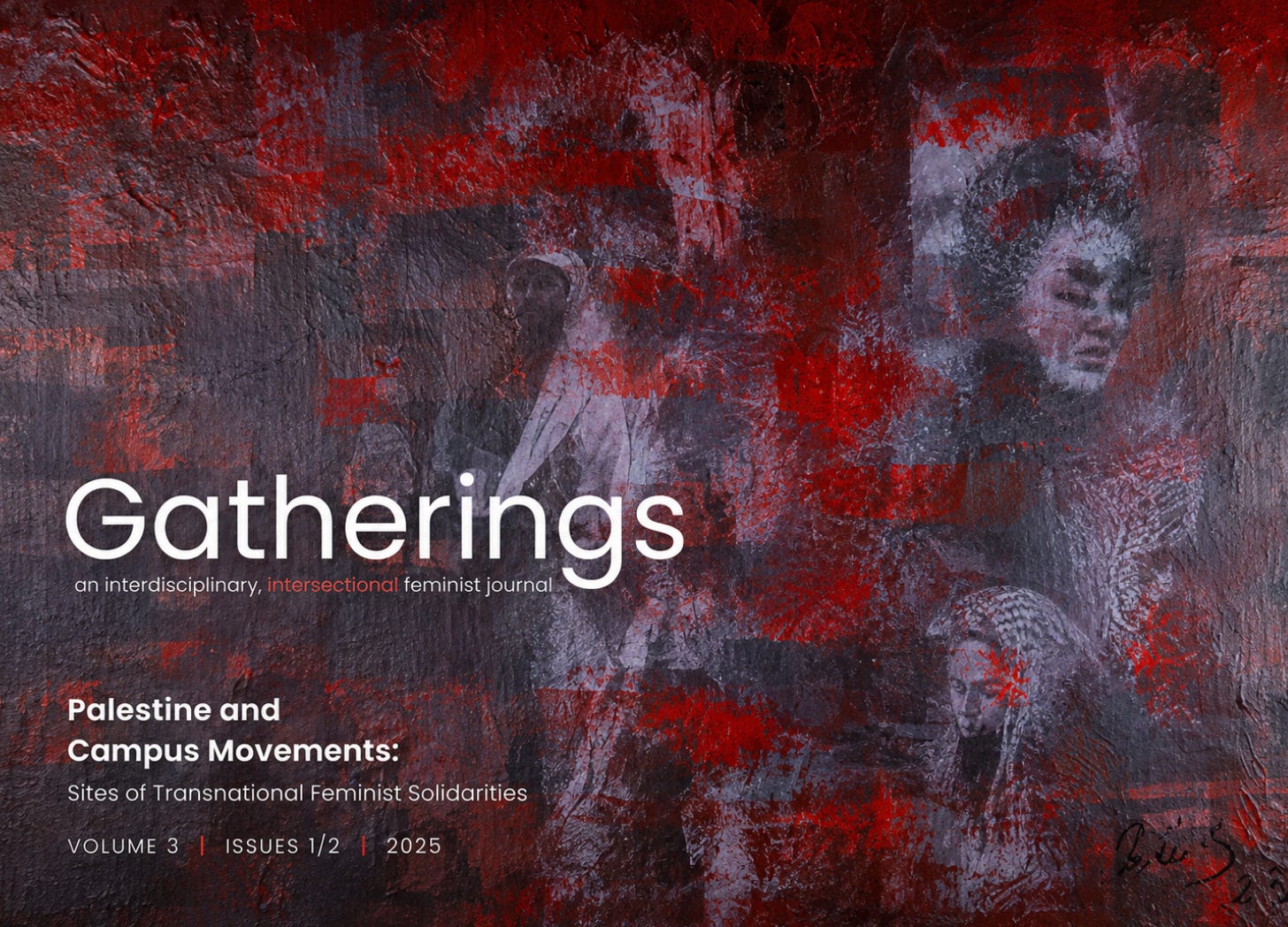
A peer-reviewed journal hosted in St. John Fisher University’s digital collection has published a special issue on “Palestine” and campus activism containing a series of striking claims about Israel, Zionism and the Oct. 7 massacre. One paper describes the attack using the language of “Islamic Resistance” and Palestinian “resistance fighters,” criticizes yoga studios that condemned Hamas, deliberately adopts “Zionist entity” as terminology for Israel and repeatedly invokes “militant political action.”
The same paper calls the Gaza war the “latest holocaust,” expresses solidarity with “fighters resisting imperial occupation” and documents relationships with Students for Justice in Palestine chapters and other radical anti-Israel activist organizations. A separate essay by the issue’s guest co-editor claims Zionists have mastered “the art of manipulating history” and that “all forms of knowledge in the West” are instrumentalized to serve Zionism.
The material appears in Volume 3 of Gatherings, a peer-reviewed journal in St. John Fisher University’s digital collection. The August 2026 issue, titled “Palestine and Campus Movements: Sites of Transnational Feminist Solidarities,” spans 148 pages and continues an earlier issue devoted to the same subject.
Oct. 7 Framed Through ‘Resistance’
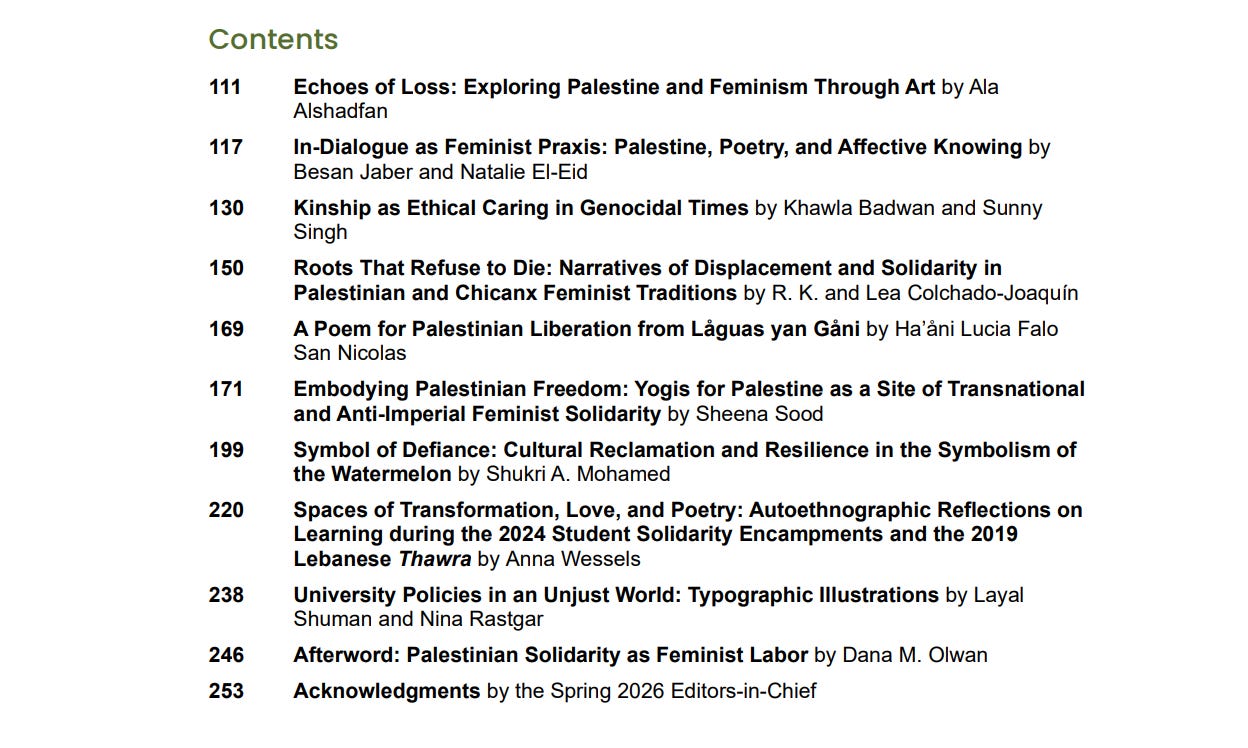
The most consequential contribution is “Embodying Palestinian Freedom: Yogis for Palestine as a Site of Transnational and Anti-Imperial Feminist Solidarity,” written by Sheena Sood, an assistant professor of sociology at Delaware Valley University and co-founder of Philadelphia-based Yogis for Palestine.
Sood introduces Oct. 7 by referring to the “Islamic Resistance’s launch of Tufan Al-Aqsa.” A footnote explains that Tufan Al-Aqsa, or Al-Aqsa Flood, is the name used by Hamas and Palestinian “resistance fighters” for the coordinated attacks, which the paper says were intended “to break the Israeli siege on Gaza.” The passage does not mention the Israeli civilians murdered or the hostages abducted into Gaza.
Sood later criticizes the reaction of yoga teachers and studios following the massacre. According to the paper, many “rushed to condemn the attacks by Hamas” while invoking ahimsa, the yogic principle of nonviolence. Sood characterizes those responses as a “neutral, two-sides approach” producing “flattened calls for peace and light.” Yogis for Palestine instead circulated its own political statement, which Sood says attracted more than 700 signatures.
Sood had adopted that framing almost immediately after the massacre. On Oct. 8, 2023, one day after the Hamas-led attacks, she wrote that “we can’t ‘both sides’ righteous rebellions and resistance to Israel’s decades-long occupation and racist settler colonial project of Zionism,” casting the violence as legitimate “rebellion” and “resistance” rather than condemning the attacks.


‘Dismantling of the Zionist Entity’
Throughout the paper, Sood repeatedly refers to Israel as the “Zionist entity” and explicitly explains that the terminology is deliberate. A footnote traces the phrase to Arab states’ historical rejection of Israel’s legitimacy and cites former professor Steven Salaita describing Israel as a “temporary phenomenon.” Sood says adopting the term represents a “gesture of refusal.”
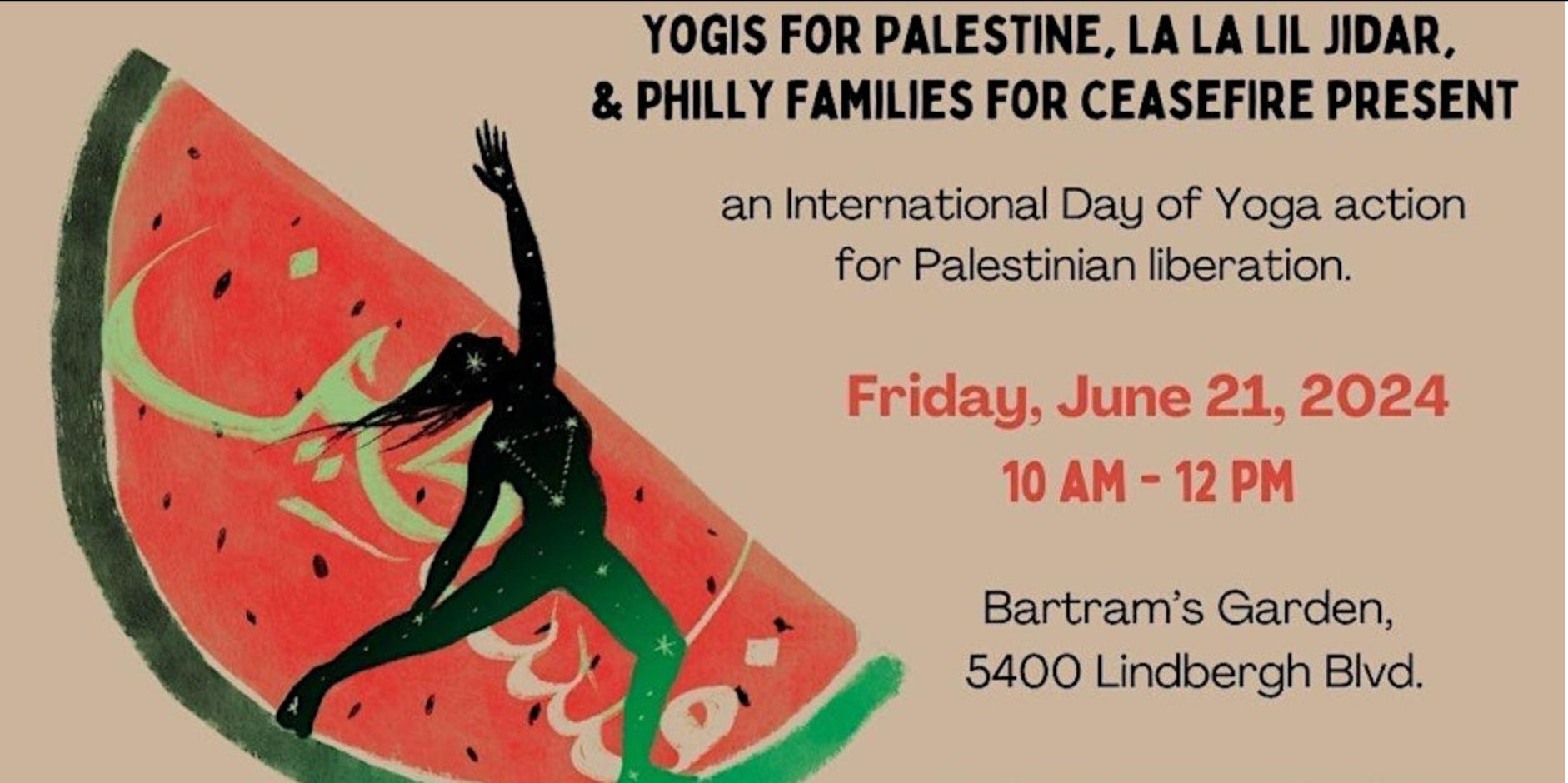
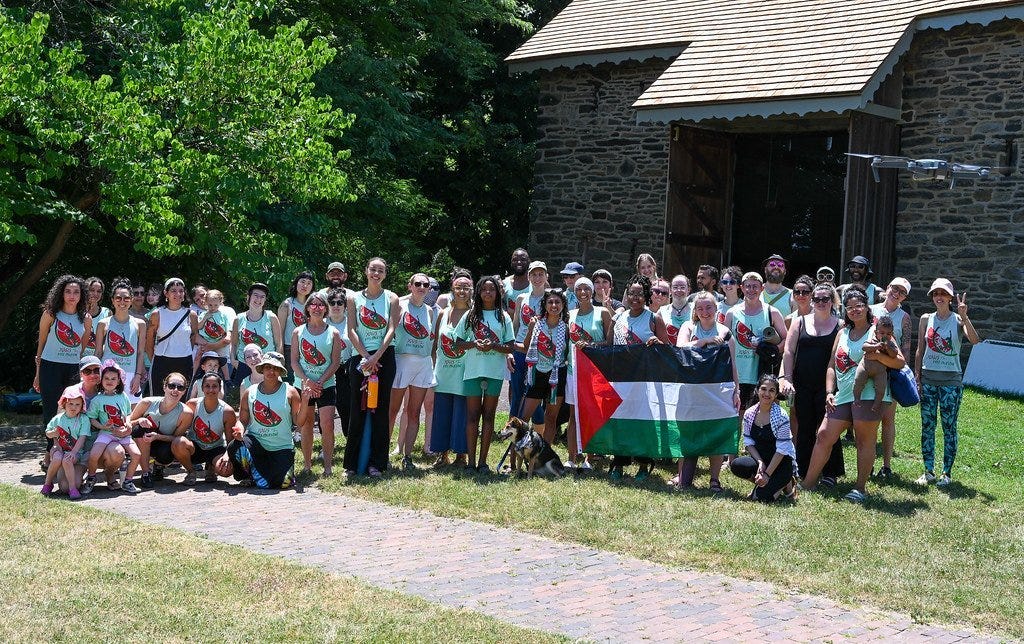
The rhetoric extended into Yogis for Palestine’s activism. Sood describes a June 2024 gathering at Philadelphia’s Bartram’s Garden where nearly 100 participants mourned Palestinian “martyrs” and used yoga to call for the “dismantling of the Zionist entity” and a “free Palestine.”
The following year, Yogis for Palestine partnered with Tejal Yoga on an international campaign involving more than 170 registered yoga teachers. Sood says the campaign raised more than $22,000 for Al-Jawad Camp in Gaza and linked Palestinian activism with Kashmiri and other “resistance struggles.”
‘Militant Political Action’ and ‘Fighters’
The paper becomes more explicit when discussing what organizers believe should accompany yoga and symbolic solidarity. A statement reproduced by Sood says “militant political action” is what will end what organizers describe as genocide in Gaza.
Sood then repeats the terminology in her own analysis, writing that Palestinian trauma will continue until what she calls the “settler colonial Zionist occupation” is “defeated through militant political action.”
‘Student Intifada’ and Activist Networks
Sood’s paper also maps Yogis for Palestine’s connections to the wider campus movement. She describes the spring 2024 university encampments as a U.S.-based “student intifada” and says University of Pennsylvania encampment organizers invited the group to lead a yoga session.
According to Sood, that involvement helped Yogis for Palestine deepen relationships with Students for Justice in Palestine chapters at Temple and Drexel universities, Penn’s Up Against the Occupation, Penn Faculty for Justice in Palestine, the Philadelphia Palestine Coalition and other radical anti-Israel activist organizations.
Sood also says Yogis for Palestine programming generated donations for several Palestinian causes, including the Palestinian Centre for Human Rights. PCHR was later placed on the Treasury Department’s sanctions list in September 2025 under authorities related to the International Criminal Court.
Guest Editor Says Zionists ‘Mastered the Art of Manipulating History’
Another of the issue’s most striking passages comes from guest co-editor Besan Jaber, a graduate student at the University of Illinois Chicago, in an essay co-authored with Georgetown University scholar Natalie El-Eid.
Jaber states that “Zionists have mastered sciences and technology in addition to the art of manipulating history.” She then broadens the assertion, declaring that “all forms of knowledge in the West are instrumentalized to serve Zionism.”
The essay provides no evidence supporting the sweeping claim that all Western knowledge is instrumentalized in service of Zionism. El-Eid elsewhere invokes what she calls a longstanding “Zionist playbook” that she claims has persuaded people to view the Israeli-Palestinian conflict as complicated.
Critics have warned that sweeping claims portraying Zionists as secretly controlling or manipulating major institutions can invoke longstanding antisemitic conspiracy tropes about Jewish power and control. The ADL identifies claims that Jews control global affairs as a longstanding form of conspiratorial antisemitism, while the IHRA includes allegations of Jewish control over media, the economy, government and other institutions among examples that can constitute antisemitism.
Radical Activism Meets Peer Review
Taken together, the issue reflects a striking overlap between academic publishing and radical anti-Israel activism. Several contributions adopt activist terminology and political frameworks while documenting direct connections to campus groups, faculty networks and organizing campaigns.
The result is a peer-reviewed publication that does more than observe these movements from the outside. It gives their rhetoric, methods and ideological assumptions an academic platform, narrowing the distinction between scholarship about activism and scholarship produced from within it.
Those “yogis for Palestine” should visit Gaza and hold a public solidarity yoga session. We all know how much Hamas fighters love women in sports bras and leggings.
The Americans will soon regret having all these Islamists in their mist. The Islamists will slit an American throat as happily as a Jewish throat.