


Jewish Onliner is an independent publication. If you find our work valuable, please consider becoming a paid subscriber. You can also subscribe to us on WhatsApp and Telegram. Follow us on Instagram, Discord, and X.
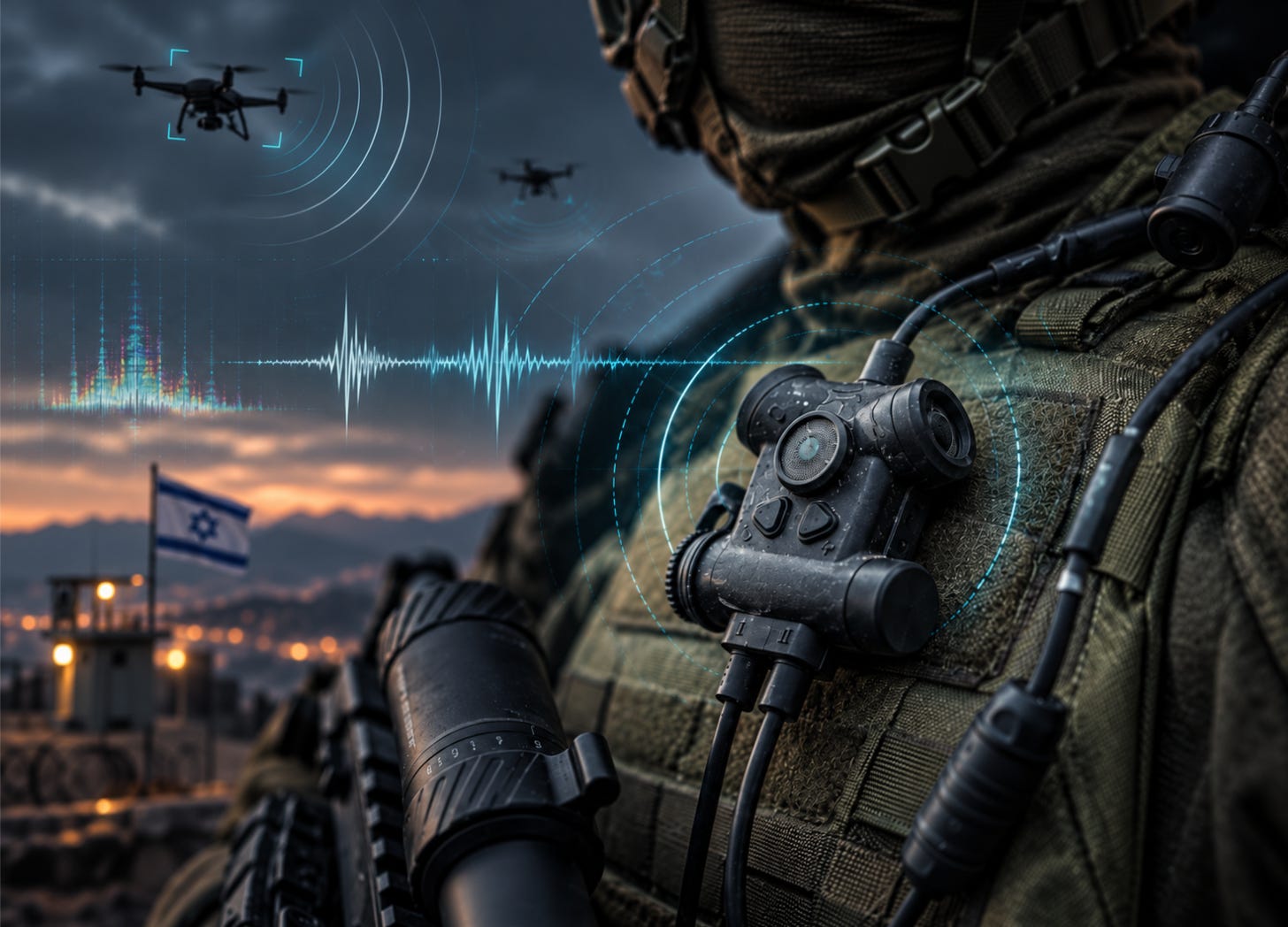
Israeli military communications company Silynxcom is developing a wearable artificial intelligence device designed to warn soldiers about nearby drones by identifying their acoustic signatures, including fiber-optic drones that can evade conventional radio-frequency detection systems.
The Netanya-based company announced the project on October 21 in a filing with the U.S. Securities and Exchange Commission. The device remains at the prototype stage. According to Silynxcom, onboard AI would analyze surrounding sounds for drone signatures and warn the person wearing it.
Silynxcom is also developing a mesh-networking capability that would allow devices carried by different soldiers to communicate with one another, potentially distributing a detection alert across a platoon. The company says the detector is intended to operate independently of tactical radios while retaining the option of connecting with existing communications equipment.
“Troops need warning that moves with them as they disperse and operate beyond defended positions,” Silynxcom CEO Nir Klein said in the company’s announcement.


A Threat Radio Sensors Can Miss
The technology is aimed in part at a problem that has become increasingly important in modern drone warfare. Fiber-optic drones transmit control commands and video through a physical fiber-optic cable that unspools behind the aircraft as it flies, rather than relying on a conventional radio link.
A U.S. Army Center for Army Lessons Learned analysis published in 2025 said fiber-optic drones pose a significant challenge to counter-drone systems because they can bypass detection technologies that search for command-and-control radio emissions and resist electronic warfare intended to jam or disrupt those signals.
The drones’ onboard electronics may still produce weak electromagnetic emissions, according to the Army, but those signals can be difficult to detect. That has increased interest in alternative methods of locating the aircraft, including listening for the distinctive noise produced by their motors and propellers.
An April 2026 paper published by the Center for Army Lessons Learned examined acoustic drone-detection systems being used in Ukraine. It described networks of passive acoustic sensors that use machine-learning algorithms to classify engine and propeller sounds before sharing detections across a network to help locate and track aircraft.
The paper also outlines the limitations of acoustic detection. Wind, temperature conditions, ambient battlefield noise and quieter propulsion systems can affect performance, and the authors describe acoustic sensors as one layer of a wider detection system rather than a replacement for radar, optical or other sensors.
NATO Sought Solutions for Fiber-Optic Drones
The challenge has also attracted NATO attention. Allied Command Transformation reported that a June 2025 NATO Innovation Challenge focused specifically on detecting, tracking and defeating fiber-optic drones received 162 technical proposals, including 42 from Ukrainian teams.
NATO sought proposed systems using technologies including radar, thermal imaging, optical equipment and acoustic sensors. The alliance said fiber-optic first-person-view drones had demonstrated an ability to circumvent conventional electronic-warfare defenses that rely on interfering with radio-frequency communications.
Silynxcom’s proposed wearable would move that acoustic-detection concept directly onto individual troops, although the company has not publicly disclosed a detection range, false-alarm rate or battlefield test results for the prototype.
Earlier Work Focused on Helping Troops Hear Drones
The new project builds on earlier Silynxcom work involving drone sounds and military hearing protection.
In December 2024, the company said that active noise-reduction systems used by armored-vehicle crews could inadvertently suppress the faint buzzing of an approaching drone along with vehicle and battlefield noise.
Silynxcom developed an upgraded headset intended to preserve or amplify relevant ambient sounds, including drone noise, while continuing to protect users from prolonged or sudden loud sounds. The company said the system could integrate with commonly used vehicle intercom and radio equipment.
In March 2025, Silynxcom reported that the technology had undergone field testing with an unnamed military force in Asia in cooperation with an unidentified global defense contractor. According to the company, the tests involved multiple vehicle platforms and communications systems.
Israeli Combat Experience and Overseas Military Interest
Silynxcom has also linked the development of its newer communications systems to lessons drawn from recent Israeli military operations.
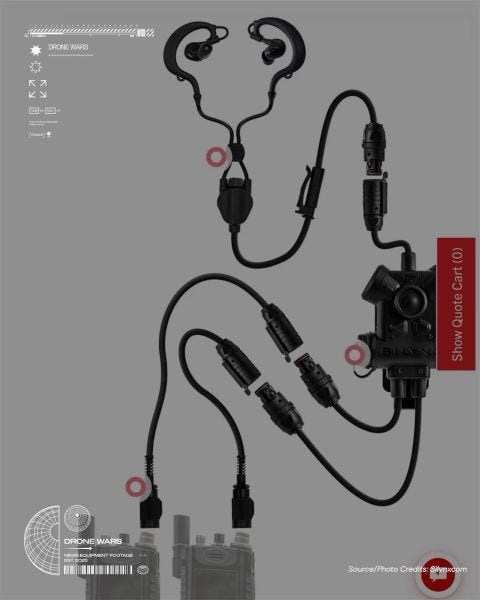
In February 2026, the company announced that its CLARUS II tactical communications and hearing-protection system had undergone a field evaluation by a specialized counterterrorism unit from an unnamed NATO member state.
Silynxcom said CLARUS II incorporated operational lessons from recent Israel Defense Forces combat activity. The company lists technologies associated with the system including ambient-sound monitoring, a low-volume microphone mode and a capability it describes as “Drone Detection.”
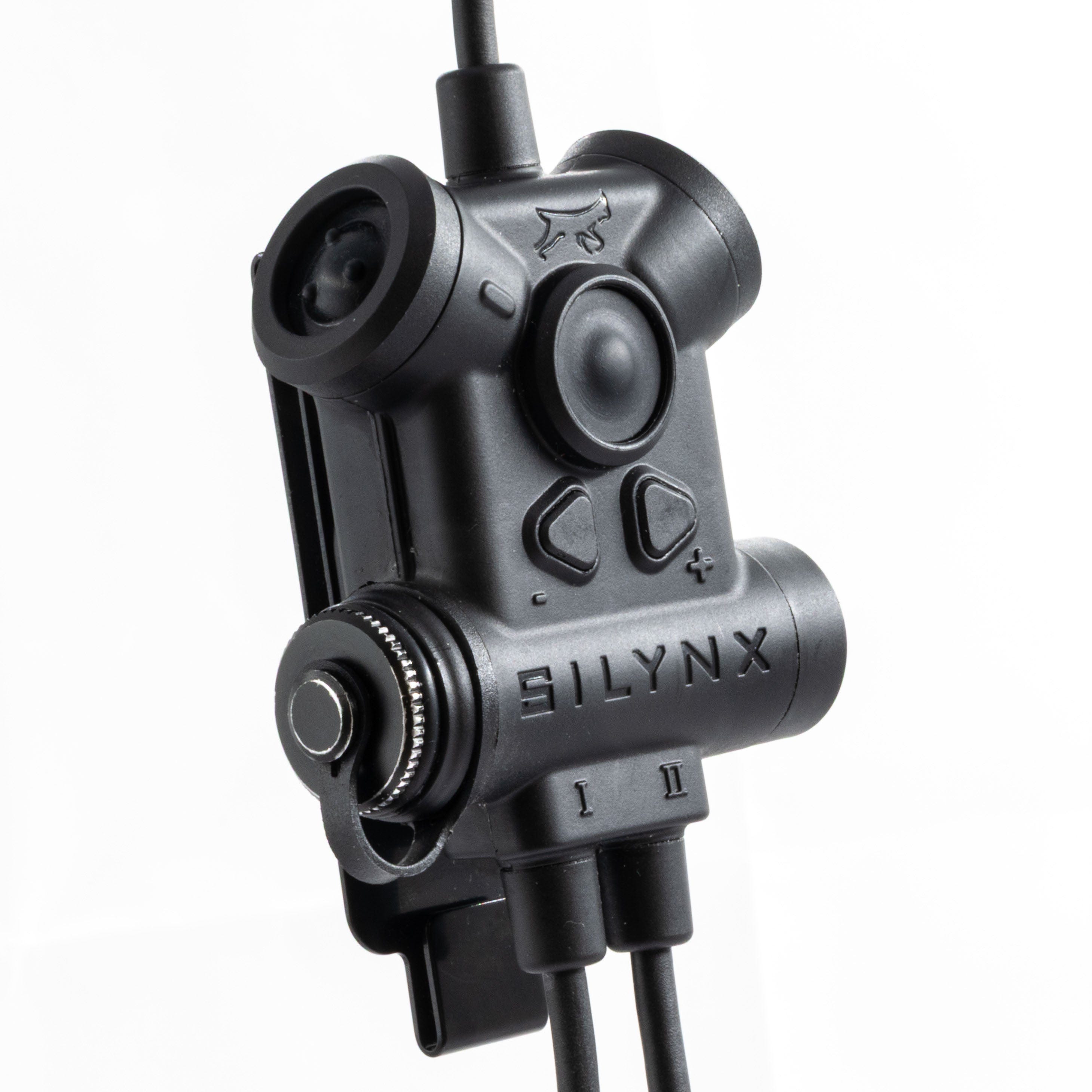
The company has also attracted U.S. military business. In October 2024, Silynxcom announced that it had received an order from the U.S. Air Force for tactical communications products in a configuration customized for the service.
If the new system advances beyond the prototype stage, it could give individual soldiers another layer of protection against increasingly difficult-to-detect drones, including threats designed specifically to defeat conventional electronic-warfare systems. Combined with Silynxcom’s existing military customers and field-tested communications equipment, the project represents another example of Israeli battlefield experience being translated into technology with potential applications for allied forces abroad.