


Jewish Onliner is an independent publication. If you find our work valuable, please consider becoming a paid subscriber.
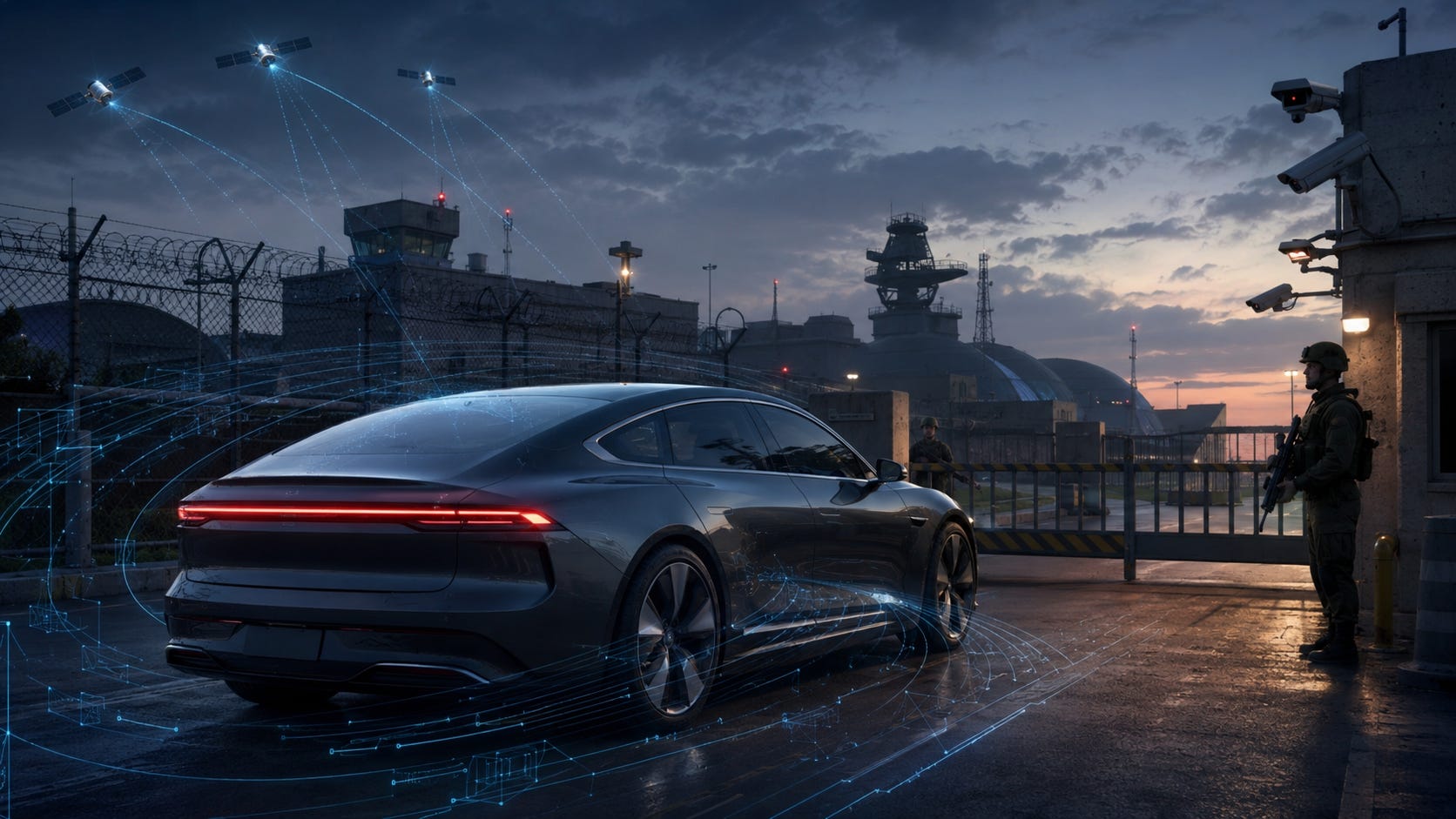
Israel’s defense establishment is quietly turning Chinese-made vehicles from a procurement choice into a national-security concern, after the IDF, Israel Police, Elbit Systems, and other state-linked bodies reportedly began restricting or removing Chinese cars from sensitive fleets. The shift, centered on military bases, defense contractors, and public-sector fleets, reflects a broader fear that modern vehicles are no longer just transportation tools but connected devices equipped with cameras, microphones, GPS, cellular links, and software that can collect and, depending on configuration, transmit sensitive data.
The issue has become urgent because Chinese brands now occupy a large share of Israel’s vehicle market, especially among electric and plug-in hybrid models, leaving some state agencies and private defense-linked companies with fewer easy alternatives in certain EV and plug-in hybrid categories.
From Fleet Decision to Security Risk
The latest trigger came when Elbit Systems, one of Israel’s largest defense companies, informed employees that leased vehicles made by Chinese manufacturers, including Geely, would be phased out of its fleet, according to Calcalist. The move will reportedly continue into next year as existing leases expire and are replaced with non-Chinese models such as Skoda, Toyota, and Hyundai. Elbit’s fleet includes roughly 4,400 vehicles, making the decision significant beyond the company itself.
Elbit is not alone. Calcalist reported that restrictions first applied to intelligence bases, then expanded to all military bases, before the IDF removed Chinese vehicles from fleets used by career personnel. Rafael, another major Israeli defense contractor, had previously acquired Chery vehicles but has gradually replaced them with non-Chinese models, according to the same report.


The Times of Israel separately reported that the IDF had begun phasing out Chinese-made electric vehicles used by senior officers and had banned Chinese cars from entering military bases because of concerns that vehicle sensors and connected systems could be used for intelligence gathering. The report cited earlier Israeli coverage alleging about 700 vehicles, mostly Chery Tiggo 8 Pro plug-in hybrids, were affected.
Washington’s Role in Israel’s Fleet Debate
The Israeli moves are unfolding as Washington escalates its own scrutiny of Chinese connected vehicles. In January 2025, the U.S. Commerce Department finalized a rule restricting certain connected-vehicle hardware and software linked to China or Russia, warning that modern cars contain cameras, microphones, GPS tracking, and internet-connected technologies. The rule said malicious access to vehicle supply chains could allow foreign adversaries to extract sensitive data or remotely manipulate vehicles.
That U.S. policy matters for Israel because the two countries’ defense ecosystems are deeply intertwined. American military personnel, facilities, contractors, and technologies operate in close proximity to Israeli security sites. Calcalist noted that possible U.S. pressure may be one factor behind Israel’s reassessment, especially where Chinese vehicles are used by Israeli police or defense personnel near sensitive American assets.
The Pentagon has also placed several Chinese technology and industrial companies on its Section 1260H list of “Chinese military companies.” In June 2026, the Defense Department’s list identified BYD as affiliated with Chinese state-linked entities and as a contributor to China’s defense industrial base through military-civil fusion criteria. The designation is not itself a public finding that BYD vehicles in Israel have conducted espionage, but it adds weight to concerns inside Israeli security bodies about procurement exposure.
Why Cars Are Different Now
The concern is not simply that a vehicle is Chinese-made. It is that connected vehicles have become rolling data platforms. The U.S. Commerce Department defined vehicle connectivity systems as including telematics, Bluetooth, cellular, satellite, and Wi-Fi modules, while automated driving systems can process sensor data tied to movement, location, and surroundings.
That makes a car parked inside an air base, intelligence compound, defense facility, or police installation potentially more sensitive than an ordinary consumer device. It may record location patterns, map restricted areas, identify recurring personnel movements, or collect environmental data through onboard cameras and sensors. No public Israeli evidence has shown that Chinese vehicles used by Israeli agencies transmitted data to Beijing. The concern is based on capability, access, software control, legal exposure, and the sensitivity of the sites where the vehicles operate.


Chinese law adds another layer to the debate. Article 7 of China’s National Intelligence Law states that organizations and citizens must support, assist, and cooperate with national intelligence work in accordance with law. Separately, the U.S. International Trade Administration reported that Chinese authorities have imposed detailed rules governing data generated by connected vehicles, including data classification, protection of important data, and security reviews for some cross-border transfers.
Israel’s Regulatory Gap
Israel’s challenge is that the market moved faster than the regulatory system. Chinese brands have become deeply embedded in Israeli fleets, especially electric and plug-in hybrid categories where non-Chinese alternatives are limited. Chinese automakers accounted for the largest share of Israel’s imported passenger car sales in the first four months of 2025, selling 30,478 vehicles, according to data cited from the Israel Vehicle Importers Association.
Calcalist reported that Mekorot and the Israel Electric Corporation are reviewing the issue, while police have decided to phase out Chinese vehicles. The report also noted that the Transportation Ministry has been examining automotive cybersecurity for years, but proposed legislation granting it authority over vehicle cybersecurity has not advanced.
That leaves restrictions being imposed piecemeal by fleet owners rather than through a single national policy. For defense bodies, this may be enough to reduce immediate risk. For civilians, reservists, and private companies serving the defense sector, it creates uncertainty: a car that is legal and common on Israeli roads may be unwelcome at a military gate.