


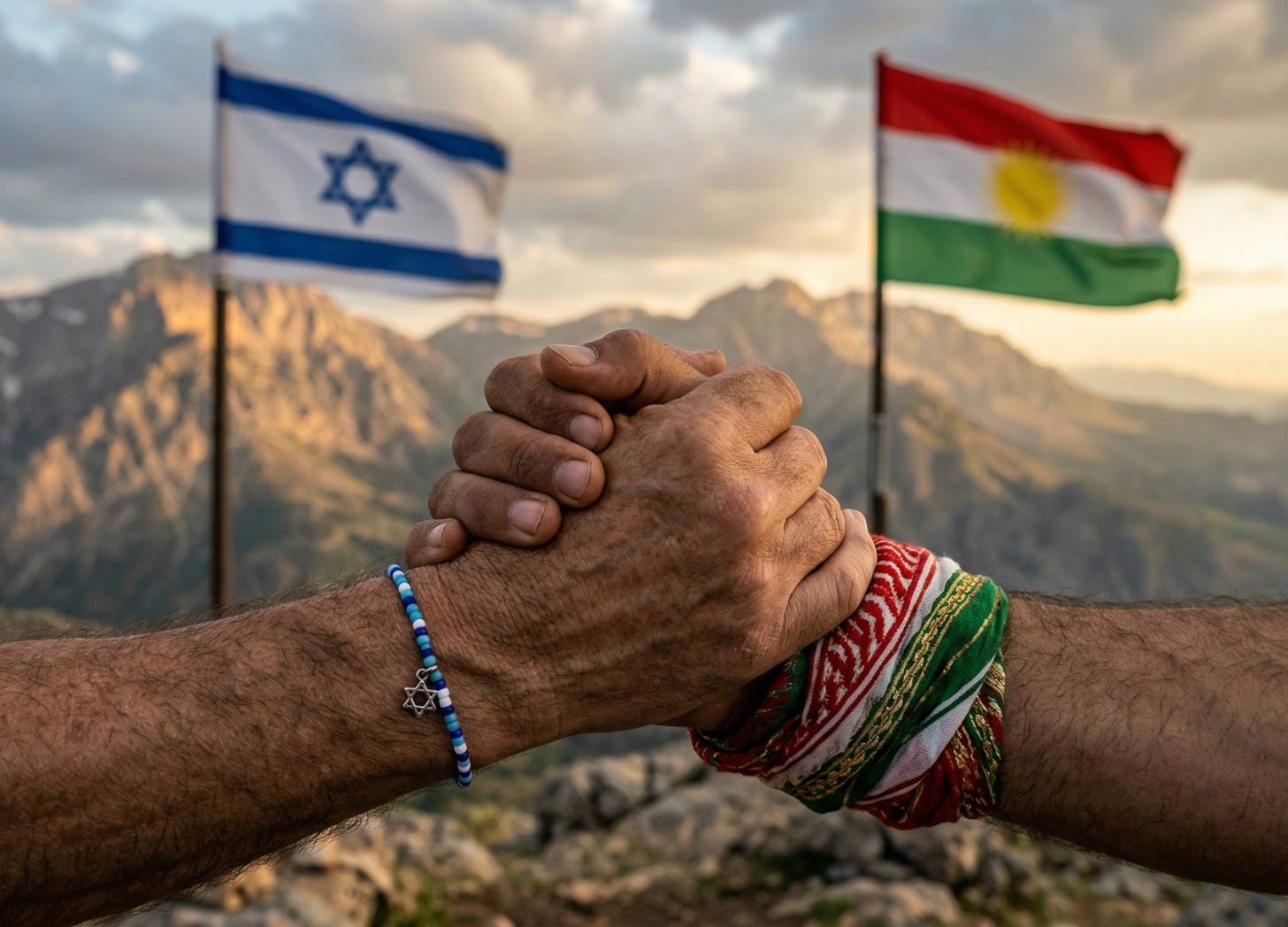
With Supreme Leader Ali Khamenei eliminated in Operation Epic Fury and the Iranian regime under sustained bombardment, a little-discussed alliance that has shaped parts of Middle East geopolitics for decades is now moving closer to the center of the conflict.
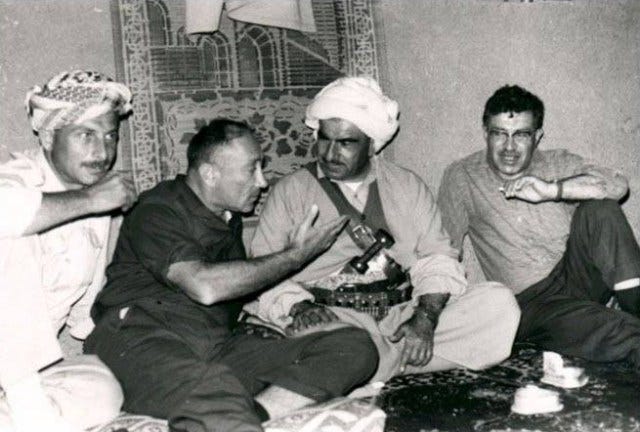
Since the 1960s, Israel and elements of the Iraqi Kurdish movement have maintained a strategic partnership rooted in shared vulnerability. This relationship was forged during a covert period in which Mossad officers helped train and support Peshmerga fighters in Iraqi Kurdistan. The connection was further deepened through accounts that Kurdish intermediaries and members of the Barzani network helped some Jewish families flee Ba’athist Iraq to safety.
That alliance, which Tehran has long viewed as a threat and has repeatedly sought to disrupt, is now being activated on a new front. CNN reported, citing multiple sources, that the CIA is working to arm Iranian Kurdish opposition forces in hopes of helping trigger a broader uprising inside Iran.
CNN reported that President Trump spoke by phone with Mustafa Hijri, president of the Democratic Party of Iranian Kurdistan (KDPI). On Sunday, Trump separately called Iraqi Kurdish leaders Masoud Barzani and Bafel Talabani to discuss the ongoing military campaign and potential cooperation, as first reported by Axios. A Kurdish ground operation into western Iran is expected in the coming days, a senior Iranian Kurdish official told CNN.
Lying in Wait: Years of Preparation
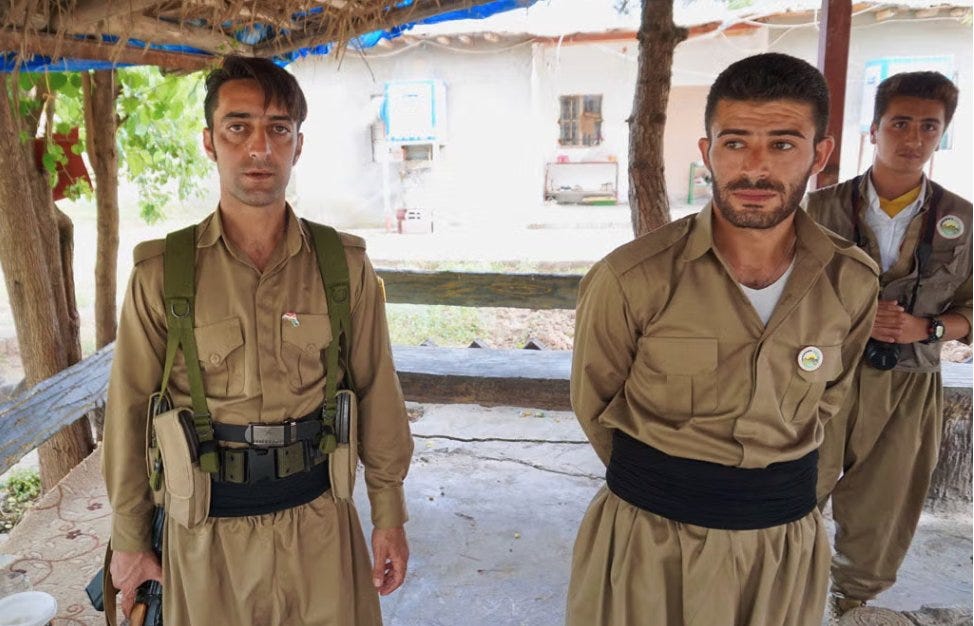
The Kurdish forces now being mobilized have been preparing for precisely this moment for years. Nolan Peterson, a former special operations pilot and combat veteran of Iraq and Afghanistan, previously reported that he visited Iranian Kurdish resistance fighters at their bases in northern Iraq and found groups already positioned for a U.S.-Iran confrontation.
“These armed groups are lying in wait, ready to throw their political and military weight behind a potential U.S. effort to overthrow Iran’s ruling mullahs,” Peterson wrote at the time. “This is a required step, many Kurds believe, toward their overall goal of achieving an autonomous Iranian Kurdistan.”
Kako Alyar, a Peshmerga fighter and head of the Central Committee Secretariat of the Komala Party of Iranian Kurdistan, previously told Peterson: “This could be a moment of change. The prospect of a U.S. attack on Iran has given us hope.”
Even then, KDPI leadership was sending small units of 15 to 20 Peshmerga fighters across the Zagros Mountains into Iran to maintain contact with an underground network of sleeper cells poised to support a countrywide uprising. Those units regularly engaged in skirmishes with Iranian forces in the mountainous border region. KDPI’s Zadeh told Peterson the group could mobilize “100,000 or 200,000 Kurds inside Iran if there’s a revolution.”
A separate commander, Husaini of the Organization of Iranian Kurdistan Struggle, was equally unambiguous about his group’s readiness as far back as 2019: “Our sleeper cells in Iran are ready for any new circumstances. We have maintained our military training and we’re willing to send troops into Iran tomorrow — we’ve made some very specific preparations for any sudden events that might happen in Iran.”
Peterson noted that the Kurdish opposition groups were clear-eyed about the limits of their own firepower. “These opposition groups are well aware of the fact that they don’t wield the requisite firepower to overthrow the Iranian government by force,” he wrote. “For that reason, the Kurds generally see a potential conflict between the U.S. and Iran as a fortuitous opportunity to achieve their goals at last.”
Zadeh framed the Kurdish calculus directly: “We prefer political means. But this is the Iranian regime. The only language they speak is violence. I have no hope of reform with this regime — overthrowing the government is a necessity for us to achieve our goals. When your people are attacked, you have to defend yourself.”
Coordination Already Underway
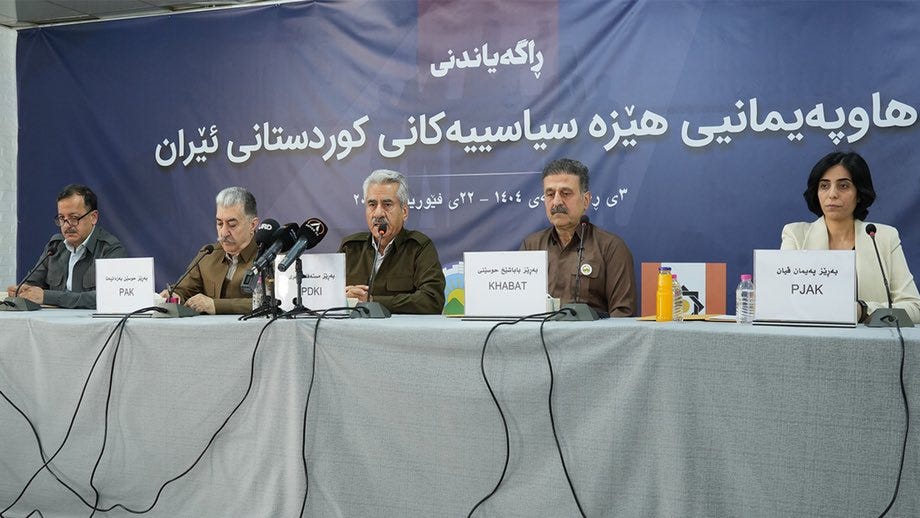
The groundwork was laid weeks before the first strike. On February 22, five major Iranian Kurdish opposition groups formalized a unified coalition — the KDPI, PAK, Komala, PJAK, Khabat, and one Komala branch. Their coordination predated the first U.S.-Israeli strike by six days.
PDKI-affiliated figures claimed attacks on Iranian regime border bases, intelligence offices, police stations, and missile facilities, and says it freed prisoners in the city of Mariwan, according to FDD’s Long War Journal.
Iran’s response was immediate. The IRGC claimed they had launched more than 30 drones at Kurdish opposition bases in the Kurdistan Region on Tuesday alone, striking Komala headquarters in Sulaymaniyah and multiple KDPI sites in Erbil and Koya.
“We believe we have a big chance now,” a senior Iranian Kurdish official told CNN.
Israel’s Role on the Border
According to Kurdish media sources, Israel has been systematically striking IRGC military and police outposts along the Iraq-Iran border. A separate line of planning has centered on whether Kurdish forces could take and hold territory in Iran’s north, creating a buffer zone relevant to Israel’s long-term security posture.
A 60-Year Bond
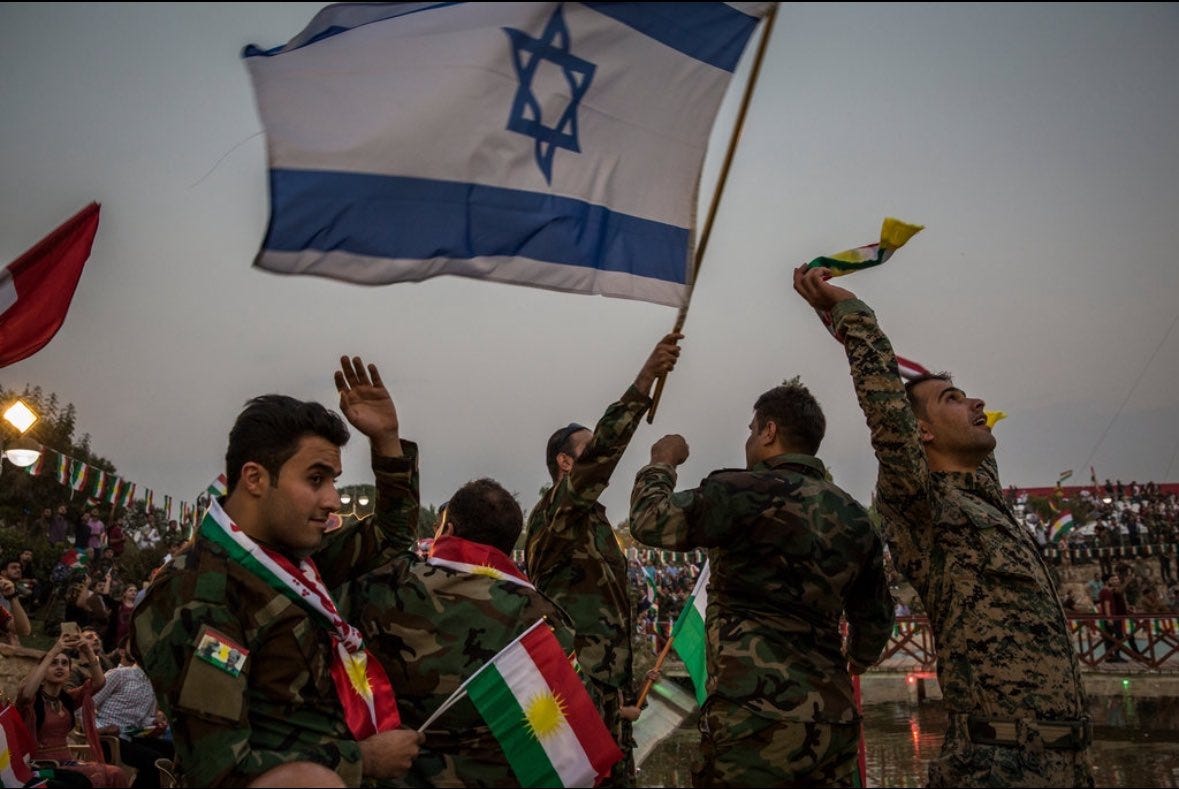
The partnership traces back to Israel’s founding strategic logic. Prime Minister David Ben-Gurion’s Periphery Doctrine sought alliances with non-Arab minorities on the margins of a hostile Middle East — and the Kurds were a natural fit. Israeli Brigadier General Tzuri Sagi arrived in Kurdistan in 1965 to train Peshmerga fighters, later saying “I became a patriotic Kurd.” The Mossad established bases in the region, supplied advanced weaponry, and financed European awareness campaigns on the Kurdish cause.
The bond runs deeper than strategy. When Ba’athist persecution forced Iraq’s Jews to flee in the late 1960s, Kurdish leaders — including a young Masoud Barzani — personally guided Jewish families over the Zagros Mountains to safety. Today, an it is estimated that over 200,000 Kurdish Jews and their descendants live in Israel.
In 2017, when Kurds voted 92.73% in favor of independence, Israel was the first, and effectively the only state to openly endorse Kurdish independence. Prime Minister Netanyahu stated that Israel “supports the legitimate efforts of the Kurdish people to achieve their own state.” Every other U.S. ally stayed silent or actively opposed the referendum.
The Threat Tehran Always Feared
Iran has long understood the strategic implications of this alliance. The IRGC bombed Erbil in 2022 claiming Israeli facilities were there. Baghdad’s 2022 anti-normalization law — threatening death or life imprisonment for any ties with Israel, passed with 275 of 329 lawmakers voting in favor.
Researcher Himdad Mustafa put it plainly: “The law is clearly aimed at Kurds”. Mustafa also noted that, “Since 1960, Kurds have been called the puppets of Zionists and given the title, the “second Israel,” by the neighboring people to invalidate the struggle of Kurds for Independence.”
Kurdish filmmaker and former Peshmerga Aso Qaderi was equally direct: “Kurds and Jews have a common history of genocides, repression, exile, and displacement.”
He identified Iran as the engine behind Baghdad’s hostility and predicted it would fail: “Iran and its proxies will not succeed in breaking the decades-old Kurdish-Israeli ties.”
Caveats
Kurdish parties are also seeking political assurances from Washington before fully committing — a reflection of a long pattern of feeling abandoned. What is clear is that a partnership forged sixty years ago in the mountains of Iraqi Kurdistan, and sustained through decades of shared threat perception, now sits at the center of one of the most consequential military operations in the modern Middle East.