


Jewish Onliner is an independent publication. If you find our work valuable, please consider becoming a paid subscriber.
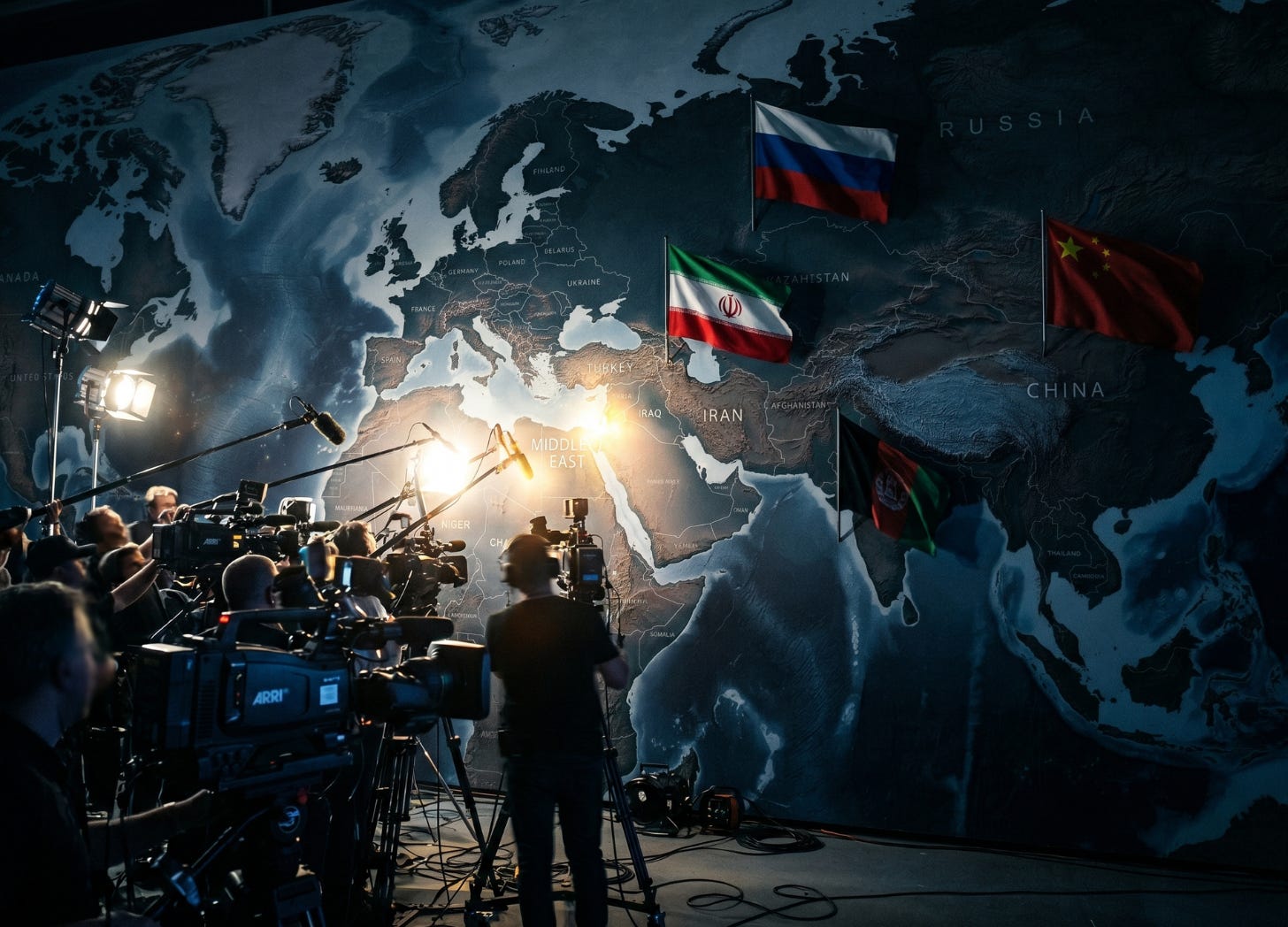
Major press freedom organizations devote significantly more social media attention to Israel and Gaza than to several countries with worse press freedom records, according to a new Jewish Onliner analysis of posts by the Committee to Protect Journalists and Reporters Without Borders.
The findings raise questions about whether social media attention by press freedom groups tracks the severity of repression, or whether it is also shaped by conflict salience, audience engagement, and geopolitical news cycles.
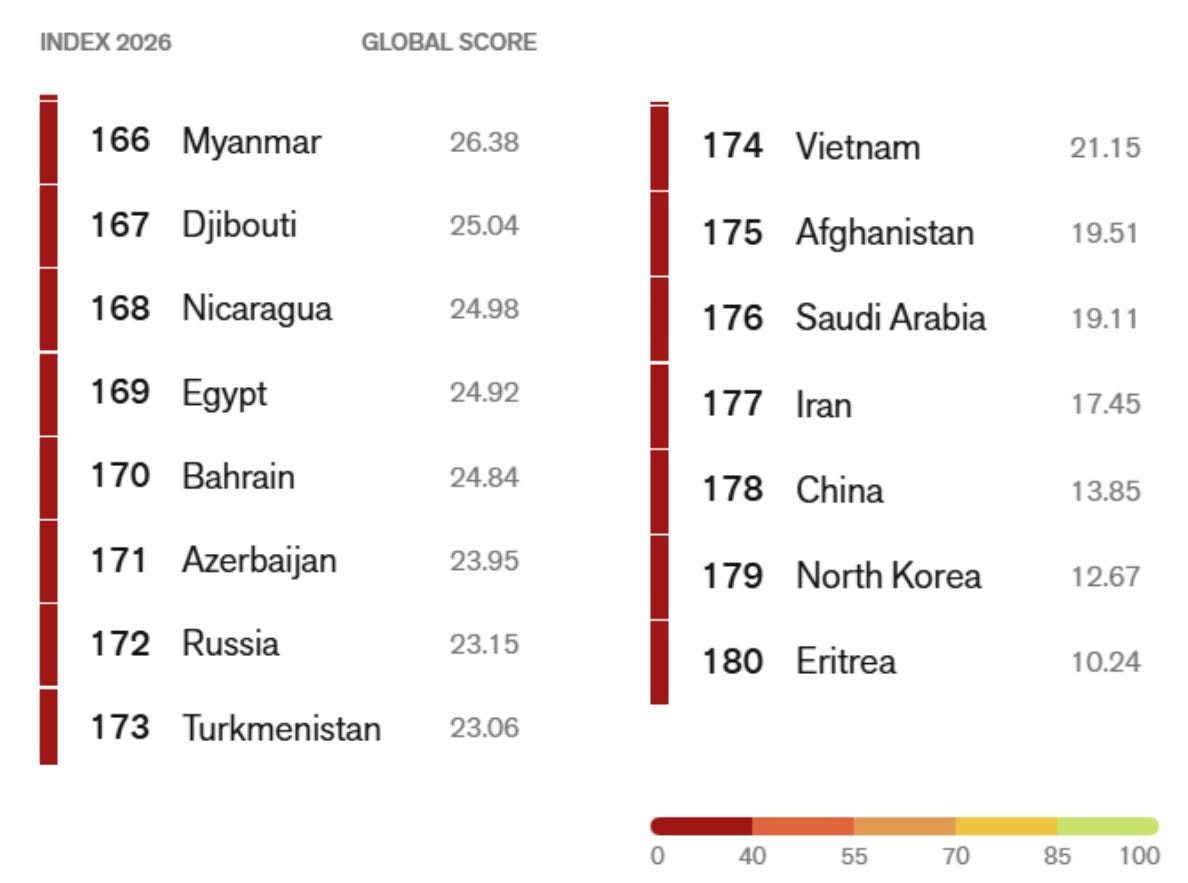
Jewish Onliner examined eight years of social media posts from the Committee to Protect Journalists (CPJ) and Reporters Without Borders on X. The dataset of 1,648 X posts spanning February 2018 to April 2026 reveals that Israel/Gaza received 271 posts, more than any other country cluster examined, despite ranking 116th out of 180 countries on RSF’s own 2026 World Press Freedom Index.
Israel’s RSF ranking also appears to be heavily affected by Gaza-related journalist-casualty assessments, an area where the underlying classifications are disputed. A study by the Meir Amit Intelligence and Terrorism Information Center, reported by the Jerusalem Post, examined 266 Palestinians identified as journalists or media workers killed in Gaza and found that 157, roughly 60%, were members of or affiliated with terrorist organizations or affiliated outlets.


Afghanistan Disparity
The disparity becomes most striking when comparing Israel coverage to countries with documented severe repression. Afghanistan, which ranks 175th on the 2026 press freedom index with a score of just 19.51, making it the fifth-worst country globally for press freedom, received only 179 total posts.
The analysis identifies Afghanistan as the most systematically underrepresented country relative to its press freedom conditions throughout the eight-year study period, despite the Taliban takeover in August 2021 and the severe deterioration in Afghan media freedom that followed.
The Post-October 2023 Shift
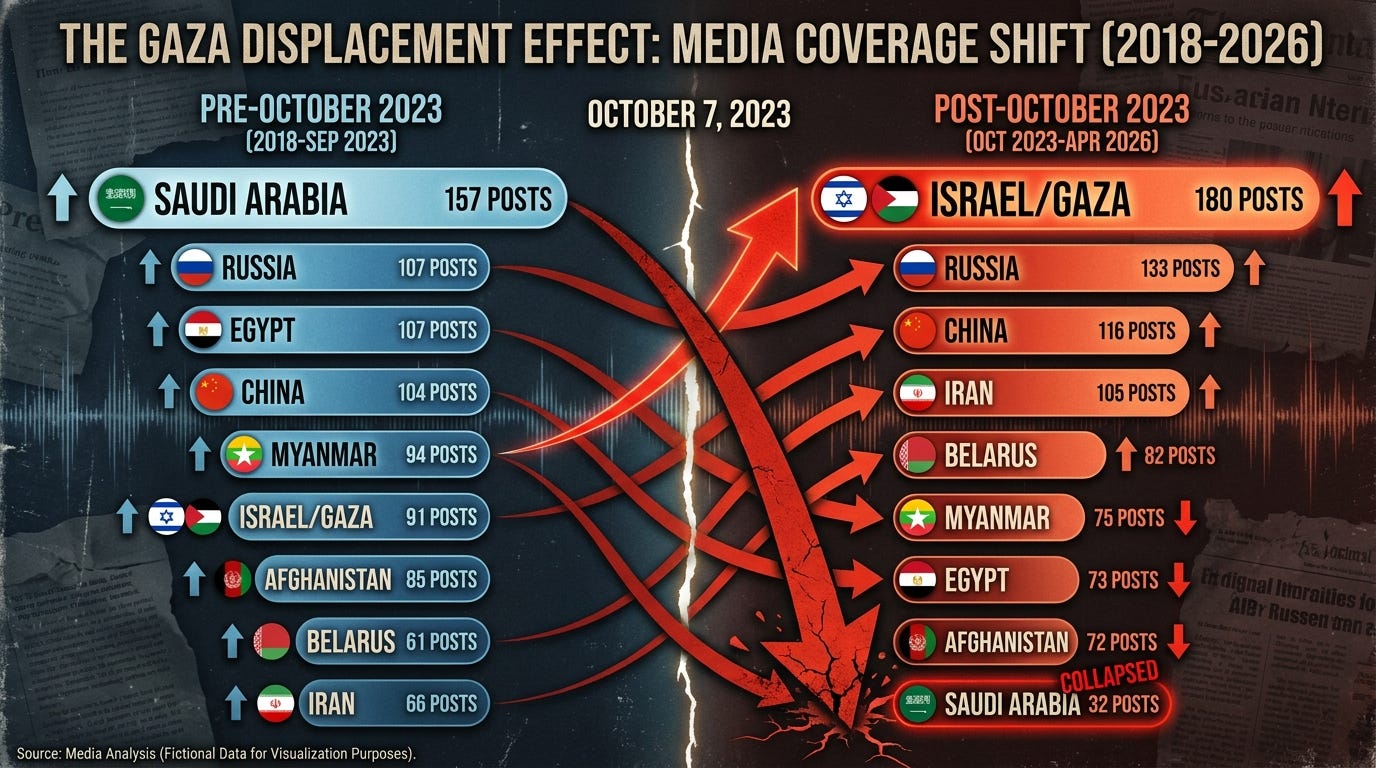
The data show a sharp shift in coverage patterns after the October 7, 2023 Hamas attack on Israel.. Israel/Gaza posts nearly doubled in the post-conflict period, moving from fifth place to first by a wide margin with 180 posts. Saudi Arabia, ranked 176th, saw coverage decline from 157 posts before October 2023 to 32 posts afterward.
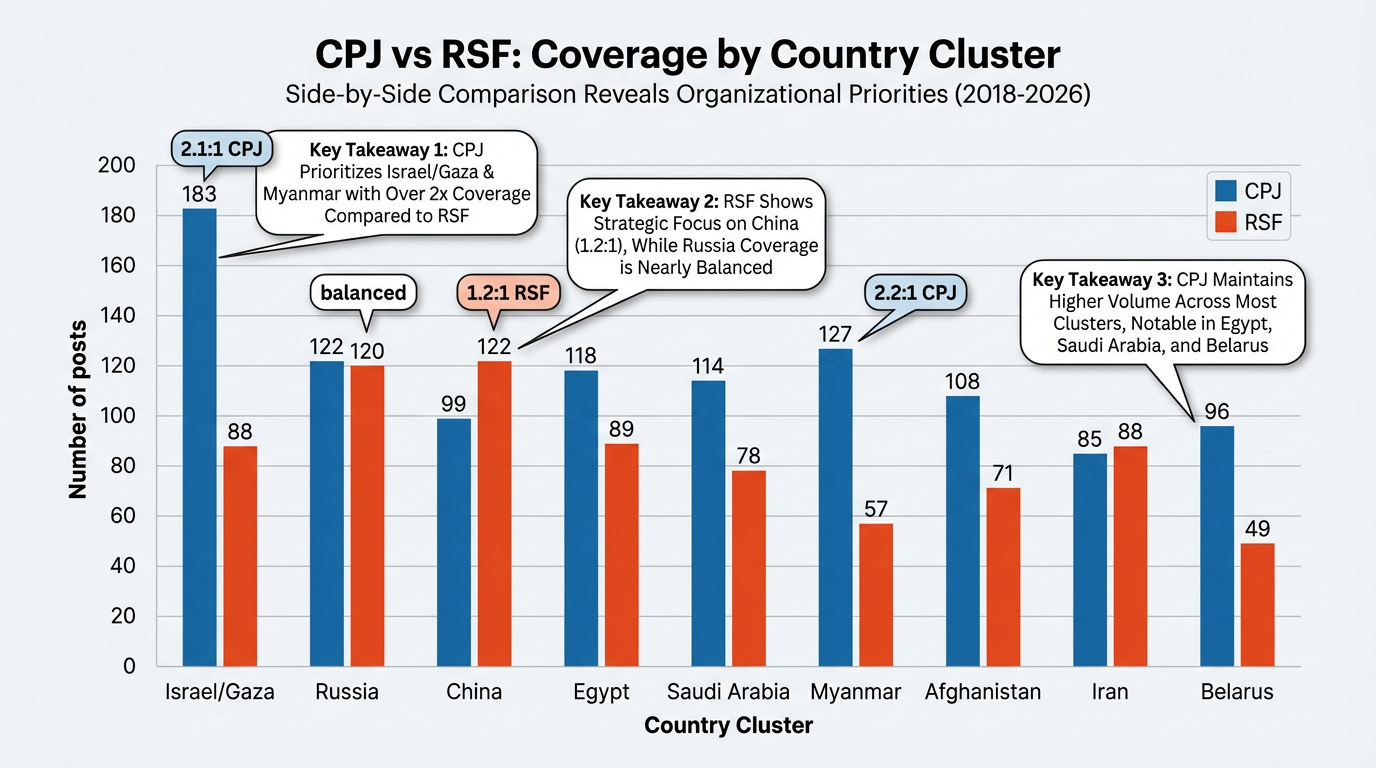
CPJ demonstrated particularly stark prioritization of Israel. Out of all Israel/Gaza posts analyzed from both organizations, CPJ published 183 compared to RSF's 88, more than double the coverage. This represents CPJ’s sharpest organizational divergence in the entire dataset, with the group devoting 67.5% of all Israel/Gaza coverage despite accounting for only 49.3% of total posts analyzed.
China and Iran: Worse Rankings, Less Coverage
China and Iran both rank near the bottom of RSF’s 2026 World Press Freedom Index, yet both received fewer posts than Israel/Gaza. China ranked 178th and was described by CPJ as the world’s worst jailer of journalists, while RSF said 121 media professionals were behind bars there. Iran ranked 177th, with RSF citing systematic pressure on journalists and their families. In Jewish Onliner’s dataset, China received 221 posts and Iran 173, compared with 271 for Israel/Gaza
The Middle East and North Africa region is characterized by RSF as “the worst zone in the world for press freedom, with 18 out of 19 countries classed as being in a ‘very serious’ or ‘difficult’ situation.” Yet countries like Saudi Arabia and Iran, with documented journalist executions and systematic imprisonment, received less sustained attention than Israel once Gaza coverage began.
Engagement Patterns
The analysis also examined audience engagement metrics, revealing that China content generated the highest per-post engagement despite ranking only third in volume. This suggests that organizations may be responding, at least in part, to what performs with their X audiences rather than distributing attention solely according to the severity of repression.
Afghanistan’s double deficit, least covered and lowest engagement, indicates the country’s press freedom crisis is systematically less legible to the Western audiences these accounts address, according to the analysis.
The Displacement Effect
Gaza coverage appears to have coincided with reduced attention to several other crises. Egypt, Myanmar, and Afghanistan all saw declining coverage in the post-October 2023 period, despite ongoing systematic repression. The pattern is consistent with a finite-attention dynamic, in which high-profile conflicts absorb a larger share of organizational posting.
The findings raise questions about whether social media advocacy by press freedom organizations is shaped not only by press freedom conditions, but also by audience engagement, geopolitical salience, and the news cycle.