


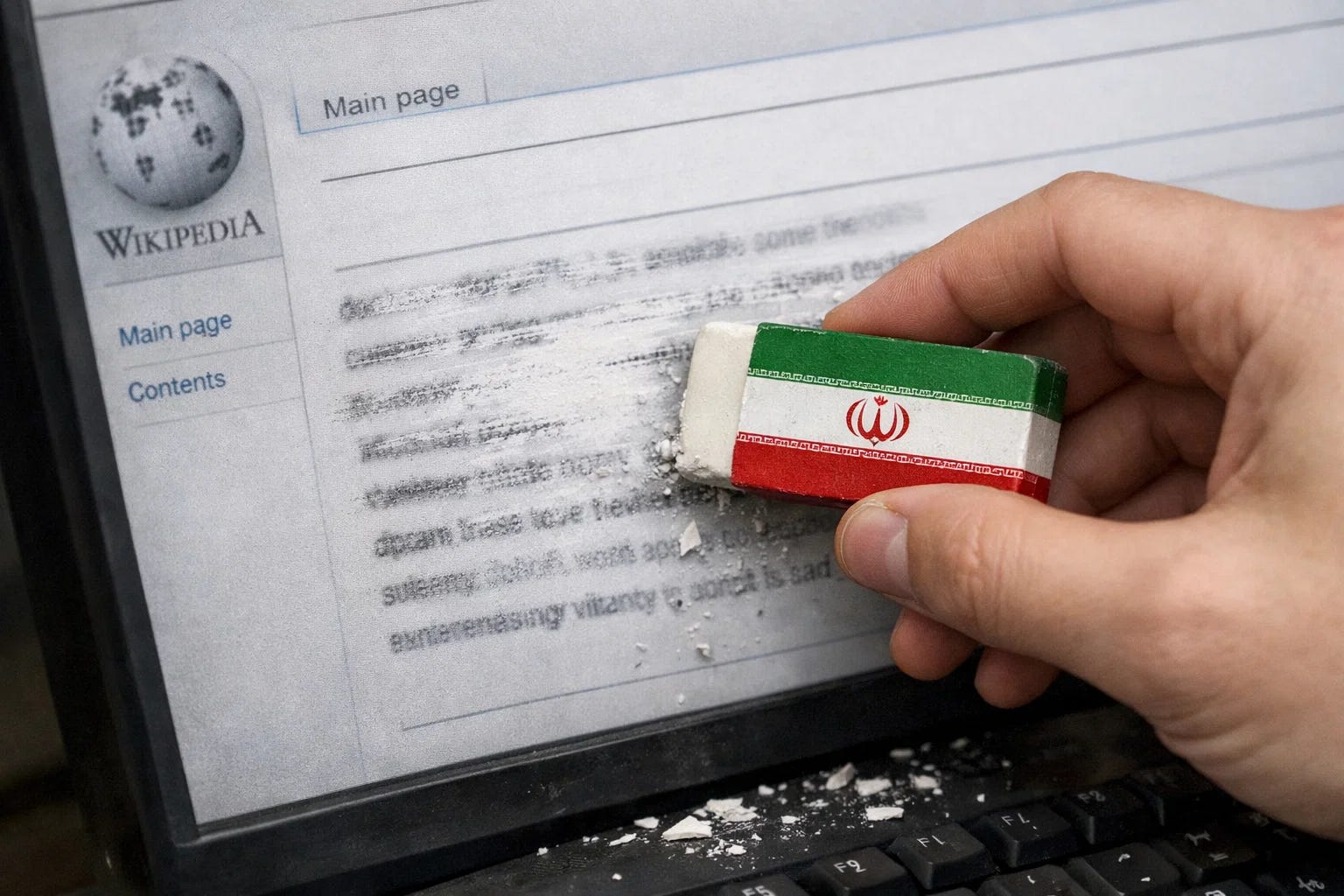
A new investigative report from NPOV details a sophisticated information warfare campaign by pro-Iranian regime editors on Wikipedia, who are systematically altering content to downplay the regime's human rights abuses and promote its propaganda. This digital offensive, which has been ongoing for years, aims to control the narrative about Iran online and, crucially, to influence the Large Language Models (LLMs) and AI systems that rely on Wikipedia for their information.
The campaign, which echoes what Supreme Leader Ali Khamenei calls "vindication jihad"—a soft war in the information space designed to rewrite reality itself—employs a range of deceptive tactics, including systematic deletion of inconvenient content and the discrediting of reliable sources, to erase inconvenient truths and replace them with state-sanctioned falsehoods. This manipulation of what is often considered a democratized source of knowledge represents a new front in the Iranian regime's war on truth, with far-reaching implications for how the world views the Islamic Republic.
The Digital Battlefield
The NPOV report outlines a disturbing pattern of “abrasive deletion,” where pro-regime editors make small, seemingly innocuous edits over time that, in aggregate, erase entire sections of articles critical of the Iranian government. For example, crucial details about the 1988 mass executions of political prisoners, including the fact that women and children were among the victims, have been systematically removed. Similarly, information about the 2022 sentencing of an Iranian official in Sweden for war crimes has vanished from the platform.


These edits follow a documented pattern rather than isolated changes. By modifying Wikipedia articles, the report suggests the regime aims to influence how information about Iran is presented to researchers, including students, journalists, and policymakers. The implications of this are enormous, especially as AI chatbots and other LLMs use Wikipedia as a primary source for their training data.
When these systems are queried about Iran, they are likely to regurgitate the regime’s propaganda, effectively laundering it and presenting it as objective fact to millions of users worldwide.
The Soldiers of “Vindication Jihad”
The report identifies several key editors who are at the forefront of this information war. One editor, “Mhhossein,” has edited the page for Supreme Leader Ali Khamenei more than 200 times, consistently removing information about Iran’s nuclear program and widespread protests. Another, “Iskandar323,” who is currently facing a site ban from Wikipedia, has made over 49,000 edits across 16,000 pages, including the removal of thousands of words about human rights abuses just days after the October 7th atrocities.
These editors do not work in a vacuum. They are part of a coordinated effort that includes using voting blocs on Wikipedia’s “Talk Pages” to outvote and silence editors who attempt to present factual information. They also promote state-run media outlets as reliable sources while simultaneously discrediting dissident and independent news sources.
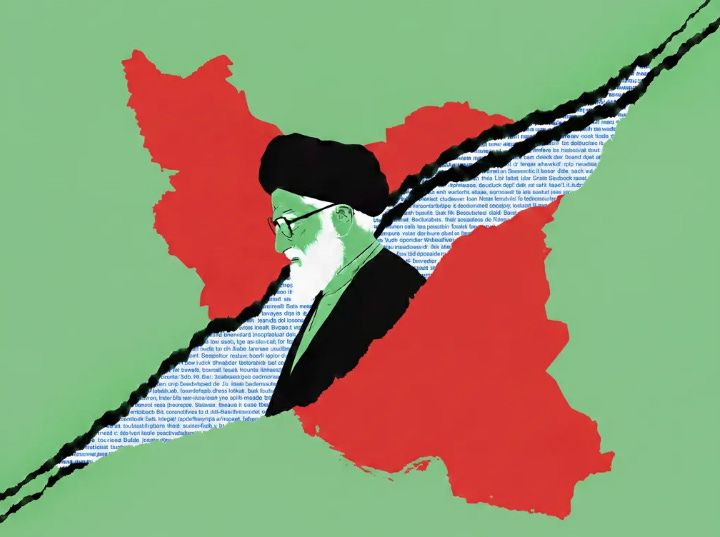
The report documents a coordinated effort across dozens of articles, where systematic edits have altered content in ways that favor the regime's preferred narrative. As the world grapples with the challenges of disinformation, the battle for truth on Wikipedia has become more critical than ever.
Two Fronts, One Strategy: Street Repression and Information Control
The NPOV Report situates these edits in a broader state ecosystem: physical repression at home, narrative management abroad. Iran’s rulers don’t merely try to suppress protest; they also try to manage what the world believes happened—and what it will remember happened—after the smoke clears.
That matters when reporting from inside Iran is already constrained. During crackdowns, blackouts and intimidation make documentation fragile. In one example of how difficult truth-gathering can become, CBS News reported that Iran’s protest death toll could be far higher than activists had been able to publicly verify amid communications shutdowns, including verification of video showing bodies at a Tehran-area morgue. If information is hard to collect in real time, then later edits to “the record” become even more consequential.


The Wikipedia Double-Edged Sword
Wikipedia operates on a deceptively simple and revolutionary principle: anyone can edit it. This open-access, collaborative model has allowed the platform to become the world’s largest encyclopedia, a testament to the power of collective knowledge and open information sharing. At its best, this system enables a global community of volunteer editors to create and maintain a vast, constantly updated repository of information that is free for all.
However, this very openness creates a significant vulnerability. Propagandists and state-sponsored actors, like those detailed in the NPOV report, can exploit this system for their own ends. By working in coordinated teams, these actors can systematically target articles, gradually eroding factual information and replacing it with their preferred narrative. The report's evidence illustrates how Wikipedia's greatest strength—its accessibility—can be exploited by those seeking to control how information is presented.