


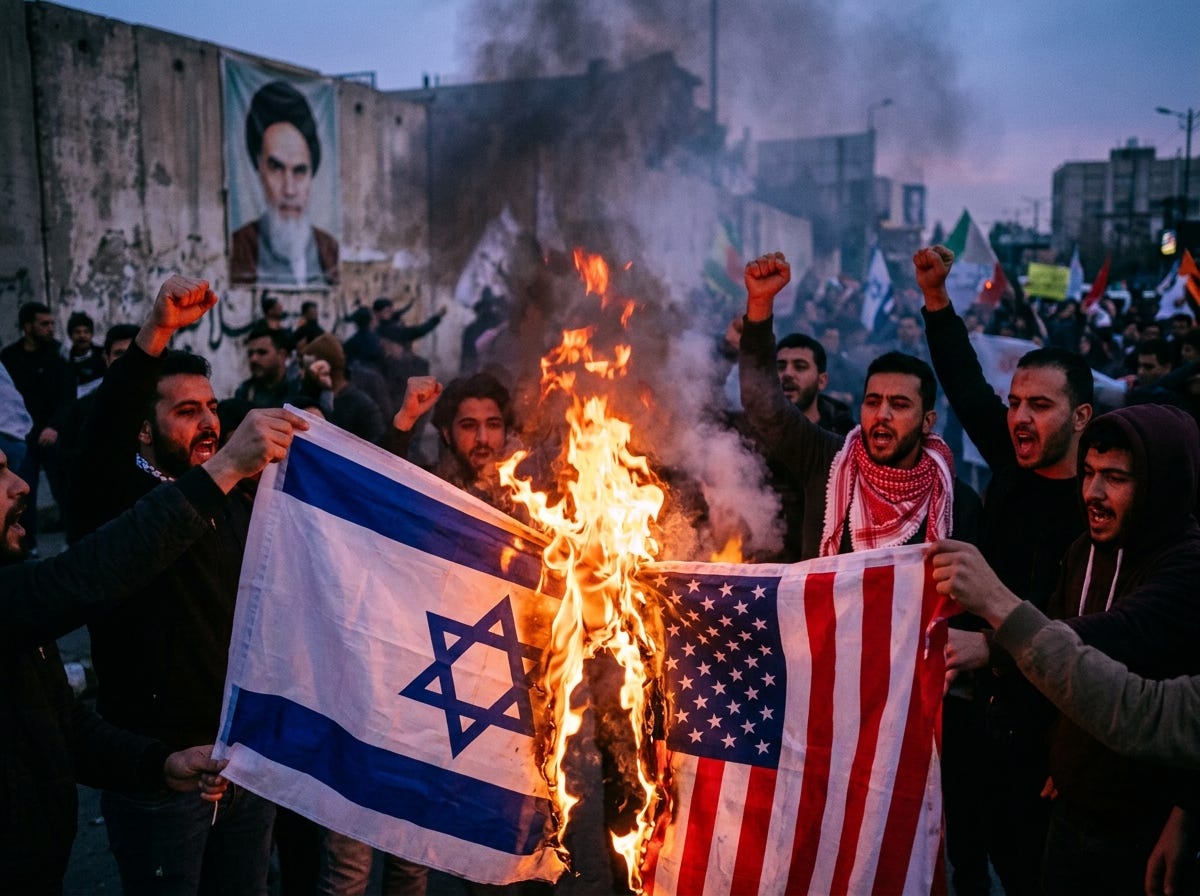
On Friday, March 13, the last Friday of Ramadan, demonstrations are expected in cities around the world for what the Iranian regime calls ‘Quds Day,’ or Jerusalem Day, with related rallies planned in some places for several days afterward.
Israeli and American flags are burned. Missiles are paraded through Tehran. Senior Iranian officials step up to podiums and declare that the “Zionist regime” is on the verge of collapse. Crowds chant “Death to Israel” and “Death to America.” Officially framed as a day of “solidarity with Palestinians.” However, in practice it’s a state-sponsored event, funded and exported by the Iranian government, and it has occurred annually since 1979.
This year, Quds Day-related events are set to take place from March 13 to March 15, with major rallies already announced in New York, Houston, London, and Toronto.
Given the event’s long history of extremist rhetoric, glorification of terrorist groups, and recurring security concerns, Quds Day rallies may warrant heightened scrutiny from law enforcement and public officials, particularly when organized in major Western cities.
A Revolution With a Global Blueprint
When Ayatollah Khomeini consolidated power after the Islamic Revolution, his ambitions didn’t stop at Iran’s borders. Within weeks, he declared the creation of International Quds Day on August 7, 1979, calling on Muslims worldwide to rally against Israel’s control of Jerusalem. It was sold as an act of solidarity with Palestinians. In reality, it was a calculated ideological move.
"I invite Muslims all over the globe to consecrate the last Friday of the holy month of Ramadan as Al-Quds Day and to proclaim the international solidarity of Muslims in support of the legitimate rights of the Muslim people of Palestine… I ask all the Muslims of the world and the Muslim governments to join together to sever the hand of the usurper and its supporters.” — Ayatollah Khomeini, 1979
Jerusalem — al-Quds in Arabic — holds deep spiritual significance across all branches of Islam. By anchoring his revolution to the Palestinian cause, Khomeini effectively bypassed the Sunni-Shia divide that might otherwise have limited his reach. Suddenly, Iran’s revolutionary message wasn’t just for Shia Muslims, it was framed as a pan-Islamic duty. Senior Iranian clerics even described participation in Quds Day as a religious obligation, elevating political mobilization into an act of faith.
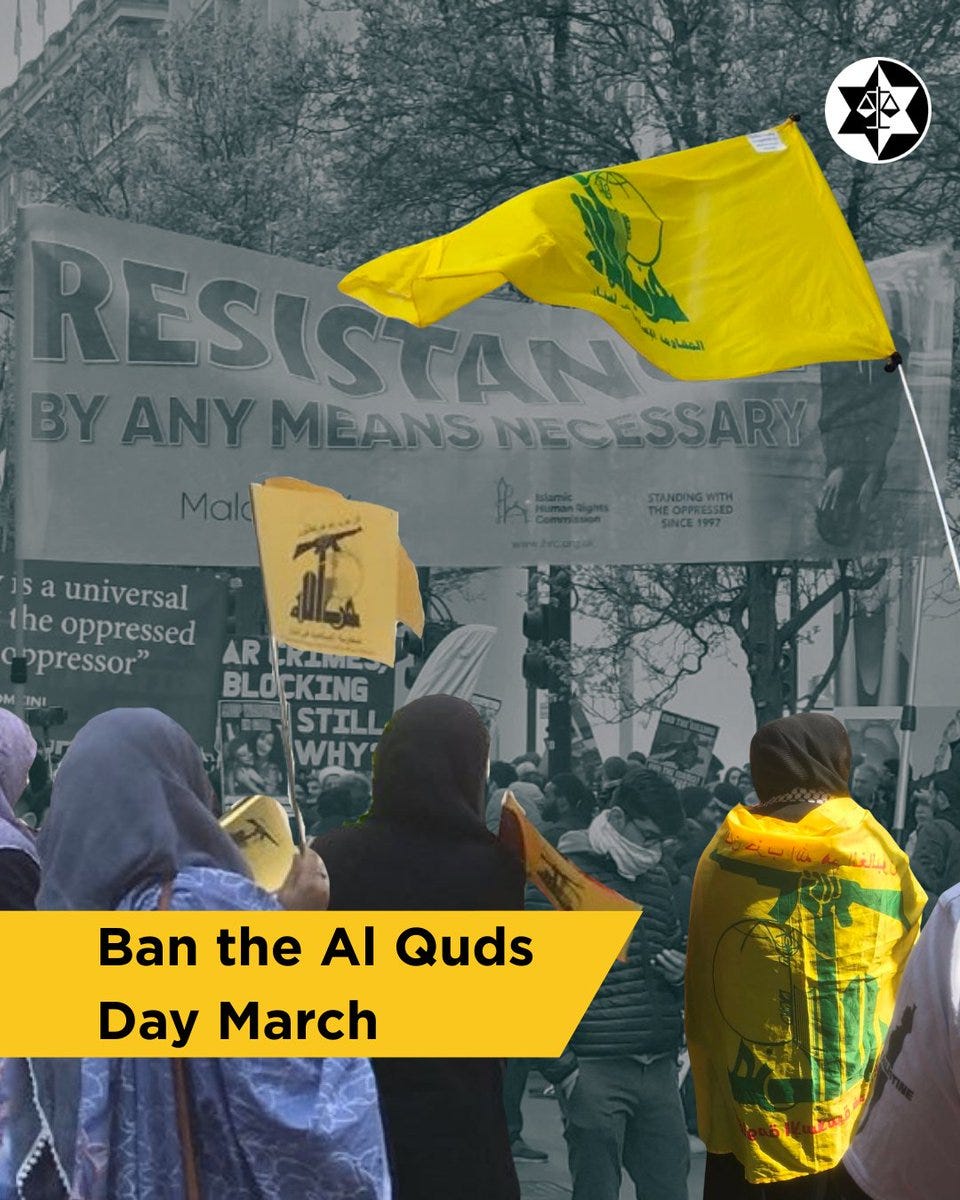
The Bigger Danger
Critics argue that the West dangerously misreads Iran by focusing almost entirely on its missiles and proxies. Iran’s most durable weapon they say, is its ideas. By positioning itself as the uncompromising defender of Jerusalem, Tehran has constructed a moral shield that makes it politically costly for even Sunni Arab governments, who privately distrust Iran, to push back against its narrative.
The West dangerously misreads Iran by focusing almost entirely on its missiles and proxies. Iran's most durable weapon they say, is its ideas. By picking the Palestinian cause, an issue that resonates with all Muslims, not just Shia ones, Tehran constructed a moral shield that made it politically hard for Sunni Arab governments to push back. Opposing Iran's narrative meant looking like you were against Palestinians.
The result is a paradox that plays out every year on Quds Day, a Shia-majority state successfully speaks to and mobilizes Sunni populations across the globe, all under the banner of Palestinian liberation. For Israel and the Jewish world, this matters enormously. It means the threat isn’t only rockets from Gaza or Hezbollah tunnels in Lebanon, it’s a decades-long ideological campaign that has normalized eliminationist language about the Jewish state in mainstream Muslim discourse worldwide.
A Global Network of Influence
What makes Quds Day alarming is the infrastructure behind it. Iran doesn’t simply hold rallies at home, it finances and organizes events in over 80 countries annually, including Western cities like New York, London, Berlin, and Toronto. The Islamic Revolutionary Guard Corps (IRGC) uses the occasion to showcase ballistic missiles and military hardware, while its proxies — Hezbollah, Hamas, Palestinian Islamic Jihad, and the Houthis — coordinate their messaging in lockstep with Tehran.
Critics, including the ADL and other watchdogs, have documented antisemitic tropes, praise for terrorist groups, and violent rhetoric associated with Quds Day messaging and some related rallies. Iran’s state-controlled Kayhan newspaper has published pieces prior to Quds Day praising Adolf Hitler. Israeli cyber authorities have repeatedly warned of heightened cyber risk around Quds Day, and Israeli media have linked some attacks to that period.
Quds Day is not simply an annual protest to be tolerated or ignored. It’s the most visible expression of a 46-year-old campaign to delegitimize, isolate, and ultimately eliminate the State of Israel, pursued not only through weapons, but through words, symbols, and the deliberate shaping of global opinion.
Nearly half a century after Khomeini launched it, that campaign is still running, and still spreading.