


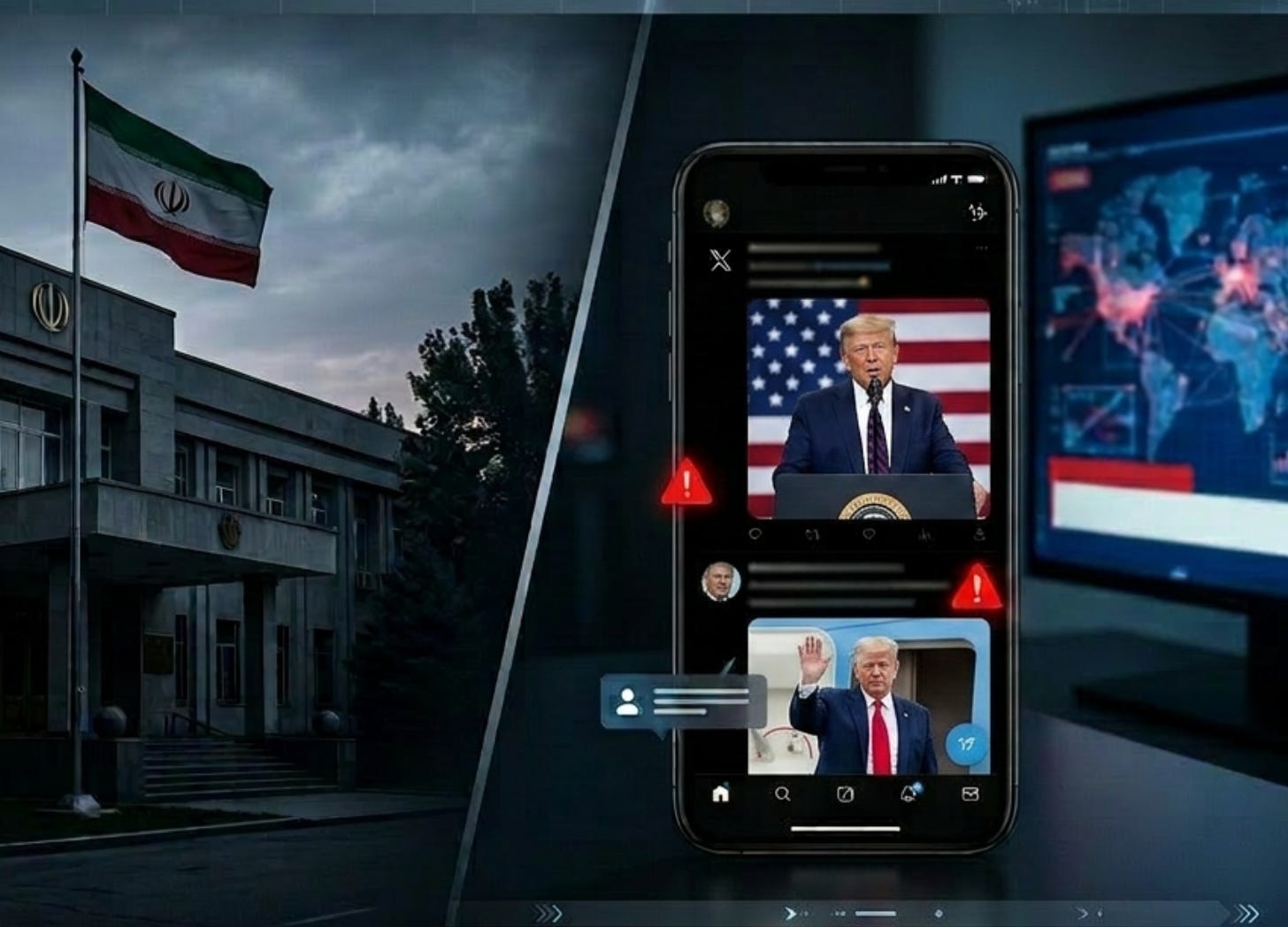
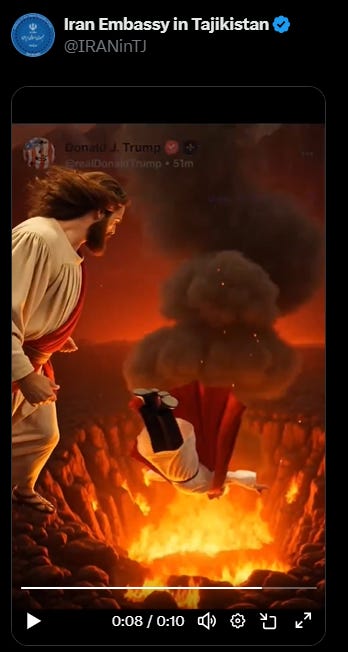
On April 14, 2026, the official X account of the Iranian Embassy in Tajikistan posted an AI-generated video depicting Jesus Christ punching President Donald Trump in the face, with Trump bloodied and falling into a fiery pit. The 10-second video incorporated imagery from Trump’s own deleted Truth Social post and quickly accumulated millions of views on the platform. The Tajikistan embassy’s provocative content represents an escalation in Iran’s broader digital influence campaign targeting Western leaders and audiences.
Graphic Depiction of Violence Against President Trump
The Iranian Embassy took the image posted by Trump and transformed it into graphic propaganda depicting violent assault on the sitting U.S. president. An automated voice declares “Your reckoning has come” as a Christ figure descends from the sky. Trump is shown screaming “no” before impact, with audio effects simulating blood spattering as his body plummets downward into flames.
The Tajikistan post was not isolated. Other Iranian diplomatic accounts, including ones linked to South Africa and Zimbabwe, also posted mocking or satirical content targeting Trump during the same period.
The Epstein Conspiracy Push
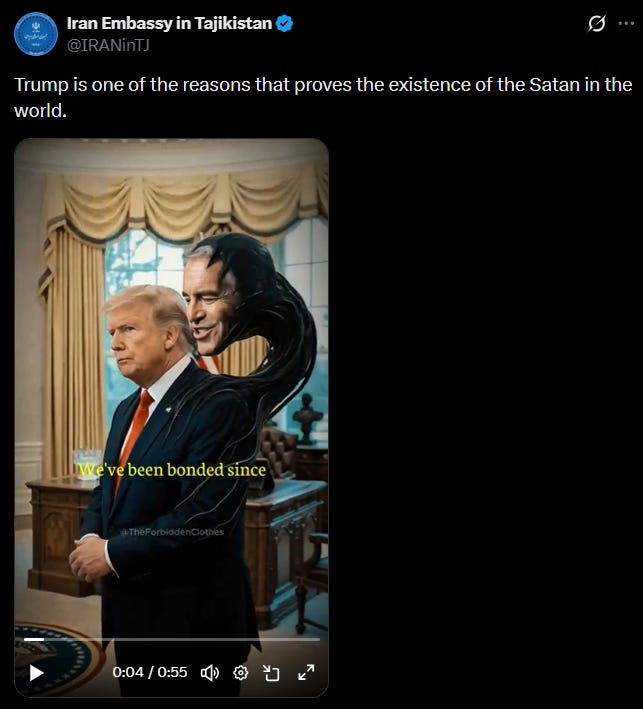
On the same day, the same Iranian Embassy account posted an AI-generated video depicting the ghost of Jeffrey Epstein communicating with Trump and allegedly instructing him to take specific actions, including criticizing Tucker Carlson, Candace Owens, and Alex Jones on Truth Social. The video depicted Epstein’s ghost speaking to Trump and implying a directive relationship between them
The embassy accompanied the Epstein video with the caption: “Trump is one of the reasons that proves the existence of the Satan in the world.”
Historical Pattern: Soleimani Commemoration
The Tajikistan embassy’s engagement in propaganda is not new. In 2024, the account made a post honoring Qasem Soleimani, the former IRGC Quds Force commander who was eliminated in a U.S. strike in January 2020.
The commemoration indicates the diplomatic account has long served as a propaganda vehicle for Tehran rather than functioning in a traditional diplomatic capacity.


Implications
The most serious aspect of the episode is that an official Iranian embassy account appeared to glorify violence against a sitting U.S. president. Whatever its propagandistic or satirical framing, that is an extraordinary use of a diplomatic platform. It illustrates the extent to which Tehran’s official channels are being used not merely to message or mock, but to circulate inflammatory content that erodes the boundary between diplomacy, propaganda, and incitement.