


Jewish Onliner is an independent publication. If you find our work valuable, please consider becoming a paid subscriber. You can also subscribe to us on WhatsApp and Telegram. Follow us on YouTube, TikTok, Instagram, Discord, and X.
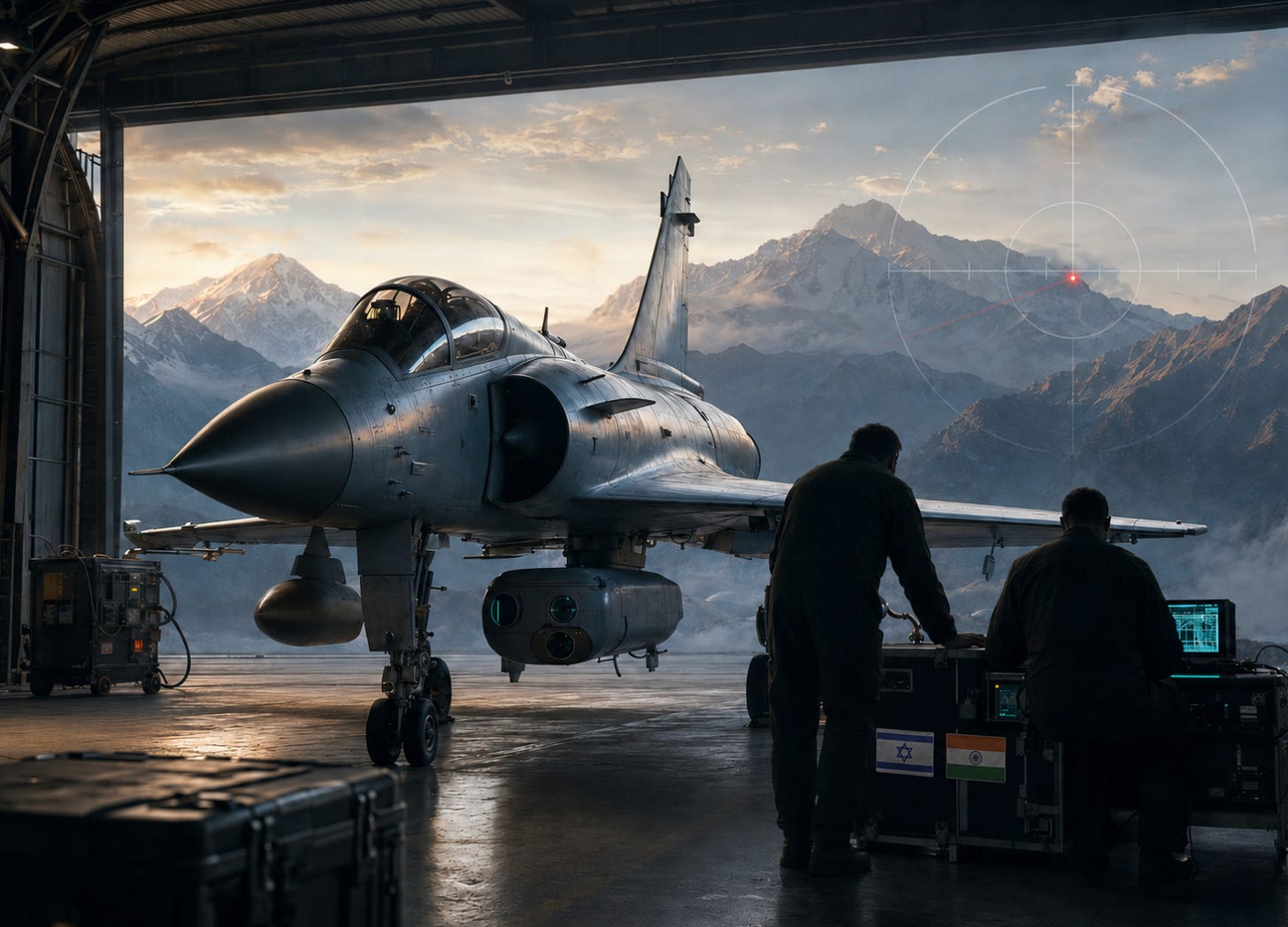
Two Israelis involved in integrating advanced targeting systems onto Indian fighter aircraft have provided new firsthand details about how a prewar defense project became an emergency combat effort during the 1999 Kargil War.
In an interview published by NDTV, Ami, a former civilian program manager at Rafael Advanced Defense Systems, and Shlomo, a retired Israeli Air Force fighter pilot and former Mirage squadron commander, described the emergency effort to help operationalize Israeli-made Litening targeting pods on Indian Mirage 2000 fighter jets.
Both men were identified only by their first names. NDTV described the appearance as their first interview with Indian media. The broader story of Israel’s assistance and the Indian Air Force’s rapid wartime integration of the system had been documented previously, but the interview provided new details from members of the Israeli team.


An Emergency Push Built on a Prewar Project
The Litening project did not begin during the war. Integration work was already underway by 1997, with Israeli specialists and Indian personnel testing the pod on India’s French-built Mirage 2000 aircraft. The system had not yet been fully operationalized when fighting began in 1999.
The emergency phase began with a Friday-night call from Group Captain N.A.K. Browne, who was then India’s defense attaché in Israel and later became chief of the Indian Air Force. The call came from Tel Aviv as Israel was entering Shabbat.
Ami recalled that by Sunday morning, engineers and other specialists who had not expected to travel were flying to India with tools and test equipment.
“We have a friend in need,” he said.
The account describes an improvised deployment, but not an improvised technology program. Years of earlier work gave the Israeli and Indian teams a foundation from which they could accelerate the remaining integration under wartime pressure.


The High-Altitude Technical Challenge
The Kargil conflict began after Pakistan Army forces, principally members of the Northern Light Infantry and Special Services Group, crossed the Line of Control and occupied strategic positions on the Indian side. Many were dressed to appear to be Kashmiri militants.
The Indian Air Force faced targets at elevations of approximately 14,000 to 18,000 feet. Thin air affected aircraft and weapon performance, while the rocky and snow-covered terrain made targets difficult to identify. Pilots were also prohibited from crossing the Line of Control and had to remain wary of Pakistani shoulder-fired surface-to-air missiles.
The Litening targeting pod allowed pilots to locate targets through electro-optical and infrared sensors and designate them with a laser. U.S.-made Paveway II bombs could then home in on the reflected laser energy.
Shlomo compared the integration challenge to making three different systems speak the same language: an Israeli pod, American laser-guided bombs and a French aircraft. The analogy referred to the aircraft’s software, electrical and weapons interfaces, not literal operating languages.
Although the overall development program had lasted years, then-Wing Commander Raghunath Nambiar later said the accelerated wartime integration of the pod and 1,000-pound laser-guided bombs was completed in 12 days.
Precision Over Mountain Terrain
On June 24, 1999, Nambiar’s Mirage 2000 used a Litening pod to designate Pakistani Army positions on Tiger Hill before releasing a Paveway laser-guided bomb. The strike was the Indian Air Force’s first successful combat use of a laser-guided munition.
Narmdeshwar Tiwari, then an Indian Air Force test pilot, also played a central role in operationalizing the Litening pod during the Kargil campaign. The new NDTV interview credited both Nambiar and Tiwari with using the technology under conditions that the Israeli team had not previously tested.
Shlomo estimated that conventional bombs landing 20 or 30 meters from a mountain target could have little effect, while the laser-guided system could place a weapon within two or three meters. Those figures are his characterization rather than a published Indian Air Force performance assessment, but independent studies confirm that the terrain frequently rendered near misses ineffective.
The Litening system and laser-guided bombs materially improved India’s precision-strike capability. They did not, however, determine the war on their own. The Indian Army, its artillery and the wider Indian air campaign all played indispensable roles in recapturing the occupied positions.


Beyond a Commercial Contract
Ami said he traveled to India approximately 100 times between 1996 and 2004, with roughly half of those visits occurring before the Kargil War. His recollection underscores that the emergency deployment grew out of an existing program and years of direct cooperation with Indian personnel.
“This is profound friendship,” he said, describing the relationship as extending beyond the commercial terms of a defense contract.
Kargil did not create India-Israel defense ties. The countries established full diplomatic relations in 1992, and India began purchasing Israeli military equipment before the war. But a detailed study of the bilateral defense relationship concluded that the relationship strengthened significantly after Kargil, when Israel demonstrated its willingness to meet urgent Indian requirements.


From Kargil to a Special Strategic Partnership
Israel has since become one of India’s leading sources of military equipment. According to SIPRI’s latest arms-transfer data, Israel supplied approximately 15 percent of India’s major arms imports in 2021-25, ranking behind Russia and France.
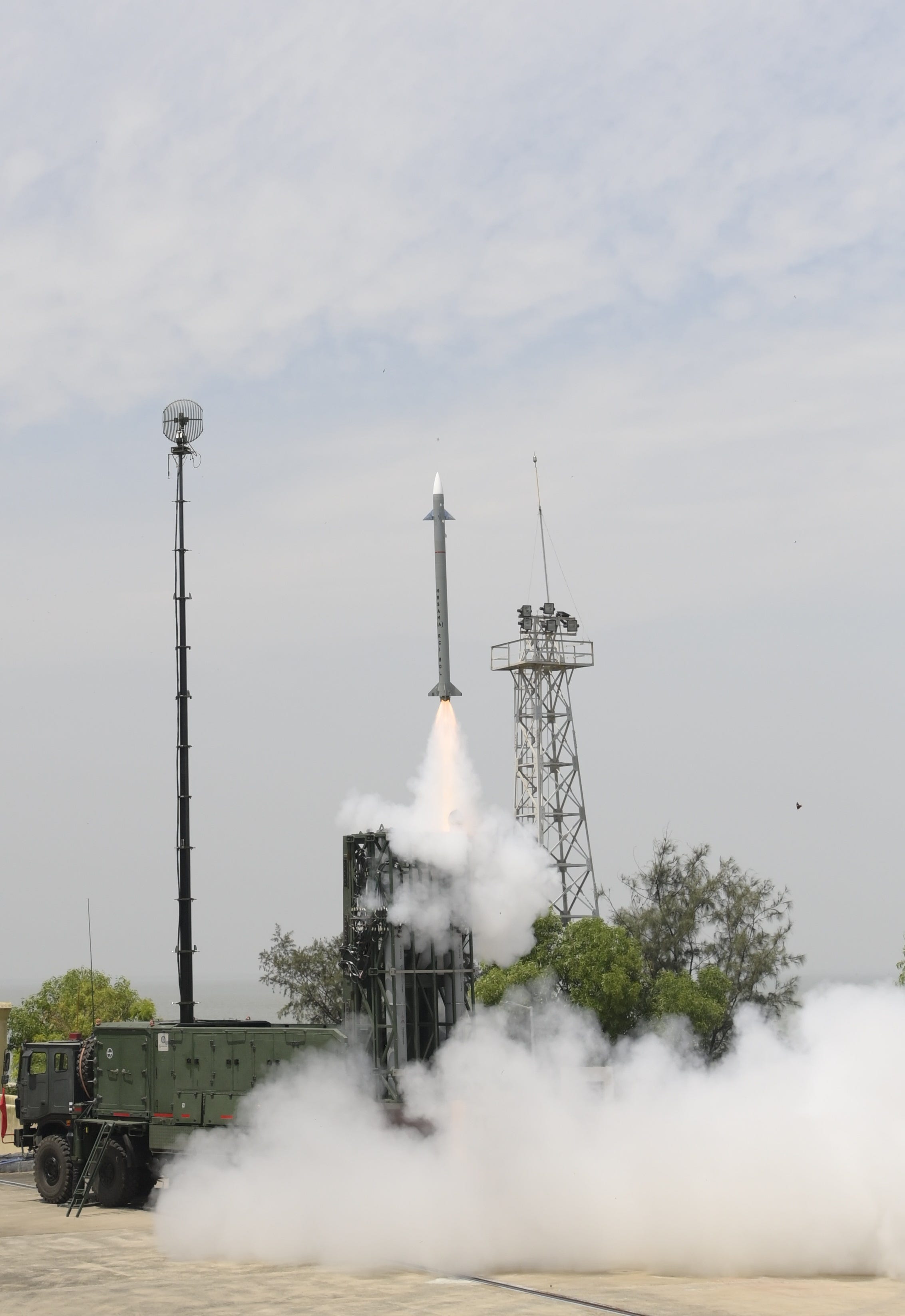
The relationship remains partly based on procurement, but it now also includes joint development and domestic production. The Medium-Range Surface-to-Air Missile system, developed jointly by India’s Defense Research and Development Organisation and Israel Aerospace Industries, is a prominent example.
Political engagement has expanded alongside the defense relationship. Narendra Modi became the first Indian prime minister to visit Israel in 2017, and Benjamin Netanyahu visited India in 2018.


Modi returned to Israel for a state visit on February 25-26, 2026. During that visit, the two governments formally elevated their relationship to a “Special Strategic Partnership for Peace, Innovation and Prosperity.”
The framework encompasses defense and security as well as artificial intelligence, cybersecurity, semiconductors, quantum computing, biotechnology, space and other emerging technologies.