


Jewish Onliner is an independent publication. If you find our work valuable, please consider becoming a paid subscriber. You can also subscribe to us on WhatsApp and Telegram. Follow us on YouTube, TikTok, Instagram, Discord, and X.
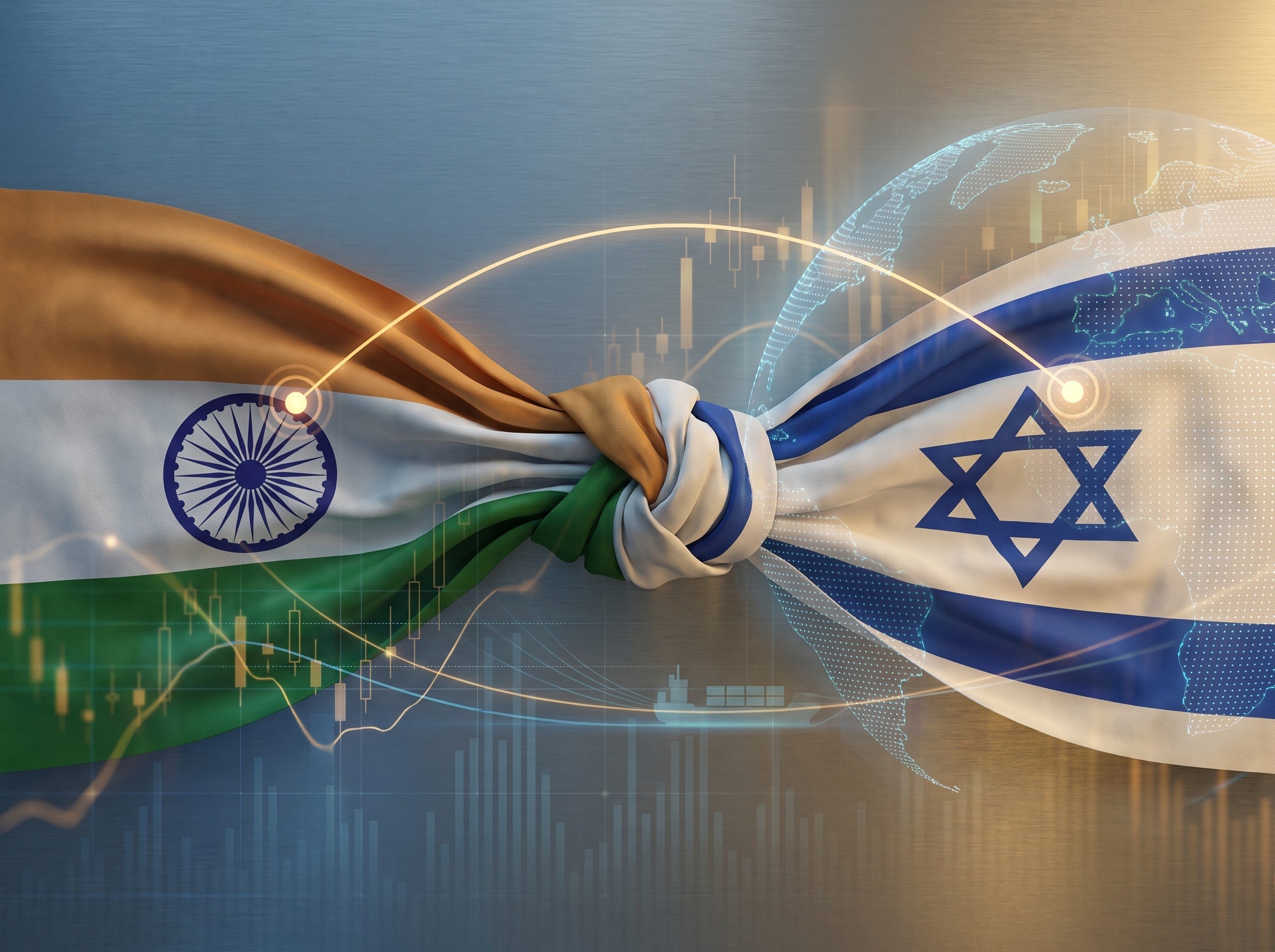
India and Israel completed the second round of negotiations for a proposed Free Trade Agreement on July 23, advancing an economic initiative that both governments say could unlock the largely untapped potential of their commercial relationship.
The four-day negotiating round in New Delhi came five months after the first round under a newly adopted framework and followed the elevation of bilateral relations to a “Special Strategic Partnership for Peace, Innovation & Prosperity” during Prime Minister Narendra Modi’s February visit to Israel.
According to India’s Commerce Ministry, bilateral merchandise trade rose from approximately $3.62 billion in fiscal year 2024–25 to $3.93 billion in 2025–26. Both governments believe a comprehensive agreement could expand trade, investment and economic integration between India’s large manufacturing and consumer economy and Israel’s technology-focused market.
The negotiations remain at an early stage, and neither government has released proposed tariff schedules, market-access commitments or an anticipated completion date. However, officials have identified machinery, chemicals, textiles, agriculture, medical devices, advanced technologies, artificial intelligence, cybersecurity, high-tech manufacturing and services as areas with substantial potential.
A completed agreement could become an important expansion of economic ties between South Asia’s largest economy and one of West Asia’s leading innovation economies, particularly as both countries seek more resilient supply chains, diversified commercial partnerships and deeper cooperation in strategic technologies.
A Framework Years in the Making
India and Israel first opened FTA negotiations in May 2010, completing eight rounds by November 2013 before talks stalled for more than a decade. The current push began in November 2025, when the two governments signed new Terms of Reference establishing a structured negotiating framework.
Weeks earlier, on September 8, 2025, Indian Finance Minister Nirmala Sitharaman and Israeli Finance Minister Bezalel Smotrich had signed a Bilateral Investment Treaty in New Delhi providing investor protection, transparency guarantees, and independent arbitration mechanisms.


Modi at the Knesset: “Ambitious” and “Untapped”
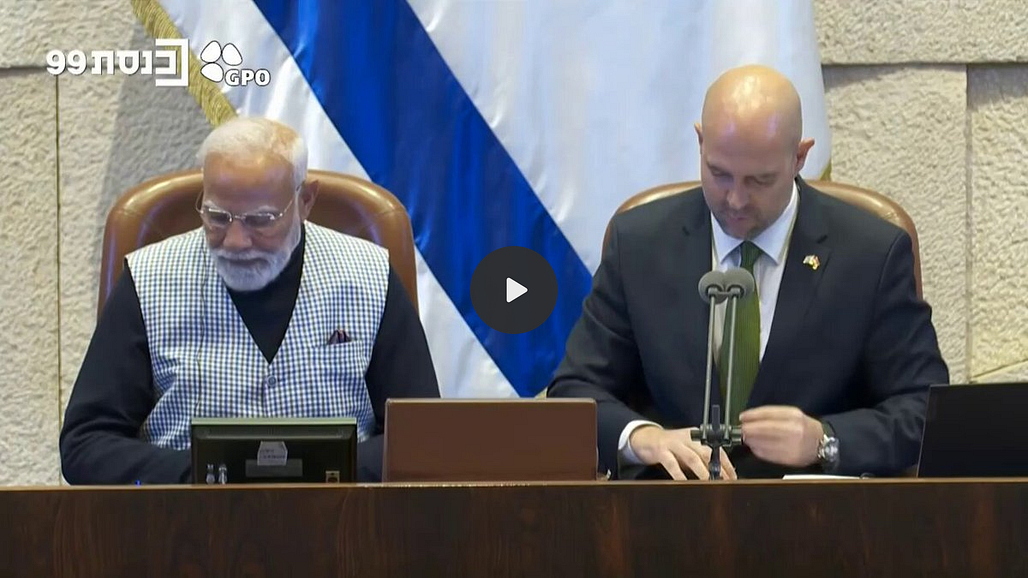
Addressing the Knesset on February 25, 2026 — becoming the first Indian Prime Minister to do so — Modi declared that “our teams are working hard to negotiate an ambitious Free Trade Agreement” that would “unlock the vast untapped potential in our trade relationship.” The next day, a joint statement confirmed the elevation to a “Special Strategic Partnership,” with more than a dozen bilateral agreements concluded during the visit.
Netanyahu framed the stakes bluntly: “The future belongs to those who innovate and Israel and India are bent on innovation.”

Two Rounds, Wide Scope
The first round of the revived FTA negotiations concluded in New Delhi from February 23-26, 2026, timed to overlap with Modi’s Israel visit. Union Commerce Minister Piyush Goyal pressed both delegations toward a “modern, comprehensive, and future-ready” agreement.
The second round wrapped in New Delhi from July 20-23, 2026, led by India’s Chief Negotiator Ajay Bhadoo and Israel’s Chief Negotiator Yifat Alon Perel of the Ministry of Economy and Industry. Officials covered trade in goods and services, rules of origin, customs procedures, intellectual property rights, digital trade, and sanitary and phytosanitary measures.


The Diamond, Agriculture, and Defense Pillars
Bilateral trade is anchored by three sectors. Diamonds and precious stones alone accounted for USD 416.62 million in Indian exports to Israel and USD 316.24 million in imports — a decades-old value chain in which Israel dominates certification and marketing while India handles global cutting and polishing.
Agriculture forms the second pillar. India now hosts 35 operational Centres of Excellence built under the Indo-Israel Agriculture Project, with plans to expand to 100 nationwide, supported by the newly established India-Israel Innovation Centre for Agriculture.
Defense collaboration deepened on November 4, 2025, when the two countries signed a Defence Cooperation Memorandum of Understanding in Tel Aviv emphasizing joint development, technology transfer, and co-production rather than simple arms purchases.


Labor Mobility and Strategic Signaling
The Modi-Netanyahu joint statement carried implications beyond trade columns. Israel agreed to admit an additional 50,000 Indian nationals, expanding a workforce that has increasingly filled construction and caregiving roles since Israel restricted Palestinian labor after October 7, 2023.
The joint statement also referenced the Hamas-led October 7 attack and the April 2025 Pahalgam attack in Indian-administered Kashmir, with Modi declaring: “Terrorism cannot be accepted in any form or expression.”
What Comes Next
Bhadoo and Perel have committed to continued inter-sessional virtual engagement, with additional rounds planned toward an “early conclusion.” Israel currently ranks only 40th as an Indian export destination and 50th as an import partner — figures officials on both sides argue vastly understate the ceiling once tariff and non-tariff barriers fall.
For Israel, the deal offers scale, manufacturing depth, and a democratic partner outside a Western trade architecture increasingly buffeted by protectionism. For India, it provides direct access to Israeli innovation in AI, cybersecurity, water technology, precision agriculture, and medical devices. What began as a strategic relationship built on security cooperation is being rewired into an economic architecture — one that could define one of the twenty-first century’s most consequential democratic partnerships.
India has never discriminated against Jews. While W Europe burns under siege from its Muslim population, India remains a welcome refuge for a normal Israeli-Jewish/Indian-Hidu relationship. In crass and very broad terms, the Hindus have no great love for Muslims, who in turn have made themselves Israel’s/Jews’ implacable enemy. The enemy of my enemy is my friend. This has been a long time coming.