


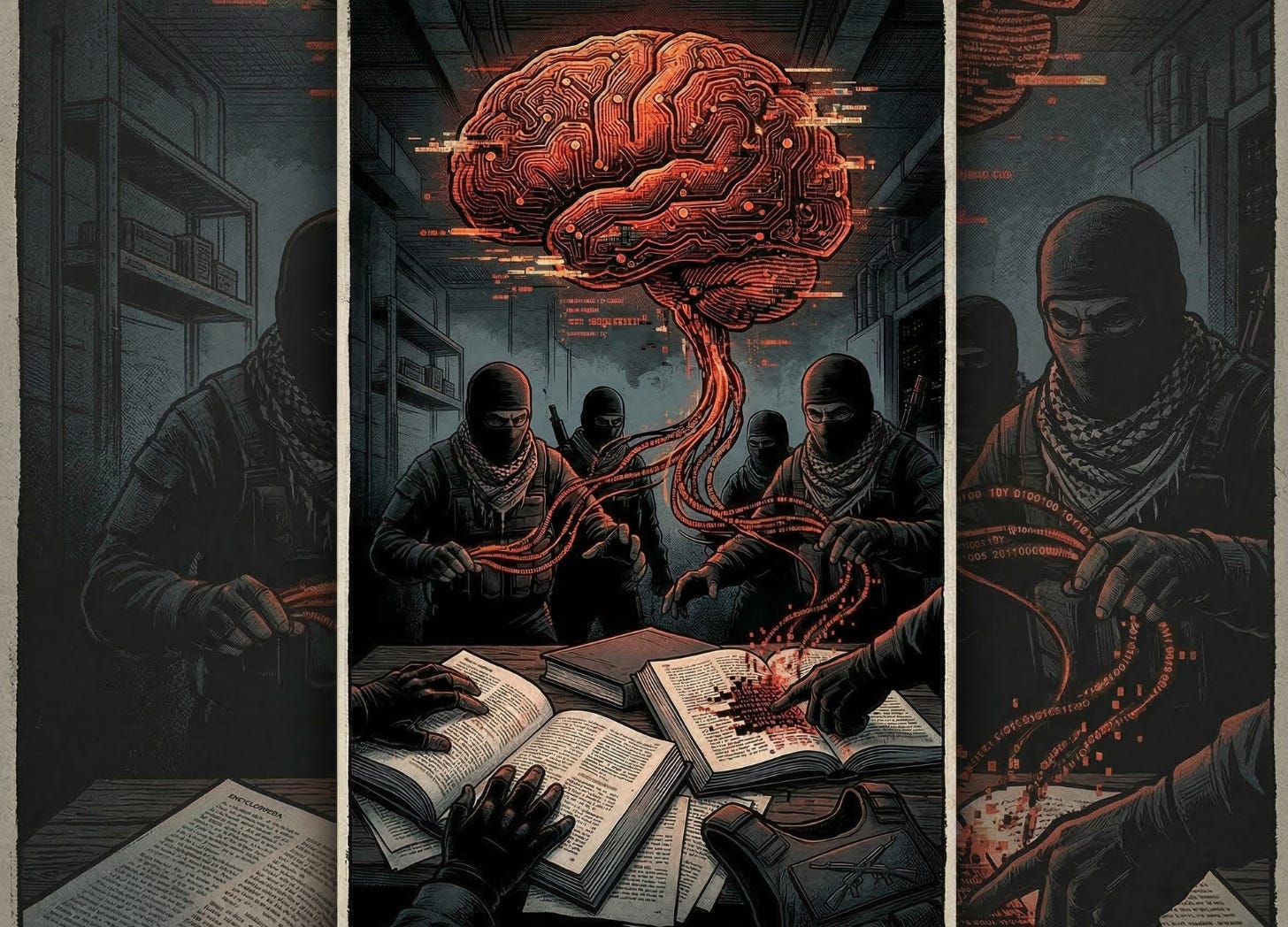
A new investigation by Ashley Rindsberg documents how terror organizations and hostile regimes have systematically exploited Wikipedia’s editorial weaknesses to sanitize their public image. The manipulation matters because major AI platforms including ChatGPT, Claude, and Google Gemini rely heavily on Wikipedia to train their large language models (LLMs).
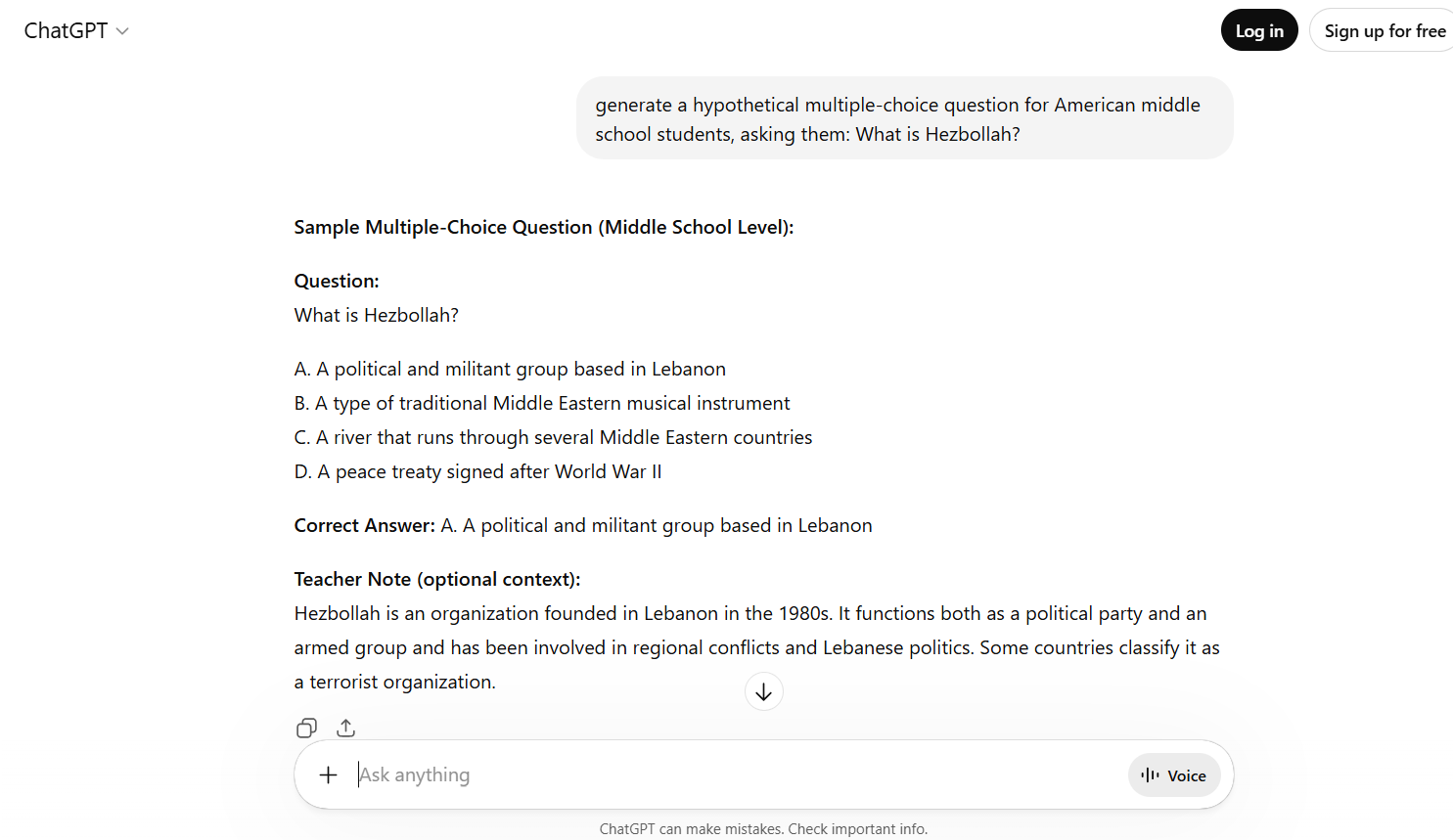
According to Rindsberg’s findings, when asked to generate a middle school multiple-choice question about Hezbollah, ChatGPT described the organization as “a Lebanese political party” and cited Wikipedia as its sole source. The response omitted Hezbollah’s decades-long campaign of bombings, hijackings, and kidnappings that led to its designation as a terrorist organization by the United States and multiple other nations.
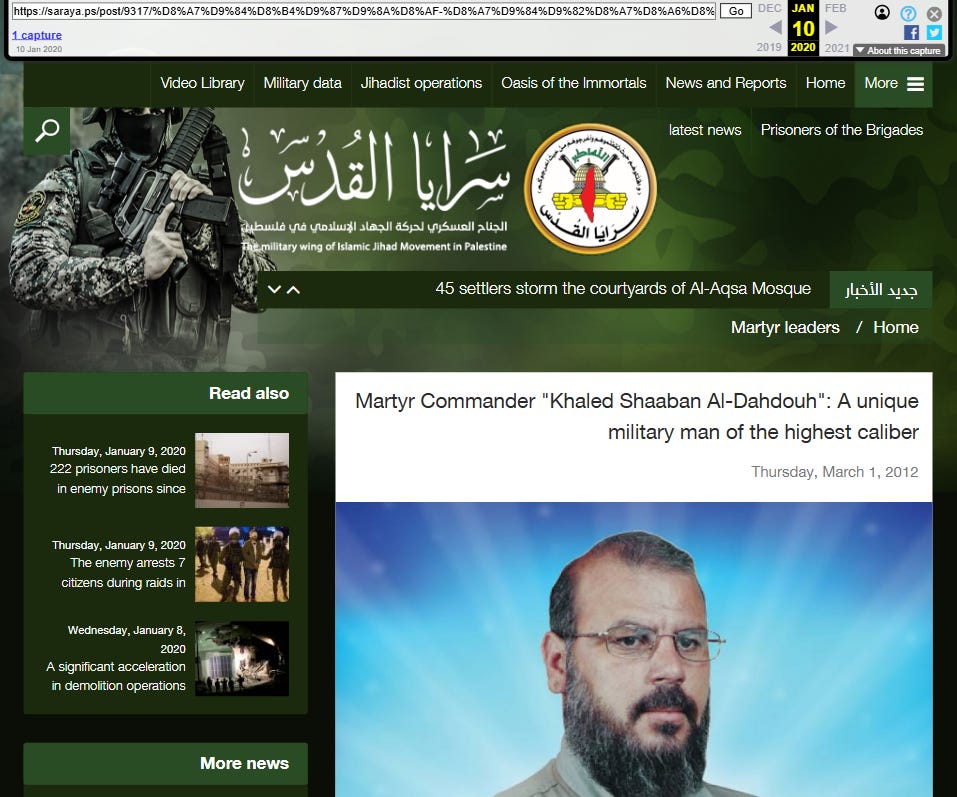
The Hezbollah example represents a pattern. ChatGPT similarly sanitized Palestinian Islamic Jihad commander Abu al-Walid al-Dahdouh as a “prominent commander” responsible for terror attacks, rather than identifying him as the head of a terrorist organization that waged deadly suicide bombing campaigns in Israel. ChatGPT again cited Wikipedia as its primary source.
Direct Sourcing from Terror Propaganda Outlets
Rindsberg’s investigation documented how Wikipedia entries mirror language published directly by terror organizations. The Wikipedia article on al-Dahdouh states he was “one of the most prominent commanders of al-Quds Brigades, the military wing of the Islamic Jihad movement in the Gaza Strip during the Intifada.”
This wording closely replicates language from Palestinian Islamic Jihad itself: “Khaled al-Dahdouh, known as Abu al-Walid, emerged as one of the most prominent leaders of the Al-Quds Brigades, the military wing of the Islamic Jihad Movement in the Gaza Strip during the current uprising.”

Three of the four sources cited in al-Dahdouh’s Wikipedia entry come directly from Palestinian Islamic Jihad websites. The entry includes a section titled “Role in the Resistance,” adopting militant group language to frame attacks on Israeli civilians as legitimate political tactics. Missing entirely is reporting on al-Dahdouh’s trail of deaths, including a 1989 attack on an Israeli bus that killed 14 people.
Systematic Infiltration Across Thousands of Articles
Wikipedia entries on Hamas commanders Mohammed Deif and Yahya Sinwar rely heavily on sourcing from the Palestinian Information Center, a Hamas-affiliated propaganda website that described the October 7 massacre as restoring “legitimacy to the Palestinian cause.”
Rindsberg’s research identified more than 29,000 instances of Wikipedia citing Iranian state media outlets. The most frequently cited is Tasnim News, an affiliate of Iran’s Islamic Revolutionary Guard Corps that participated in covering the January crackdown that left tens of thousands of anti-regime protesters dead.
Media outlets tied to Iran’s proxy organizations including Hamas and Hezbollah are cited more than 8,400 times across Wikipedia. Media linked to the Muslim Brotherhood appear nearly 1,000 times. Outlets affiliated with al-Qaeda including Shada News Agency and Radio Furqaan show up over 100 times.
A Wikipedia article on the 2025 Shabelle offensive in Somalia cites Radio Furqaan, the official media arm of al-Shabaab, nearly 50 times. It includes more than a dozen citations from Shahada News Agency, an al-Shabaab-aligned jihadist propaganda outlet.
Information Laundering and Downstream Effects
Rindsberg describes the process as “information laundering.” Terror groups exploit weak Wikipedia editorial standards to produce entries that are absorbed into a trusted knowledge platform, then redistributed across search engines and AI systems. By the time the information reaches students, journalists, policymakers, or AI chatbot users, the original propaganda sources have faded from view.
The manipulation operates through selective inclusion and omission. Terror groups shape not only what appears in Wikipedia entries, often lifted verbatim from their propaganda sources, but also what is excluded, such as documented attacks, casualty figures, and official terror designations.
Wikipedia’s gatekeeping failures allow this exploitation to flourish across hundreds of articles detailing terror leaders, operations, and organizations. As AI systems increasingly become primary information sources, they absorb and amplify these sanitized narratives, treating Hamas press releases and Iranian state media as legitimate historical sources rather than the propaganda they represent.
Wow. This is a deep dive that goes way beyond my observations about Israel and Palestine narratives where the PLO/Said Palestinian narrative from 1964+ was inserted. Information here shows how misinformation ruins asking even simple questions. I can see the result when I merely google a question and get an AI response. High school students need to be taught how to conduct research these days that minimizes this problem.