


Jewish Onliner is an independent publication. If you find our work valuable, please consider becoming a paid subscriber.
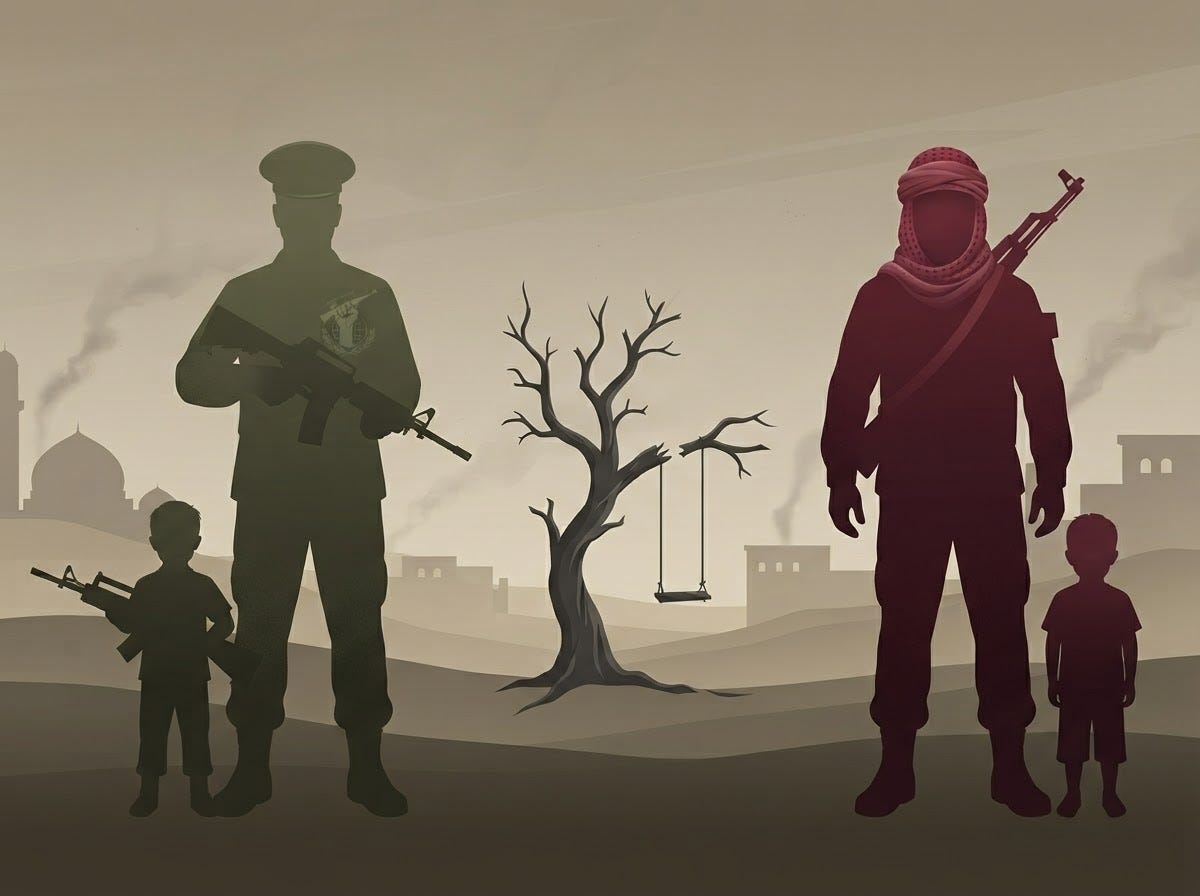
More than 4,000 newly recruited fighters reportedly arrived in Amran province on the morning of Saturday, July 18, according to Yemen Window, an account echoed by Yemen Online. A significant portion were allegedly minors, some reportedly no older than 15.
Most of the recruits reportedly came from Saada, Hajjah, and Amran provinces, arriving aboard military vehicles and civilian transport that overwhelmed recruitment camps, hotels, lodgings, and markets across the region. Preparations were reportedly underway to move large numbers of recruits toward confrontation zones within days.
The Houthis allegedly offered recruits up to 400,000 Yemeni rials to join, while withholding details about their destinations and assignments — reportedly to discourage desertion or refusal to serve. According to reporting, the recruits are bound for Al-Jawf, where the Houthis may be preparing to reinforce their positions or open a new front.


The Houthis’ History of Child Recruitment
The Houthis’ use of child soldiers did not begin with the Amran mobilization. Amnesty International documented in 2017 that the group was recruiting fighters as young as 15, in some cases through religious schools and without parental knowledge. A senior Houthi military official told the Associated Press in 2018 that the group had inducted 18,000 child soldiers into its ranks since the war began in 2014, with boys as young as 10 recruited.
In 2021, the Yemeni child-protection organization SEYAJ estimated that the group operated roughly 6,000 summer camps where children were exposed to ideological instruction and, in some cases, combat training. A UN Panel of Experts report separately found that nearly 2,000 children recruited by the Houthis were killed in combat between January 2020 and May 2021 alone, including in Amran and several other provinces.
The Houthis signed a pledge with the UN in April 2022 to end and prevent child recruitment. Despite that commitment, Human Rights Watch reported in February 2024 that recruitment had increased noticeably after October 7, 2023, as the group used the Gaza war to support a broader mobilization campaign.


Documented Basij Recruitment of Children
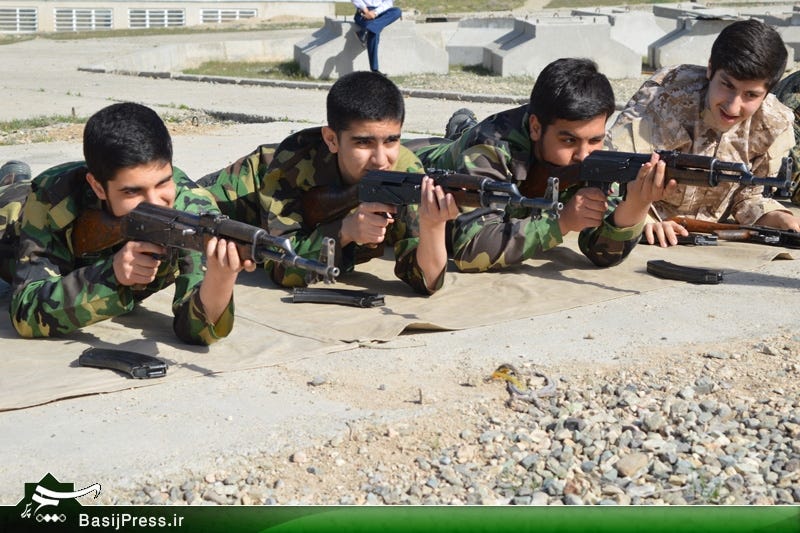
Documented recruitment by the Basij, an IRGC paramilitary force, offers relevant historical context for how children have been used in combat roles by groups aligned with Iran. In October 2018, the U.S. Treasury sanctioned a financial network tied to the Basij for recruiting, training, and deploying children as combatants.
Treasury reported that the Basij had branches across Iran, provided combat training to children as young as 12, and recruited and trained fighters for possible deployment to Syria from at least early 2015, with Iranian children among those sent to support the Assad government. Treasury separately said the Basij recruited Afghan immigrants, including children as young as 14, for the Fatemiyoun Brigade, and recruited Pakistani nationals for the Zainabiyoun Brigade — both militias operating in Syria under the IRGC-Quds Force.
Treasury officials said the financial infrastructure supporting these practices enabled “the Iranian regime’s violent ambitions across the Middle East.”
Treasury said Iran’s state broadcaster aired footage on November 25, 2017, purporting to show a 13-year-old Basij member in the Syrian city of Abu Kamal. The boy described himself as a “defender of the shrine” — the regime’s standard term for fighters sent to Syria — discussed his motivation for joining, and named two fellow fighters killed in the conflict.
In April 2026, Amnesty International documented a separate, IRGC-led mobilization campaign inside Iran that was reportedly open to children as young as 12. Amnesty said recruiting children under 15 into armed forces, or using them in hostilities, constitutes a war crime; international standards separately prohibit nonstate armed groups from recruiting or using anyone under 18.
Child Recruitment Beyond Yemen
Child recruitment has also been documented or alleged among other Iranian proxy groups, including some Iraqi militias. Harakat Hezbollah al-Nujaba, founded in 2013 by Akram al-Kaabi, and Asaib Ahl al-Haq, a 2006 offshoot of Muqtada al-Sadr’s Mahdi Army led by Qais al-Khazali, are both Iraqi Shia militias funded, armed, and trained by Iran’s IRGC-Quds Force and organized under Iraq’s Popular Mobilization Forces. The U.S. designated AAH and the Khazali brothers as terrorists in 2020, and designated Nujaba a Specially Designated Global Terrorist in 2019 before adding it to the Foreign Terrorist Organization list in September 2025.
The U.S. State Department has reported allegations that both groups recruited boys under 18, most commonly out of schools, to fight in Syria and Yemen, and said the Iraqi government did not investigate the claims.