


Jewish Onliner is an independent publication. If you find our work valuable, please consider becoming a paid subscriber. You can also subscribe to us on WhatsApp and Telegram. Follow us on Instagram, Discord, and X.
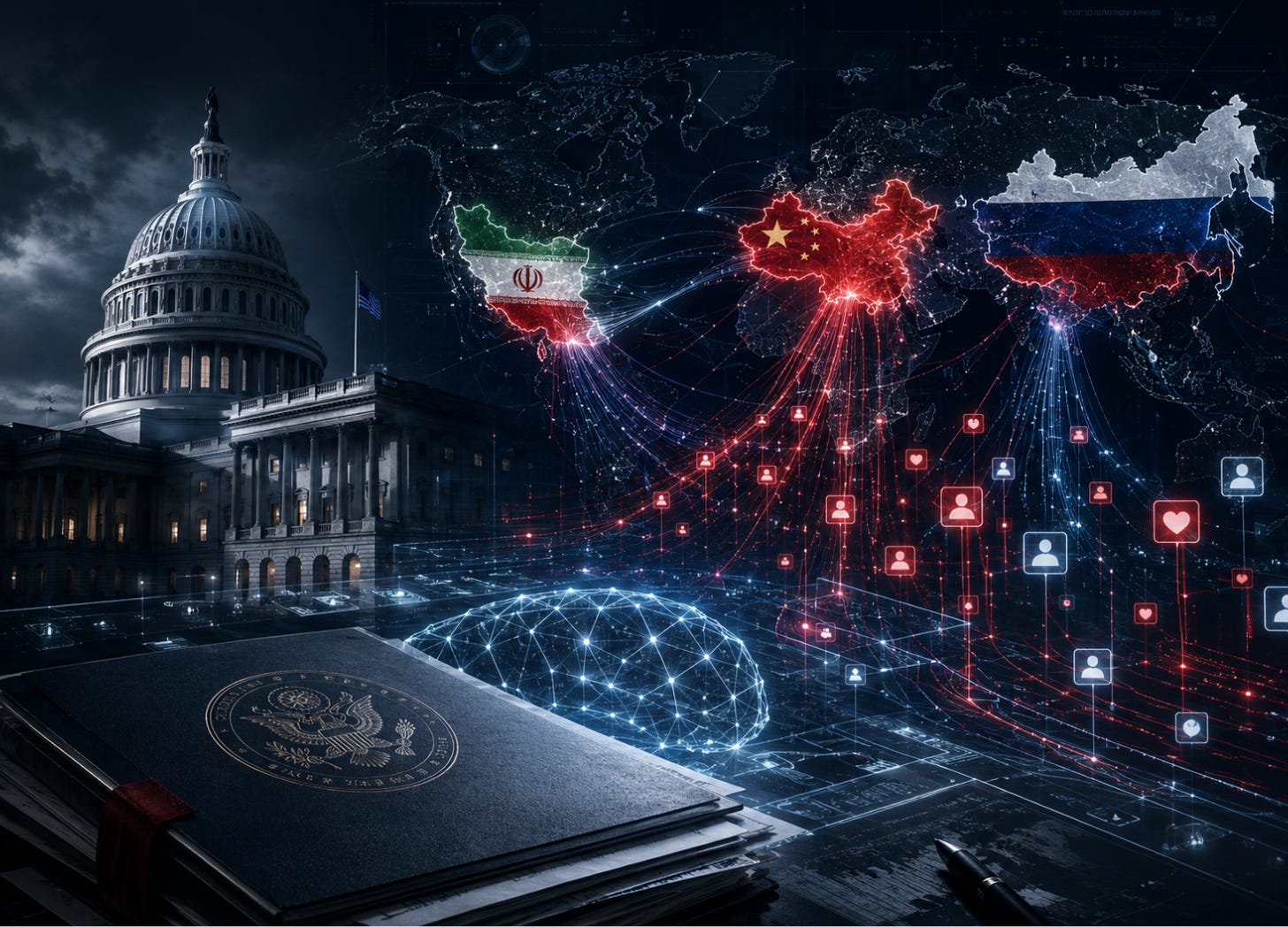
A bipartisan House Intelligence Committee report warns that artificial intelligence is supercharging covert influence operations by Iran, China, and Russia, allowing foreign adversaries to flood social media, target college campuses, and exploit divisions inside the United States at unprecedented scale.
The report, released August 31, places those operations within a changing threat landscape in which foreign state influence, terrorist propaganda, and online radicalization increasingly overlap. It cites Rep. Josh Gottheimer’s warning that since 2023, Iran, China, and Russia have conducted covert operations aimed at dividing Americans, while AI now enables adversaries to generate fake voices, videos, and millions of messages.
The review also says Hamas, Hezbollah, and other terror networks flooded online platforms with doctored videos and misinformation after the October 7 attacks, using the war in Gaza to shape public debate, raise funds, and generate international political pressure on Israel. Separately, it says antisemitic attacks rose sharply after October 7 and that many were carried out by homegrown violent extremists radicalized by content denigrating Jews.
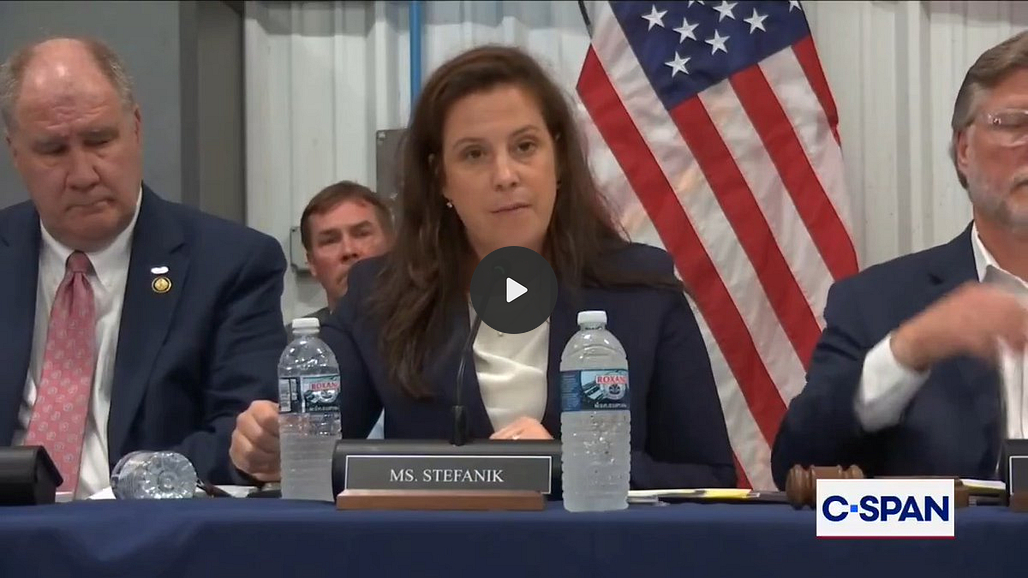
The 52-page Review of the 9/11 Commission Report was released at the Flight 93 National Memorial ahead of the attacks’ 25th anniversary. The year-long bipartisan review was launched by House Intelligence Committee Chairman Rick Crawford and Ranking Member Jim Himes, and co-chaired by Republican Rep. Elise Stefanik and Democratic Rep. Josh Gottheimer. According to the committee’s release, the review drew on classified and public briefings, two open hearings, and a public roundtable.
The committee found that reforms enacted after 9/11 transformed U.S. counterterrorism and broke down intelligence silos. It also concluded that nearly two decades of concentrating on counterterrorism allowed counterintelligence capabilities to fall behind as foreign adversaries learned to penetrate American institutions, manipulate decision-making, and exploit the country’s openness.

Hamas Propaganda and Antisemitic Radicalization
The report describes foreign malign influence as a form of cognitive warfare directed at the political, social, and informational foundations of Western societies. After the Hamas-led October 7 attacks, it says, Hamas, Hezbollah, and other terror networks used false or manipulated content about Gaza to influence political debate, collect money, and increase pressure on Israel.
The committee says such campaigns may combine propaganda, covert media manipulation, cyber operations, fake accounts, proxy organizations, and selective amplification. Their purpose is not always to sell one false claim. They may instead deepen polarization, confuse the public, and weaken trust in government.
The report does not identify individual Hamas or Hezbollah posts or calculate the reach of the post-October 7 campaigns in that section. Its assessment is nonetheless explicit in treating terror-network messaging as part of the foreign influence threat, rather than as political advocacy alone.
In a separate section on homegrown violent extremism, the committee says radicalization increasingly occurs through social media, encrypted messaging, online communities, and algorithmic networks. Individuals can progress toward violence without joining a group or contacting an overseas handler, leaving fewer of the indicators post-9/11 systems were built to detect.
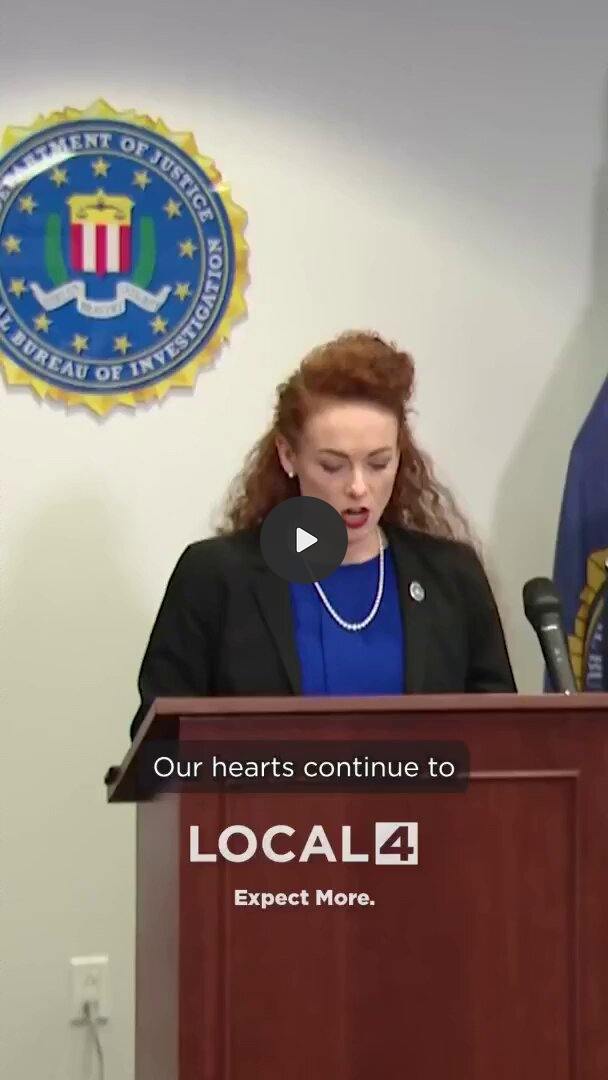
The review points to the recent attack on Temple Israel in West Bloomfield Township, Michigan, as an example of the security burden now placed on Jewish institutions. The FBI assessed the March attack to be a Hezbollah-inspired act of terrorism that deliberately targeted the Jewish community.

Iran’s Proxies and Covert Networks
Iran appears in the report as both a state influence actor and a persistent counterintelligence threat. The committee says the Islamic Revolutionary Guard Corps and its Quds Force sponsor, train, and equip proxy groups abroad, allowing Tehran to conduct global terror operations while retaining a degree of plausible deniability.
It also cites Iran’s use of transnational criminal networks to target dissidents in the United States. In one example, a federal jury convicted two organized-crime leaders in 2025 over an IRGC-directed plot to murder Iranian-American journalist and activist Masih Alinejad in New York.


The influence section reproduces Gottheimer’s statement at the committee’s July 21 hearing that Iran, China, and Russia have run covert operations since 2023 to divide the United States through social media, criminal groups, and college campuses. He warned that artificial intelligence allows one adversary to produce fake voices, videos, and millions of messages.
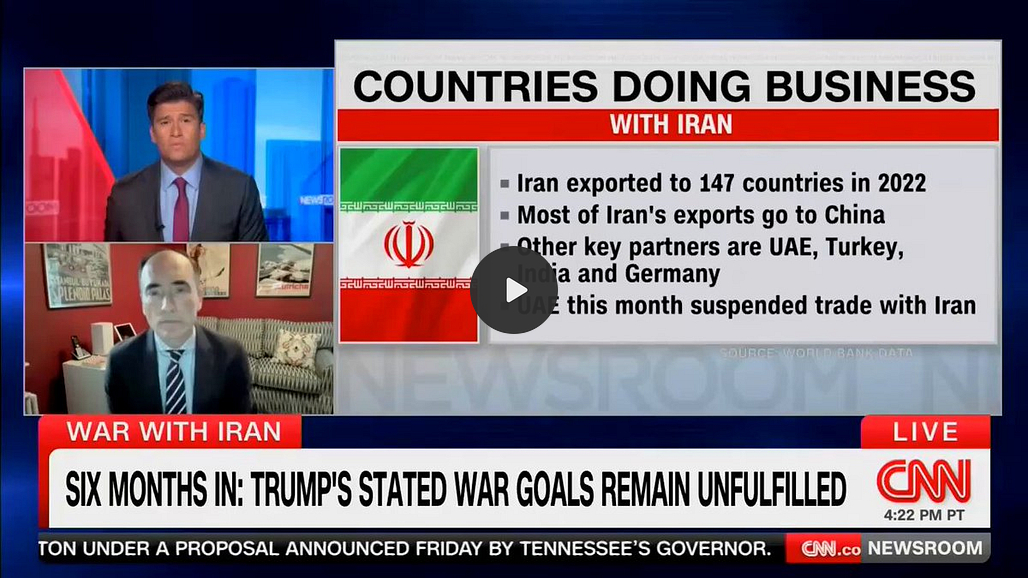
The report also says China has provided Iran with economic, technological, and diplomatic support while buying discounted sanctioned oil. A March fact sheet cited by the House report says Chinese buyers take roughly 90 percent of Iran’s exported oil. It separately documents Iran’s use of offshore accounts, including accounts under Chinese jurisdiction, to help finance the IRGC, Hezbollah, Hamas, Palestinian Islamic Jihad, the Houthis, and other Iran-aligned groups.

A New Intelligence Model
The committee issued 20 recommendations. It calls for professionalizing open-source intelligence, creating dedicated budget lines and career standards, and treating publicly available information as the intelligence discipline of first resort. The report says open-source reporting already supplies 20 percent of the President’s Daily Brief but remains underfunded and unevenly integrated across agencies.
It also recommends stronger intelligence sharing with local law enforcement and fusion centers, closer cooperation with private companies, and safeguards against terrorists using advanced artificial intelligence. The panel says any response to influence operations must preserve First Amendment rights.
Among its final proposals, the committee calls for keeping the National Counterterrorism Center as the Intelligence Community’s lead counterterrorism integrator and requiring greater sharing of counterintelligence information with the National Counterintelligence and Security Center. The recommendations now require action by Congress, the Office of the Director of National Intelligence, and individual agencies to take effect.
If we want to actually stop foreign adversaries from weaponizing AI-generated propaganda against us, playing whack-a-mole with deepfakes on social media is a losing game. They can spin up a million synthetic videos and bot-driven narratives faster than any moderation team could ever hope to flag them.
The only real tactical fix is forcing universal cryptographic provenance - stuff like the C2PA standard - right at the platform ingestion layer. A digital passport for media. Instead of wasting time trying to prove a video is fake after it’s already gone viral and fried public discourse, systems would automatically check if a file has a legitimate, tamper-evident cryptographic signature tracing back to a real source. If it doesn't? It gets throttled or flagged before it ever hits a mainstream feed.
It changes the math entirely. It doesn't stop people from lying, but it completely breaks the automated scale that makes these state-backed bot farms so dangerous. By baking verification right into the underlying infrastructure, we stem the synthetic flood and force adversaries back to the drawing board.
As opposed to overt influence…and blackmail ops.