


Jewish Onliner is an independent publication. If you find our work valuable, please consider becoming a paid subscriber. You can also subscribe to us on WhatsApp and Telegram. Follow us on Instagram, Discord, and X.
More than $34.6 million in cryptocurrency moved out of wallets linked to a Hezbollah financial facilitator after Israel published a notice targeting them for seizure, according to a report released Monday, September 28, by Democratic staff of the U.S. Senate Permanent Subcommittee on Investigations. The activity included deposits and withdrawals involving two Turkish exchanges, Paribu and BTCTurk.
The finding places two Turkish platforms inside a money trail that investigators say remained active for months after the Israeli notice. The report does not establish how much of the $34.6 million involved either exchange, who held the relevant accounts, or whether the platforms knew of the wallets’ alleged Hezbollah connection.
The case centers on Tawfiq Muhammad Sa’id al-Law, a Lebanon-based Syrian money exchanger. Israeli seizure order ASO 29/23 listed 39 wallet addresses that the Senate report associates with him. The order was signed on May 21, 2023, and Israel’s National Bureau for Counter Terror Financing publicly announced the operation on June 28.
Israel said it had uncovered an infrastructure used by Hezbollah, Iran’s Quds Force and Syrian actors to transfer funds through digital currencies. Its announcement said the operation had seized millions of shekels intended for terrorist organizations.
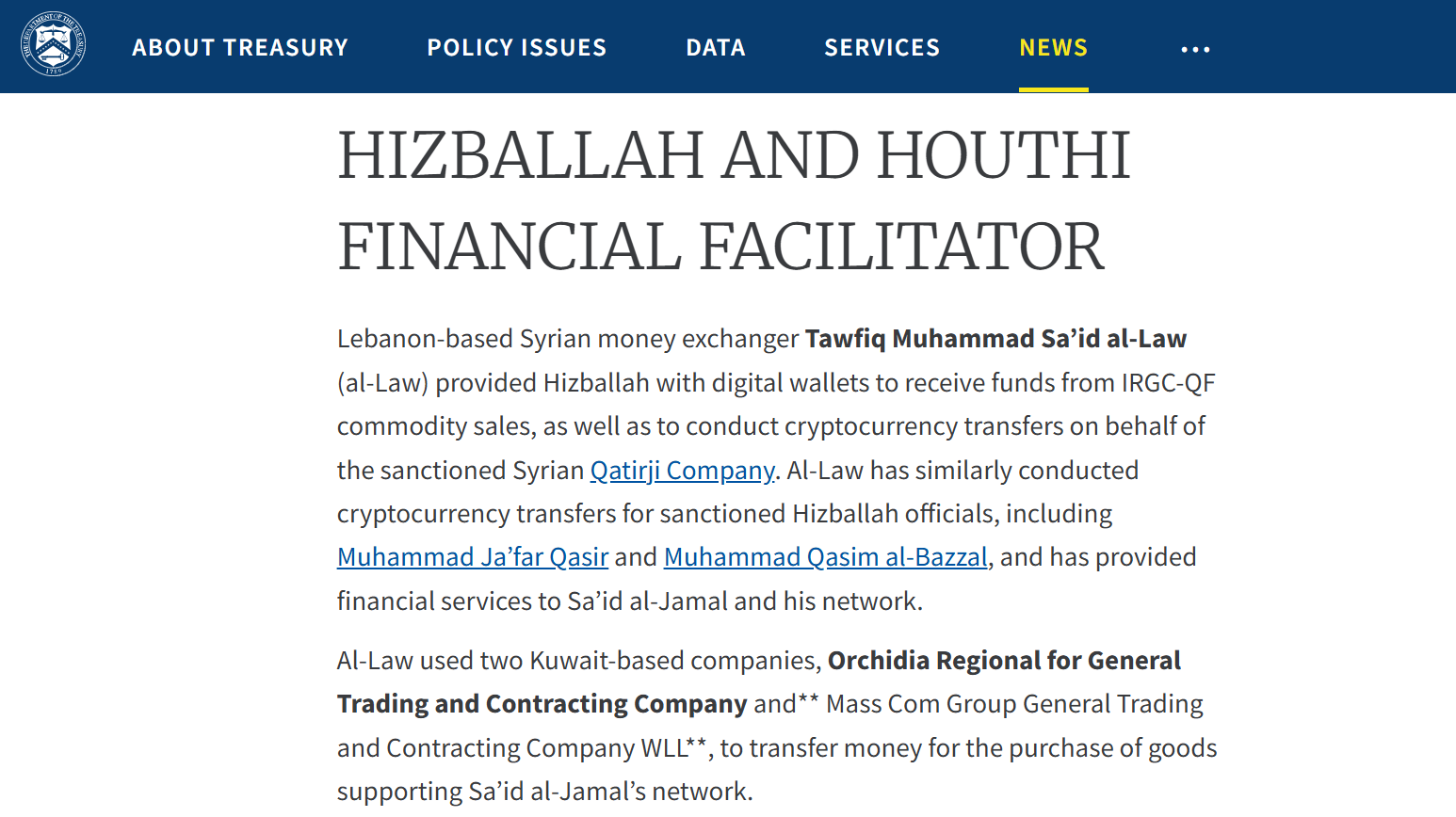
The U.S. Treasury sanctioned al-Law on March 26, 2024. It said he had provided Hezbollah with digital wallets to receive proceeds from Quds Force commodity sales and had conducted cryptocurrency transfers for sanctioned Hezbollah officials. Treasury’s account connected al-Law to a wider financing operation; it did not name Paribu or BTCTurk as participants.
The Months After the Notice
USDT, issued by Tether, is a cryptocurrency designed to maintain a value of roughly one U.S. dollar. It can move between addresses on public blockchains. Tether can also blacklist addresses, preventing the USDT held there from being transferred.
According to the Senate staff’s analysis, only five of the 39 wallets had been blacklisted before March 2024. Tether did not freeze the remaining 34 until that month, shortly before Treasury sanctioned al-Law.
Investigators calculated that the delay allowed more than $34.6 million in USDT to move out of the listed wallets after publication of the Israeli seizure notice. The report names Binance, Paribu and BTCTurk among the exchanges involved in related withdrawals and deposits.
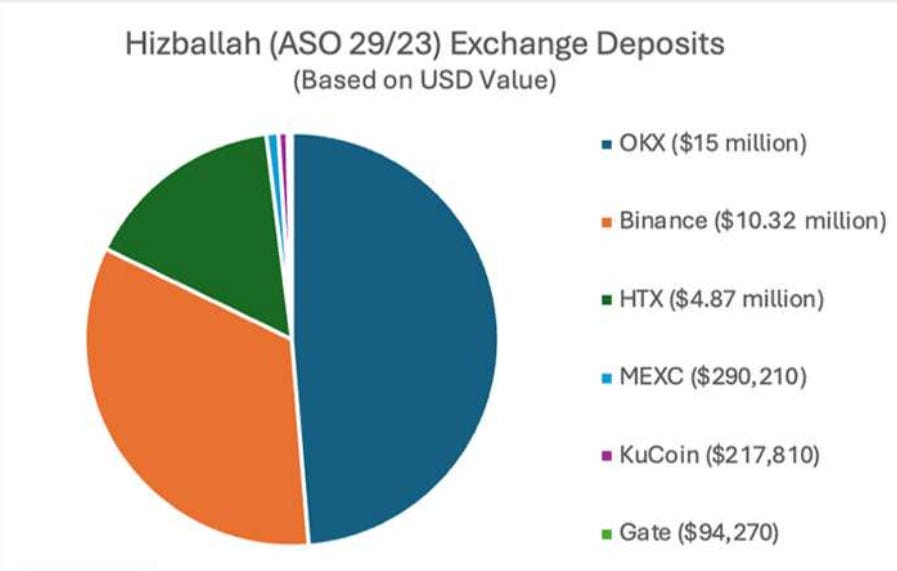
That figure describes outbound transactions from the wallet set, not a sum traced exclusively through Turkey. A separate chart gives deposit totals for six other exchanges associated with the ASO 29/23 wallets, but provides no figures for Paribu or BTCTurk. The chart also does not specify a time window that would allow its amounts to be treated as a breakdown of the post-notice outflows.
Nor does a transaction involving an exchange address, by itself, identify the customer behind it or prove that the platform knowingly served al-Law. The report’s methodology distinguishes blockchain addresses from their owners and describes using third-party attribution data to identify exchanges.
That makes the Turkish platforms potential sources of further evidence. Matching blockchain transfers with internal exchange records could help investigators establish who controlled the relevant accounts and trace subsequent activity. The public report does not supply that customer-level evidence for Paribu or BTCTurk.
A Dispute Over Freezing the Funds
The al-Law wallets form one case in a broader Senate staff investigation of 846 wallets sanctioned or targeted for seizure by U.S. or Israeli authorities over associations with Iran and its regional proxies. Investigators found that 84 percent had transacted exclusively or almost exclusively in USDT, according to the report’s findings.
Senator Richard Blumenthal, the subcommittee’s ranking Democrat, has called on the Treasury and Justice departments to investigate Tether’s anti-money-laundering and sanctions-compliance practices. His announcement describes the inquiry as ongoing.
The report also cites an earlier Israeli order involving Hamas. It says wallets attributed in March 2022 to a Hamas-affiliated money-laundering operation under ASO 15/22 were never frozen by Tether and continued transferring funds after their designation. Investigators presented that case as another example of inadequate freezing measures.
Tether rejects the suggestion that USDT provides a haven for sanctioned networks. In a statement issued September 28, it said actions involving its token had resulted in approximately $550 million being frozen during 2026 across wallets U.S. authorities identified as connected to Iran’s central bank and Iranian sanctions networks.
The company also said it had frozen more than 22 million USDT in over 40 cases referred by Israel’s counterterror-finance bureau, involving more than 640 addresses. Those figures describe Tether’s broader cooperation with authorities. The statement does not specifically address the reported delay in freezing the al-Law wallets between 2023 and 2024.
For now, the documented finding is that wallets associated with a Hezbollah financier continued moving millions after a public seizure notice, with two Turkish exchanges appearing in the activity. The unanswered questions are how much moved through each platform, who controlled the relevant accounts, and what the exchanges knew.